


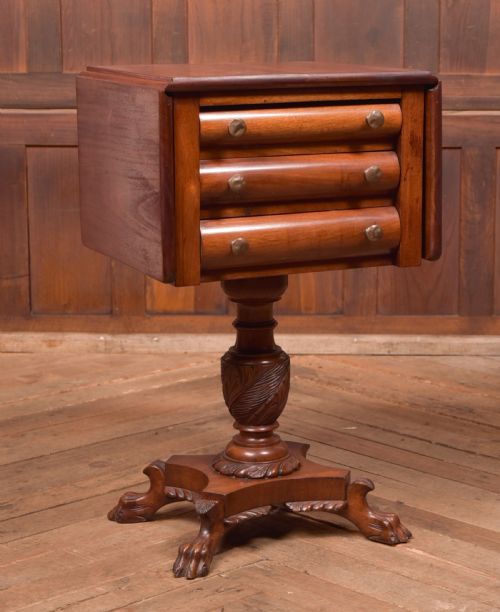

Carved Feet Side Cabinet
These carved feet side cabinet pieces bring enduring timber storage to any room, offering the distinct utility collectors seek.
Carved Feet Side Cabinet
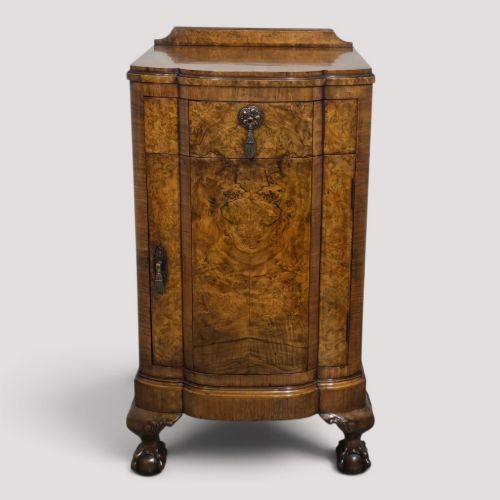
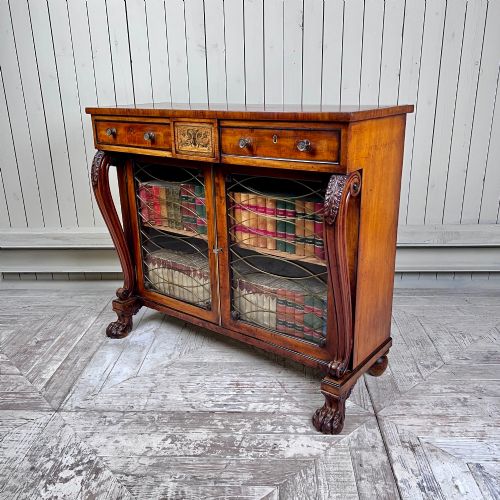
A carved feet side cabinet spans diverse eras from Regency to the 1930s, encompassing side tables, music cabinets, and bedside cupboards. You will frequently encounter mahogany and burr walnut constructions among these selections.
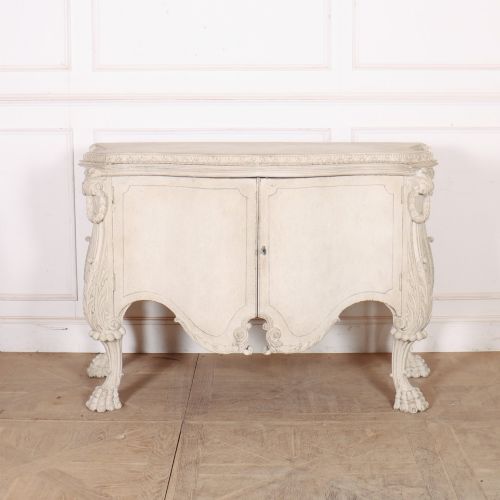
The aesthetic ranges from Queen Anne Revival and Grand Regency to Italian Rococo and Pre-Raphaelite painted finishes. These variations reflect the changing tastes of cabinet makers across Victorian, Edwardian, and later periods.
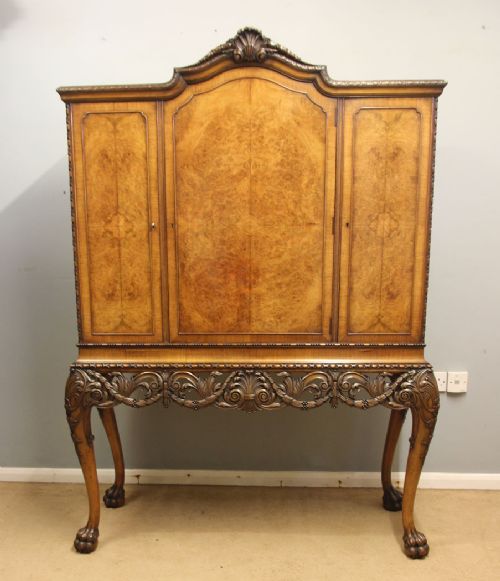
Formats include three-door side cabinets, chiffonier bookcases, and small bedside chests designed for domestic storage. Each piece demonstrates how period workshops adapted traditional forms for contemporary interiors.
Materials and construction methods
Cabinet makers relied heavily on solid mahogany and walnut, frequently applying burr walnut veneer to key surfaces for visual depth. Ebony and brass inlays add precise linear contrast on Regency examples.
Surfaces receive careful hand-painting in specific instances, particularly on Pre-Raphaelite revival works from the early twentieth century. Supporting structures utilise substantial timber frames, terminating in characteristic carved feet.
Ball and claw feet anchor a display cabinet in the archive, reminding us that furniture also enjoys a good grip.
Judging cabinet quality
Superior quality rests in the crispness of the timber carving and the selection of figured veneers such as burr walnut. Fine brass inlay work and well-balanced proportions elevate a piece well above standard utility furniture.
The integrity of the structural timber and the refinement of period styling, from Queen Anne curves to Regency geometry, dictate the overall stature of the cabinet.
The Carved Feet Side Cabinet Glossary
- Burr walnut
- A highly figured timber veneer prized for its swirling grain patterns. It appears frequently on cabinet doors from the early twentieth century.
- Chiffonier
- A low sideboard or cabinet featuring shelves or a superstructure, popular during the Regency period. These pieces often incorporate brass inlay and mahogany construction.
- Demi-lune
- A half-moon shape used for console tables and cabinets designed to sit flush against a wall. This profile suits smaller rooms and hallway spaces.
- Inlay
- A decorative technique where contrasting materials like brass or ebony are inserted into wood surfaces. This adds geometric or floral detailing to the cabinet frame.
Carved Feet Side Cabinet: Frequently Asked Questions
What periods do these cabinets represent?
The selection spans the Regency era through to the 1930s, including Victorian and Edwardian examples.
Revival styles such as Queen Anne and Pre-Raphaelite also feature prominently across the inventory.
How were these cabinets originally used?
They served multiple domestic functions, from storing sheet music in dedicated cabinets to holding linen and books in living spaces.
Bedside variants provided compact bedside storage, while larger chiffonier bookcases combined display space with enclosed shelving.
What woods are most common?
Mahogany forms the structural core of many Victorian and Regency pieces, offering rich dark tones and durability.
Burr walnut appears frequently in later twentieth-century pieces, valued for its distinctive figured grain.
Are painted finishes period accurate?
Hand-painted decoration occurs on specific pieces, notably those executed in the Pre-Raphaelite style during the early twentieth century.
Such decorative treatments reflect specific artistic revivals rather than standard cabinet making practice.