

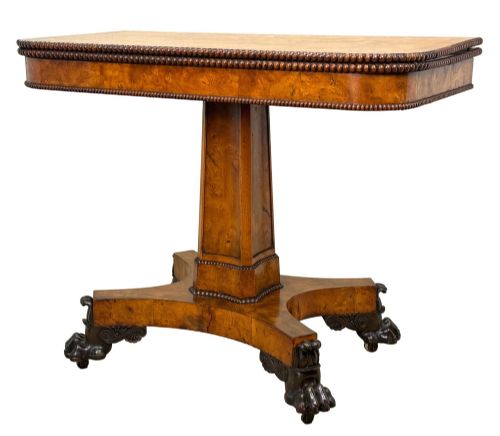
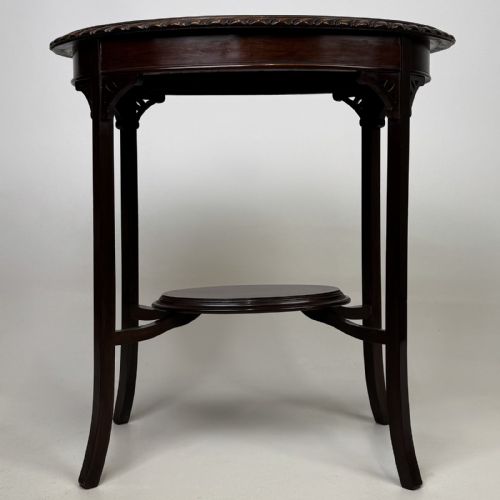
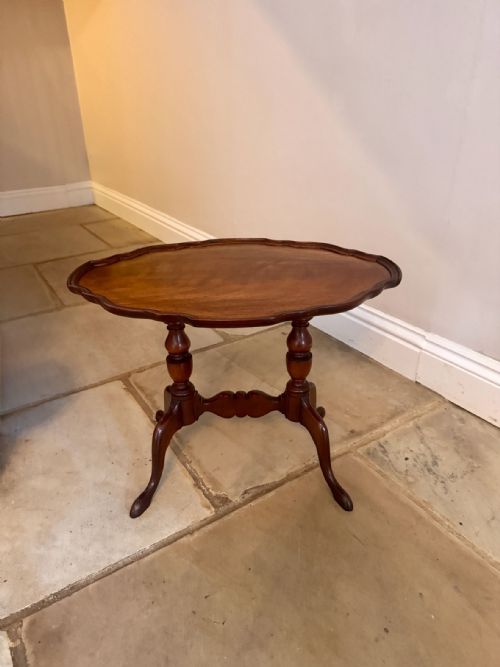
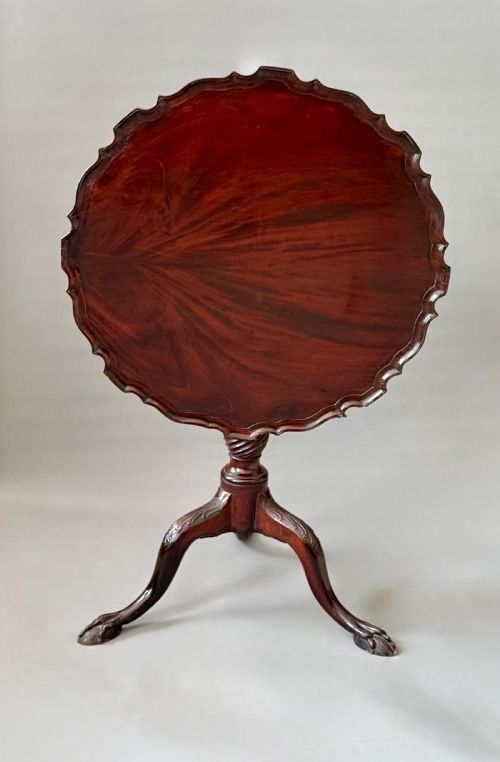
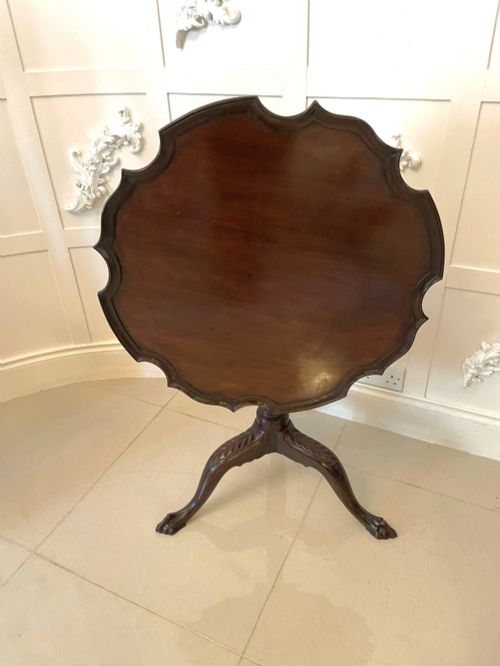
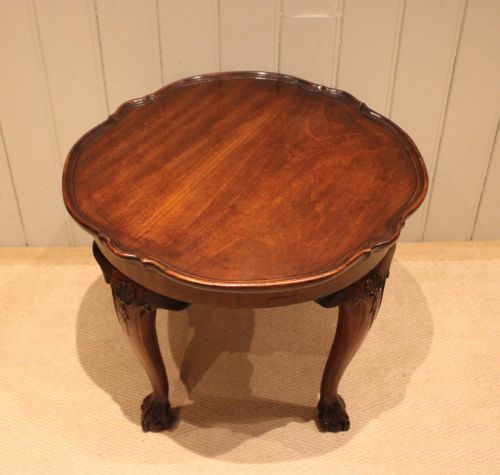
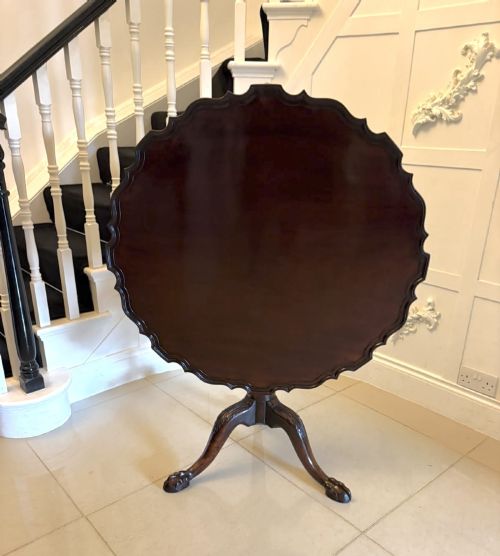
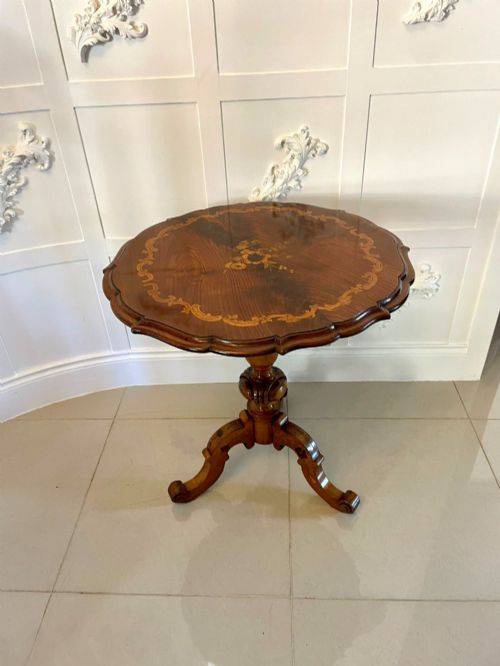
Carved Edge Table
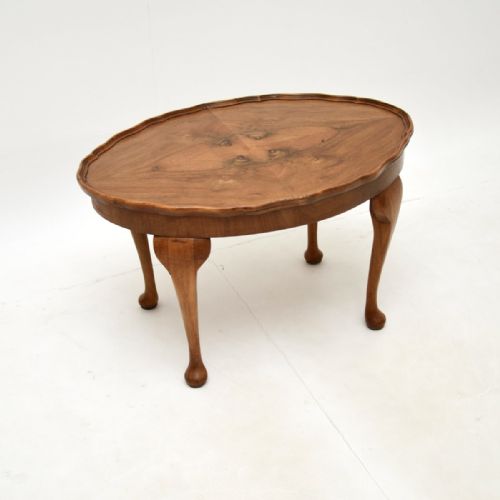
A carved edge table brings sculptural refinement to a room, offering distinctive moulded borders in mahogany, walnut and oak across various periods.
Carved Edge Table
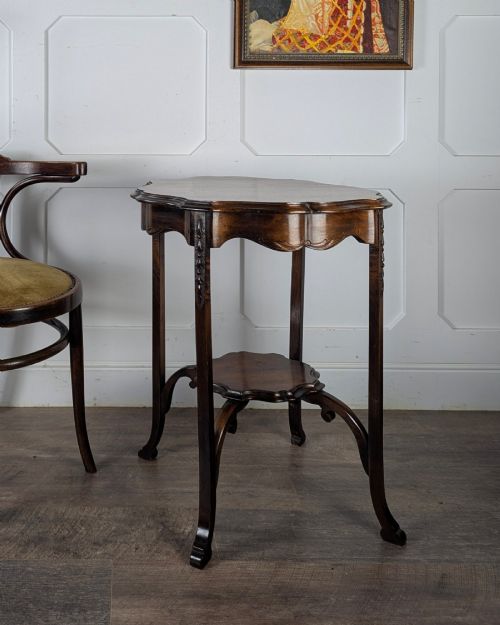
When you search for a carved edge table, you encounter diverse forms ranging from occasional and side tables to centre tables, coffee tables, dining tables, and jardiniere stands. The selection spans periods from the eighteenth century through the Victorian, Edwardian, and Regency eras into the early twentieth century.
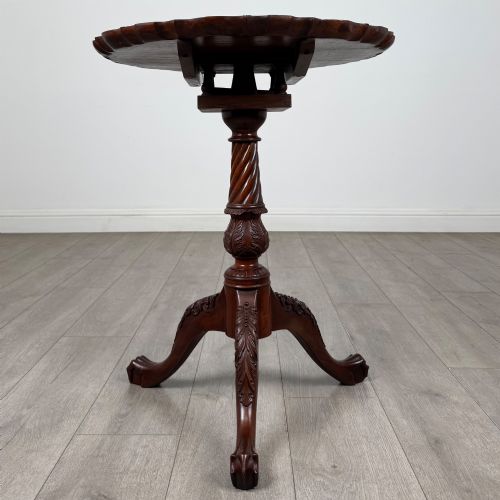
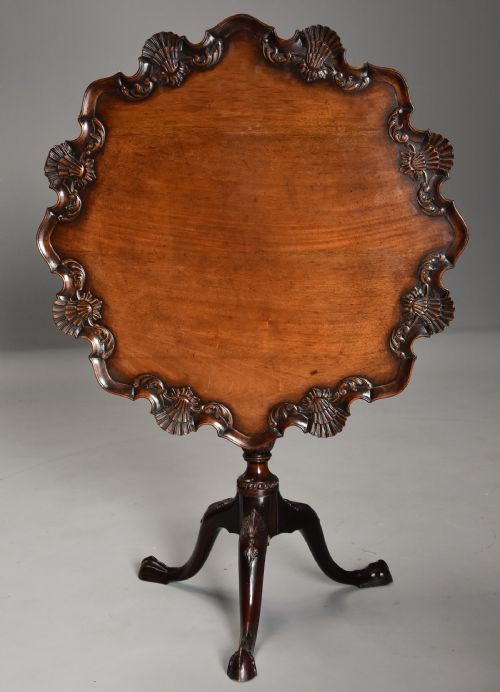
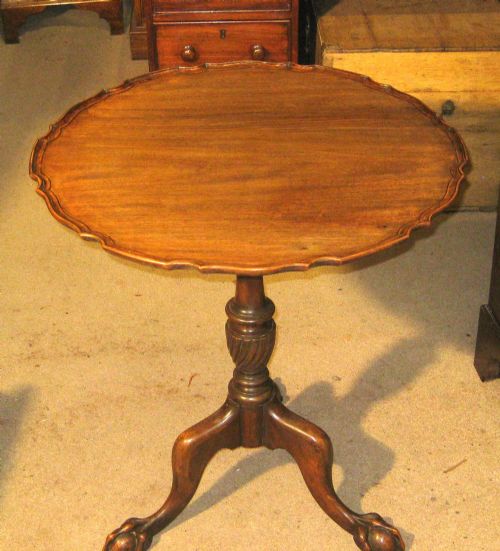
The most frequent examples on this page are mahogany and walnut pieces featuring pie crust or gadrooned borders, often supported by tripod bases or tilt-top mechanisms. These versatile items served historically for tea, dining, display, and general parlor use.
Makers and makers' marks occasionally appear, with pieces recorded from workshops such as Shapland and Petter or bearing labels from retailers like McKeon's of Liverpool. Regional variations also emerge, including French etageres, Anglo-Indian campaign silver tables, and Kashmiri walnut trays.
How they were made
Cabinet makers utilised dense hardwoods including mahogany, oak, and multiple varieties of walnut, such as burr and figured walnut, selected for their rich grain patterns. Inlays of marquetry and contrasting timbers like satinwood added surface decoration to table tops and occasional stands.
Moulded edges, specifically pie crust and gadrooned profiles, required precise hand carving from solid timber or thick veneer. Mechanical elements such as birdcage supports and tilt-top mechanisms allowed tables to pivot and lock into position for convenience or storage.
Carved Edge Table Retail Price Guide 2026
Typical asking prices for carved edge table among the pieces listed under this phrase on Sellingantiques today, from the lower quarter to the upper quarter. They describe what is for sale here now, not the wider market.
Listings feature woods like solid mahogany, oak, and burr walnut, alongside specialised forms including Anglo-Indian campaign silver tables and French etageres.
What varies in quality
The standard of carving distinguishes standard production from superior pieces, with crisp undercutting on pie crust borders and fluid lines on tripod legs marking out finer examples. The choice and matching of timber veneers, particularly burr and figured walnut, heavily influence the visual depth of the top.
Structural integrity depends on the precision of the joining work in tilt-top mechanisms and birdcage supports, where smooth movement without excessive play indicates careful original assembly. Provenance, such as attributed maker workshops or intact retailer labels, further elevates the standing of an individual piece.
Shapland and Petter
The Carved Edge Table Glossary
- Pie crust edge
- A raised, scalloped border carved along the perimeter of a circular table top, resembling pastry crimping. This decorative detail is frequently found on Georgian and later tripod tables.
- Tilt top
- A mechanism allowing the table top to pivot ninety degrees and lock vertically when not in use. This clever design saved floor space in smaller eighteenth and nineteenth-century rooms.
- Birdcage
- A revolving wooden framework beneath a tilt top that allows the table surface to rotate independently of the central pillar. It provides smooth articulation and stability.
- Gadrooned edge
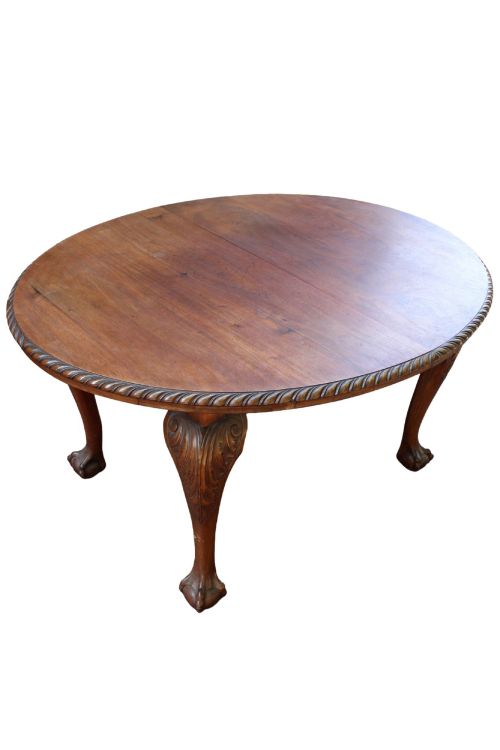
- A decorative carved moulding featuring parallel convex curves or fluting, often running around the edge of table tops or rails. It appears commonly on Edwardian and Victorian mahogany designs.
- Burr walnut
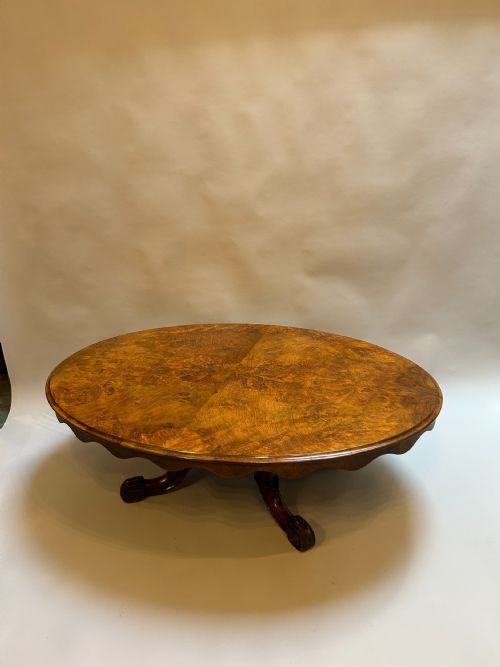
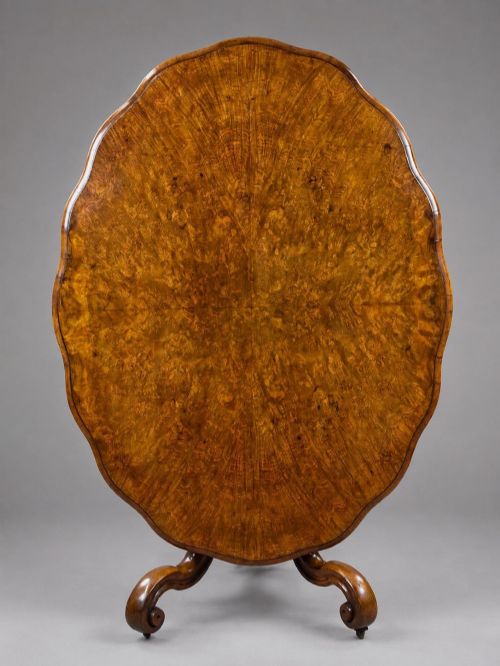
- Timber taken from the gnarled growths of walnut trees, prized for its swirling, highly figured grain patterns. Cabinet makers utilised it extensively for veneering luxury table tops.
Carved Edge Table: Frequently Asked Questions
What is a pie crust table used for?
These tables served primarily as occasional furniture for tea service, holding lamps, or displaying decorative objects in formal reception rooms. Their raised edges prevented items from sliding off when the surfaces were in active daily use.
Today, they function well as compact coffee tables or lamp tables beside seating areas, adding traditional character and useful surface space to living rooms.
How does a tilt top mechanism work?
A pivot block beneath the top connects to a catch or brass latch, allowing the surface to fold flat against the central pillar. This enabled historical households to store tables against walls when space was required for other activities.
When examining a tilt top, check that the pivot pin and catch engage securely to hold the surface level and steady during everyday use.
How do I identify a George III table?
George III pieces date from the latter half of the eighteenth century into the early nineteenth century, typically constructed from solid mahogany with hand-carved tripod bases. Look for proportional elegance, slender cabriole legs terminating in pad or claw-and-ball feet, and crisp hand-tooled borders.
Later revival pieces from the Victorian and Edwardian periods often replicate these Georgian proportions, making timber age, patination, and construction joints key indicators of original date.
Where should I place a tripod table?
Tripod bases with three splayed legs fit easily into corners, beside armchairs, or between windows where four-legged tables might obstruct pathways. Their compact circular footprints make them adaptable for smaller spaces throughout the home.
Ensure the floor is level so the three-footed base rests evenly without rocking, and avoid placing them in direct sunlight to protect antique timber finishes.