

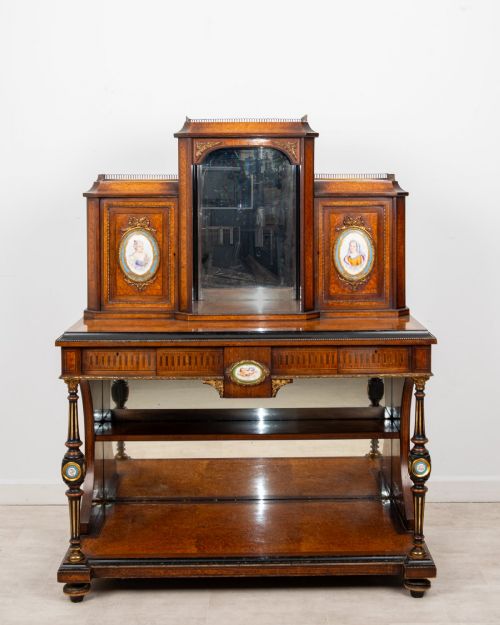
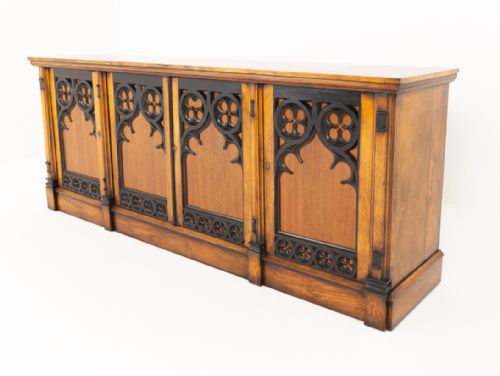


Carved Ebonised Cabinet
A carved ebonised cabinet brings deep colour and dramatic relief to a room, offering rich visual weight and practical storage through dark timber.
Carved Ebonised Cabinet
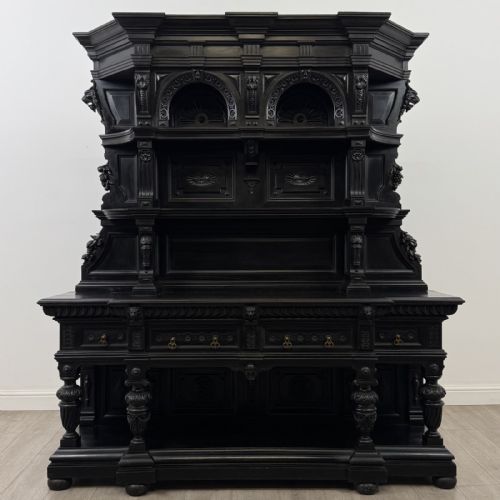
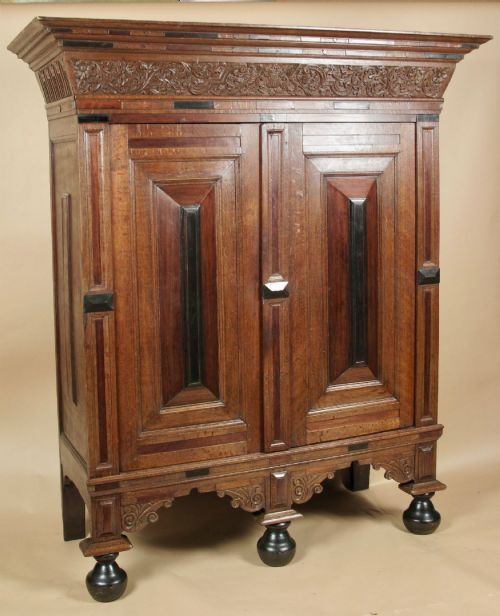
A carved ebonised cabinet encompasses a varied group of dark-stained or blackened timber furniture pieces spanning several centuries. The selection ranges from substantial seventeenth-century continental armoires and kasts to nineteenth-century Victorian pier cabinets, music cabinets, and writing desks.
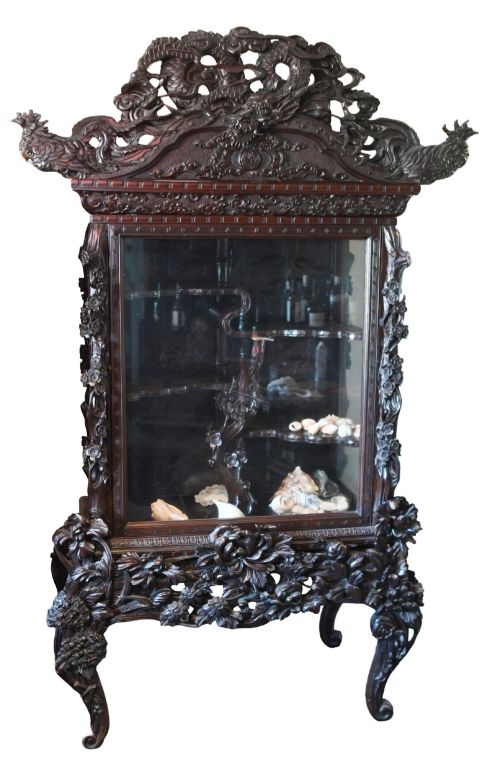
Buyers will encounter diverse regional interpretations, including Dutch Baroque forms, French Napoleon III designs, Aesthetic Movement pieces, and Japanese Taisho era display cabinets. Sideboards, pedestals, and wall shelves also appear within this dark-toned grouping.
Materials and construction
The construction relies on underlying timbers such as oak, rosewood, amboyna, pitch pine, and walnut, which are then ebonised to resemble solid ebony. Cabinetmakers employed staining and polishing techniques alongside intricate hand carving to create high-contrast decorative surfaces.
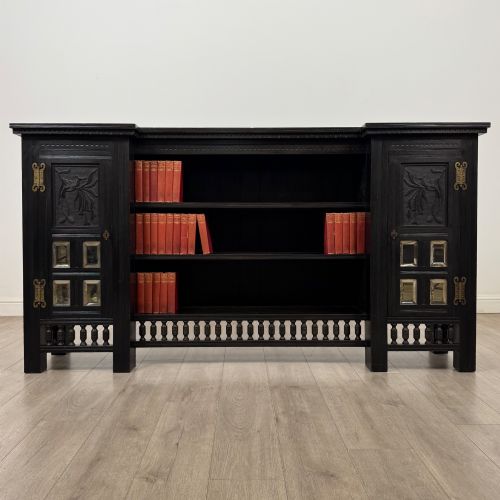
Many examples incorporate secondary materials like brass mounts, metal details, ceramic plaques, and inset marble tops to punctuate the dark timber. Marquetry inlay and panel construction provide structural stability while enhancing the decorative programme of the piece.
Carved Ebonised Cabinet Retail Price Guide 2026
Typical asking prices for carved ebonised cabinet among the pieces listed under this phrase on Sellingantiques today, from the lower quarter to the upper quarter. They describe what is for sale here now, not the wider market.
Understanding quality differences
Quality reveals itself in the crispness and depth of the hand carving, the choice of secondary woods, and the integration of contrasting elements such as brass mounts or porcelain plaques. Finer examples display meticulous attention to detail in the ebonised finish and joinery.
The integrity of the original timber and the restraint or ambition of the decorative style distinguish standard utility items from exhibition-grade furniture. Maker attribution and period provenance further elevate certain pieces within the range.
Henry Ogden & Son
The Carved Ebonised Cabinet Glossary
- Ebonised
- Timber treated with stain, dye, or paint to imitate the dark, dense appearance of true ebony. This finish gained immense popularity during the Victorian and Aesthetic Movement periods.
- Kast
- A large, heavy seventeenth-century Dutch or Flemish wardrobe or cupboard typically constructed from oak and accented with rosewood or ebony. These pieces often feature prominent architectural mouldings and deep paneling.
- Amboyna
- A highly prized exotic wood derived from the burl of the narra tree, known for its intricate, swirled grain pattern. It provides a warm, golden-brown contrast against ebonised framing.
- Pier Cabinet
- A narrow display cabinet designed specifically to fit the wall space between windows. They frequently feature glazed doors and delicate ebony details or mounts.
- Aesthetic Movement
- A late nineteenth-century design style that emphasised visual beauty over narrative subject matter. Cabinets from this movement often reflect Anglo-Japanese or simplified geometric influences.
Carved Ebonised Cabinet: Frequently Asked Questions
Where should I place a dark cabinet?
Position the piece against a lighter wall colour to let the dark silhouette and carved details stand out clearly. Avoid direct, intense sunlight, which can fade the ebonised finish and dry out the underlying wood over time.
Ensure the room maintains stable humidity levels to protect older timber and delicate veneer work. Generous floor space helps balance the visual weight of substantial pieces like armoires or credenzas.
How do I date a nineteenth-century piece?
Examine the secondary woods visible inside drawers and on the back panels for clues to the period of construction. Tool marks, screw types, and construction methods often indicate whether a piece originates from the early Victorian era or the later Aesthetic Movement.
Look for stylistic markers such as Gothic revival elements or Japanese-inspired motifs. Documentation, maker stamps, and historical design registrations also help narrow down the production decade.
What is the difference between a kast and an armoire?
A kast is a traditional Dutch or Flemish storage cabinet from the seventeenth century, characterised by massive proportions and architectural pediments. They usually disassemble into multiple sections for transport.
An armoire is a general term for a French wardrobe or movable cupboard, which evolved through various revival styles during the nineteenth century. Armoires tend to feature lighter proportions and distinct regional detailing.