

Carved Dining Sideboard
A carved dining sideboard anchors a room with substantial timber and deep relief, offering enduring surface space and generous storage for formal service.
Carved Dining Sideboard
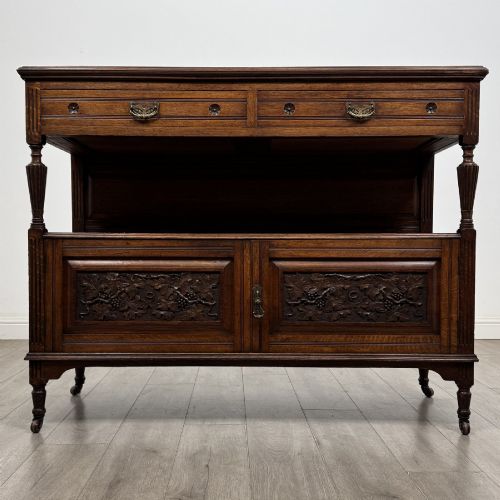
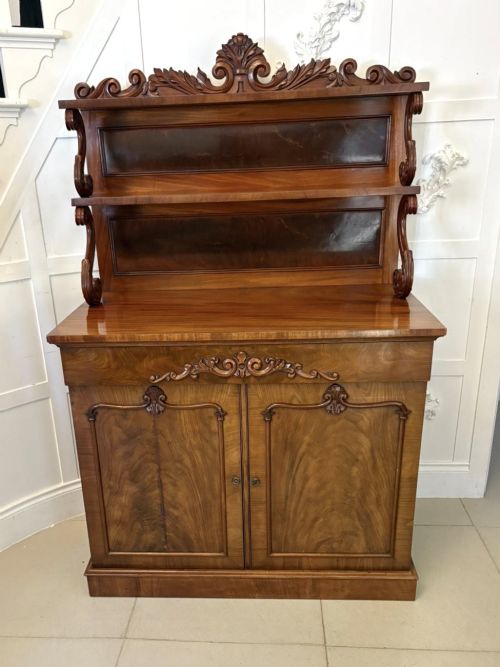
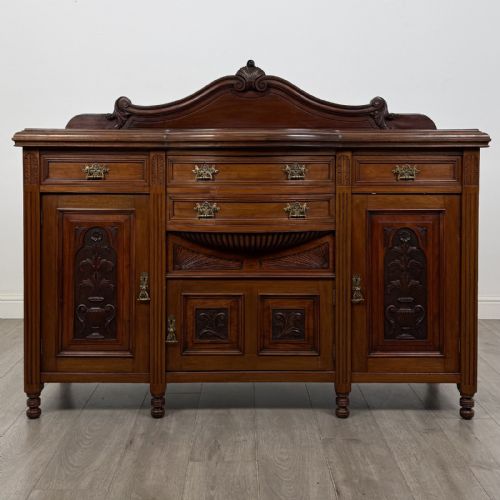
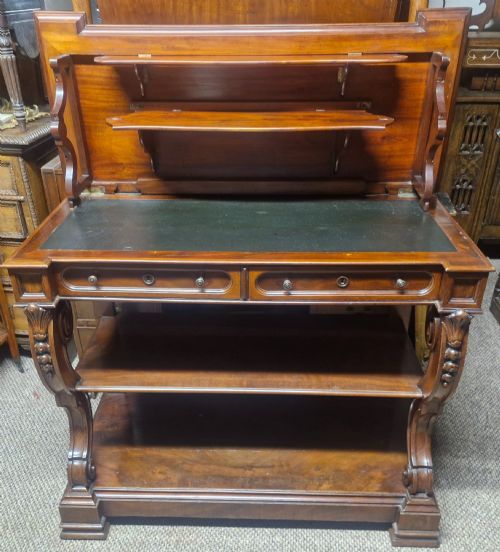
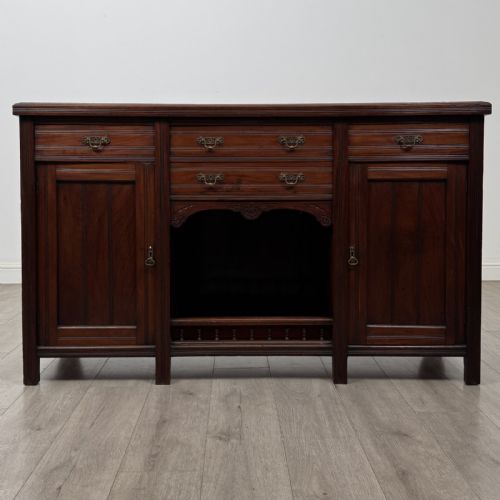
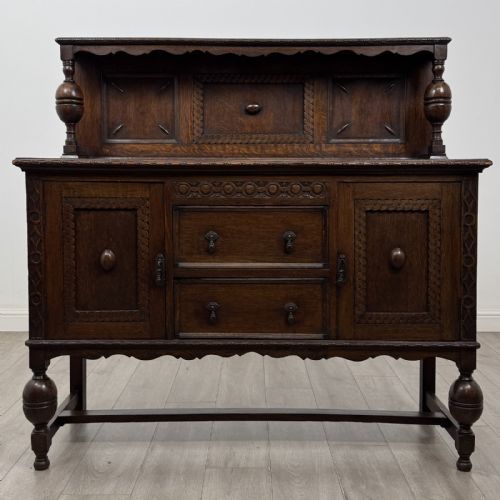
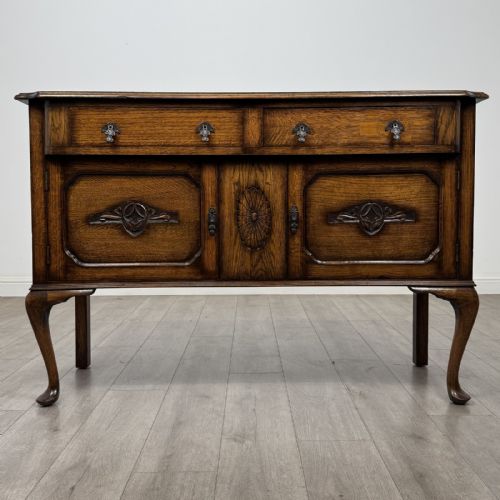
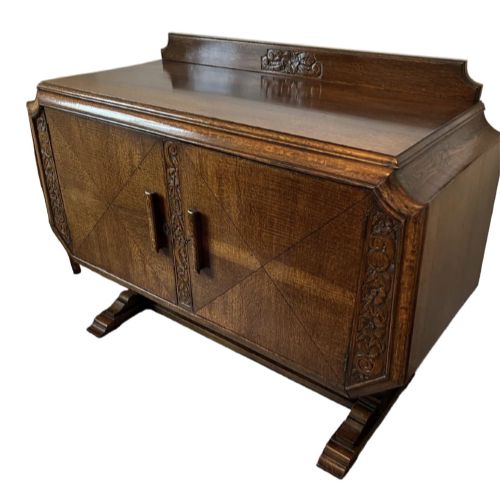
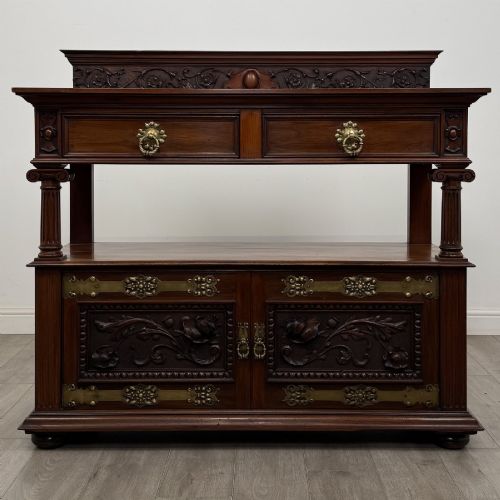
A carved dining sideboard serves as a commanding focal point in a formal dining room, combining heavy timber construction with elaborate surface decoration. These pieces arrive in forms ranging from grand Victorian mirror backs to compact Edwardian pedestals and robust oak cupboards.
The most common examples encountered on this page stem from the Victorian and Edwardian eras, alongside pieces bearing Jacobean Revival or Arts and Crafts influence. Buyers regularly select these items to house tableware, linens, and dining room essentials within deep cupboards and drawers.
Origins span across British workshops and continental makers, utilising timbers suited to heavy domestic service. The inventory draws heavily from the nineteenth and early twentieth centuries, capturing shifts from formal mahogany grandeur to robust carved oak.
Materials and Construction
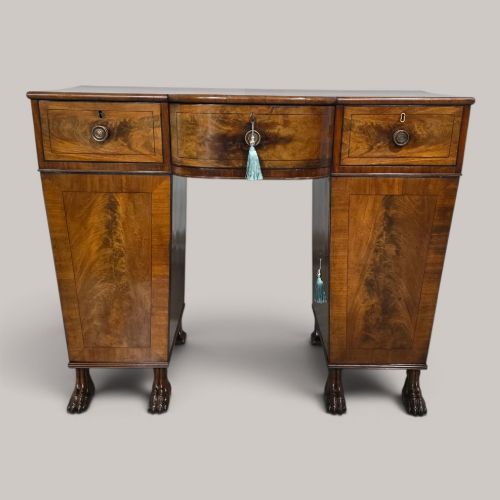
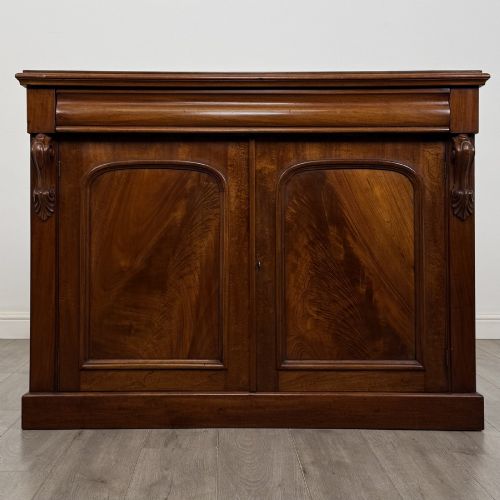
Makers utilised solid oak and rich mahogany as primary structural timbers, frequently applying burr walnut, flame mahogany veneer, or satinwood to visible drawer fronts and doors. These hardwoods provided the necessary density to support deep relief carving, stretcher bases, and heavy marble tops.
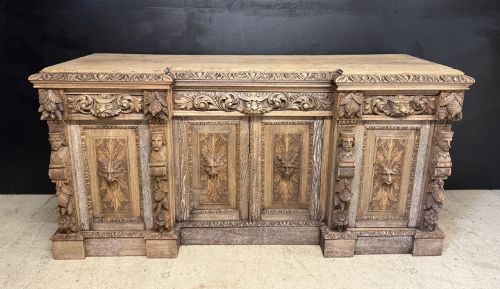
Joinery techniques relied on dovetailed drawer construction and robust framing to withstand the daily weight of silver, glass, and heavy crockery. Decorative elements incorporate brass hardware, glass panels, and iron fittings alongside hand-chiselled ornamentation such as green man motifs.
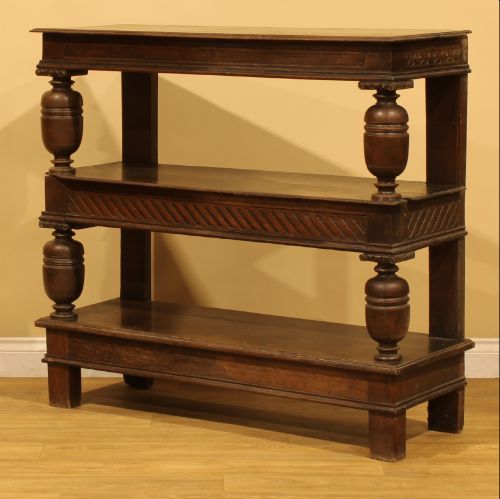
Carving was executed directly into the solid timber or applied as distinct mouldings, particularly around mirror frames, galleries, and stretcher bases. Polishing methods built a deep lustre upon the wood grain, highlighting the natural figure of pollard oak and figured mahogany.
Carved Dining Sideboard Retail Price Guide 2026
Typical asking prices for carved dining sideboard among the pieces listed under this phrase on Sellingantiques today, from the lower quarter to the upper quarter. They describe what is for sale here now, not the wider market.
Several Victorian oak pieces feature woodland green man carvings peering out from the foliage to watch over the dining room.
The Spectrum of Execution
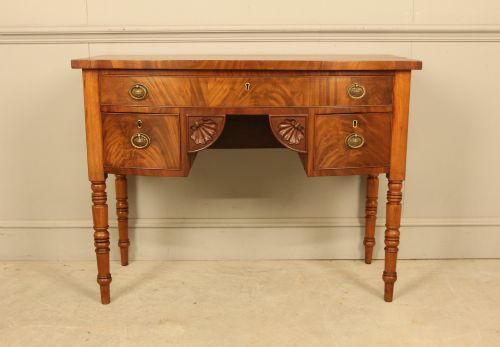
Superior examples distinguish themselves through the crispness of hand-carved relief work and the careful selection of figured wood veneers. Master craftsmen devoted meticulous attention to symmetrical grain matching across large cupboard doors and serpentine drawer fronts.
Construction depth separates standard utility items from monumental display pieces, notably in the inclusion of integrated mirror backs, carved galleries, and substantial pedestals. The integrity of the original hardware, marble surfaces, and internal cutlery fittings further elevates the standing of a piece.
The Carved Dining Sideboard Glossary
- Chiffonier
- A compact sideboard or low cabinet equipped with drawers and enclosed shelving, often featuring a raised shelf or small superstructure on top. This form gained popularity during the nineteenth century for smaller dining rooms and parlours.
- Credenza
- A sideboard or buffet piece designed for serving food and displaying decorative objects, frequently incorporating mirror backs and marble tops in Victorian iterations. The term originates from Italian dining traditions.
- Stretcher base
- An internal framework of horizontal timber beams connecting the lower legs of a piece to provide structural rigidity and visual weight. Such bases often feature elaborate central carvings.
- Green man
- A sculptural architectural motif depicting a human face disgorging foliage, vines, or branches from the mouth. This ancient symbol appears frequently on revival and Arts and Crafts oak carvings.
- Pedestal sideboard
- A heavy form featuring two distinct cabinet pedestals flanking a central recess or serving surface. These monumental units typically offer extensive storage behind panelled doors.
Carved Dining Sideboard: Frequently Asked Questions
How do I care for antique wood?
Maintain the timber by applying a quality beeswax polish periodically to nourish the grain and protect the polished surface from drying out. Keep the piece away from direct heat sources and strong sunlight to prevent veneer lifting.
Dust regularly with a soft, dry cloth rather than synthetic dusters that might scratch the historical finish. Treat marble tops with gentle soap and water, avoiding acidic cleaners.
Where should I place my sideboard?
Position the piece against a principal wall in a dining room or spacious hallway where its depth and decorative back can be appreciated. Ensure the floor is level so that heavy doors and drawers operate smoothly without binding.
Allow sufficient clearance in front of the unit for drawers and cupboard doors to open fully during service. Keep the piece clear of damp exterior walls to preserve the internal timber construction.
How do I identify the wood type?
Examine the grain pattern and colour tone closely, noting that oak displays distinct medullary rays while mahogany presents a reddish-brown depth. Burr walnut and flame mahogany exhibit swirling, highly figured patterns selected specifically for visual impact.
Inspect unpolished interior surfaces or drawer linings to confirm the true primary timber beneath exterior veneers. Differences in weight and hardness also help distinguish dense hardwoods like satinwood from softer regional timbers.
What is a mirror back sideboard?
A mirror back sideboard integrates a large vertical mirror, often surrounded by carved wooden frames and small display shelves, into the superstructure of the unit. This design reflects light around the dining room and showcases decorative glassware.
These impressive forms dominated Victorian dining interiors, combining functional storage with grand architectural display. The glass is typically bevelled and secured within heavy wooden rebates.