



Carved Desk Inkwell
A carved desk inkwell brings nineteenth-century character to a modern desk through intricate woodwork and animal figures.
Carved Desk Inkwell
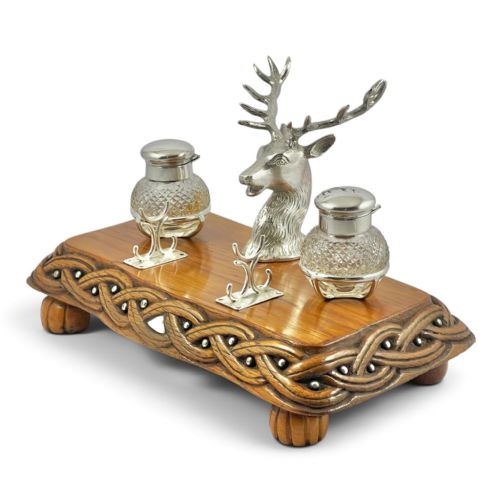
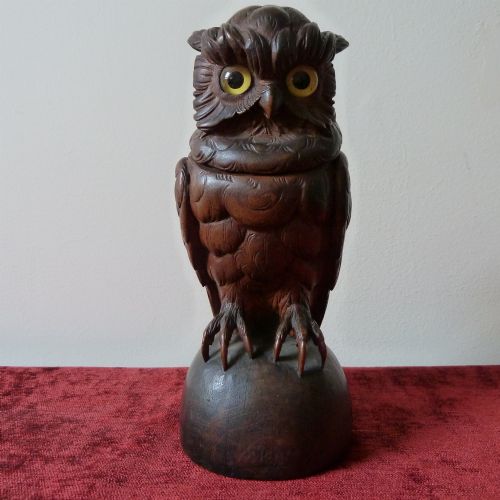
A carved desk inkwell combines practical writing equipment with figurative woodcarving, most frequently encountered in the Black Forest style from the Victorian and Edwardian eras. These desk accessories take the form of domestic and wild animals, including bears, owls, cats, and dogs, carved in deep relief from oak, linden wood, and ebony.
Beyond continental European woodcarvings, the selection includes Scottish silver-mounted oak stands, Italian Neapolitan marble desk sets with lava cameos, and Anglo-Indian brass pieces. Collectors also encounter larger desk tidies featuring built-in drawers and paired glass inserts.
The primary forms range from single hinged animal figures holding glass wells to elaborate inkstands accommodating pens, stamps, and twin containers. Most surviving examples date between the mid-nineteenth century and the early twentieth century, reflecting the heavy reliance on handwritten correspondence during those periods.
Materials and construction methods
Makers utilised native hardwoods such as oak, linden wood, and ebony, relying on hand-carving gouges and chisels to build up fur, feathers, and anatomical details. Black Forest carvers favoured linden wood for its fine grain, which allowed for deep undercut reliefs and expressive animal portraits.
Metal components such as brass, silver, and gilded bronze were integrated to form hinges, decorative mounts, and interior collars. Blown or moulded glass liners sat inside the carved housings to hold liquid ink safely without damaging the surrounding timber or stone.
Stone variants employed dense materials like onyx, lapis, and prato verde marble, often embellished with inlaid minerals or carved lava portrait cameos. These heavy mineral bases provided a stable platform for dipping pens and lifting heavy lids.
Carved Desk Inkwell Retail Price Guide 2026
Typical asking prices for carved desk inkwell among the pieces listed under this phrase on Sellingantiques today, from the lower quarter to the upper quarter. They describe what is for sale here now, not the wider market.
Dogs and bears dominate the menagerie, but cats peering out from boots offer a lighter touch of Victorian desk humour.
Distinguishing quality in carved inkwells
The fineness of the carving separates standard desk pieces from exceptional sculptural works, particularly in the rendering of animal expressions, musculature, and fur texture. Superior carvers avoided stiff symmetry, creating lifelike postures with deep undercuts that catch the light.
Material selection and hardware integrity dictate the longevity and overall finish of the piece. High-grade examples feature heavy, clear glass inserts that fit flush into the housing, alongside robust metal hinges that secure the lid without sagging or straining the surrounding carved wood.
A. MARIONNET·Maison F. Mack
The Carved Desk Inkwell Glossary
- Black Forest
- A style of woodcarving originating from the mountainous region of central Europe during the nineteenth century. It is known for realistic animal figures and foliage motifs.
- Inkstand
- A complete desk set comprising one or more inkwells alongside trays for pens, wafers, and sealing wax. These larger pieces served as the centrepiece of a writing table.
- Desk tidy
- A compartmentalised desk accessory designed to hold small stationery items such as stamps, nibs, and paper clips alongside the ink reservoir.
- Cameo intaglio
- A gemstone, shell, or lava carved in relief with a portrait or classical scene. These decorative panels occasionally ornament nineteenth-century Italian marble inkstands.
- Prato verde
- A mottled green Italian marble utilised for nineteenth-century Grand Tour souvenir desk stands and architectural ornaments.
Carved Desk Inkwell: Frequently Asked Questions
What is a carved desk inkwell?
A carved desk inkwell is a nineteenth-century desk accessory that combines a glass ink reservoir with an ornamental housing carved from wood, marble, or metal. They often feature figurative designs such as animals or architectural motifs.
These pieces were produced to hold liquid ink safely on a writing table while serving as decorative objects in Victorian and Edwardian studies.
How do I date a wooden inkwell?
Dating relies on examining the wood species, carving style, hinge construction, and the type of glass insert. Pieces from the Victorian and Edwardian periods often display distinct regional carving traits, such as the naturalistic animal forms associated with Black Forest workshops.
Matching the object type with period styles like Scottish Baronial or Arts and Crafts helps narrow down the decade of manufacture between eighteen-fifty and nineteen-hundred.
Are the glass inserts original?
Many surviving desk pieces retain their original blown or moulded glass ink inserts, though replacements are common due to breakage over decades of use. An original insert typically fits the interior housing precisely without excessive movement.
Collectors look for matched glass liners that show period-appropriate wear and manufacturing bubbles consistent with nineteenth-century glassmaking.
How should I clean a carved wooden inkwell?
Dusting with a soft, dry brush helps remove debris from deep carved recesses in the wood without introducing moisture. Avoid chemical cleaning agents and excessive water, which can damage aged timber and loosen metal hinges.
Applying microcrystalline wax occasionally helps preserve the finish of nineteenth-century wood surfaces while maintaining the natural patina.