

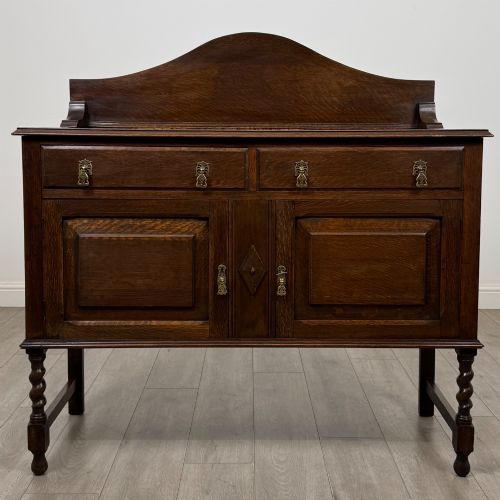
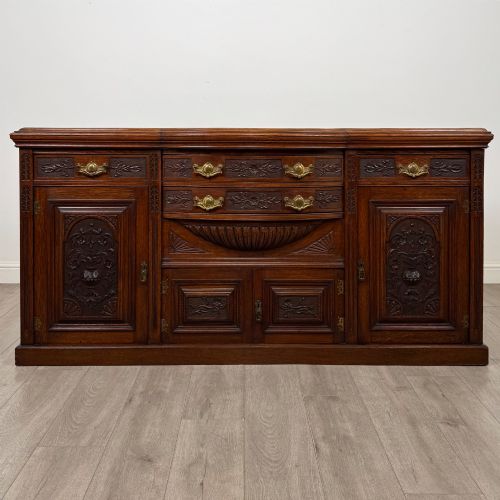
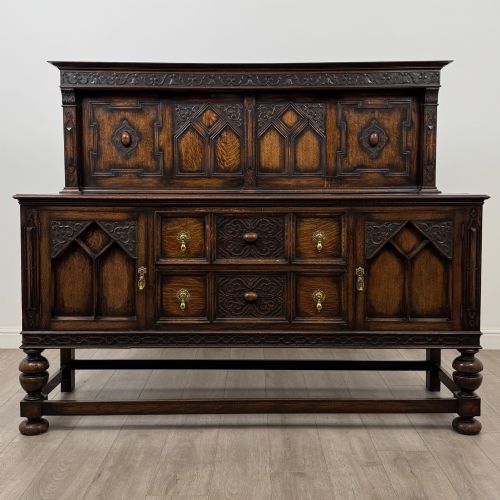
Carved Dark Oak Cupboard
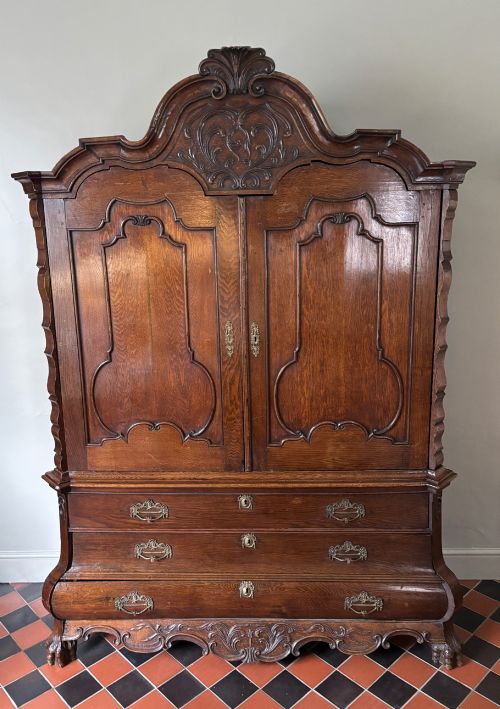
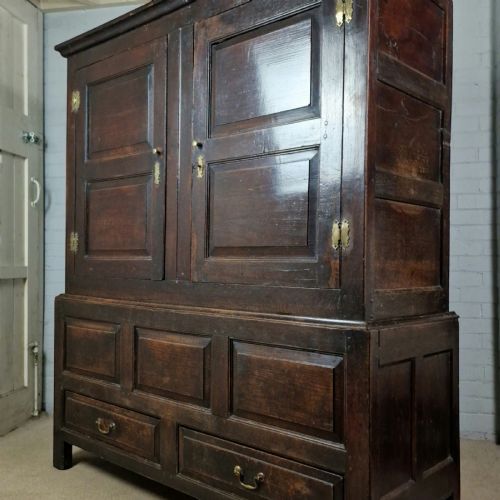
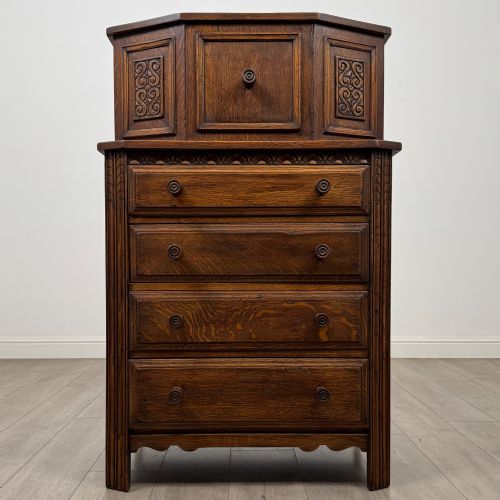
A carved dark oak cupboard is a robust storage piece bringing deep timber grain and traditional joinery to a room.
Carved Dark Oak Cupboard
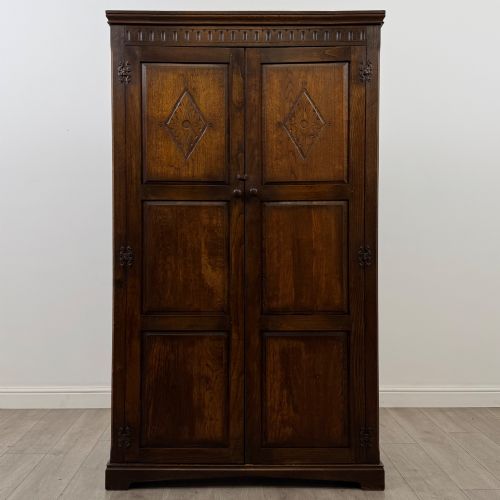
A carved dark oak cupboard is a sturdy timber storage piece designed to house household goods, vestments, or provisions. These forms range from seventeenth-century court cupboards and eighteenth-century house keepers cupboards to nineteenth-century sideboards and twentieth-century wardrobes.
The versions most commonly met on this page span the Edwardian period, the Victorian era, and the seventeenth century, alongside revivalist pieces built in Jacobean and Tudor styles. Objects appear as wall hanging cabinets, bedside lockers, and large floor-standing display units.
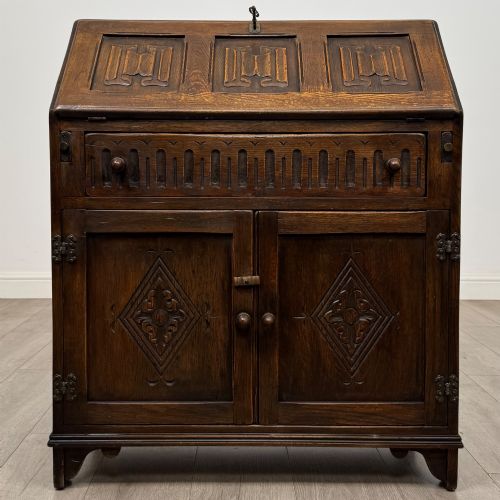
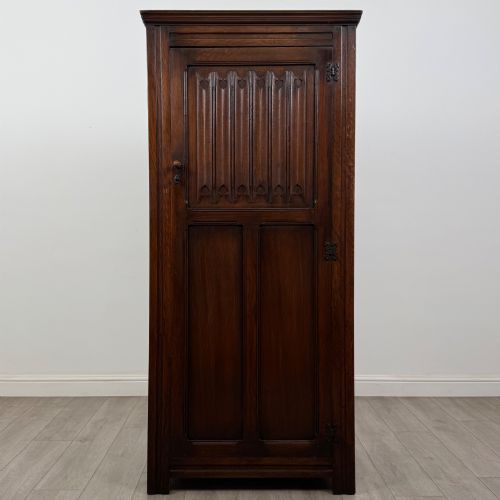
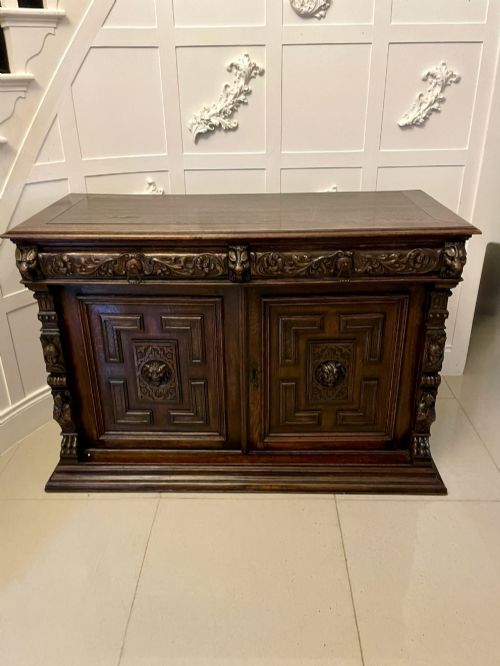
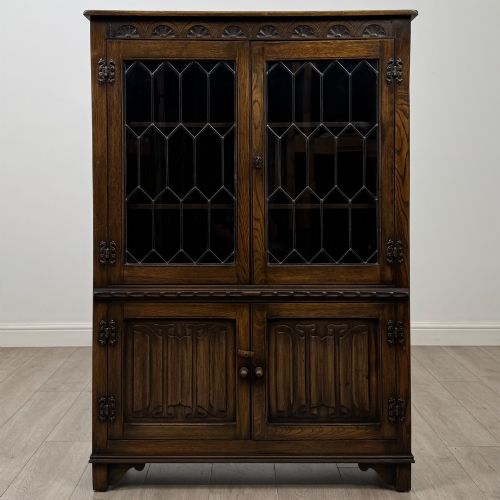
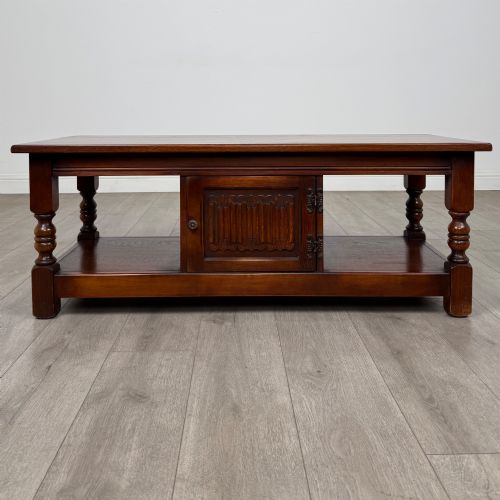
Makers utilised oak alongside iron, brass, and glass fittings to construct these heavy items. The surface decoration relies heavily on traditional carving techniques such as linenfold panels and geometric mouldings.
How they were made
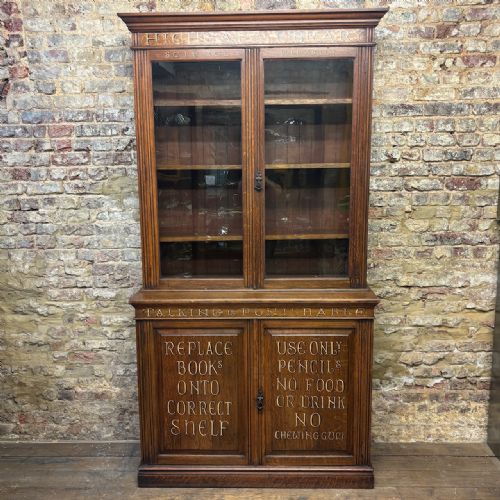
Makers constructed these cupboards using solid oak planks held together with traditional joinery methods, supplemented by iron and brass hinges, handles, and locks. Glazed doors incorporate glass panes secured with lead framing where display storage was required.
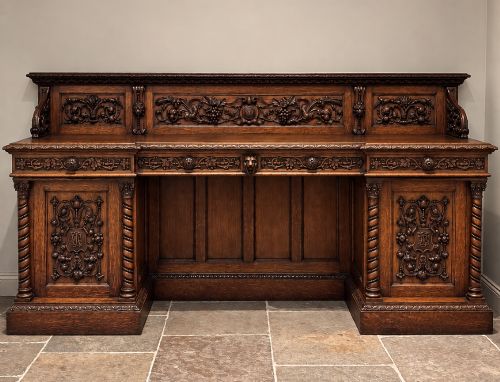
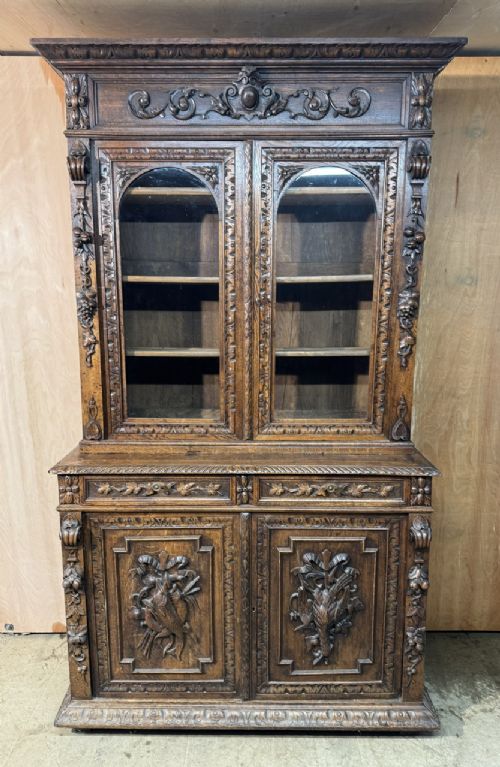
Surface embellishment relies on hand carving, producing low-relief floral patterns, linenfold panels, and barley twist columns. Many seventeenth-century and revivalist examples employ joined framework construction where panels float within grooved stiles and rails to allow for timber movement.
Several cupboards hide secrets behind linenfold panels and heavy iron keys.
What varies in quality
The standard of a carved dark oak cupboard depends on the depth and crispness of the hand carving and the selection of the timber board. Pieces featuring finely figured grain and well-executed relief work show greater care in manufacture than those with mechanical or shallow incision.
Structural integrity also separates examples, seen in the tightness of the joints and the original condition of the brass and iron hardware. Finer pieces retain their heavy panel doors and original hinges without excessive sagging or later timber replacement.
The Carved Dark Oak Cupboard Glossary
- Court cupboard
- A traditional English enclosed piece of furniture used for storing food and displaying plate, often featuring upper and lower tiers.
- Linenfold
- A style of relief carving used on wooden panels to imitate folded cloth, popular in Tudor and revivalist cabinet work.
- Barley twist
- A turned column or furniture leg carved in a helical spiral shape resembling a twisted rope.
- Joined oak
- Furniture constructed using mortise and tenon joints secured with wooden pegs rather than modern metal fasteners.
- Tridarn
- A traditional Welsh three-tiered cupboard used for storage and display, appearing in eighteenth-century inventories.
Carved Dark Oak Cupboard: Frequently Asked Questions
Where should I place a dark oak cupboard?
These substantial storage pieces suit dining rooms, hallways, or living spaces where their dark timber tones complement traditional or rustic interiors. Wall-hanging versions fit smaller spaces, while large wardrobes and sideboards require substantial wall space.
Keep these wooden items away from direct heat sources and strong sunlight to prevent the oak from drying out or splitting. Maintaining stable room humidity preserves both the timber and the original iron or brass fittings.
What is the difference between a court cupboard and a sideboard?
A court cupboard is a traditional form featuring enclosed upper and lower sections, often associated with seventeenth-century joinery and formal plate display. Sideboards emerged later, during the Georgian and Victorian periods, designed primarily for serving food and storing dining linen.
Court cupboards frequently display elaborate linenfold panels and carved columns. Sideboards offer broader flat surfaces on top with lower cabinet doors and drawers arranged horizontally.
How do I care for antique dark oak?
Care involves dusting regularly with a soft cloth and occasionally applying traditional beeswax to nourish the dry timber surface. Avoid modern silicone sprays or harsh chemical cleaners that can damage the antique finish.
Ensuring the room maintains a moderate temperature prevents the oak from warping or cracking over time. Gentle handling of brass and iron handles preserves the original metalwork.