

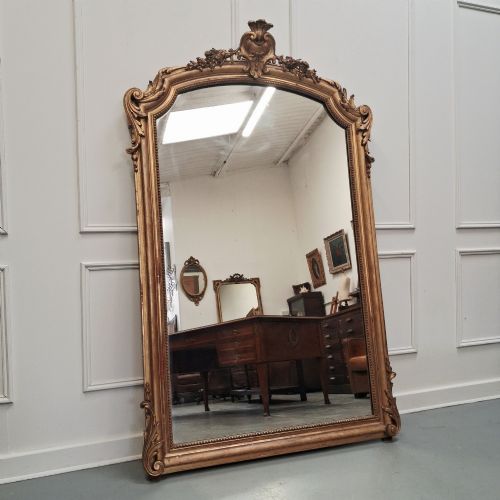
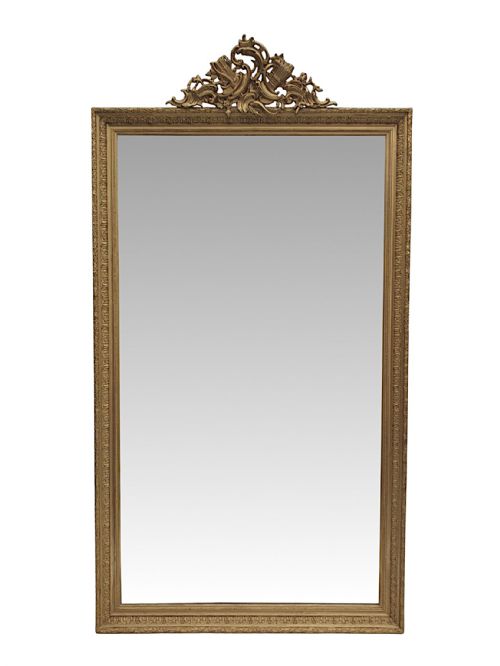
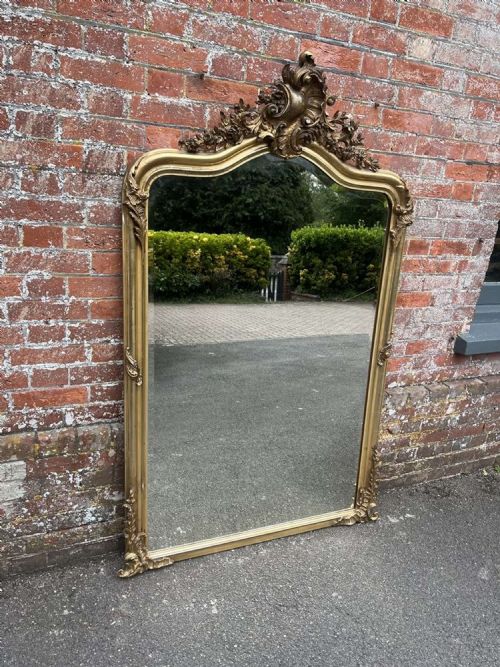
Carved Crested Mirror
A carved crested mirror brings architectural weight and reflected light to a room through ornate timber frames and sculptural top ornaments.
Carved Crested Mirror
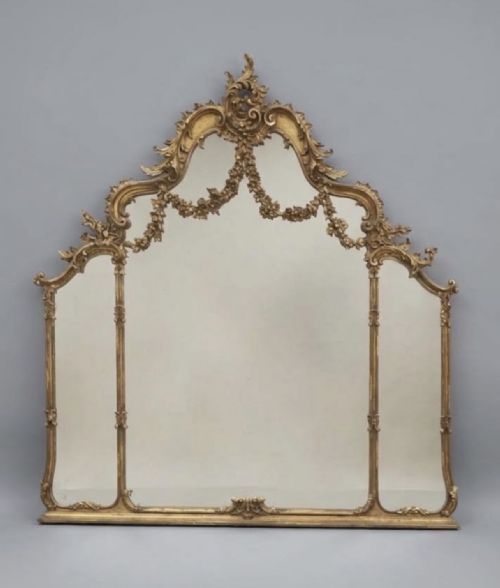
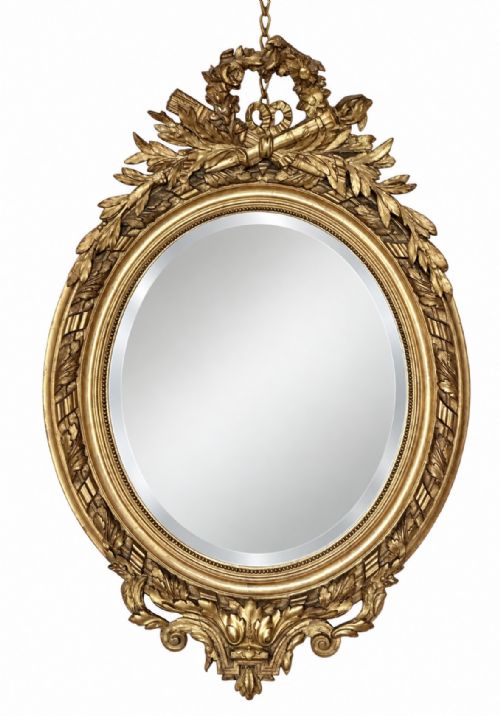
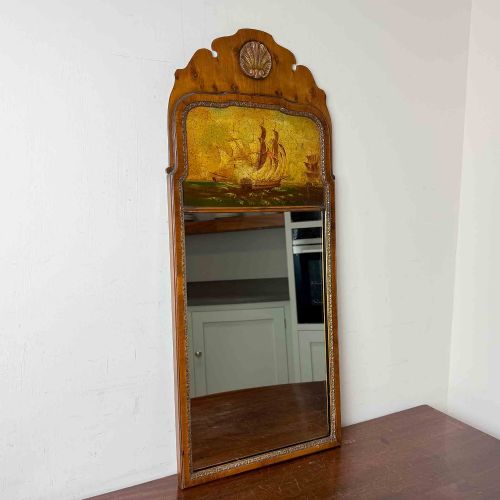
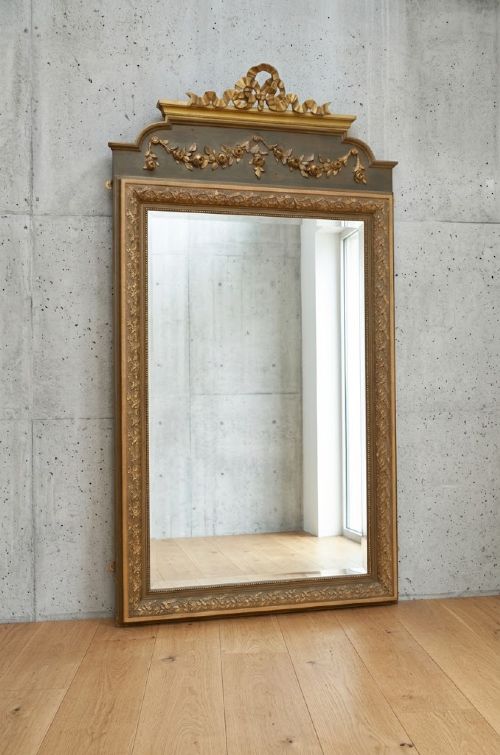
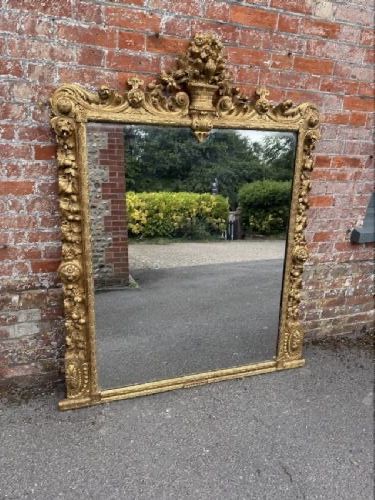
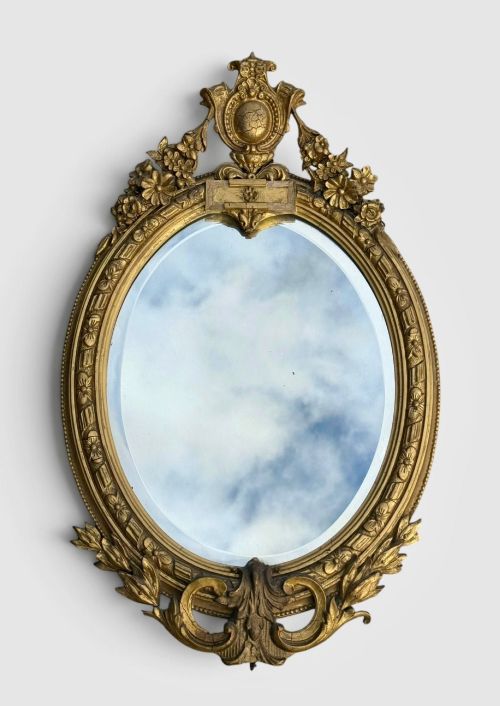
A carved crested mirror functions as a focal point in period interiors, drawing the eye upward with elaborate wooden or gesso ornamentation mounted above the main glass plate. These pieces appear across diverse historical forms, including tall overmantels, narrow pier glasses, and circular convex frames.
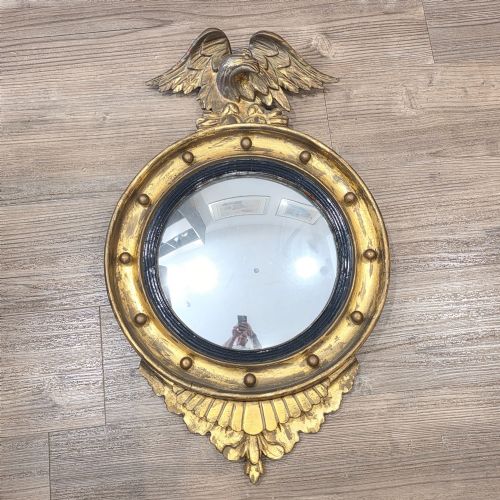
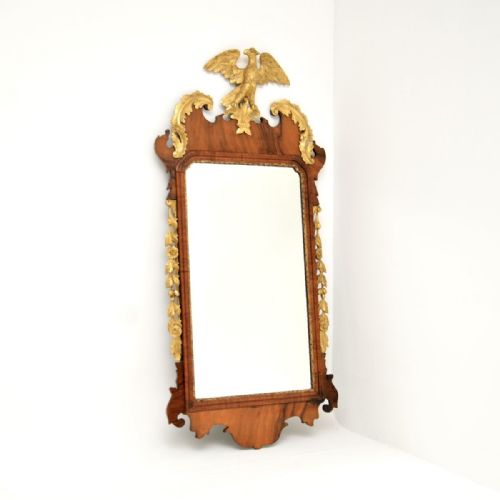
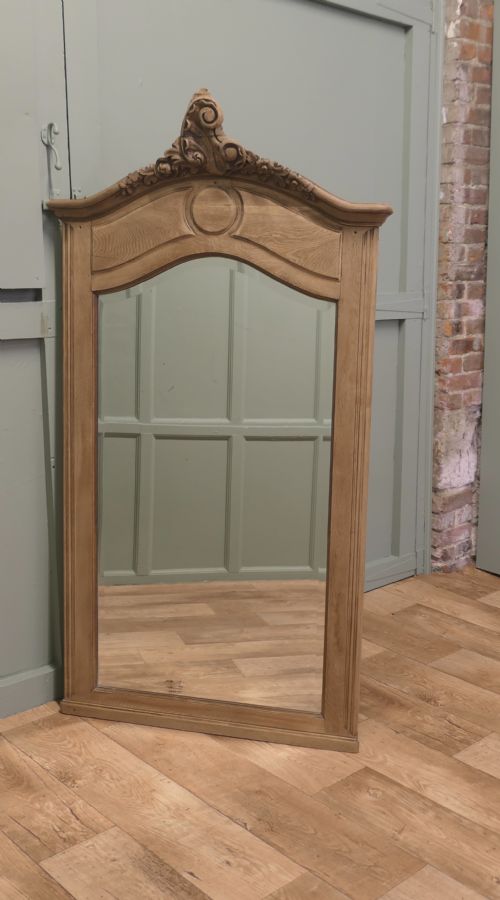
The most common examples on this page date from the nineteenth century, reflecting French and English revival tastes that favoured architectural presence. Buyers frequently encounter pieces featuring giltwood finishes, arched tops, and sculptural crests such as spread eagles or ribbon bows.
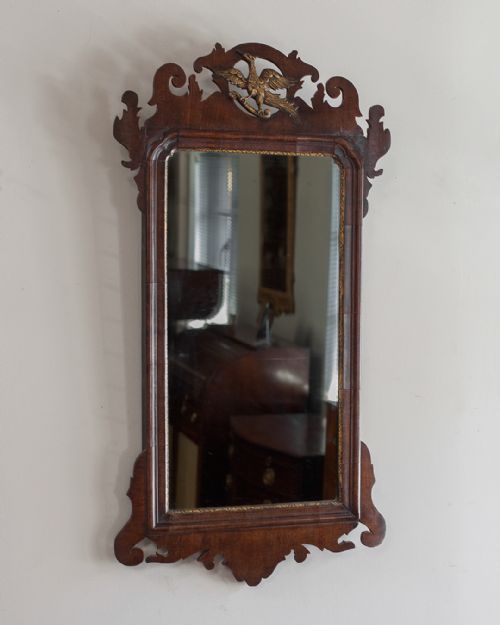
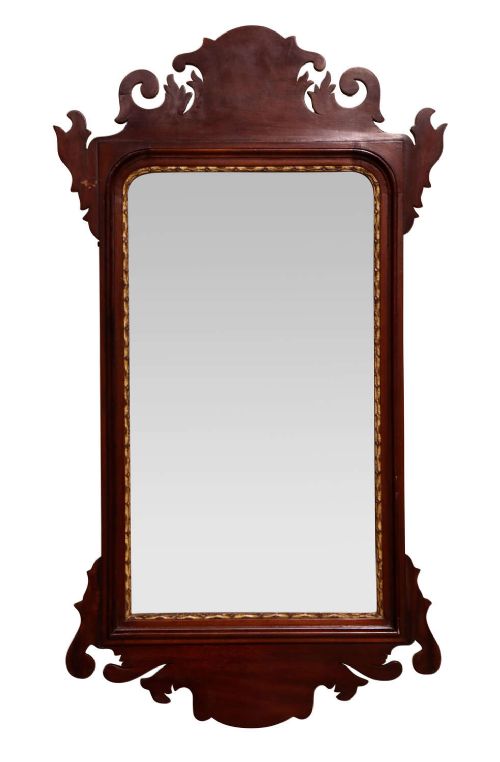
Earlier eighteenth-century variations tend toward mahogany fretwork frames or rococo designs with carved masks and asymmetrical scrolls. Later nineteenth-century interpretations incorporate ebonised wood, bleached oak, and distinct regional styles like Victorian Chippendale revivals.
Materials and construction
Carved crested mirrors rely on foundational timbers such as mahogany, yew, oak, and pine, which provide the structural strength needed to support heavy glass and projecting top ornaments. Artisans shaped these woods through hand carving and fretwork before applying decorative surface treatments.
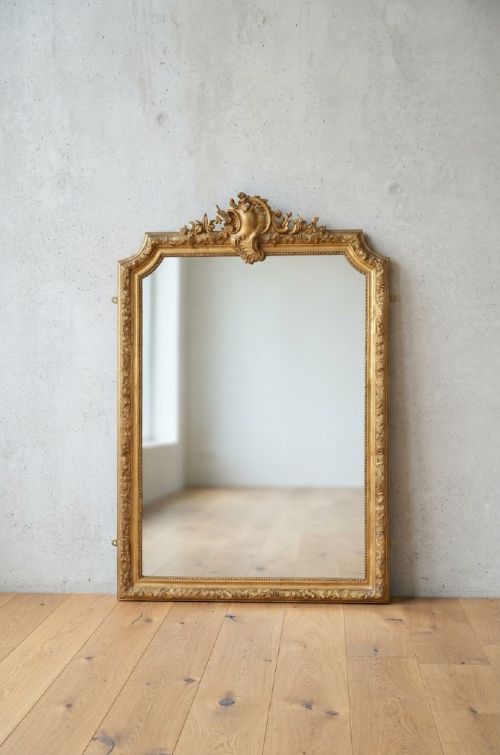
Giltwood and gesso pieces utilise layers of plaster applied over timber bases, often enriched with gold leaf or silver-gilt to achieve a luminous finish. Many nineteenth-century examples combine carved wooden elements with moulded gesso crests to create complex relief decoration.
Watch for watchful spread eagles perched atop nineteenth-century convex frames, keeping a glassy eye on the room below.
Assessing craftsmanship
Quality reveals itself in the depth and crispness of the carved ornament, where master carvers achieved sharp undercut details rather than soft, flat moulded contours. The integration of the crest to the main frame demonstrates the maker's joinery skill, ensuring the prominent upper decoration remains secure.
The selection of the underlying materials also separates standard production from finer work, visible in the choice of dense, well-figured mahogany or the even application of genuine gold leaf over prepared gesso grounds. Original mirror glass, whether flat or convex, carries age characteristics that contribute to the integrity of the piece.
Gillows Of Lancaster
The Carved Crested Mirror Glossary
- Crest
- The decorative ornament mounted at the top of a mirror frame. It often takes the form of a carved cartouche, an eagle, or a ribbon bow.
- Gesso
- A plaster-based mixture applied to wood frames to create a smooth surface for gilding or painting. Artisans could model it into high relief details.
- Fretwork
- Openwork patterns cut from thin wood panels using a fretsaw. This technique defines eighteenth-century mahogany frames.
- Convex mirror
- A round mirror with a rounded glass surface that reflects a wide-angle, curved view of the room. These frequently feature eagle surmounts.
- Pier glass
- A tall, narrow mirror designed to hang on the wall space between windows. They often match the height of surrounding architectural joinery.
Carved Crested Mirror: Frequently Asked Questions
Where should I hang an overmantel mirror?
These large mirrors traditionally sit directly above a fireplace mantel to reflect light and anchor the reception room. They also function effectively as leaner mirrors placed against a drawing room wall.
Ensure the wall fixings match the substantial weight of carved wood and gesso frames. Proper bracket placement distributes the load safely across the wall structure.
How do I identify a Regency convex mirror?
Regency convex mirrors typically feature circular frames surrounded by gilded balls or reeded bezels. A carved eagle surmount often sits atop the frame, looking down over the convex glass plate.
These pieces date from the early nineteenth century and offer a distinct fisheye perspective of the interior. The round format makes them useful for bouncing ambient light into darker corners.
What is the difference between giltwood and gesso?
Giltwood consists of solid wood carved directly and covered in gold leaf. Gesso involves a chalk and glue mixture applied over a softer timber base to build up moulded decorative reliefs.
Many antique frames combine both techniques, using carved wooden structural elements alongside applied gesso crests. Both finishes catch candle or natural light effectively within a period room.
How do I care for antique mirror glass?
Clean the glass surface gently using a soft microfibre cloth and a mild, ammonia-free cleaning solution. Avoid spraying liquids directly onto the edges where the silvering meets the frame.
Preserve the original foxing and age spots, as these characteristics confirm the authenticity of antique mercury or early silvered glass plates. Stable room temperatures protect the timber backing and prevent the gesso from cracking.