




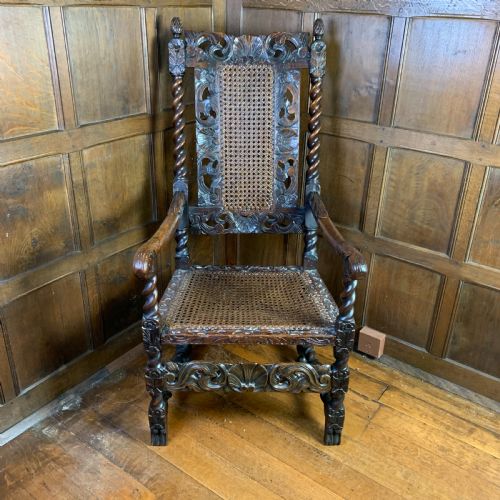

Carved Crest Throne Chairs
These carved crest throne chairs bring historic presence into a room, offering substantial timber frames and striking carved details that draw the eye.
Carved Crest Throne Chairs
When you search for carved crest throne chairs, you encounter formidable seating options ranging from seventeenth-century walnut and oak forms to later revival pieces. These grand items function primarily as armchairs and hall chairs, designed to command attention within a space.
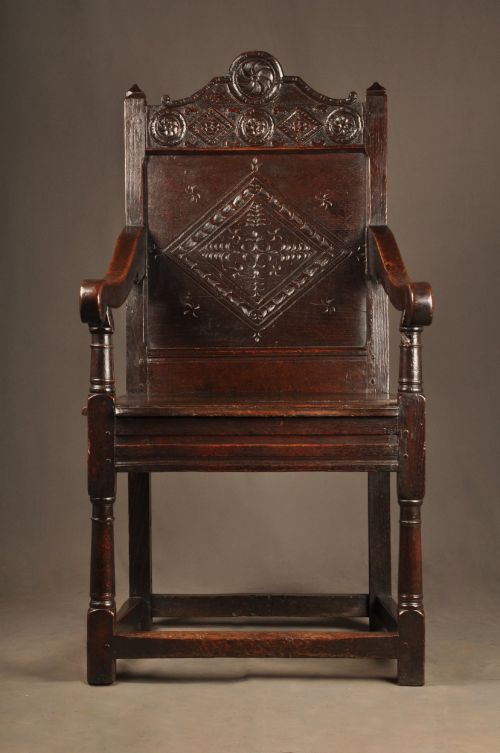
The version you meet most frequently on this page is the oak wainscot chair or Victorian revival piece, often featuring high backs and prominent carved crests. These heavy timber seats derive their character from centuries-old traditions, utilising sturdy joinery and imposing silhouettes.
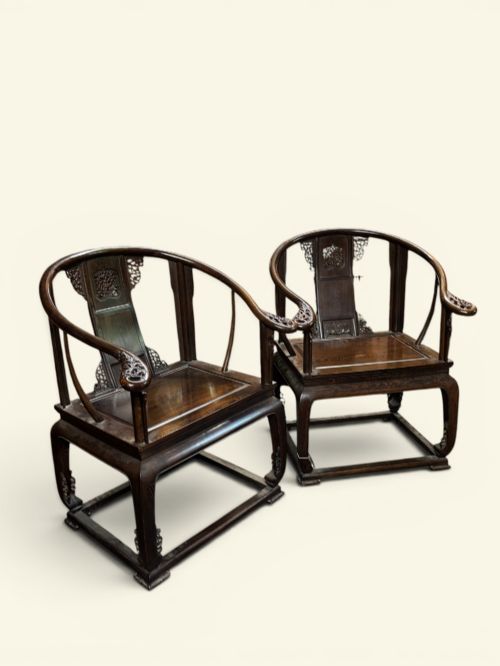
Originating across different eras including the seventeenth century, Victorian period, and early twentieth century, these chairs showcase diverse regional styles from English wainscot designs to Chinese horseshoe-back armchairs. Each piece carries distinct historical weight through its specific construction and decorative motifs.
How they were made
The construction of these chairs relies on heavy hardwoods, predominantly oak and walnut, alongside mahogany, beech, and dark hardwood. Craftsmen built these robust frames using traditional joinery methods suited to heavy daily use.
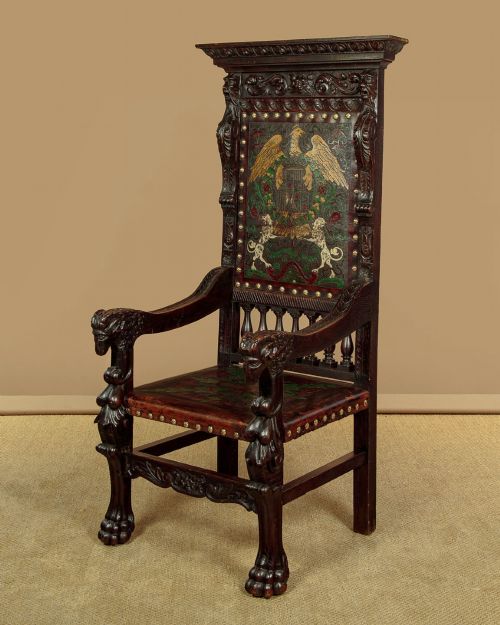
Surface ornamentation is achieved through direct carving into the timber, creating detailed crests, armorial bearings, and barley twist supports. Some examples incorporate contrasting textures through the use of brass accents, painted leather, and tapestry upholstery.
Some chairs possess such severe high backs that even the tallest sitters vanish entirely beneath the carved crest.
What varies in quality
The standard of carving defines the visual impact of the piece, distinguishing deeply chiselled crests and crisp armorial details from softer, worn ornamentation. The clarity and depth of the woodwork directly reflect the skill of the original maker.
Material selection and structural integrity separate robust examples from lesser items, particularly in the preservation of the original hardwood frame. The integration of period elements, such as brass hardware and leather inserts, further influences the overall integrity of the chair.
The Carved Crest Throne Chairs Glossary
- Wainscot chair
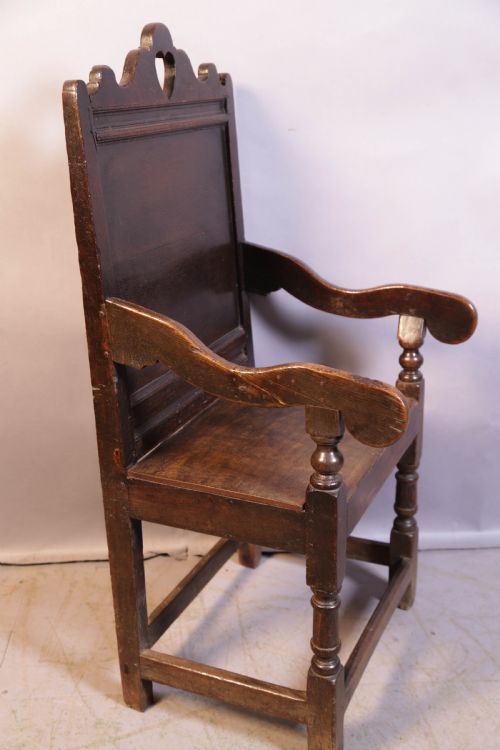
- A heavy wooden armchair dating from the sixteenth or seventeenth century, constructed mainly from oak with panelled backs and solid seats.
- Carolean
- Pertaining to the reign of King Charles the Second, known for ornate walnut furniture featuring rich carvings and scrollwork.
- Horseshoe-back armchair
- A traditional Chinese seating form characterised by a continuous curved rail forming both the back and the arms.
- Armorial
- Decorated with heraldic coats of arms or crests, often carved into the woodwork or rendered on upholstery.
- Barley twist
- A decorative turning technique resembling a twisted rope, commonly found on the legs and stretchers of seventeenth-century and revival furniture.
Carved Crest Throne Chairs: Frequently Asked Questions
What defines a wainscot chair?
A wainscot chair is a heavy, panelled wooden armchair typically constructed from oak during the seventeenth century or earlier. These pieces feature solid wooden seats and high backs designed to block draughts in great halls.
They represent some of the earliest domestic seating forms preserved today, distinguished by their boxy proportions and architectural joinery.
Where should I place a throne chair?
These imposing chairs suit spaces with high ceilings and traditional proportions, such as entrance halls, studies, or living rooms. Their substantial presence allows them to act as focal points rather than standard seating.
Positioning them away from direct heat sources and strong sunlight protects the historic timber and any leather or textile elements.
How do I identify a revival piece?
Revival pieces, such as those from the Victorian or Edwardian eras, copy seventeenth-century styles using machine-assisted tools or modified joinery techniques. Examining the underside and the wear patterns helps clarify the age of the timber and construction.
These later interpretations often combine historical motifs like barley twists and carved crests with nineteenth-century manufacturing methods.
What is a turner's chair?
A turner's chair, sometimes called an old Saxon armchair, is constructed from turned wooden spindles assembled in a triangular or round seat plan. This archaic form relies entirely on cylindrical turned members rather than flat panels.
They offer a distinct architectural silhouette that differs significantly from standard box-frame armchairs.