



Carved Coat Stand
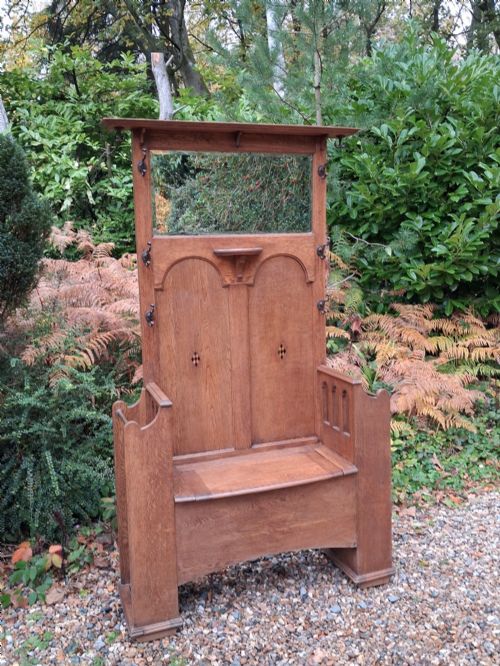
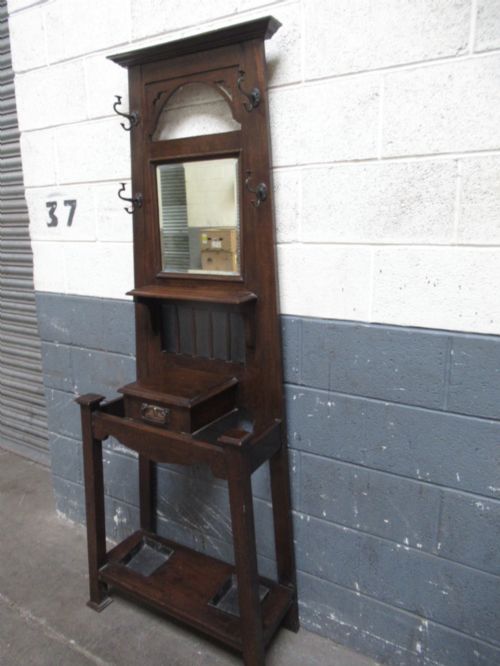
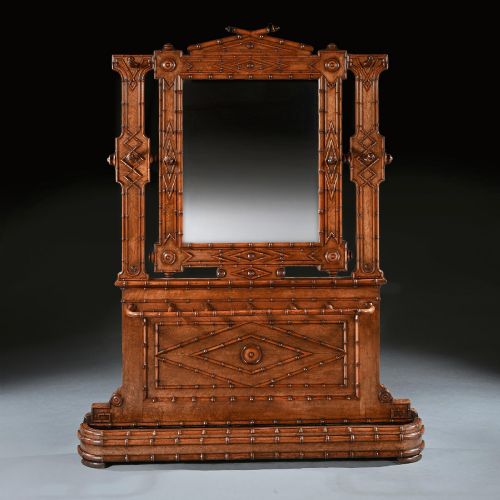
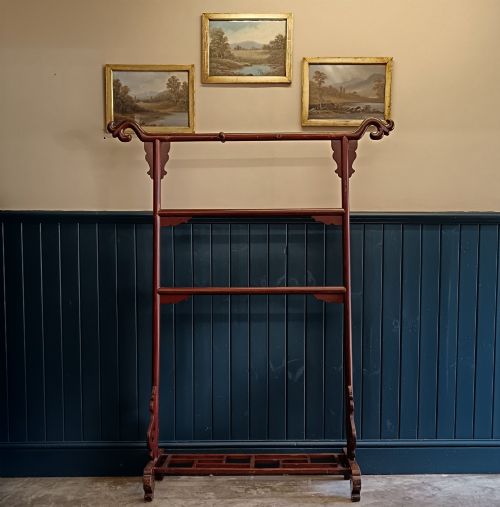
A carved coat stand holds hats, coats and sticks in the hallway while bringing rich period character to the entrance.
Carved Coat Stand
When you search for a carved coat stand, you encounter substantial entrance furniture designed to organise outerwear and umbrellas in domestic hallways. These pieces appear most frequently in oak, mahogany and walnut, hailing from the Victorian, Edwardian and late nineteenth century periods.
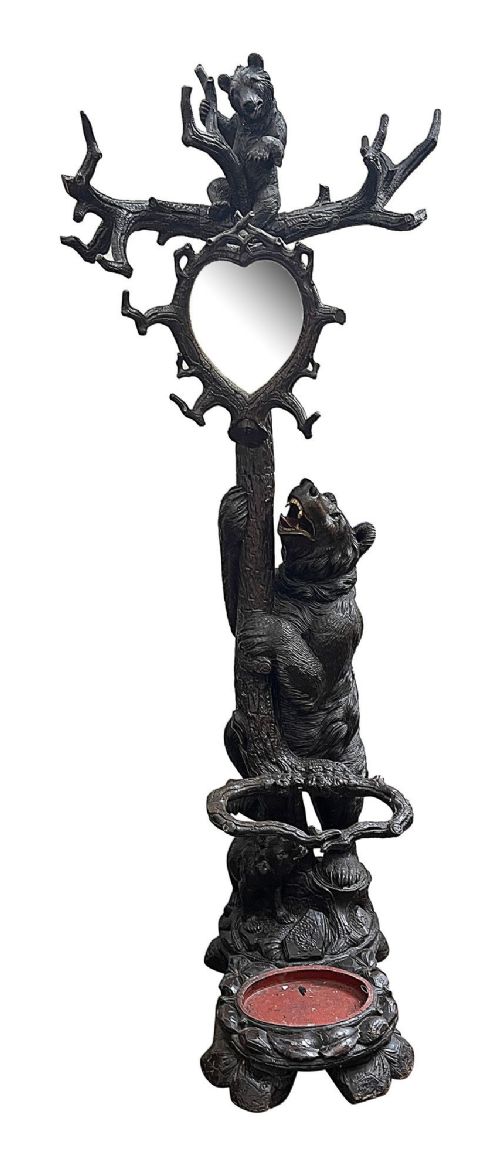
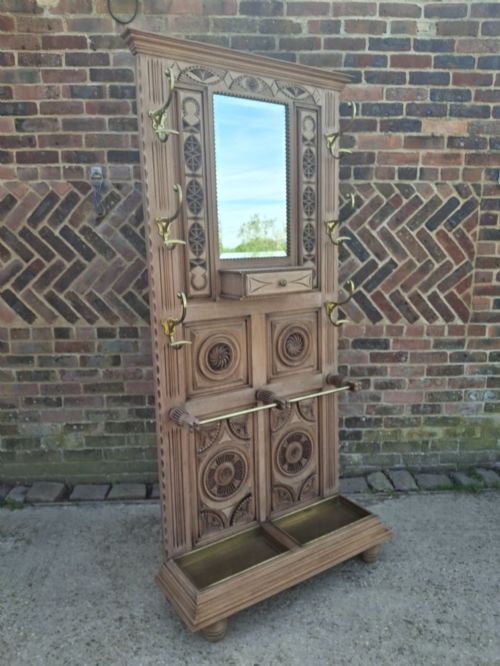
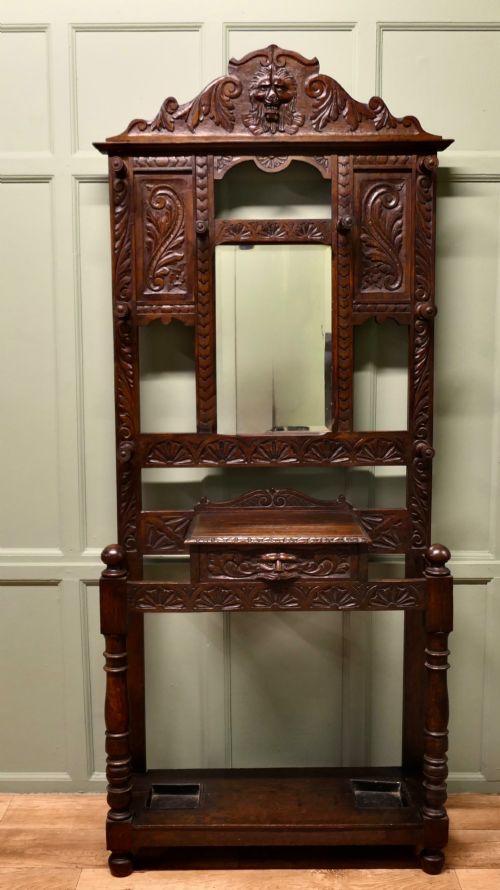
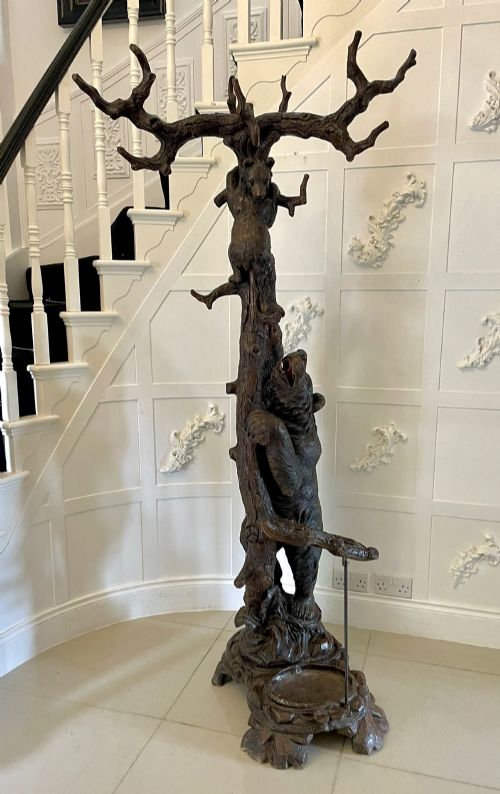
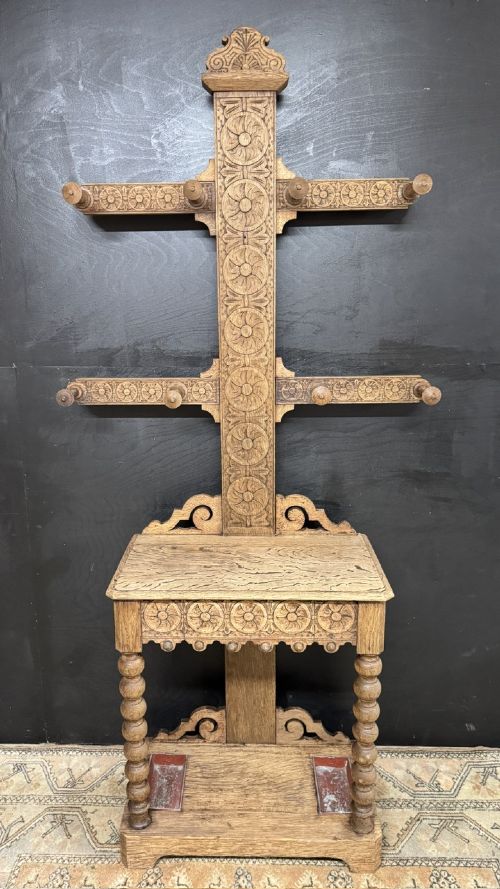
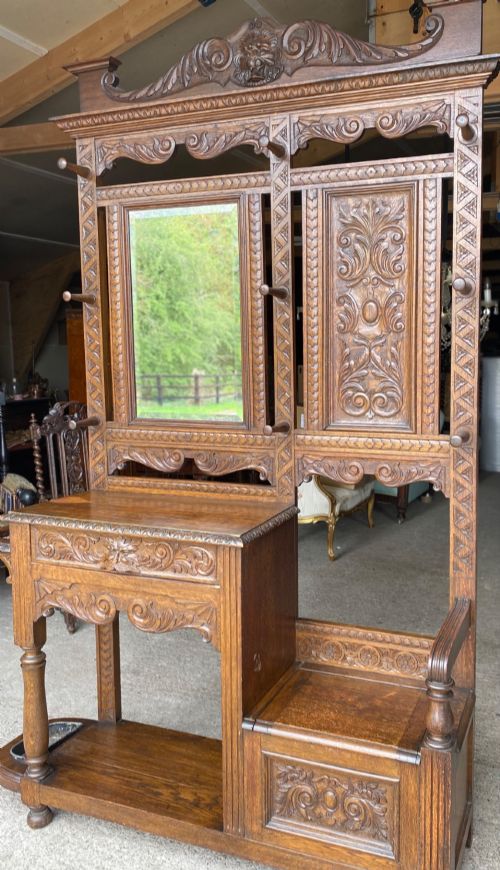
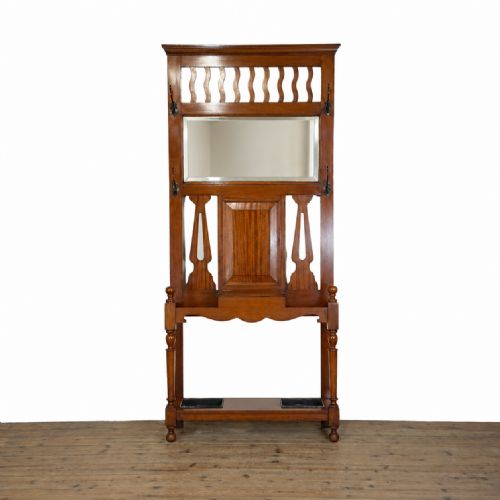
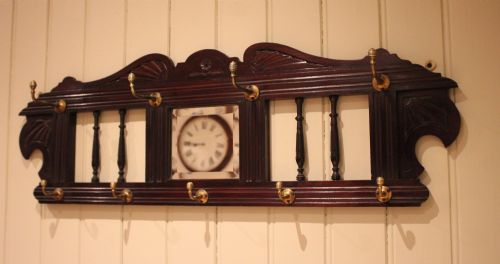
The forms range from wall-mounted racks to large freestanding pieces incorporating mirrors, marble shelves, and umbrella stands with drip pans. You will frequently meet designs featuring carved wooden motifs such as Greenmen, bears, and foliage alongside brass hooks and glass components.
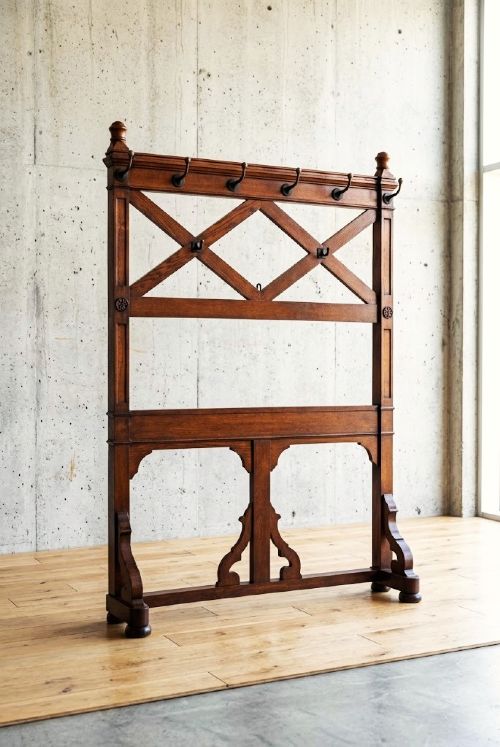
Originating largely from British and continental workshops, these items serve as both practical hallway storage and decorative focal points. The selection spans straightforward utilitarian timber frames to elaborate exhibition pieces from the Black Forest and Gothic Revival styles.
How they were made
Cabinetmakers utilised solid timbers such as oak, mahogany and walnut, shaping them through traditional joinery and deep hand-carving. Carved motifs range from naturalistic bears and foliage to architectural Gothic tracery and mythological Greenman faces.
Makers integrated functional elements including cast brass or iron coat hooks, bevelled mirror plates, and inset marble shelves to withstand daily use in busy entrance halls. Secondary materials like faux bamboo, antler, and glass appear in specific regional or stylistic pieces.
Surface finishes relied on traditional polish and wax applied to the timber grain, while metal components were cast or forged to support heavy coats and hats. Structural stability was paramount, requiring sturdy pegged joints and heavy bases to prevent tipping.
Carved Coat Stand Retail Price Guide 2026
Typical asking prices for carved coat stand among the pieces listed under this phrase on Sellingantiques today, from the lower quarter to the upper quarter. They describe what is for sale here now, not the wider market.
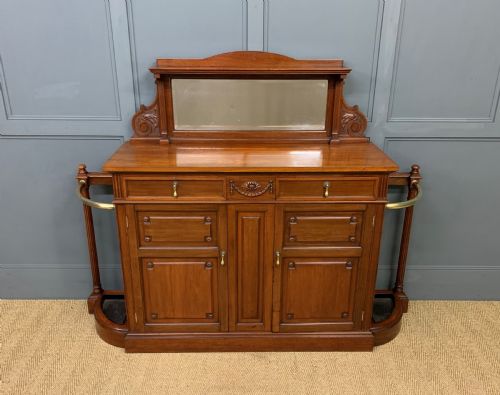
The inventory records diverse forms including wall racks, cupboards, and umbrella stands alongside freestanding coat stands.
What varies in quality
The depth and vigour of the hand-carving separate ordinary production from exceptional work, particularly in sculptural subjects like bears or Greenmen. Crisp detailing in the foliage and crisp casting on the brass hooks indicate superior craftsmanship.
Timber selection and structural integrity define the upper tier of pieces, where dense quarter-sawn oak, figured mahogany or rich walnut remain stable over generations. Finer examples incorporate original bevelled mirror plates and intact marble surfaces without replacement parts.
Shoolbred & Co.·J. Parker of Woodstock
The Carved Coat Stand Glossary
- Greenman
- A sculptural architectural ornament depicting a human face carved from or entwined with leaves and vines. This motif appears frequently on nineteenth-century oak hall furniture.
- Black Forest
- A regional style of wood carving originating from Switzerland and Germany, renowned for lifelike animal figures including bears holding card trays or branches. These pieces often utilise Linden or oak timber.
- Hall Stand
- A large freestanding hallway item combining coat hooks, a mirror, glove boxes, and umbrella holders with metal drip trays. They formed the central greeting point in Victorian and Edwardian entrance halls.
- Gothic Revival
- An architectural and decorative style drawing on medieval forms, featuring pointed arches, tracery and heavy carved oak. This aesthetic dominated mid-nineteenth-century domestic woodwork.
- Japonisme
- A late nineteenth-century European fascination with Japanese art, influencing furniture design through asymmetric arrangements and faux bamboo turnings. It frequently appears in aesthetic period pieces.
Carved Coat Stand: Frequently Asked Questions
Where should I place a carved coat stand?
Position your stand in a spacious hallway or entrance vestibule where it can function practically for daily outdoor wear. Ensure there is adequate clearance for doors to open and sufficient wall space to support its height.
Allow enough room around the piece to access umbrella trays and hooks without obstruction. Placing it near the main entry protects floors with integrated drip pans while welcoming visitors with period presence.
How do I care for the timber and carvings?
Dust the deep recesses of the carvings regularly with a soft brush to prevent dirt accumulation in the grain. Apply a traditional beeswax sparingly to nourish the wood and maintain a soft lustre.
Avoid placing timber furniture near direct heat sources or in damp environments that cause wood to warp or split. Check structural joints and brass hooks periodically to ensure they remain secure.
What periods do these pieces represent?
The selection spans the Victorian and Edwardian eras, with many examples dated to the late nineteenth century around 1880 and 1900. Earlier pieces from the mid-nineteenth century often display Gothic Revival or Regency influences.
Later items extend into the early twentieth century, incorporating Arts and Crafts or Art Nouveau design elements. Stylistic cues such as turned spindles, mirror shapes, and carving depth help determine the era of manufacture.
Can these stands support heavy winter coats?
Original brass and iron hooks on period pieces were cast solidly to bear the weight of heavy wool coats and overcoats. Most freestanding designs feature heavy timber frames or weighted bases designed to prevent tipping under a full load of garments.
Distributing weight evenly across the upper and lower tiers helps maintain the balance of the structure. Inspect the fixing points of the backboard and hooks to ensure the woodwork remains strong.