

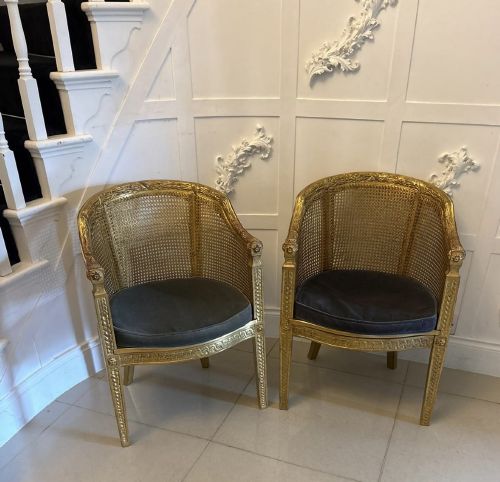
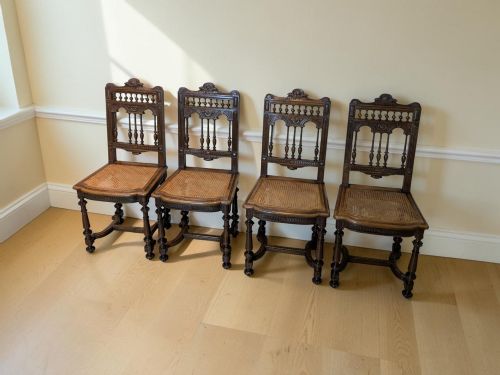
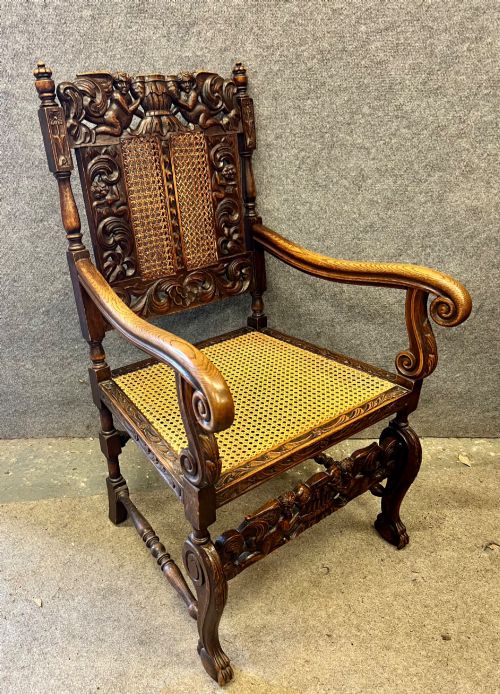
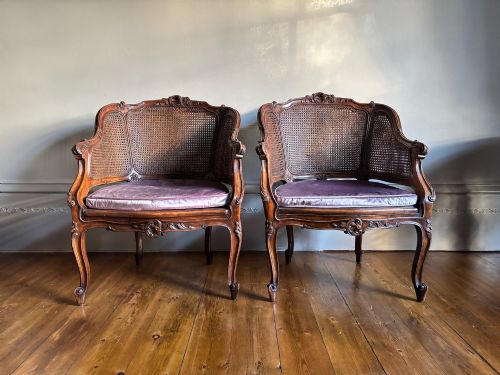
Carved Cane Chair
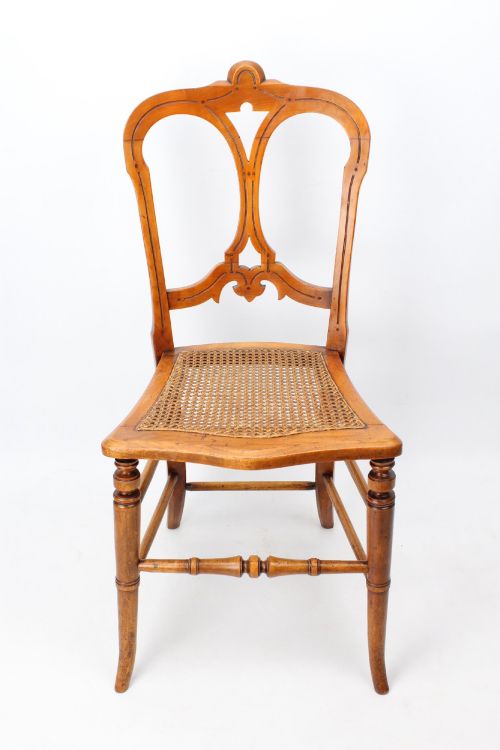
A carved cane chair brings tactile warmth and historical silhouette to a room, combining open woven seating with robust timber frames.
Carved Cane Chair
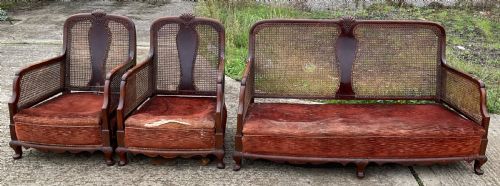
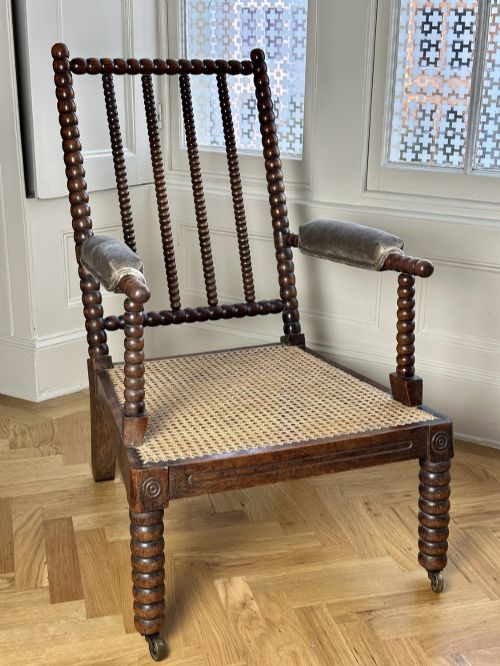
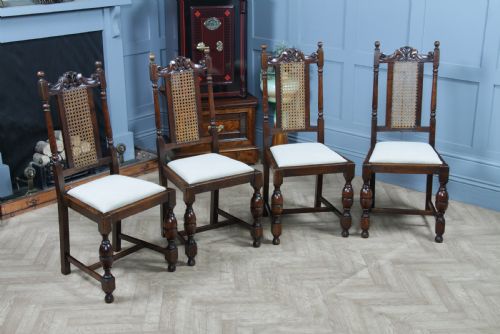
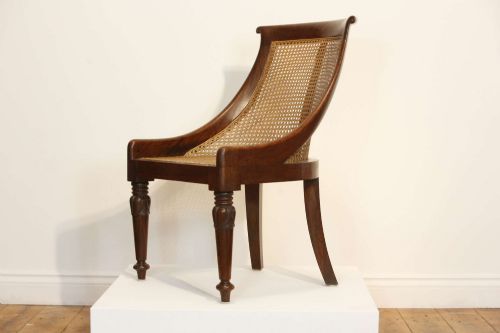
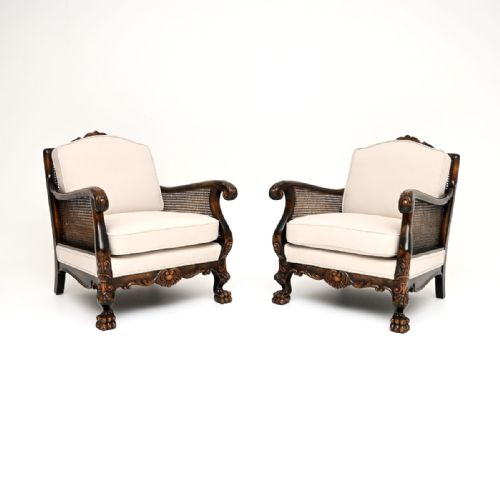
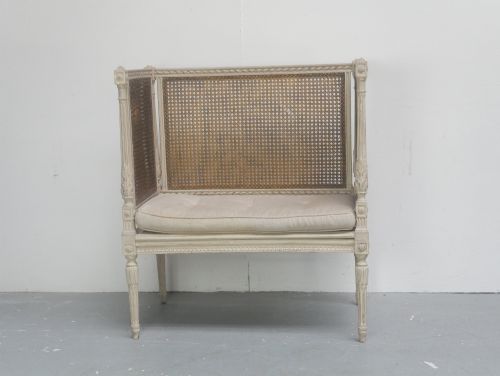
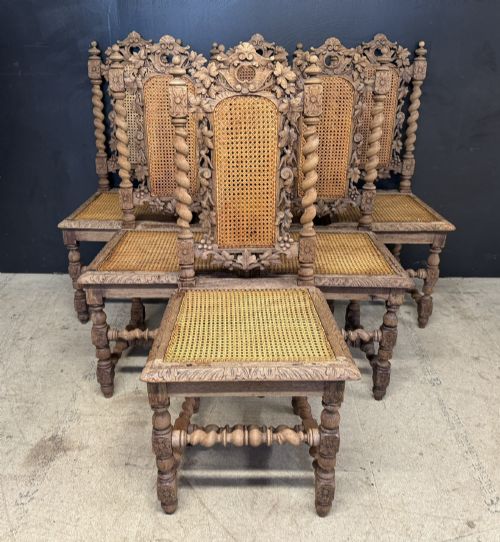
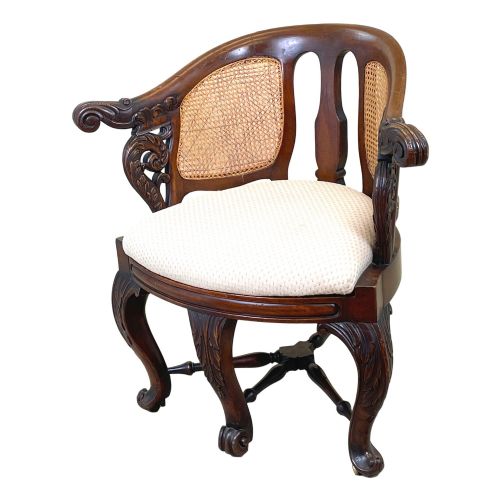
When someone searches for a carved cane chair, they encounter seating spanning from the eighteenth century through the Edwardian era and into the early twentieth century. These pieces appear across forms such as armchairs, dining chairs, side chairs, tub chairs, bergères, and window seats.
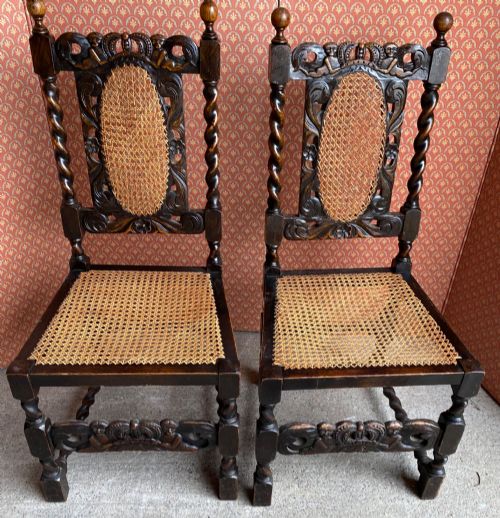
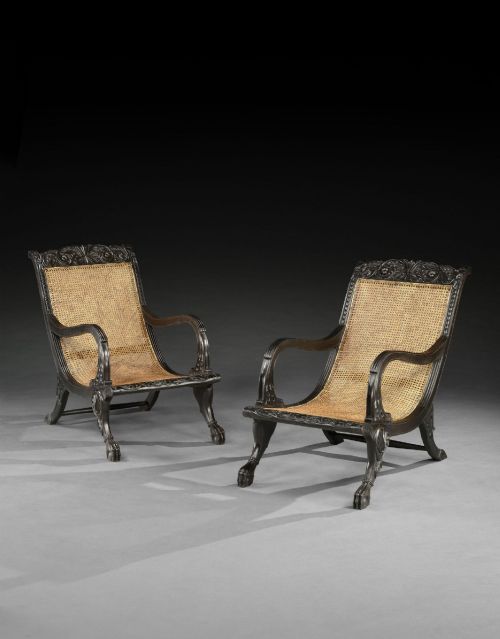
The aesthetic vocabulary draws heavily from historical revivals and regional traditions, encompassing Carolean, Louis XV, Louis XVI, Regency, and Anglo-Indian designs. Walnut, mahogany, and oak form the predominant structural frames supporting the woven panels.
Buyers most frequently meet nineteenth-century examples and revival pieces from nineteen-hundred to nineteen-twenty, reflecting sustained interest in traditional framing combined with resilient woven seating surfaces.
Timbers and Weaving Techniques
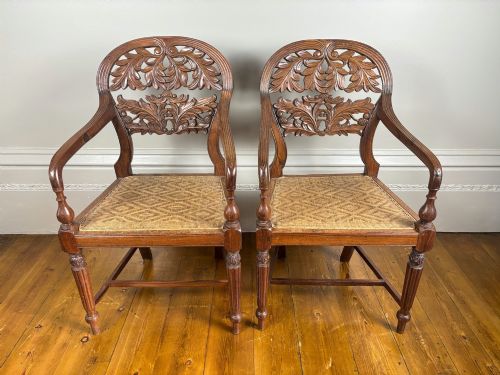
Construction relies upon durable hardwoods like mahogany, walnut, oak, rosewood, and ebony to support the structural stress placed on the frame and legs. Craftspeople shaped these timbers through traditional joinery, often incorporating elaborate surface carving along the crest rails, arms, and stretchers.
The distinctive woven component utilises split cane or woven rattan threaded through pre-drilled holes in the wooden frame. This technique yields a resilient, breathable surface that requires considerable tension and skill during manufacture to maintain structural integrity.
Carved Cane Chair Retail Price Guide 2026
Typical asking prices for carved cane chair among the pieces listed under this phrase on Sellingantiques today, from the lower quarter to the upper quarter. They describe what is for sale here now, not the wider market.
Materials documented across these listings include walnut, mahogany, oak, rosewood, ebony, fabric, velvet, brass, leather, and cane.
Distinctions in Execution
Quality rests upon the crispness and depth of the timber carving, alongside the selection of dense woods such as walnut or mahogany rather than softer secondary timbers. Master carvers produced intricate detail with clean lines along the crest rails and cabriole legs.
The standard of the woven cane work significantly alters the finish, where tight, uniform hand-weaving distinguishes superior examples from loose or coarsely applied replacements. Integration between the woven panel and the channeled wooden frame reveals the underlying standard of the workshop.
The Carved Cane Chair Glossary
- Cane
- A material derived from the peeled bark of rattan palms, woven into panels for seats and backs. It provides flexible support and lightness to heavy timber frames.
- Bergère
- An enclosed upholstered or caned armchair with closed upholstered sides resting on a low frame. It often includes a loose seat cushion.
- Carolean
- A seventeenth-century English style associated with the reign of Charles II, characterised by rich carving, scrolling foliage, and tall cane backs. Revivals of this style recurred later in the Victorian period.
- Tub Chair
- A curved upholstered or caned armchair where the back and arms form a single continuous rounded enclosure. The low-profile silhouette suits writing desks and bedrooms.
- Gonçalo Alves
- A dense exotic hardwood native to South America with distinctive figuring, utilised in Regency seating frames. It offers exceptional weight and durability.
Carved Cane Chair: Frequently Asked Questions
How do I care for cane seating?
Keep woven panels away from direct heat sources and strong sunlight to prevent the natural material from drying out and snapping. Light dusting and occasional damp wiping maintain the moisture balance of the rattan fibres.
Avoid sitting abruptly on older woven surfaces, as concentrated weight can fracture brittle strands. Proper weight distribution ensures the longevity of historical or replacement cane work.
Are these chairs comfortable for daily use?
Woven cane provides a supportive and flexible surface that yields slightly to body weight. Many variations include loose cushions or upholstered squabs for added padding during extended sitting.
Armchairs and bergères offer deeper proportions suited to reading or relaxing in living spaces. Dining variants provide upright support appropriate for prolonged gatherings around a table.
How can I tell original cane from replacement work?
Original woven panels exhibit consistent oxidation, patination, and wear matching the age of the wooden frame. The colour of the rattan deepens uniformly over decades of exposure to ambient light.
Replacement cane often appears lighter, more flexible, and displays cleaner strand tension without historical grime in the drill holes. Examining the underside reveals how the strands are pegged or knotted into the channel.
What distinguishes Regency style from Edwardian pieces?
Regency seating from the early nineteenth century leans towards classical restraint, saber legs, ebonised finishes, and classical proportions. The aesthetic draws inspiration from ancient Roman and Greek archaeology.
Edwardian interpretations from the early twentieth century often revisit lighter Sheraton forms with painted satinwood or inlaid mahogany. These later pieces reflect domestic comfort combined with refined revivalism.