
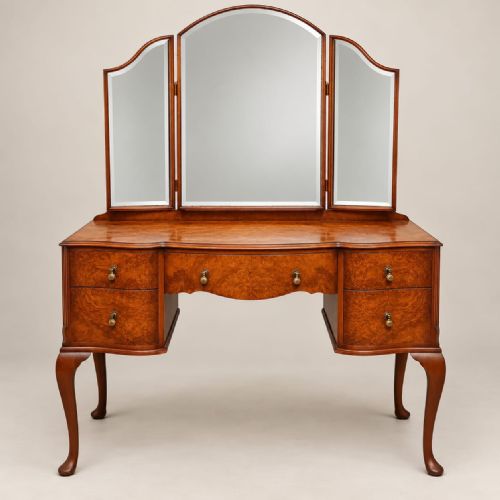
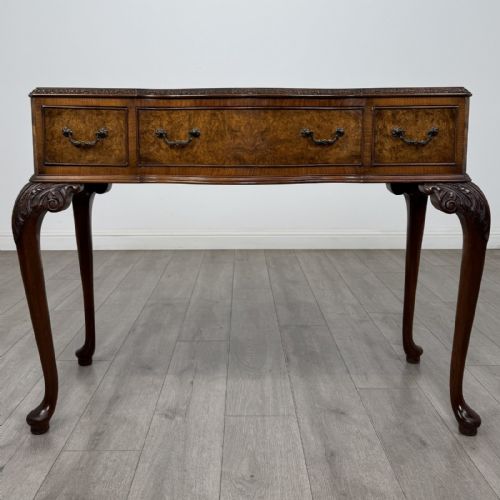
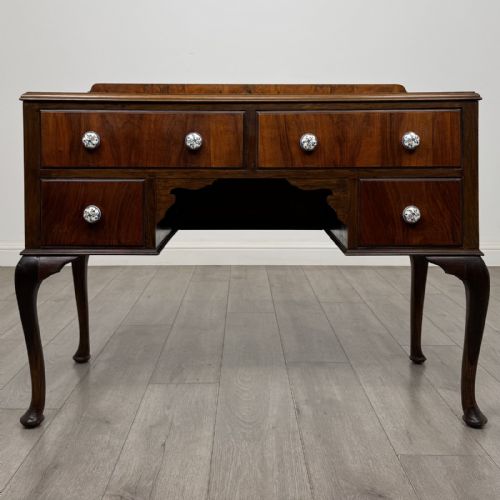
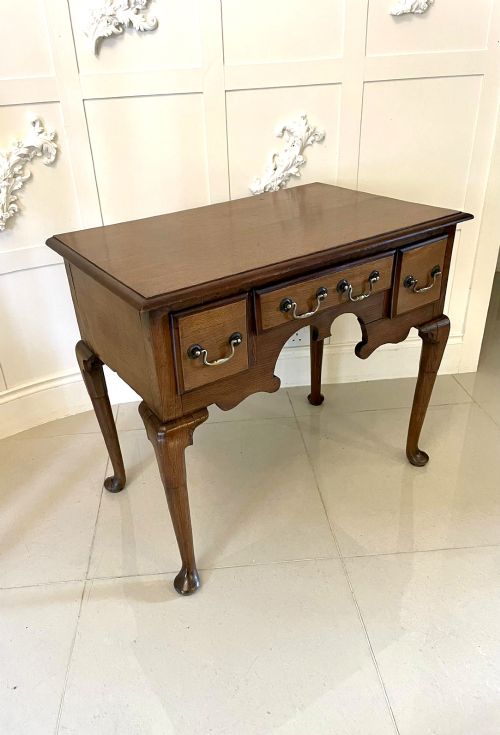
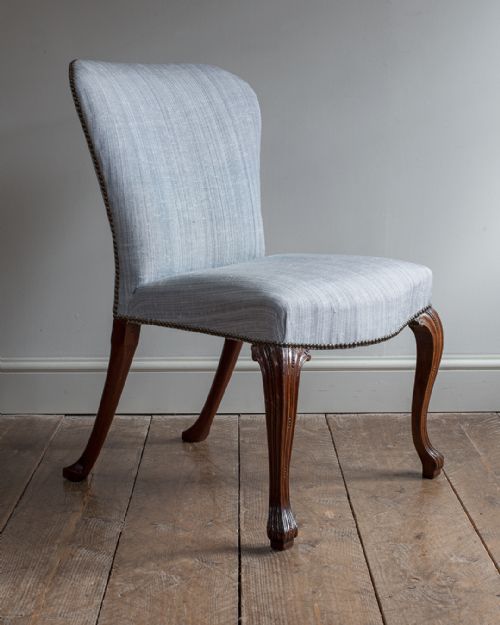
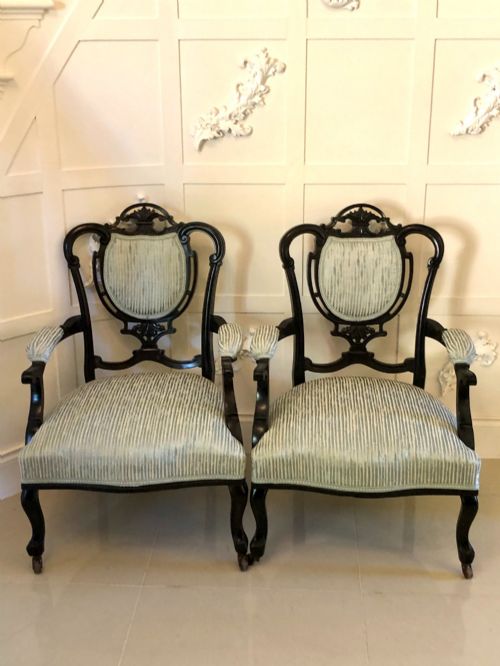
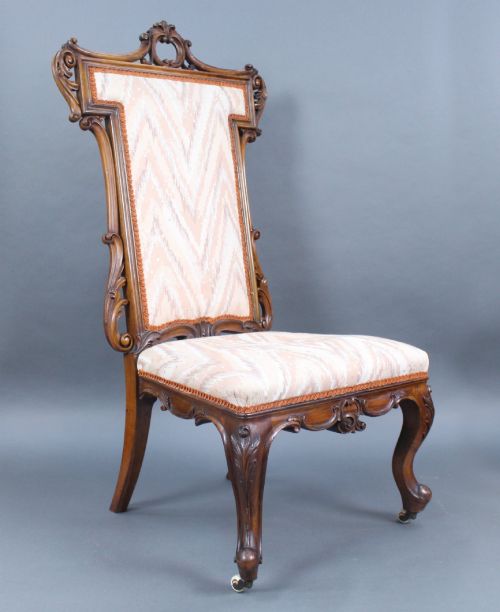
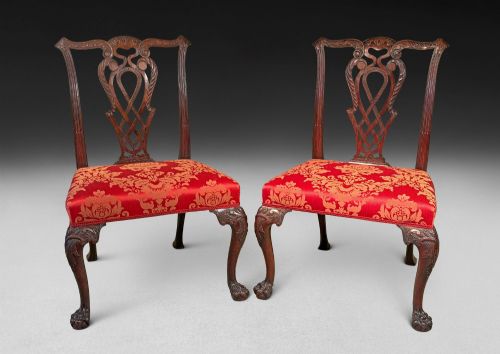
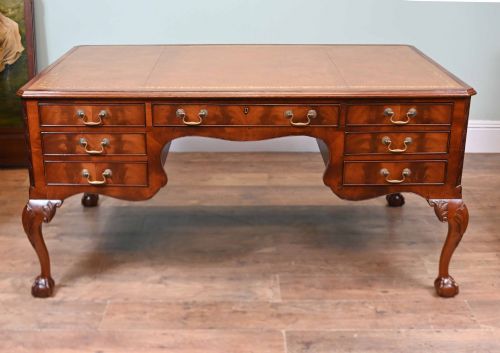
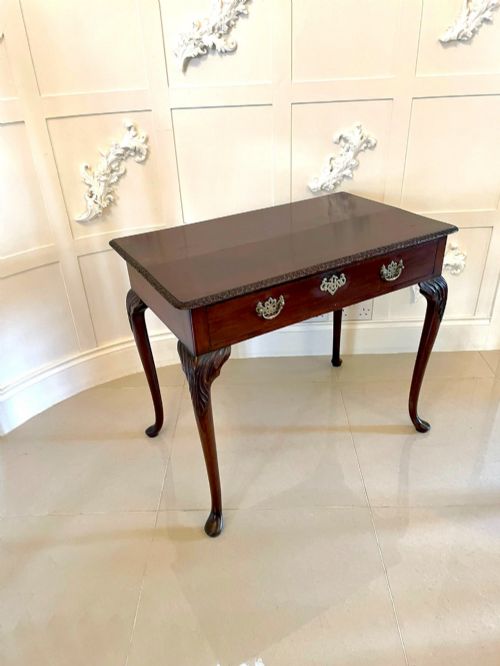
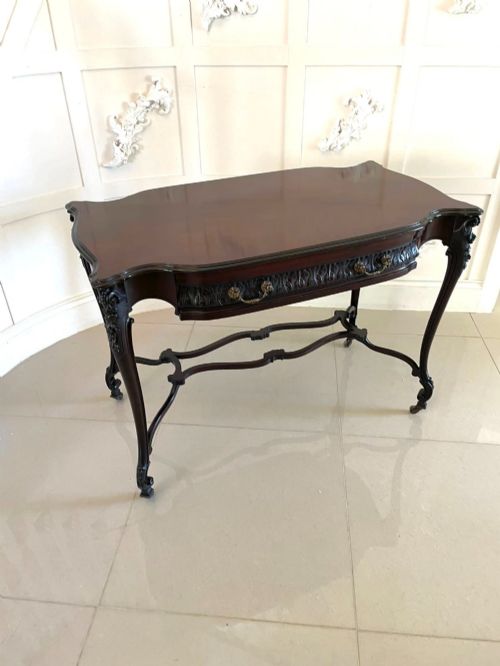
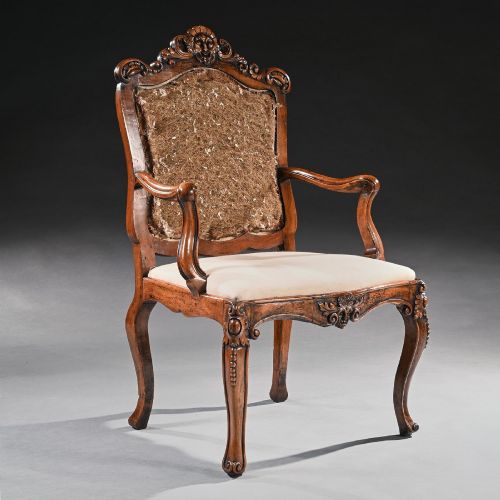
Carved Cabriole Legs Desk
A carved cabriole legs desk combines elegant S-curve supports with functional writing surfaces across walnut, mahogany and oak formats.
Carved Cabriole Legs Desk
A carved cabriole legs desk brings together foundational writing furniture and distinctive curvilinear supports derived from earlier decorative vocabularies. Buyers investigating this phrase encounter pieces spanning the Georgian era through to Edwardian interpretations and later revivals.
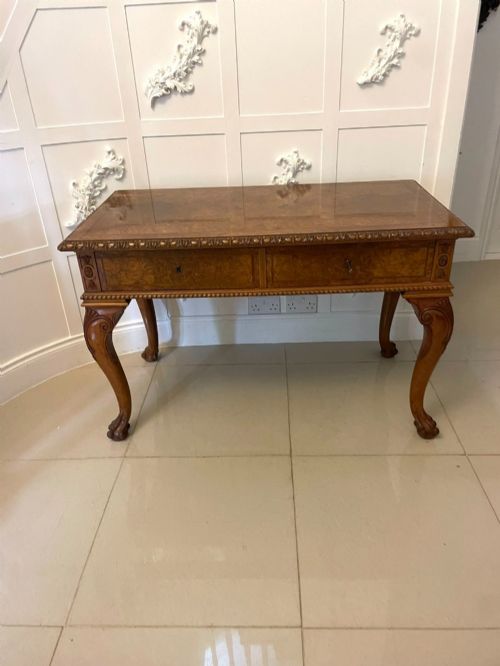
The selections on this page predominantly present in walnut and mahogany, often featuring designated writing surfaces, drawers or leather inserts. Formats range from pedestal writing tables and lowboys to bureau desks and compact writing tables.
Revival movements from the Victorian and Edwardian periods heavily influence the items encountered here, echoing eighteenth-century aesthetics. These pieces integrate the characteristic double-curved leg into domestic workspaces and studies.
Materials and construction
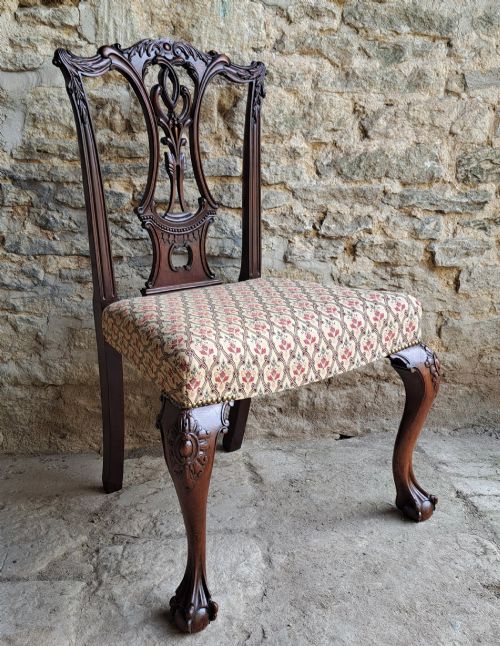
Makers utilised solid timbers such as mahogany and oak alongside burr walnut veneers for primary surfaces and framing. The characteristic cabriole leg was shaped directly from the timber, frequently integrating carved knees or claw and ball feet.
Secondary materials like leather provide durable writing surfaces on tables and pedestal desks, while brass handles and drawer pulls finish the functional components. Joinery techniques from the eighteenth to the early twentieth century ensure structural integrity across diverse forms.
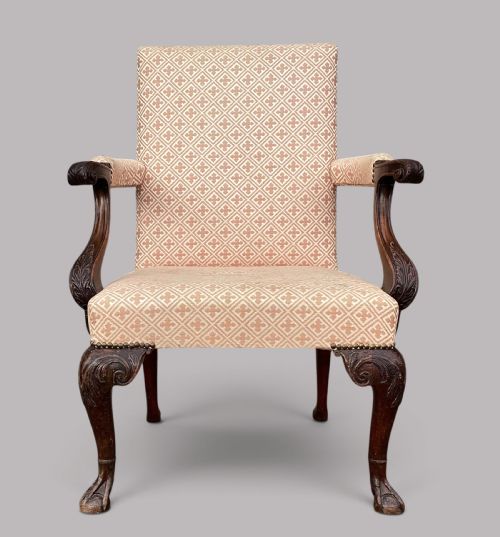
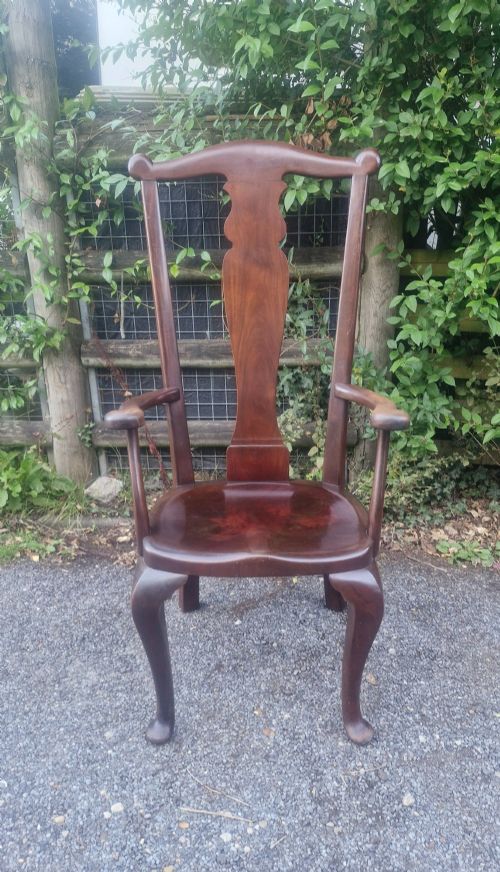
Desks occasionally share space with lowboys and library chairs, proving that eighteenth-century legs love company.
Assessing quality
The refinement of the carving on the knees and feet distinguishes standard production from exceptional examples. Crisp execution of the S-curve profile reveals the maker's skill in balancing structural strength with fluid design.
Timber selection drives the visual impact, particularly in burr walnut and figured mahogany pieces where grain alignment is carefully considered across drawers and tops. The integration of original hardware and secondary woods further establishes the standing of an individual desk.
Charles Tozer·Wylie and Lochhead Glasgow·Giles Grendey
The Carved Cabriole Legs Desk Glossary
- Cabriole leg
- A furniture leg that curves out at the knee and tapers in at the ankle, mimicking animal legs. This form originated in antiquity and gained prominence during the eighteenth century.
- Lowboy
- A small side table with drawers, commonly used as a dressing table or writing desk. These pieces typically feature four cabriole legs.
- Pedestal desk
- A heavy writing desk built on two independent pedestals containing drawers, topped with a broad writing surface. Leather inserts are frequently set into the top.
- Burr walnut
- Timber taken from a walnut tree growth featuring intricate, swirling grain patterns. It is sliced into veneers to cover larger drawer and table surfaces.
Carved Cabriole Legs Desk: Frequently Asked Questions
What is a cabriole leg desk?
A cabriole leg desk is a writing table supported by legs that curve outward at the knee and inward at the ankle. These desks appear in walnut and mahogany timbers across Georgian, Victorian and Edwardian styles.
They serve as functional workspace furniture while displaying decorative carving on the knees and feet. The design draws heavily on eighteenth-century aesthetics.
How do I date a desk?
Dating a desk involves examining the timber species, construction methods, hardware and overall style. Pieces from the Georgian period show different joinery techniques compared to Edwardian or revival items.
Secondary woods inside drawers and the presence of original brass fittings provide further clues to the manufacturing era. Comparing stylistic details against known periods helps narrow down the decade.
Where should I place a desk?
These desks suit studies, home offices and living spaces where traditional furniture adds character. Freestanding pedestal tables look particularly striking positioned away from walls to display finished backs.
Matching the timber tone to existing room decor ensures the desk integrates smoothly. Adequate lighting highlights the carved details on the legs and knees.
How do I care for walnut?
Walnut surfaces require protection from direct sunlight and extreme humidity changes to prevent timber splitting. Regular dusting with a soft cloth maintains the finish without building up heavy wax residues.
Leather writing inserts benefit from occasional gentle conditioning to keep the material supple. Avoiding harsh chemical cleaners preserves the historic patina of the wood.