



Carved Bulbous Legs
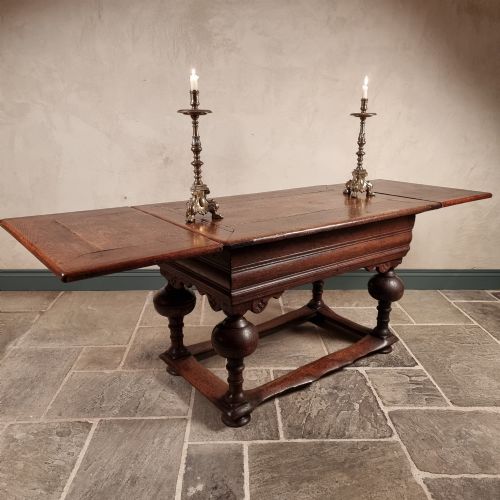
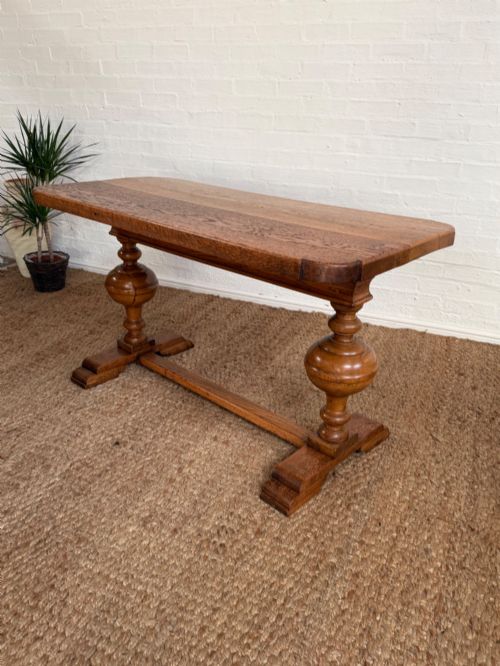
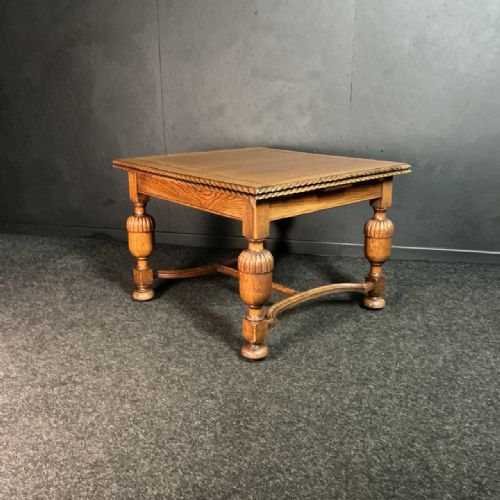
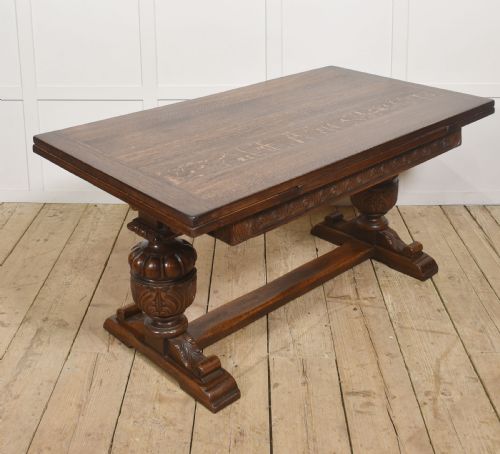
Carved bulbous legs anchor sturdy dining tables and sideboards, bringing heavy traditional presence into a room.
Carved Bulbous Legs
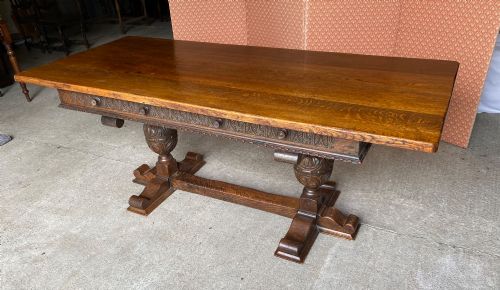
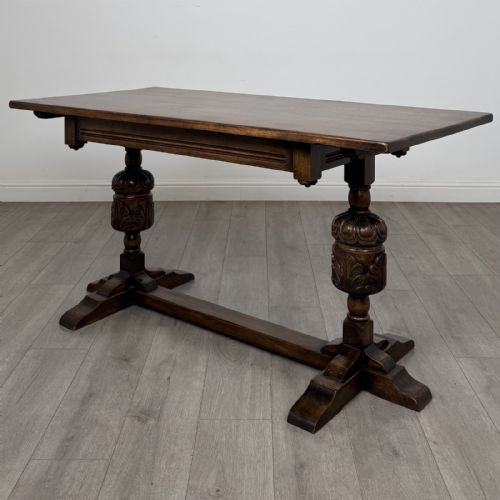
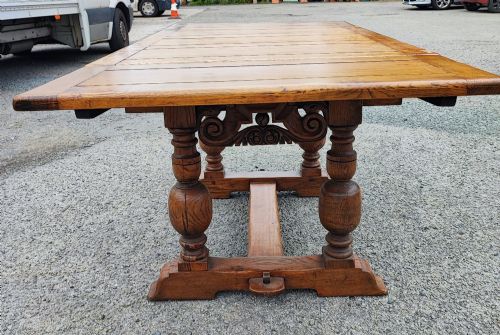
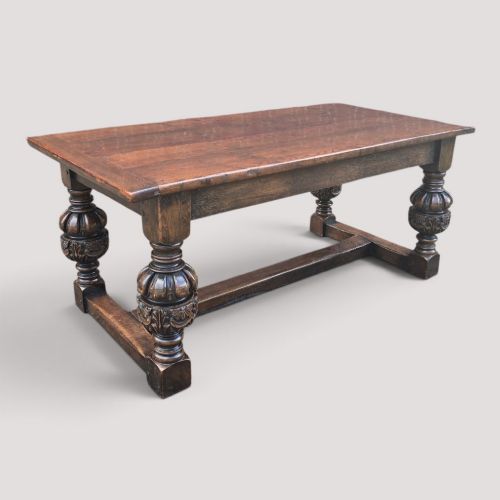
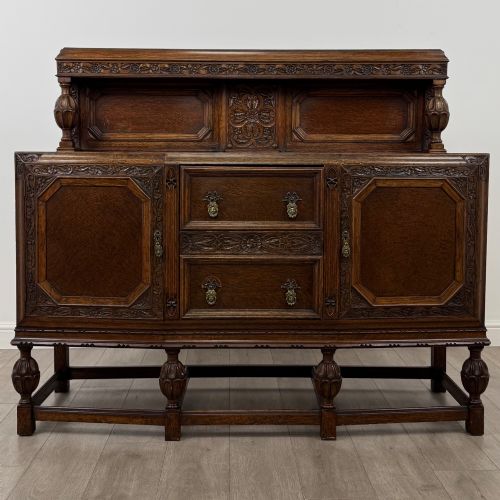
When you search for carved bulbous legs, you encounter substantial dining furniture and sideboards built for heavy use. These pieces draw heavily on Jacobean Revival, Elizabethan, and Tudor styles, dominated by solid oak timbers.
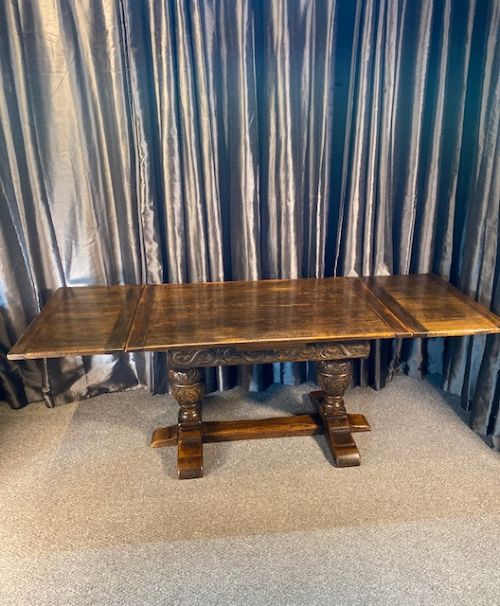
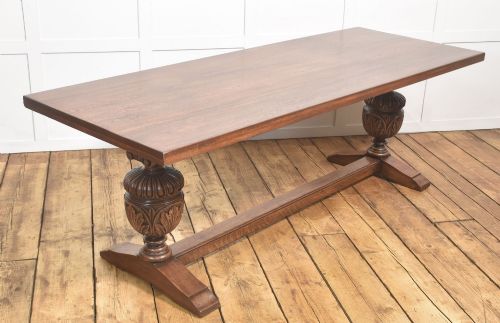
The version you are most likely to meet on this page is the oak refectory or draw-leaf dining table dating from the early twentieth century or the Edwardian period. Such tables often feature thick turned supports beneath expansive rectangular tops.
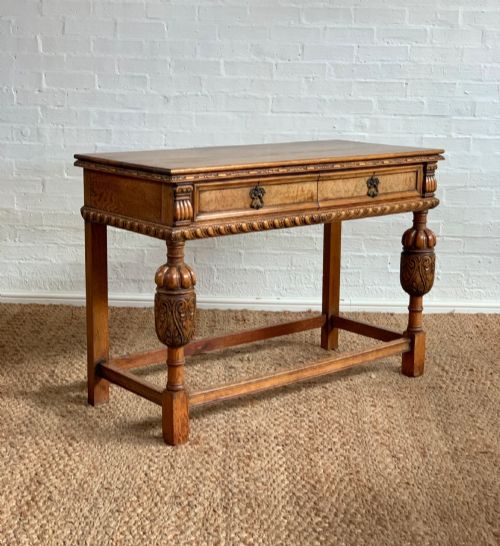
Sideboards and occasional tables also appear, carrying geometric panels, brass handles, or Dutch influences. Every piece relies on mass and carved detail to establish its character.
How they were made
Makers relied on solid oak and occasionally walnut, shaping heavy timbers by hand and machine to form robust frames. Joinery prioritised strength, using draw leaves and refectory structures to support large surfaces.
Carving was applied directly to structural members like legs and friezes, creating swelling shapes through turning and chisel work. Metal fittings such as brass face handles supplemented the woodwork on cabinetry.
Carved Bulbous Legs Retail Price Guide 2026
Typical asking prices for carved bulbous legs among the pieces listed under this phrase on Sellingantiques today, from the lower quarter to the upper quarter. They describe what is for sale here now, not the wider market.
Materials recorded across the inventory include oak, walnut, brass, and occasional fabric upholstery.
What varies in quality
The refinement of the carving dictates much of the distinction between standard production and superior craftsmanship. Crisp execution in the timber work shows greater skill than soft, mechanical rounding.
The choice of materials also separates pieces, with dense, well-figured oak and substantial draw-leaf mechanisms marking out the more ambitious furniture from simpler utilitarian items.
Beresford and Hicks·Maple and Co
The Carved Bulbous Legs Glossary
- Refectory table
- A long, narrow dining table traditionally used in communal dining halls. These examples often utilise oak and heavy underframes.
- Draw-leaf table
- A table equipped with pull-out extension leaves stored beneath the main top. This design allows the surface area to expand easily.
- Occasional table
- A small, movable table used for subsidiary purposes rather than primary dining. Edwardian versions frequently display regional European influences.
Carved Bulbous Legs: Frequently Asked Questions
What is a draw leaf table?
A draw leaf table contains hidden leaves tucked beneath the main top that slide out to extend the surface.
This mechanism provides extra dining space without requiring separate storage leaves.
How do I spot Jacobean revival furniture?
Jacobean revival furniture shows dark oak construction, geometric panels, and heavy turned supports.
These pieces date mostly from the late nineteenth and early twentieth centuries rather than the original seventeenth century.
Where should I put a refectory table?
Refectory tables suit large dining rooms or kitchens with space for their substantial length and width.
Their robust construction handles daily family meals while establishing a traditional focal point.
Are these tables solid oak?
Most dining tables and sideboards on this page utilise solid oak or substantial oak veneers.
This dense timber gives the furniture its characteristic weight and durability.