

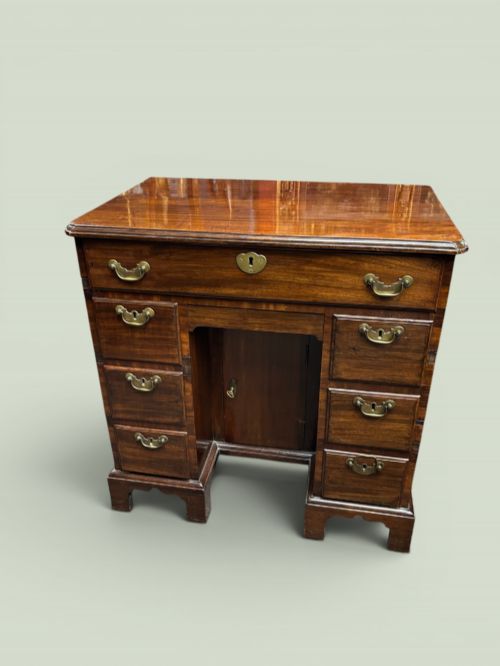
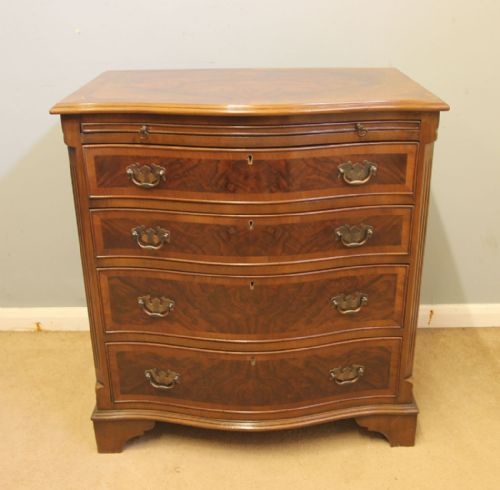


Carved Bracket Feet
Carved bracket feet anchor case furniture across the Georgian and William and Mary periods, adding architectural lift to chests and desks.
Carved Bracket Feet
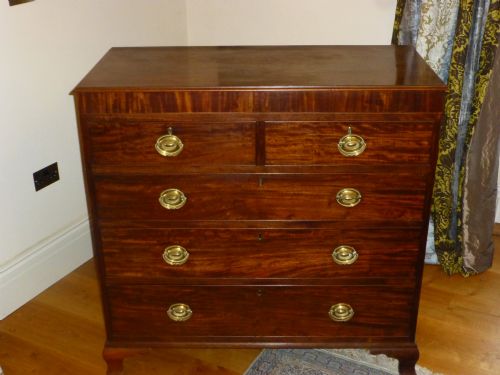
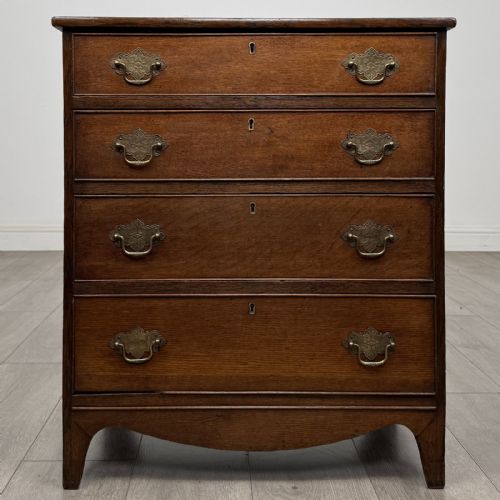
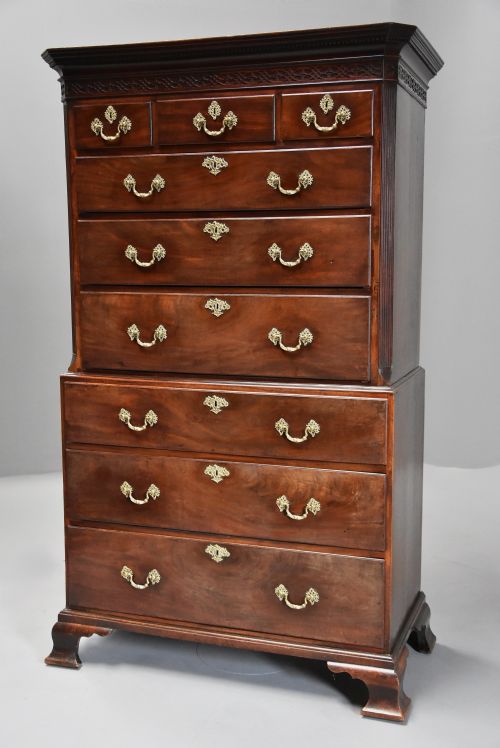
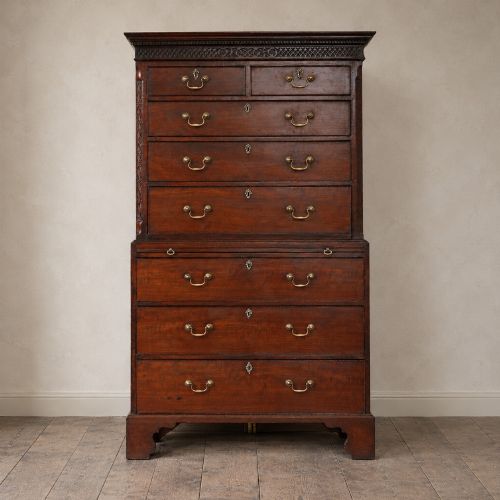
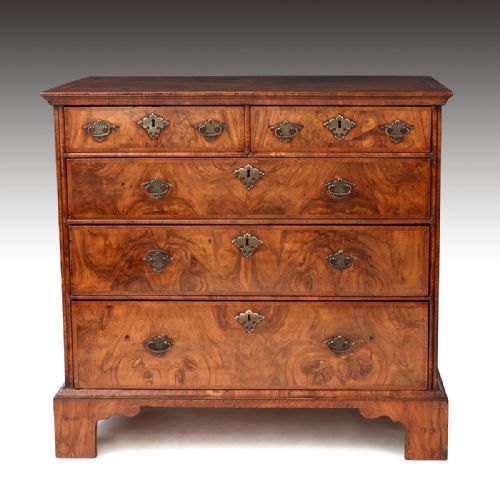
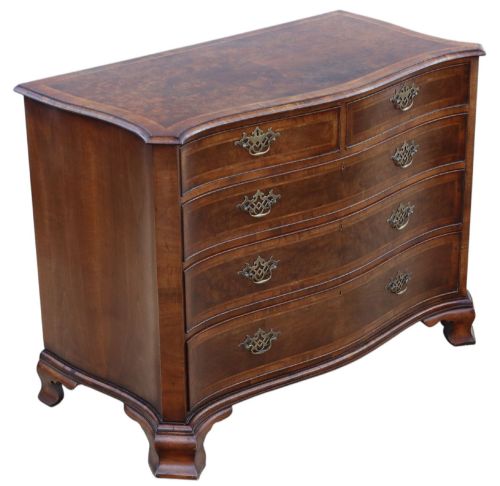
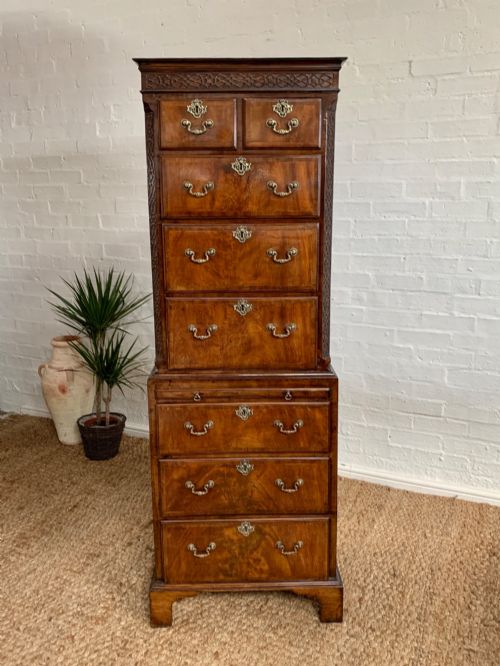
When you search for carved bracket feet, you encounter substantial case pieces designed to lift heavy chests of drawers, desks, and tallboys off the floor. These supports elevate the body of the furniture, giving a sense of proportion and balance to otherwise solid timber forms.
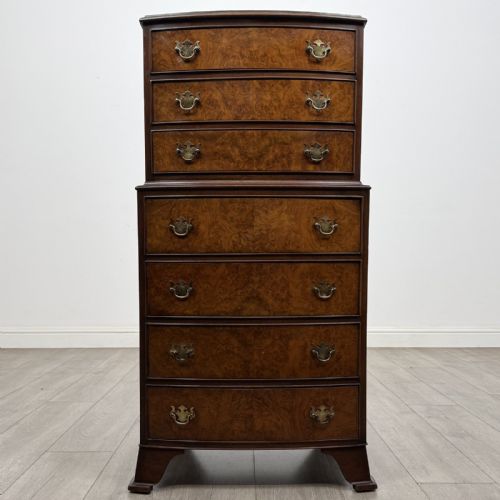
The versions most common on this page appear on Georgian mahogany and walnut chests of drawers, alongside earlier William and Mary pieces and later revival styles. Chests, kneehole desks, and tallboys dominate the listings, showing how makers integrated these solid corner supports into domestic storage.
Origins span from the late seventeenth century through the eighteenth century, with occasional twentieth-century revivals echoing earlier Georgian forms. Walnut, oak, and mahogany provide the primary timber foundations for these pieces, reflecting the favoured woods of their respective periods.
Materials and construction
Cabinetmakers constructed these supports using dense hardwoods such as mahogany, oak, and walnut, often matching the timber of the main carcase. Figured veneers and crossbanding on surfaces like burr walnut complement the carved details on the lower framework.
Joinery techniques required precise mitring and internal glue blocks to secure the corners, ensuring the foot could support the heavy weight of a chest on chest or kneehole desk. Carving was executed directly onto the solid timber bracket, shaping ogee or shaped profiles that transition smoothly into the base moulding.
Carved Bracket Feet Retail Price Guide 2026
Typical asking prices for carved bracket feet among the pieces listed under this phrase on Sellingantiques today, from the lower quarter to the upper quarter. They describe what is for sale here now, not the wider market.
Georgian and George III styles dominate the architectural forms recorded here, alongside earlier William and Mary influences.
Assessing quality
Quality rests in the crispness of the timber carving and the harmony between the foot and the overall proportions of the piece. Fine examples display sharp lines and balanced curves that integrate naturally with the base mouldings, rather than appearing as an afterthought.
The integrity of the timber and the preservation of original surfaces distinguish superior examples from heavily restored ones. Original patination on woods like mahogany or walnut indicates that the feet have survived centuries of domestic use intact.
The Carved Bracket Feet Glossary
- Chest on chest
- A tall storage unit formed by stacking one chest of drawers directly on top of another. This form frequently stands upon substantial bracket feet to bear the considerable weight.
- Kneehole desk
- A compact writing desk featuring a central recessed space for the legs, flanked by pedestals of small drawers. These pieces commonly incorporate bracket feet.
- Ogee
- A double-curve moulding shaped like an elongated S, frequently seen on finer bracket feet. This profile adds refined movement to the base of case furniture.
- Patina
- The surface sheen and colour developed by timber over decades and centuries of handling and polishing. Original patination remains a key indicator of age.
Carved Bracket Feet: Frequently Asked Questions
What pieces feature carved bracket feet?
These supports appear primarily on large case furniture designed for storage and writing. Chests of drawers, tallboys, desks, and kneehole cabinets utilise them to raise the body from the floor.
Examples range from late seventeenth-century walnut pieces to mid-eighteenth-century mahogany designs and later revival items. The form of the foot often corresponds to the overall architectural style of the cabinet.
How do I date furniture with bracket feet?
Dating relies on observing the timber choice, secondary woods, and construction methods alongside the profile of the foot. Early pieces typically employ oak or walnut, while later eighteenth-century items lean towards mahogany.
Stylistic shifts also help establish age, moving from William and Mary designs to George II and George III forms. Revival pieces from later periods often mimic these earlier traits but reveal different internal construction methods.
Are these supports original to the piece?
Determining originality involves examining the timber grain, colour, and internal blocking where the foot joins the carcase. Because feet take the brunt of floor moisture and impacts, they frequently undergo repair or replacement over centuries.
Matching wear patterns and consistent patination between the body and the base suggest the components belong together. Differences in timber species or finish often point to later intervention.
How should I care for timber furniture?
Protecting antique timber requires stable indoor humidity levels and a location away from direct heat sources or strong sunlight. These environmental controls prevent the wood from drying out, cracking, or warping over time.
Routine maintenance involves dusting with a dry, soft cloth rather than applying silicone-based polishes. Occasional application of appropriate wax helps nourish the wood and maintain the surface sheen.