

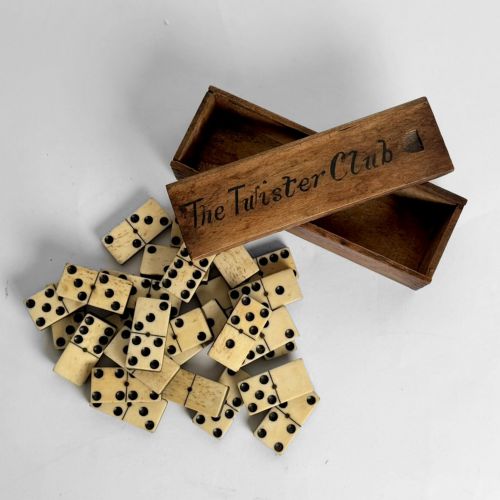
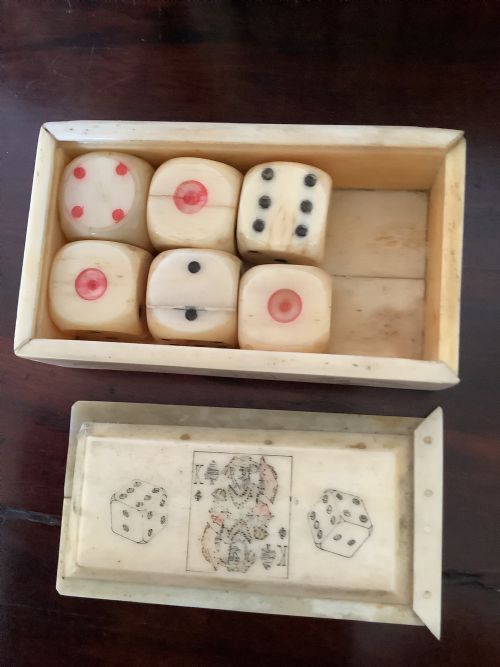


Carved Bone Gaming Set
These carved bone gaming set items are tactile, historic pastimes ranging from prisoner of war dominoes to chess sets, bringing centuries of leisure into your home.
Carved Bone Gaming Set
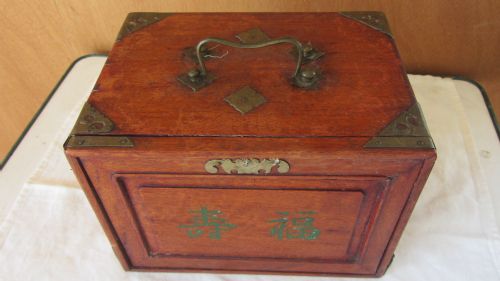
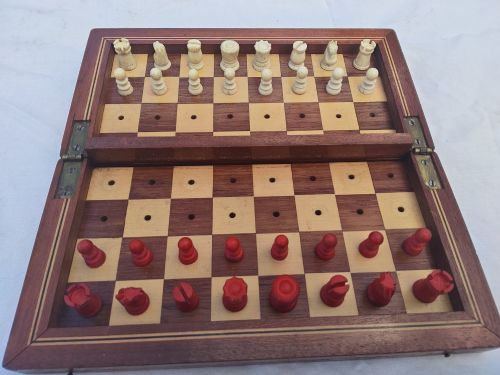
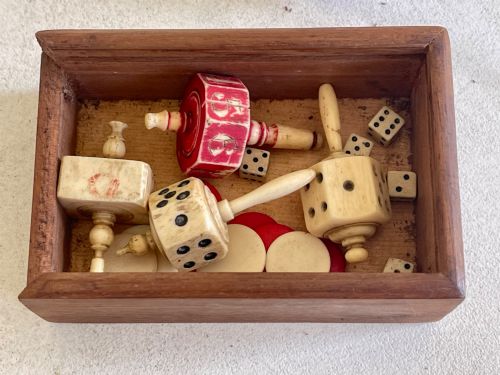
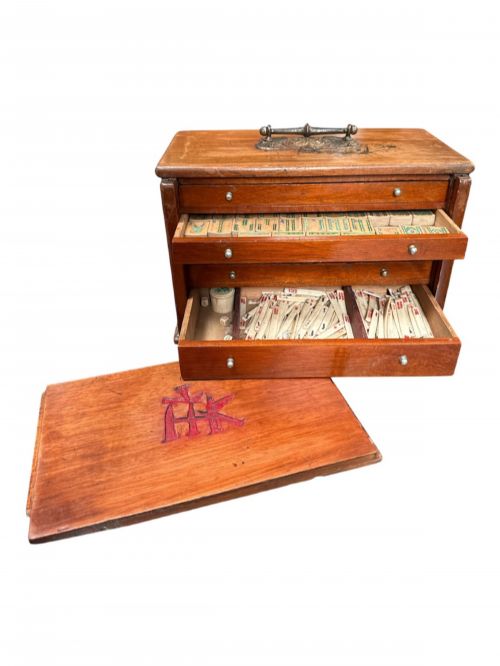
The selections on this page include Victorian and Edwardian examples alongside earlier Georgian or Napoleonic pieces. Forms range from miniature travel chess sets and fitted wooden cabinets to boxed dominoes and dice housed in small bone containers.
How they were made
Bone serves as the primary material for the playing components, shaped and worked by hand to form counters, pieces, and domino pips. Artisans often utilised ink and pigment to stain or highlight carved details, numbering, and suit markings.
Many sets incorporate complementary woods such as mahogany, boxwood, and rosewood for their storage boxes, cabinets, and travel boards. Brass fittings frequently secure the fitted wooden cases that house these delicate bone items.
Carved Bone Gaming Set Retail Price Guide 2026
Typical asking prices for carved bone gaming set among the pieces listed under this phrase on Sellingantiques today, from the lower quarter to the upper quarter. They describe what is for sale here now, not the wider market.
Current listings feature items from the 1800s, Victorian era, and Edwardian period, utilising bone, mahogany, boxwood, and rosewood.
What varies in quality
The finesse of the carving on the bone pieces separates standard items from finer examples, particularly in figural chess sets and intricate prisoner of war work. Crisp detailing and clean pigmentation on the numbering and symbols indicate superior craftsmanship.
The integrity and survival of the original fitted cabinet or box also influence the overall standard. Mahogany and rosewood cases with intact brass hardware preserve the complete set more effectively than replacement containers.
The Carved Bone Gaming Set Glossary
- Teetotum
- A small spinning top used for gambling or games of chance, often found in nineteenth-century collections. They feature marked sides that dictate the player's winnings or losses.
- Mahjong
- A tile-based game originating in China, played with sets traditionally featuring bone faces backed by wood. Complete sets often come in fitted wooden cabinets.
- Whittington Pattern
- A specific nineteenth-century design style associated with chess sets. Collectors look for this distinct pattern when identifying period chess pieces.
- Boxwood
- A dense, pale wood frequently utilised alongside bone in traditional chess sets. Its smooth grain provides a strong contrast to carved bone.
Carved Bone Gaming Set: Frequently Asked Questions
What is a carved bone gaming set?
A carved bone gaming set includes historic tabletop items like dominoes, chess pieces, dice, and counters fashioned from bone. These sets date from periods such as the nineteenth century and the Edwardian era.
They represent historical leisure pursuits and often survive in wooden boxes or fitted mahogany cabinets designed for storage or travel.
How do I care for antique bone?
Antique bone requires stable indoor humidity away from direct sunlight and rapid temperature changes. Avoid using harsh chemical cleaners or excessive water on the bone surface.
Dust the pieces gently with a soft, dry cloth. If the storage box is wood, maintain it with appropriate furniture wax as needed.
Were these sets used for travel?
Many nineteenth-century chess sets and game collections were specifically built for travel, featuring compact wooden boxes and miniature pieces. These allowed Victorians to play games on coaches, trains, or during voyages.
Fitted interiors ensured that bone counters and dice remained secure while in motion.
How are prisoner of war pieces identified?
Prisoner of war gaming pieces typically date from the Napoleonic era and display meticulous hand-carved bone work created with basic tools. Makers often utilised scrap materials available during confinement.
Their distinct style and historical context separate them from commercial Victorian factory production.