




Carved Bedside Lockers
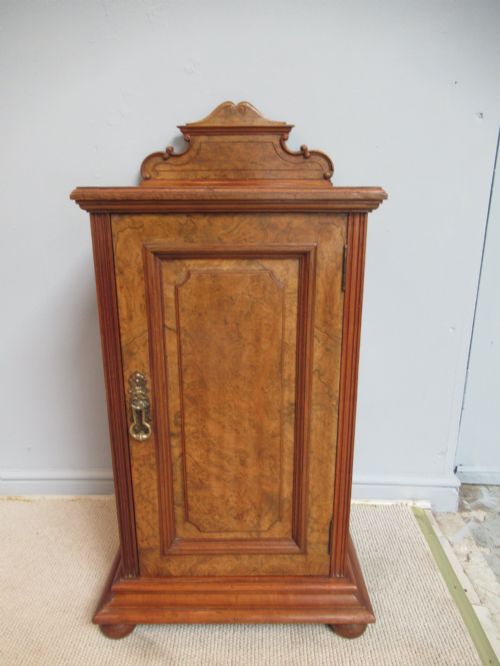
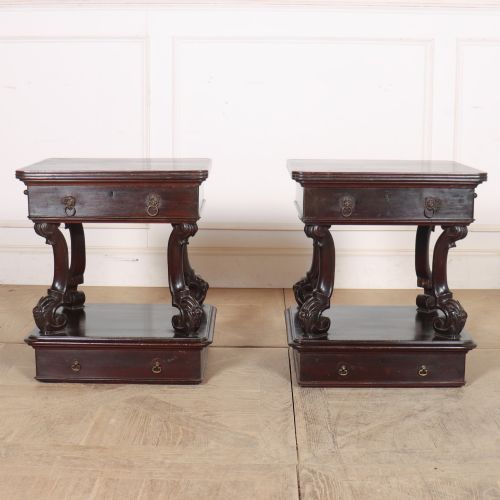
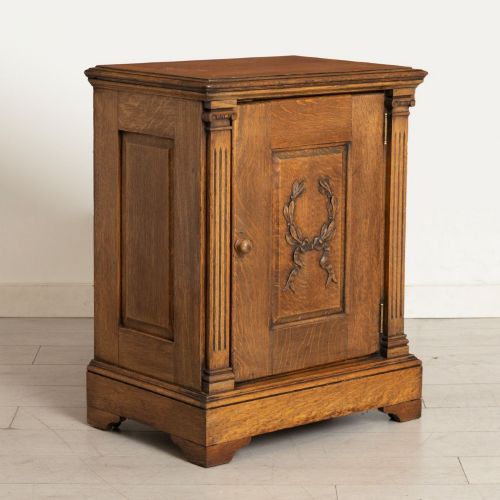
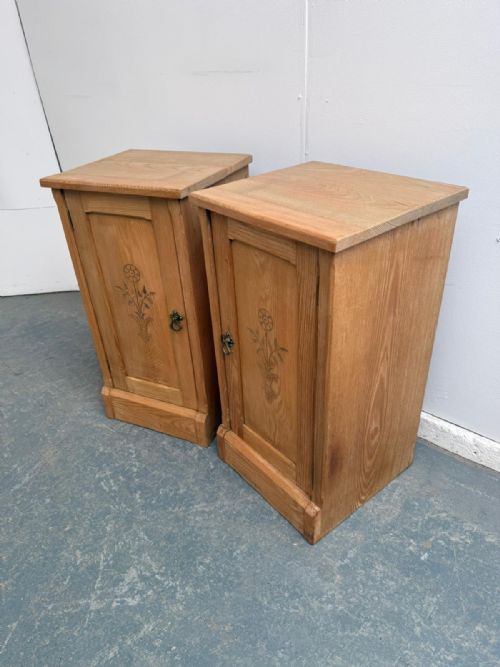
These carved bedside lockers bring practical bedside storage and period character to a bedroom.
Carved Bedside Lockers
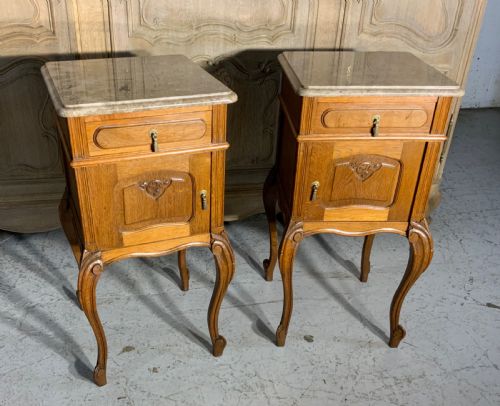
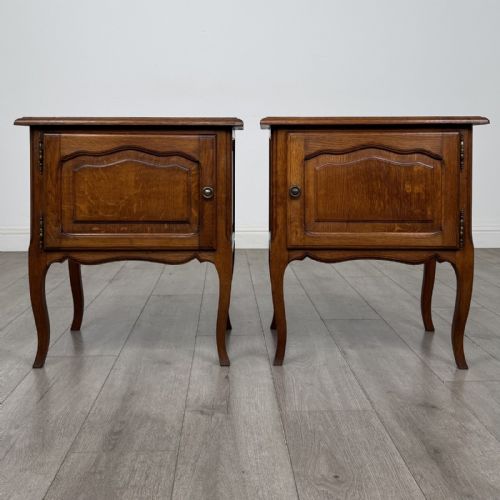
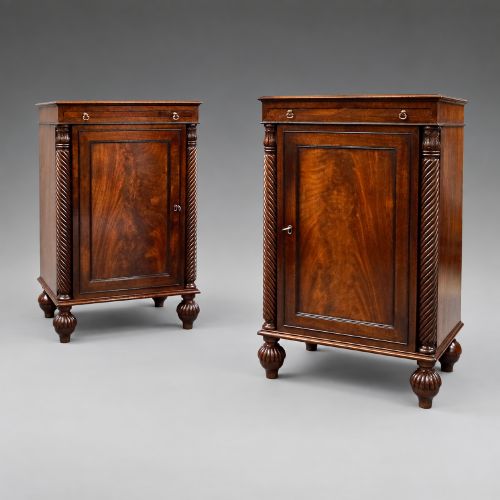
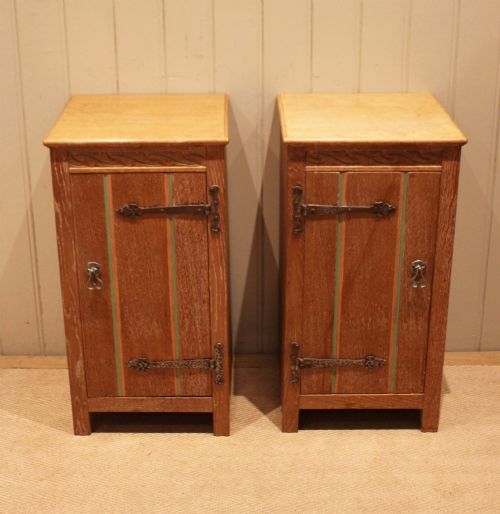
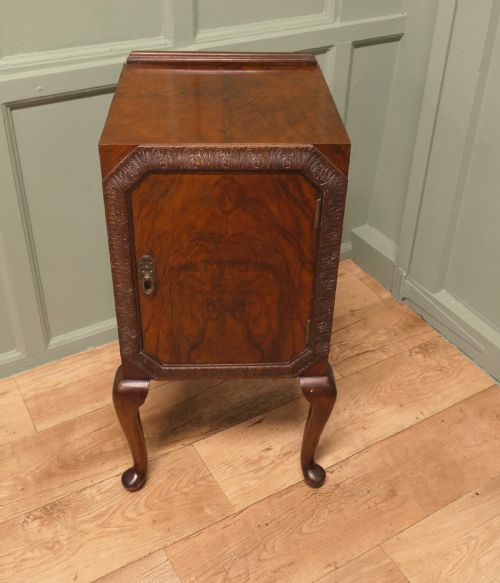
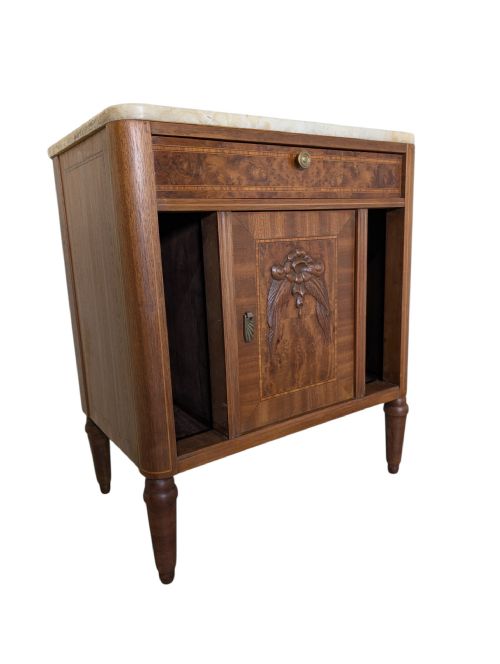
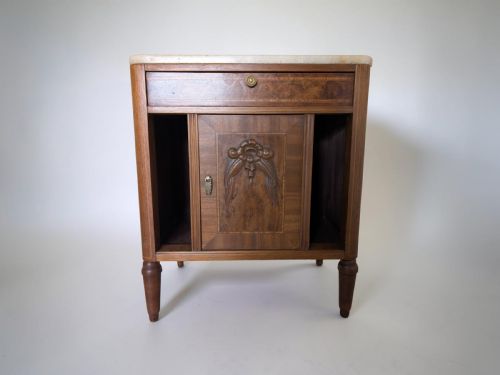
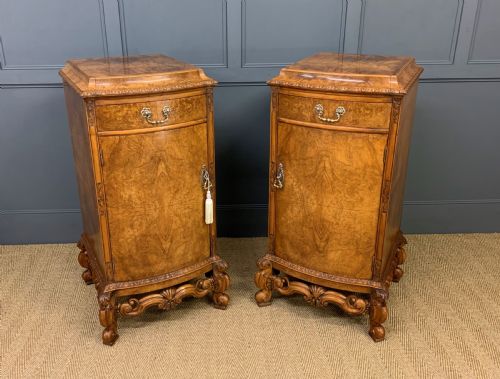
The forms vary from simple oak or mahogany cupboards with a single drawer and door to tall burr walnut pedestal cabinets and marble-topped French designs. Many pieces incorporate carved friezes, panel doors or marquetry inlay reflecting styles ranging from Gothic Revival and Jacobean Revival to Art Deco and Arts and Crafts.
How they were made
Cabinet makers utilised solid and veneered hardwoods including mahogany, oak, walnut and burr walnut, frequently pairing timber bodies with inset marble tops. Brass handles, hinges and metal fittings complete the construction.
Surface ornamentation relies on hand carving, notably on friezes and door panels, alongside marquetry inlay and satinwood or exotic hardwood details. Waxed finishes and limed treatments protect the timber while highlighting the natural grain.
Carved Bedside Lockers Retail Price Guide 2026
Typical asking prices for carved bedside lockers among the pieces listed under this phrase on Sellingantiques today, from the lower quarter to the upper quarter. They describe what is for sale here now, not the wider market.
The selection includes French Provincial, Gothic Revival and Arts and Crafts styles, alongside pieces featuring fitted marble tops and marquetry inlay.
What varies in quality
The standard of timber selection and complexity of cabinet making define the upper tier of pieces, particularly where burr walnut veneers or figured mahogany are matched across a pair. Subtle hand-carved details and integrated marble tops distinguish finer examples from plain utility cupboards.
Originality of brass hardware and stability of joints shape the integrity of each cabinet. Pieces retaining makers' stamps or bearing refined stylistic details from periods such as the Arts and Crafts movement or French Art Deco demonstrate superior workshop provenance.
Heals·Simpson Halifax·Gillows·James Shoolbred
The Carved Bedside Lockers Glossary
- Pedestal cupboard
- A narrow, upright cabinet designed to stand beside a bed, featuring an enclosed cupboard space beneath a top surface or drawer. These form the primary structural format for most bedside lockers.
- Frieze
- The decorative horizontal band situated immediately beneath the top surface of a cabinet. On these pieces, this section frequently carries hand carving.
- Marquetry
- The art of applying decorative veneer pieces of different woods to form geometric or pictorial patterns on the surface. It appears on select walnut and inlaid side cabinets.
- Pot cupboard
- An alternative historical term for a bedside cabinet or locker, originally intended to house a chamber pot. They typically combine a single door with an interior shelf.
Carved Bedside Lockers: Frequently Asked Questions
How do I date a bedside locker?
Dating relies on examining the timber, construction methods, handles and stylistic details present on the piece. Victorian examples often utilise solid mahogany or burr walnut with hand-cut dovetails, while 1920s and 1930s pieces may show Art Deco influences or limed oak finishes.
Maker stamps and specific revival styles, such as Gothic Revival or Jacopolitical Jacobean Revival, offer further chronological clues for placing a cabinet within the nineteenth or twentieth century.
Are bedside lockers sold in pairs?
Many bedside cabinets and lockers survive and sell as matched pairs, though single examples also appear frequently. Pairs often originate from larger bedroom suites produced during the Victorian, Edwardian and Art Deco eras.
Matching pairs are particularly sought after for placing on either side of a double bed, providing symmetrical storage and matching timber grain or carved details.
How do I maintain marble top lockers?
Marble top bedside lockers require gentle cleaning with a soft cloth and neutral soap to protect the stone surface from acidic liquids or staining. Keeping the marble polished helps preserve its original sheen.
The wooden base and carved sections benefit from occasional waxing to nourish the timber without building up excessive residue.