
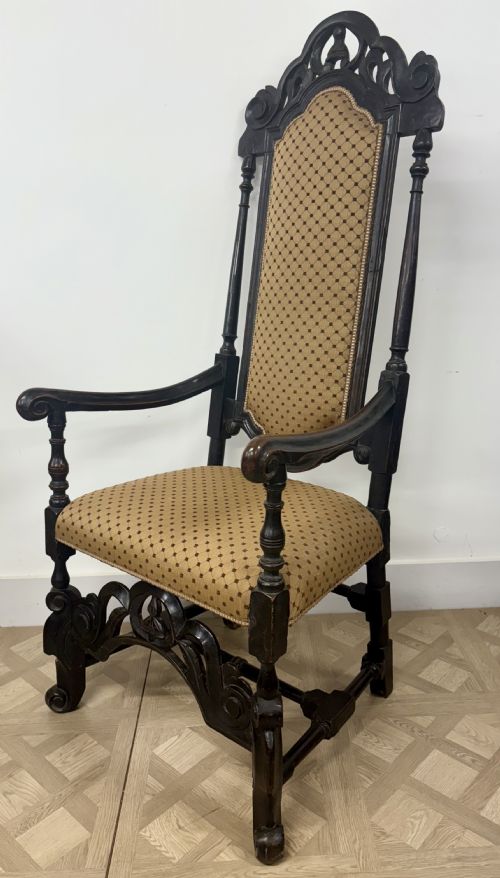
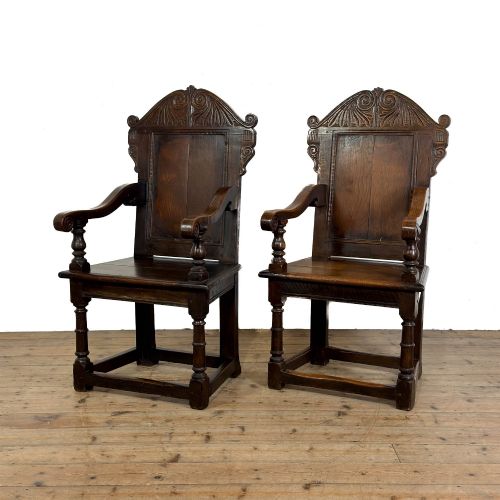
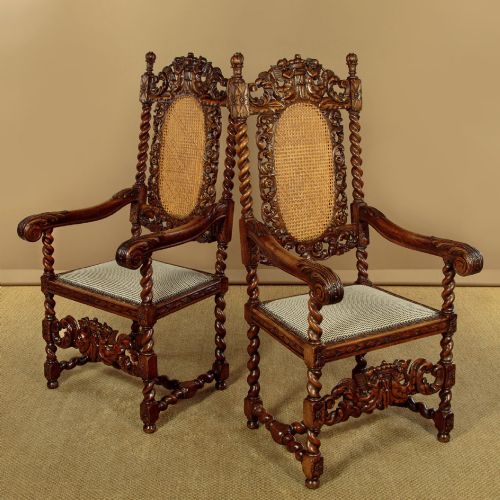
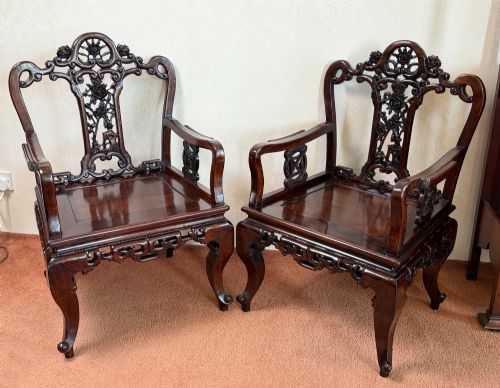
Carved Back Throne
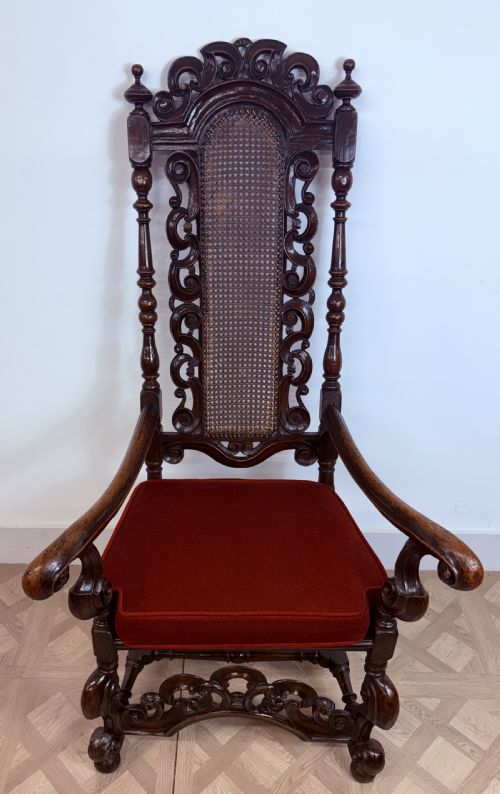
These carved back throne examples command a room with high presence, offering substantial seating built for impact.
Carved Back Throne
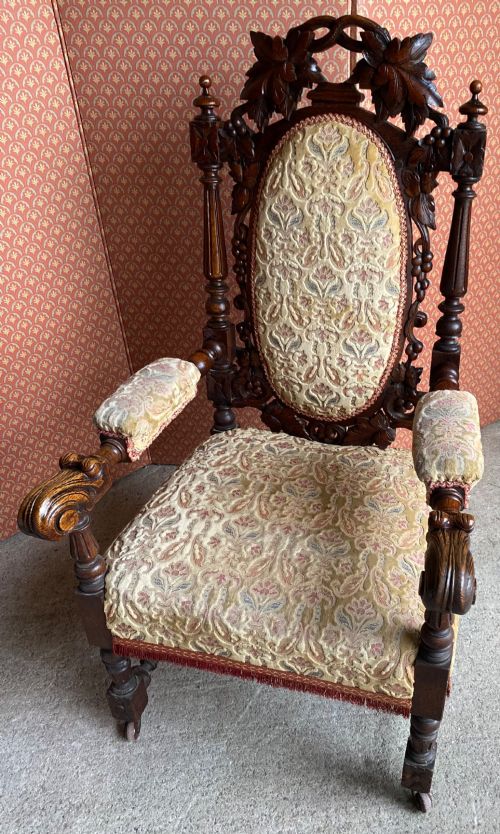
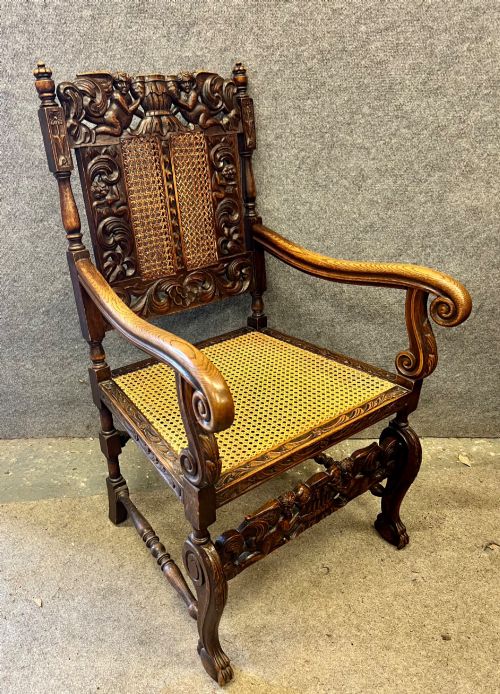
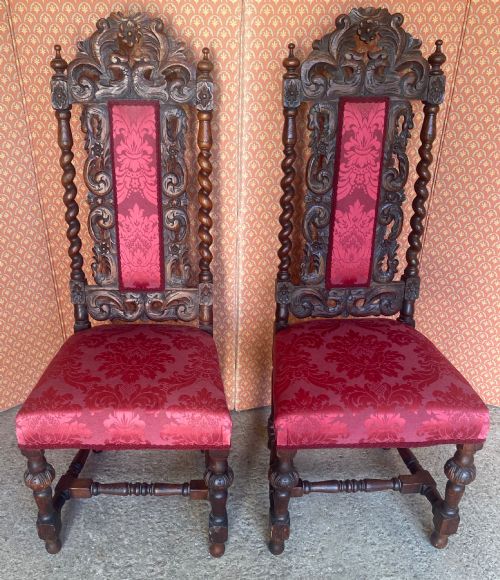
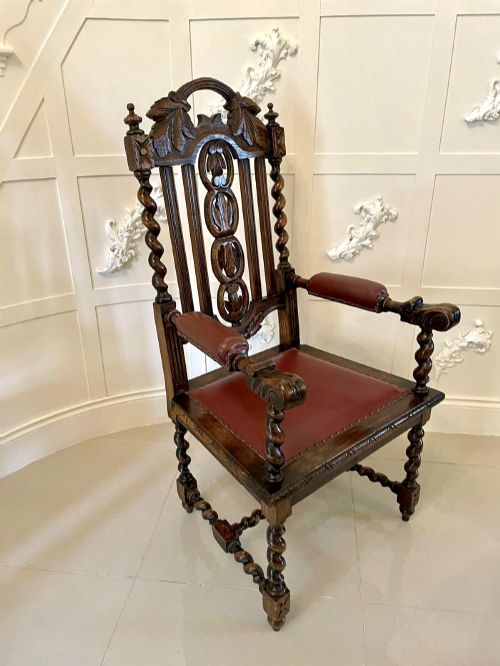
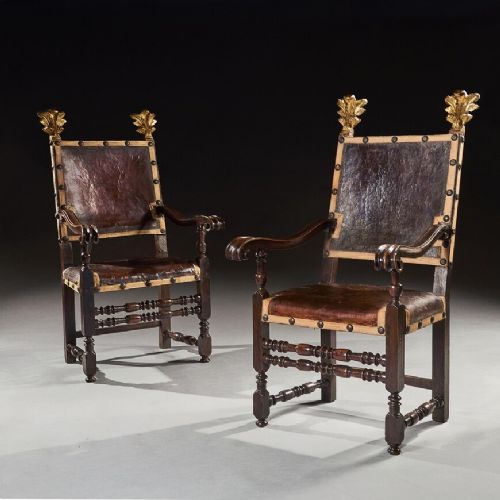
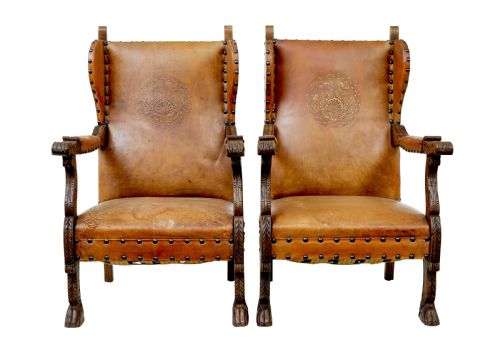
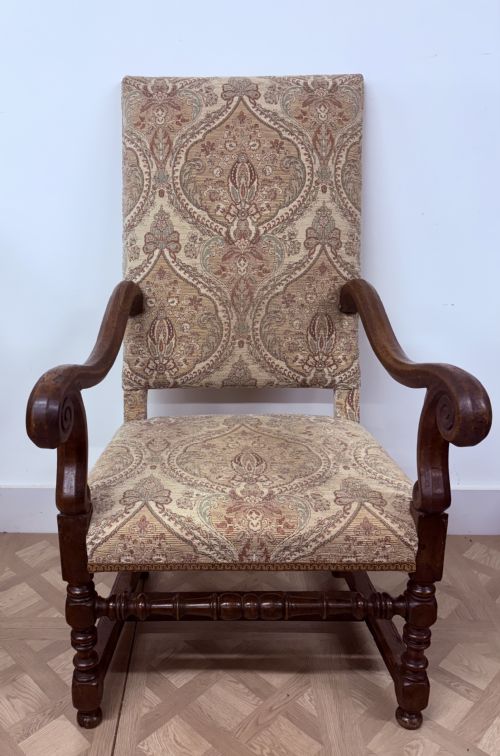
A carved back throne sits firmly in the category of heavy seating, taking the form of armchairs, hall chairs, and accent chairs designed to draw the eye. When exploring a carved back throne, buyers encounter pieces spanning from the seventeenth century through to the early twentieth century, reflecting enduring architectural forms.
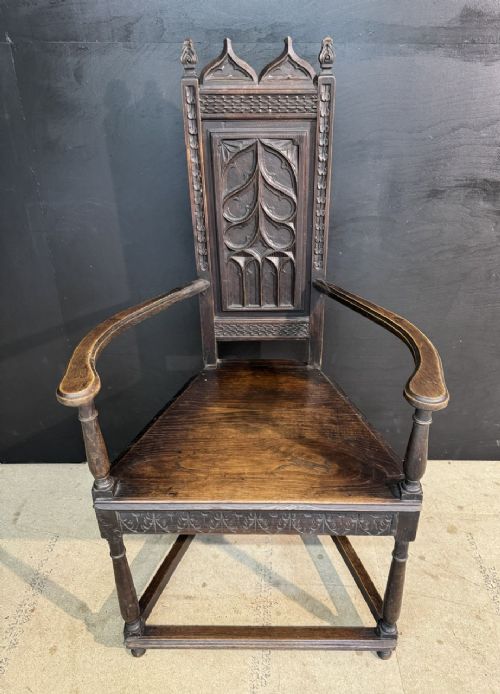
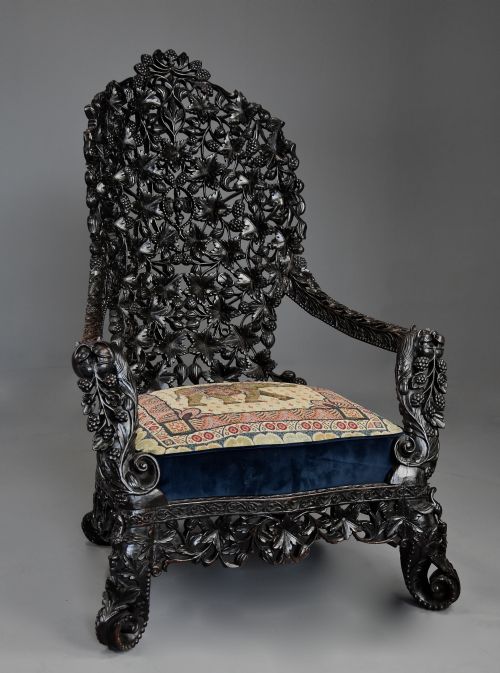
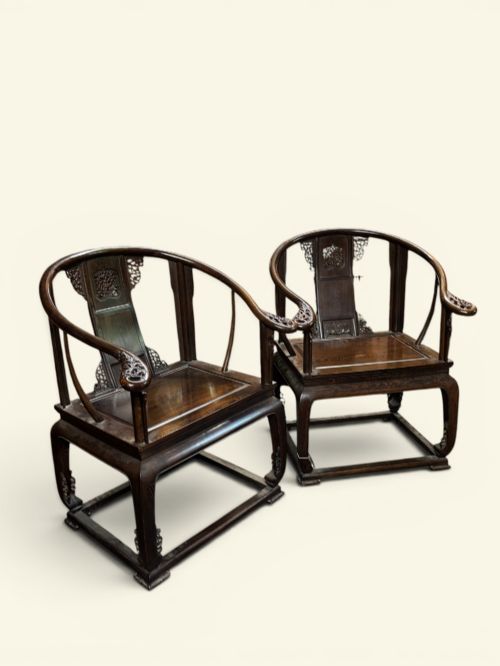
The material selection leans heavily on robust timbers like oak and walnut, alongside Chinese hardwood, elm, and blackwood. Regional variations range from English wainscot and Welsh great chairs to Italian baroque designs and Chinese horseshoe-back armchairs.
Revival styles appear frequently alongside genuine seventeenth-century originals, demonstrating how later cabinetmakers drew inspiration from earlier eras. Buyers meet pieces defined by high backs, substantial armrests, and intricate surface decoration suited for formal reception rooms.
Materials and construction methods
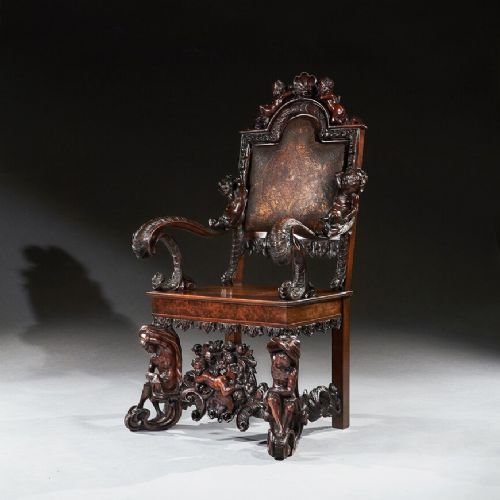
Makers constructed these chairs primarily using solid oak, walnut, and exotic hardwoods, joined with traditional framing techniques to support heavy ornamentation. Carvers worked directly into the timber to produce high relief panels, cresting rails, and elaborate back splats.
Upholstery elements integrate materials such as embossed leather, painted leather, fabric, velvet, cane, tapestry, and brass detailing. Giltwood finishes and parcel-gilt treatments appear on continental pieces, applied over carved wooden foundations to catch the light.
Giant proportions appear in island workshops, where makers scaled up seating dimensions to accommodate imposing architectural spaces.
Assessing craftsmanship and execution
The depth and crispness of the carved detail separate ambitious workshop output from simpler production. Superior examples display sharp relief work where foliage, figures, and geometric motifs retain clean edges.
Timber selection and structural integration also determine standard, with well-figured grain and tight joinery withstanding centuries of use. The harmony between the original frame and decorative elements indicates the skill of the maker.
Andrea Brustolon
The Carved Back Throne Glossary
- Wainscot chair
- A heavy wooden armchair of seventeenth-century origin, constructed with panelled backs and solid wooden seats. These pieces often display Yorkshire or Welsh regional characteristics.
- Caquetoire
- A sixteenth or seventeenth-century conversation chair featuring a high, narrow back and a trapezoidal seat designed to accommodate voluminous period dress.
- Horseshoe-back armchair
- A seating form originating in China, defined by a continuous curved rail that sweeps from the arms around to form the backrest. The design supports the sitter while displaying figured hardwood grain.
- Parcel-gilt
- A decorative treatment where selected areas of a carved wooden surface receive a thin layer of gold leaf, contrasting with the dark walnut or painted ground beneath.
- Bustolon
- A reference to the elaborate Italian baroque carving style associated with Andrea Brustolon, known for dramatic figures and complex sculptural frames.
Carved Back Throne: Frequently Asked Questions
What defines a carved back throne?
These seats feature elevated backrests decorated with deep relief woodwork, distinguishing them from standard household chairs. They function as architectural statements within a domestic interior.
Craftsmen built them using dense timbers like oak, walnut, and hardwood, often incorporating upholstered leather or tapestry panels.
Where were these chairs placed historically?
Owners positioned them at the head of long tables, in halls, or within formal reception rooms to indicate status and authority. Their substantial proportions suited large, draughty interiors.
They served both practical seating functions and decorative roles, anchoring the furniture scheme of a grand chamber.
How do I distinguish a seventeenth-century original from a revival piece?
Original pieces show natural timber wear, historic tool marks, and construction methods appropriate to the period, such as pegged joints and hand-sawn boards. Revival examples from the nineteenth and twentieth centuries often use more uniform machinery cuts and replicated period styles.
Examining the underside and hidden framing reveals the age of the wood and the assembly techniques used by the maker.
How should I care for leather and wood elements?
Maintain the timber surfaces with appropriate wax polishes to preserve the finish and prevent the wood from drying out. Avoid placing the chairs in direct sunlight or near heat sources.
Embossed and painted leather requires gentle dusting and occasional conditioning to maintain flexibility without damaging historic pigments.