
Carved Back Sideboard
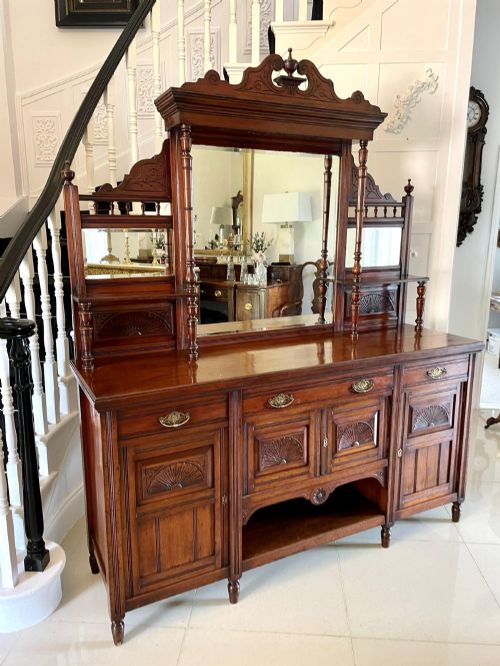
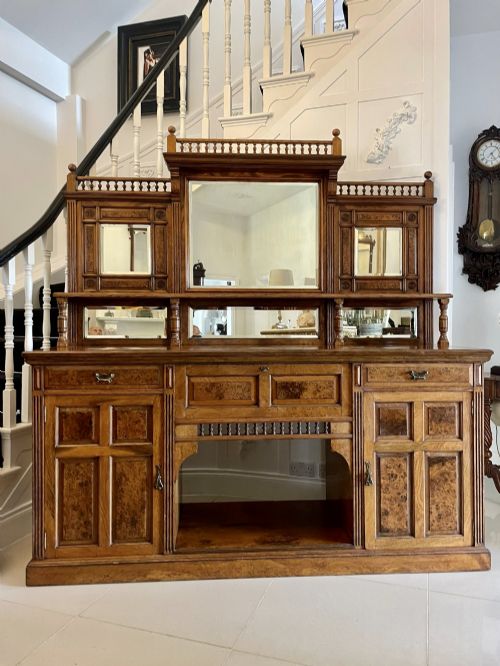
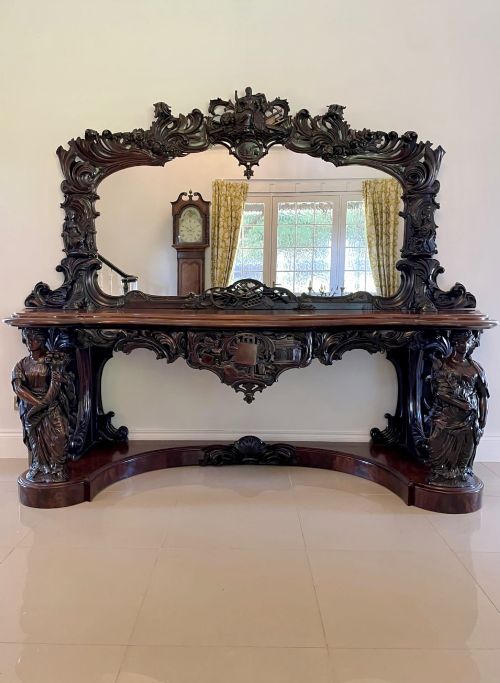
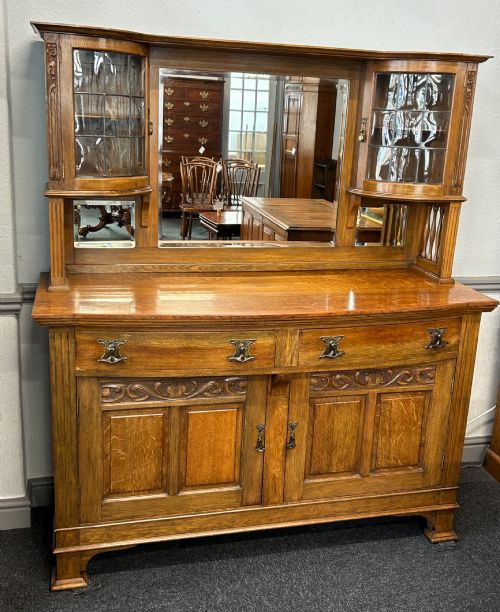
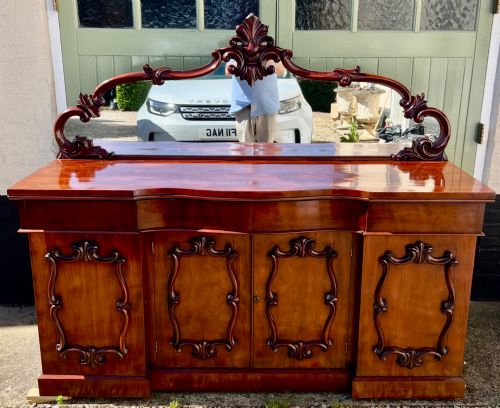
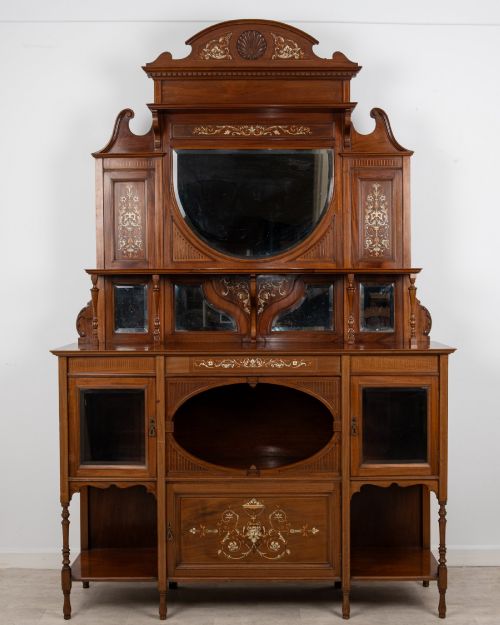
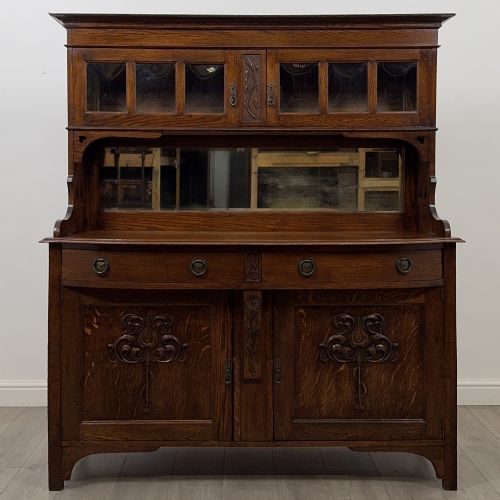
A carved back sideboard is a substantial dining or drawing room storage piece defined by elaborate timber work and often an integrated mirror.
Carved Back Sideboard
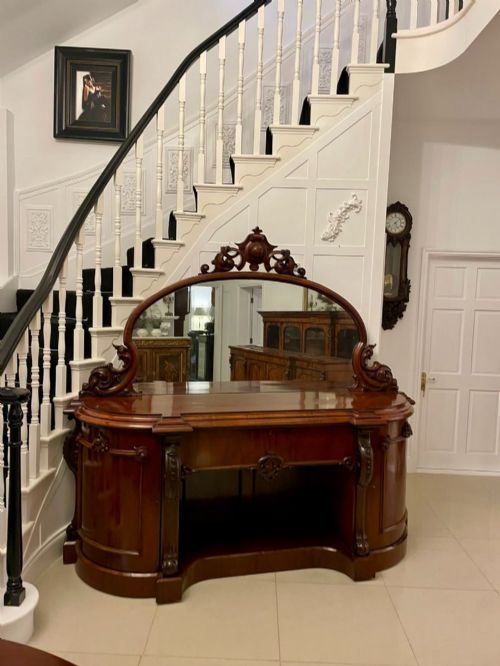
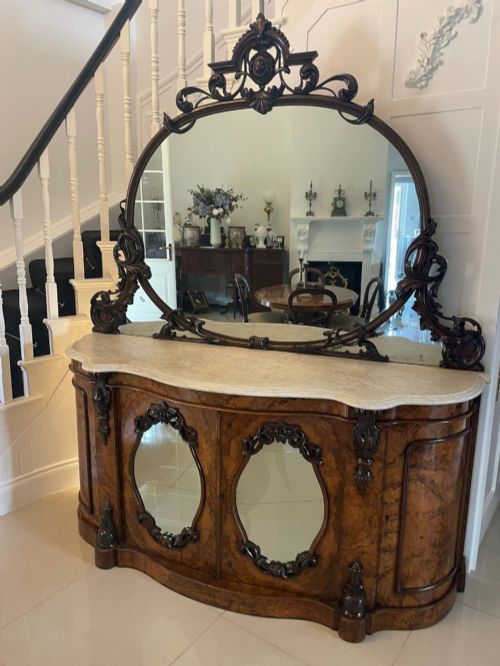
A carved back sideboard functions primarily as a grand dining room or parlour serving station, designed to hold china, cutlery and glassware while displaying decorative objects on its surface. When you examine this page, you encounter pieces dominated by heavy Victorian and Edwardian examples featuring high wooden superstructures.
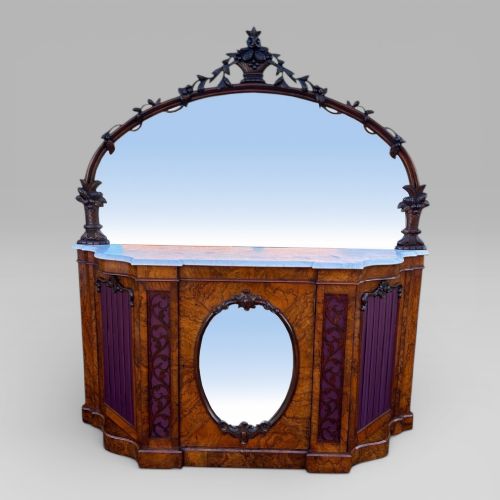
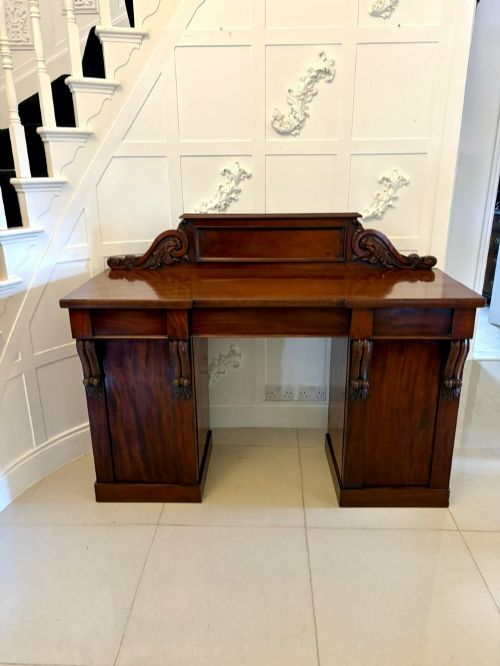
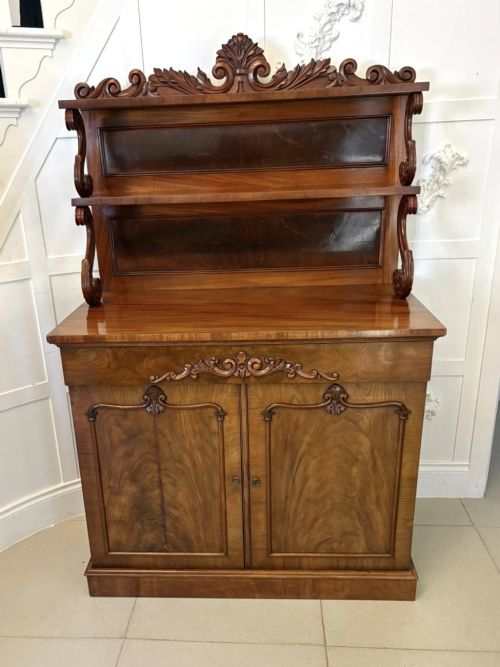
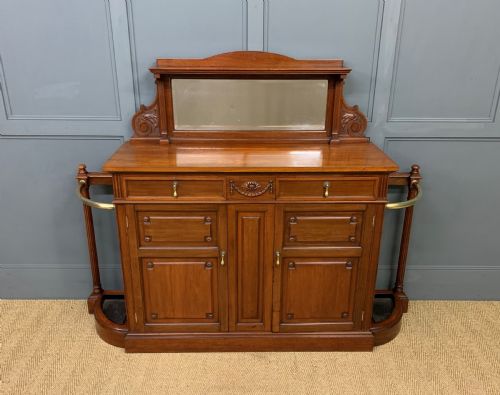
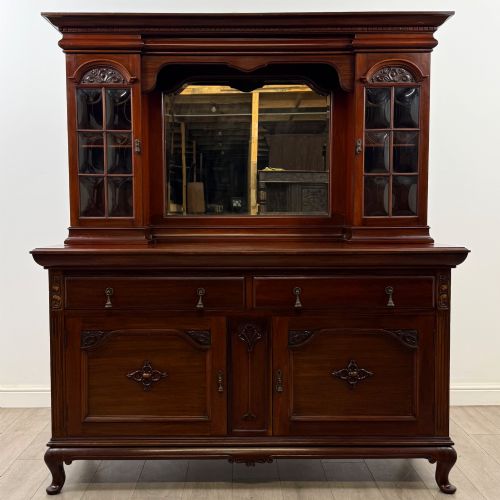
The form encompasses multiple stylistic interpretations, including Arts and Crafts designs alongside ornate Victorian Gothic and Renaissance revivals. Most commonly, these items incorporate an upright mirror glass panel set into a heavily carved timber frame above a low cabinet base or pedestal storage unit.
How they were made
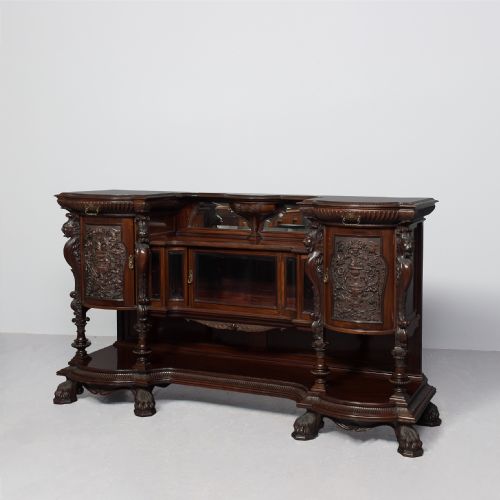
Cabinet makers utilised dense hardwoods such as mahogany, oak, walnut and burr walnut, frequently pairing them with brass hardware and fitted mirror glass. Timber surfaces received deep hand-chiselled relief decoration, leaf motifs and figural carvings, particularly along the raised superstructure and door panels.
Construction methods involved heavy structural timber framing, dovetailed drawers and panelled doors to support the considerable weight of marble tops and tall mirrored backs. Artisans polished the wood to highlight natural figures in the grain, ranging from figured mahogany to pollard oak.
Listings feature extensive examples in solid oak and mahogany, spanning Victorian, Edwardian and Arts and Crafts design movements.
What varies in quality
The depth and crispness of the timber carving separate standard production from exhibition pieces, with superior examples displaying sharply defined relief work rather than shallow moulding. Finer specimens employ high-grade timbers such as burr walnut or figured mahogany, selected for rich grain patterns.
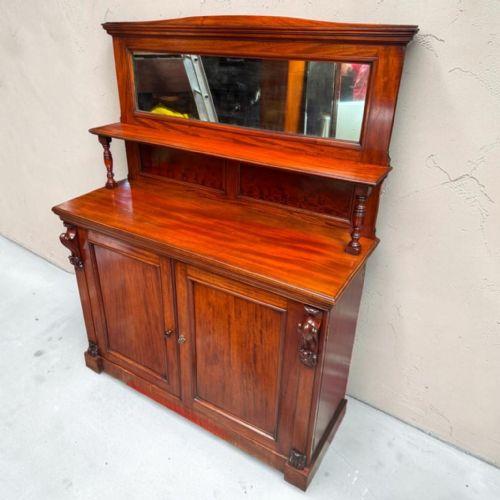
Structural ambition dictates tiering within the category, moving from simple two-tiered chiffoniers to massive pedestals incorporating marble surfaces and large bevelled mirror glass inserts. Maker attribution to known workshops also elevates the standing of an individual piece.
Shoolbred and Co·T Simpson and Son·James Simpson and Sons
The Carved Back Sideboard Glossary
- Mirror back
- A wooden superstructure incorporating an integrated looking glass above the main storage surface. This feature reflects light and displays decorative objects.
- Credenza
- A low dining or drawing room cabinet designed for storage and serving. It often shares similar proportions and mirror superstructures with sideboards.
- Chiffonier
- A compact sideboard or cabinet featuring a raised shelf or mirror back. Victorian iterations frequently combine lower cupboards with upper display tiers.
- Pedestal
- A structural support column or housing unit placed beneath the main counter surface. These often contain cellarettes or internal shelving.
- Breakfront
- A cabinet facade where the central section projects forward from the flanking cupboards. This configuration adds architectural depth to large dining furniture.
Carved Back Sideboard: Frequently Asked Questions
How do I clean the wood?
Dust the carved surfaces regularly with a soft, dry cloth to prevent dirt accumulation in the deep crevices of the relief work. Apply traditional beeswax periodically to nourish the hardwood and maintain the polished finish without sealing the grain.
Avoid using modern liquid sprays or silicones, which build up over time and dull the natural lustre of mahogany, oak or walnut. Take extra care around mirror glass inserts to prevent moisture seeping into the wooden rebate.
Where should I place it?
Position the piece against a sturdy dining room or hallway wall capable of supporting its substantial timber weight and large dimensions. Keep the furniture away from direct heat sources and strong sunlight to prevent the timber from warping or splitting.
Ensure there is adequate clearance around the doors and drawers for unhindered access during daily use. The integrated mirror back works effectively to bounce light across darker reception spaces.
Can I store heavy items inside?
Utilise the internal shelving for standard dining room essentials such as porcelain, linens, flatware and glassware. The robust timber construction of these cabinets handles everyday domestic storage loads with ease.
Distribute weight evenly across the shelves to maintain structural integrity within the pedestal cupboards. Avoid overloading narrow side cabinets beyond their intended domestic capacity.
How do I identify the period?
Examine the timber selection, hardware style and carving motifs to determine the era of production. Victorian pieces typically feature heavy Gothic or Renaissance revival carvings in mahogany, oak or burr walnut.
Edwardian and Arts and Crafts examples display simpler linear forms in lighter oak or mahogany, often reflecting functional design principles. Tool marks, joint construction and backboards offer further clues to the date of manufacture.