




Carved Armless Chairs
Carved armless chairs are low-slung, upholstered seats built for comfort and display, appearing here in walnut, mahogany, and ebonised wood.
Carved Armless Chairs
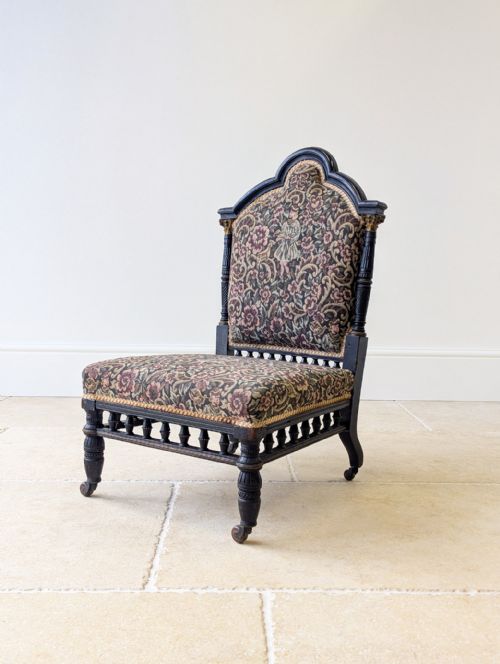
Carved armless chairs span the Victorian and Edwardian periods, taking the form of nursing chairs, slipper chairs, and salon chairs. These low seats were designed for domestic spaces, often featuring exposed frames in walnut, mahogany, or ebonised wood.
The versions most commonly met on this page are Victorian walnut framed nursing chairs and low salon seating. They combine carved wooden frames with upholstered seats, often retaining period fabric, velvet, or textile coverings.
Makers produced these chairs in various regional styles, including 19th Century French examples and Aesthetic Movement designs. Chinese Qing Dynasty hall chairs also appear within the selection, offering alternative carved forms.
How they were made
Makers fashioned the structural frames from dense hardwoods like walnut, mahogany, and oak, applying hand-carving to crest rails and legs. Ebonised wood and rosewood also feature, sometimes accented with brass details.
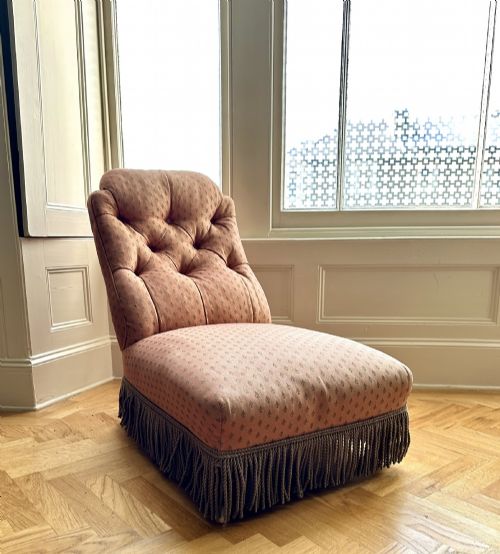
Upholstery techniques involved traditional stuffing and springing secured with fabric, velvet, or textile coverings. Fringe trim was frequently applied to the lower edges of slipper chairs.
Carved Armless Chairs Retail Price Guide 2026
Typical asking prices for carved armless chairs among the pieces listed under this phrase on Sellingantiques today, from the lower quarter to the upper quarter. They describe what is for sale here now, not the wider market.
Materials recorded across the selection include walnut, mahogany, ebonised wood, and brass.
What varies in quality
The refinement of the hand-carved detail on the wooden frame distinguishes finer examples from simpler production. Crisp execution on walnut or mahogany legs indicates a higher grade of craftsmanship.
The integrity of the original timber frame and the quality of the surviving textile or upholstery materials dictate the overall standing of each piece.
The Carved Armless Chairs Glossary
- Nursing chair
- A low-seated chair designed for comfort, traditionally used in bedrooms or nurseries during the Victorian period. These chairs typically feature a low profile and a carved wooden frame.
- Slipper chair
- An upholstered bedroom chair with a low seat, historically used while putting on shoes or slippers. They often include fringe trim and lack armrests.
- Ebonised wood
- Timber treated with a dark stain or finish to resemble ebony. This technique was popular in Aesthetic Movement pieces.
- Cabriole leg
- A furniture leg that curves out and then in, resembling an animal's leg. This form appears frequently on Victorian seating.
Carved Armless Chairs: Frequently Asked Questions
Where were carved armless chairs used?
These chairs were typically placed in bedrooms, drawing rooms, and nurseries. Their low seats made them practical for specific domestic tasks.
In formal spaces like salons, they served as decorative accent seating that did not crowd the room.
How do I identify a nursing chair?
Nursing chairs are characterised by their unusually low seats, designed to allow a person to sit comfortably close to the floor. They frequently feature carved wooden frames and upholstered backs.
Many examples date from the Victorian era and use walnut or mahogany frames.
What is a slipper chair?
A slipper chair is an upholstered seat without arms, built very close to the floor. They gained popularity for bedroom use.
They often include decorative fringe along the base and can be found in various period fabrics.
Can I reupholster an antique chair?
Many antique chairs are sold specifically for upholstery, allowing new fabric to be fitted to the frame. This updates the textile while preserving the wooden structure.
Traditional materials and techniques should be considered when undertaking upholstery work on period frames.