



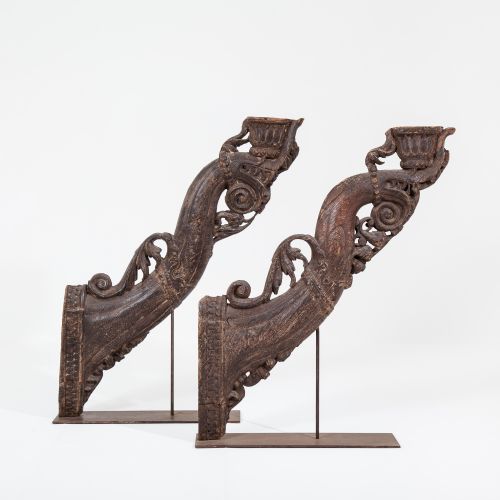

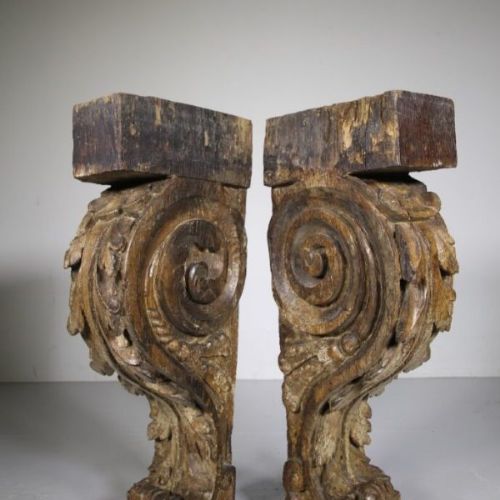


Carved Acanthus Brackets
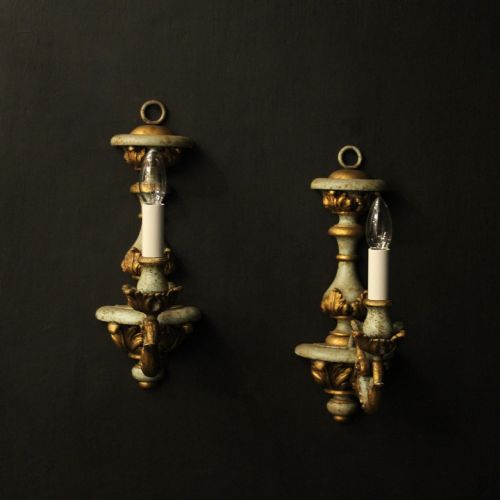
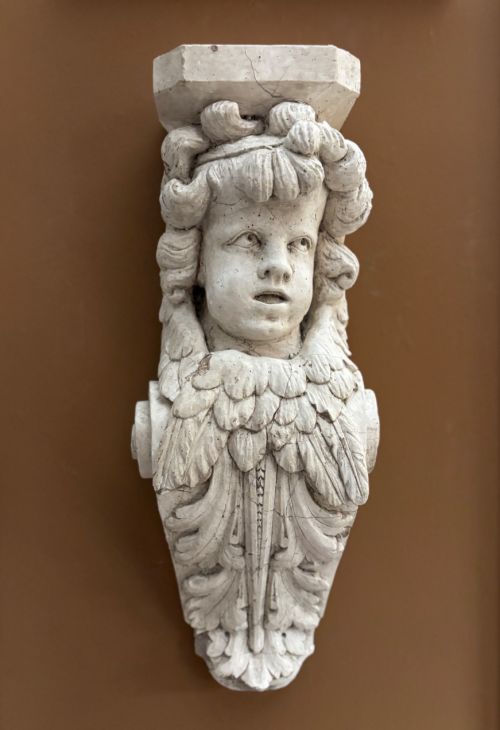
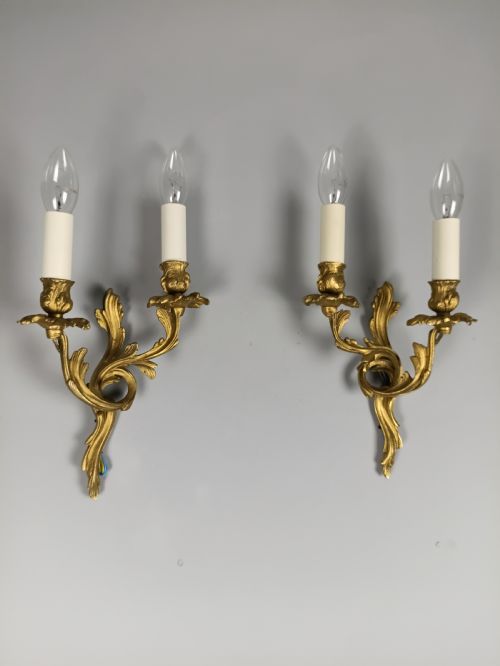
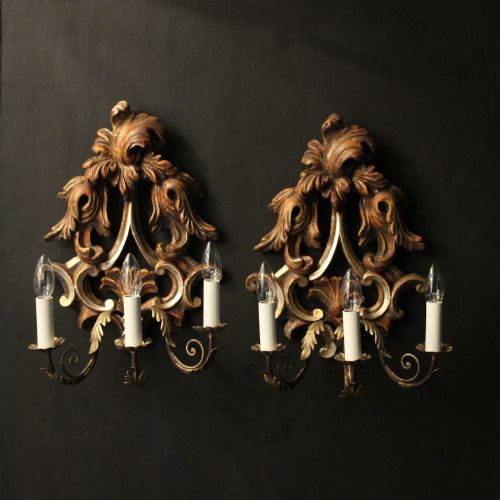
These carved acanthus brackets provide structural support and ornamental weight to a room, formed from carved wood, gesso, and giltwood.
Carved Acanthus Brackets
Carved acanthus brackets represent a specific category of architectural salvage and wall furniture designed to project from a vertical surface. When buyers search for carved acanthus brackets, they encounter forms ranging from architectural corbels and capitals to wall lights and sconces.
The pieces appearing on this page span several centuries, drawing from the eighteenth century, the Georgian and Victorian eras, and early twentieth-century revivals. Wooden wall brackets and architectural elements form the most frequent encounters in this selection.
Originating in styles such as Florentine Rococo, French Chateau, Neoclassical, and Baroque Revival, these items serve as both load-bearing architectural supports and decorative wall mounts. Their deployment spans single wall brackets to paired sconces adapted for lighting.
How they were made
Makers shaped these items primarily from carved wood, including oak, red walnut, and limewood, alongside plaster, stone, and bronze. Artisans frequently applied gesso, gold leaf, paint, and gilding to wooden surfaces to achieve rich decorative finishes.
The construction relies on traditional hand-carving techniques, visible in the detailed foliage and figural elements such as putti and cherubs. Structural components range from solid timber corbels to composite wall brackets finished with metallic leaf or polychrome paint.
Several pieces feature watchful putti and cherubs peering out from the foliage, keeping an eternal, silent guard over the hallway.
What varies in quality
Quality in these pieces depends on the crispness and depth of the hand-carving within the acanthus foliage and figural motifs. Superior examples exhibit fluid, confident tool work that creates deep undercutting and distinct relief.
The integrity of the original surface finish, whether aged gilding, polychrome paint, or bare timber, dictates the visual authority of the piece. Superior craftsmanship shows harmonious integration between the structural wooden core and the applied decorative layers.
The Carved Acanthus Brackets Glossary
- Corbel
- A structural piece of stone, wood, or metal jutting from a wall to carry a superincumbent weight. These items function primarily as architectural supports.
- Giltwood
- Wood that has been prepared and coated with gold leaf or a metallic substitute. This finish appears frequently on decorative wall brackets from various periods.
- Capital
- The uppermost member of a column, serving as a transition from the shaft to the lintel. Examples in this category often feature classical leaf carving.
- Gesso
- A plaster mix used as a base for paint or gold leaf on wood. It provides a smooth surface for detailed decorative finishing.
- Putto
- A figure of a small infant, commonly depicted as a chubby male child in classical art. These figures appear frequently on ornamental brackets and sconces.
Carved Acanthus Brackets: Frequently Asked Questions
How were carved acanthus brackets used historically?
These pieces functioned primarily to support shelves, beams, or architectural projections while adding ornamental detail to an interior. They also served as wall sconces and brackets for lighting.
In domestic and civic interiors, craftsmen mounted them at prominent wall junctions to elevate the visual weight of the room. Their dual role combined structural utility with sculptural decoration.
How do I distinguish eighteenth-century pieces from later revivals?
Eighteenth-century items typically display hand-tool marks and timber patination consistent with age and continuous use. Later revivals from the nineteenth and twentieth centuries often replicate earlier styles with distinct manufacturing signatures.
Examining the underside, joints, and surface preparation reveals the period of manufacture. Construction methods and wood species provide the clearest indicators of age.
Can these wall brackets support functional lighting?
Many surviving examples are adapted as wall lights and sconces with integrated arms for electrical wiring. These pieces combine original carved woodwork with functional illumination.
When assessing wired brackets, check the internal wiring components to ensure they meet modern electrical standards. Professional rewiring preserves the antique wooden mount while ensuring safety.