




Carriage Clock with Case
A carriage clock with case is a portable timekeeper housed in brass and glass, designed for travel and valued for mechanical precision.
Carriage Clock with Case
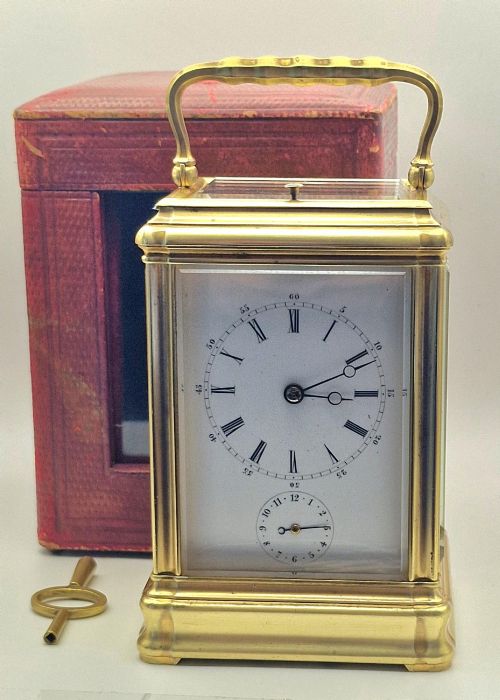
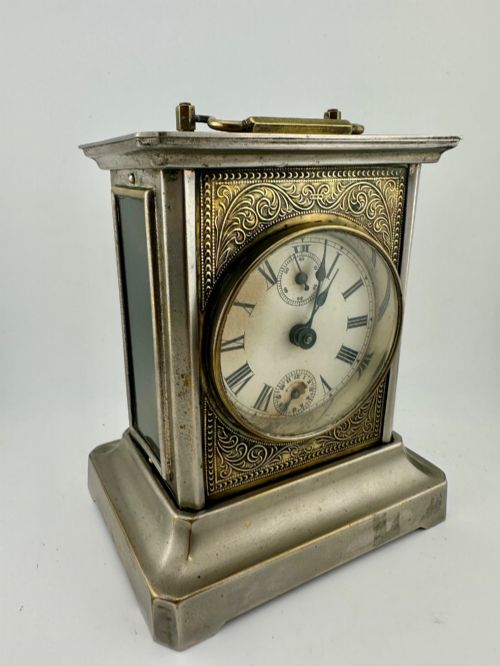
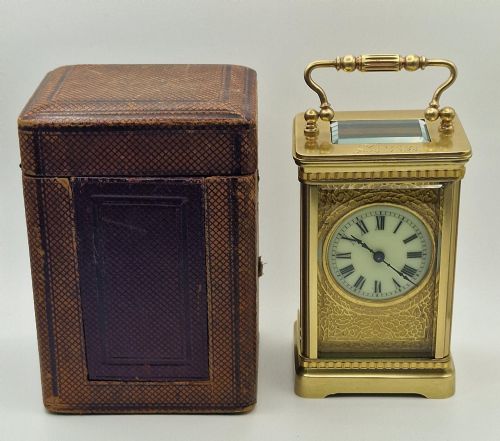
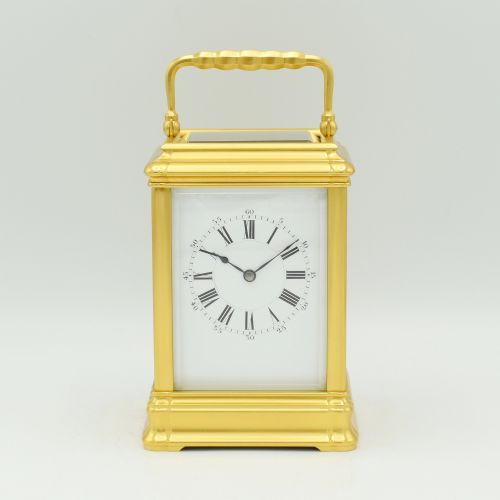
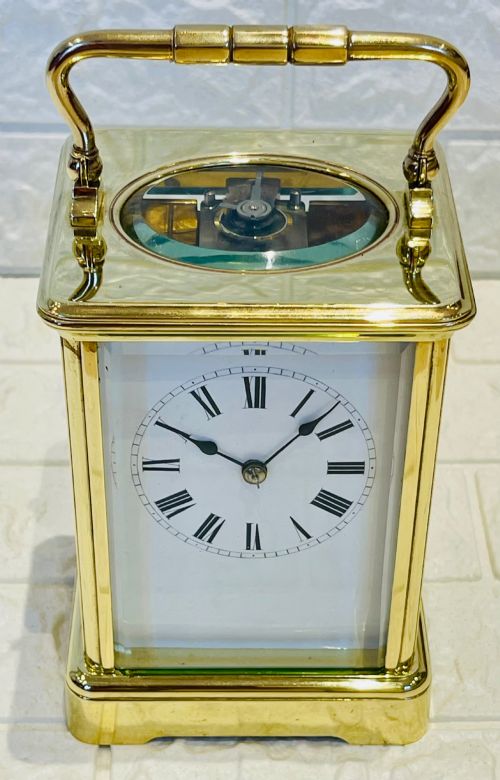
A carriage clock with case represents a mechanical timekeeper originally built for travel during the nineteenth century. These pieces combine heavy brass framing with bevelled glass panels to display the escapement and movement within.
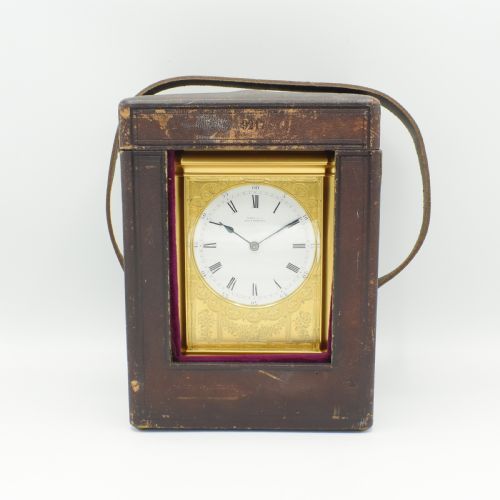
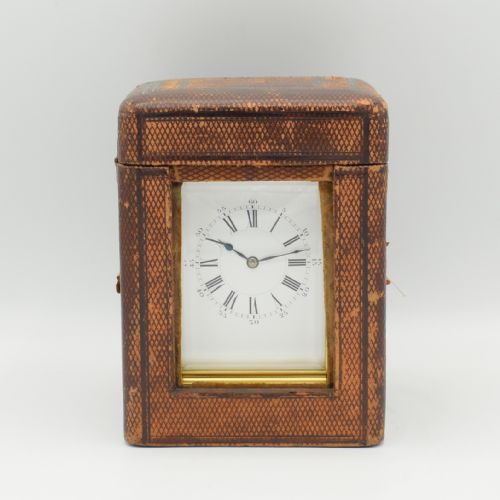
The selections available span Victorian and Edwardian periods, including French and English examples. Many survive with their original leather or wooden travelling cases intact.
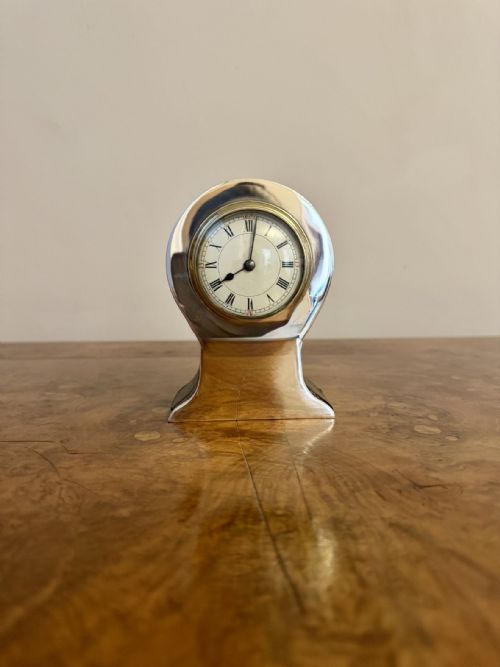
Forms range from standard brass corniche and gorge cases to miniature boudoir models and giant formats incorporating complications such as alarms, repeaters and calendars.
Materials and Construction
The primary structural material is brass, frequently gilded or polished, combined with multiple glass panels that afford a complete view of the gear train. Enamel is utilised for dial faces, bearing Roman or Arabic numerals.
Fitted travelling cases are constructed from leather to protect the delicate escapement during transit. Additional components include steel for springs and pinions, alongside sterling silver in select examples.
Carriage Clock with Case Retail Price Guide 2026
Typical asking prices for carriage clock with case among the pieces listed under this phrase on Sellingantiques today, from the lower quarter to the upper quarter. They describe what is for sale here now, not the wider market.
Listings demonstrate carriage clocks spanning the Victorian and Edwardian eras, utilising brass, glass, enamel, and leather.
Markers of Quality
Quality rests in the complexity of the movement and the integrity of the case. Clocks featuring striking trains, repeaters, or alarm mechanisms demand higher precision in manufacture.
The survival of original gilding, complete leather cases, and matching keys elevates an example. Maker attribution to established workshops adds distinction to the physical execution.
Henri Jacot·Pickford of London·Clerke Royal Exchange London·A Delépine·Drocourt·Richard and Co
The Carriage Clock with Case Glossary
- Corniche case
- A traditional rectangular brass carriage clock frame featuring simple column corners and a stepped top and base. This style represents a standard nineteenth-century design.
- Gorge case
- A stepped architectural brass frame distinguished by curved mouldings to the top and bottom. It often houses more complex repeating movements.
- Repeater
- A mechanism that chimes the hours and quarters upon demand via a push button on the top. This complication required high skill in assembly.
- Grand Sonnerie
- A striking train that automatically chimes the hours and quarters on the passage of time. It is found on high-grade French movements.
- Escapement
- The internal mechanism that controls the release of power to regulate the timekeeping. It is typically visible through the upper glass panel.
Carriage Clock with Case: Frequently Asked Questions
How do I wind a carriage clock?
Winding is performed from the back plate using a dedicated key inserted into the arbors.
Care must be taken not to overwind the mainspring to avoid damaging the internal components.
Why do some clocks have leather cases?
Travelling cases were originally supplied to protect the brass and glass housing from knocks during carriage journeys.
These outer cases help preserve the clock and often feature fitted compartments for the winding key.
How do repeaters work?
Pressing the button on top of the case triggers the striking train to sound the last hour and the quarters.
This allowed the time to be checked in the dark before electric lighting was common.
What is the difference between a timepiece and a clock?
A timepiece refers strictly to a movement that indicates the hours and minutes without a striking train.
Clocks include additional mechanical trains for sounding hours, alarms, or repeating functions.
How do I date a carriage clock?
Dating relies on stylistic clues in the brass case design, dial typography, and any maker marks stamped on the movement back plate.
The presence of specific complications and original travelling cases also points to distinct periods in the nineteenth century.