




Carolean Carved Hall Chairs
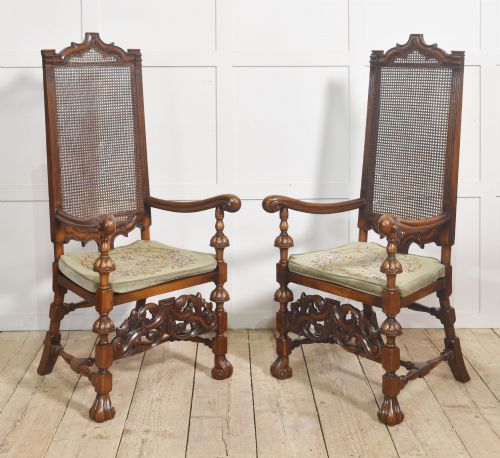
Carolean carved hall chairs bring seventeenth-century drama to an entrance, offering heavy timber construction and striking pierced woodwork.
Carolean Carved Hall Chairs
Carolean carved hall chairs stand as substantial seating options, typically encountered in durable oak or walnut. You will find originals from the seventeenth century alongside nineteenth-century revivals that emulate the ornate style of the Charles II period.
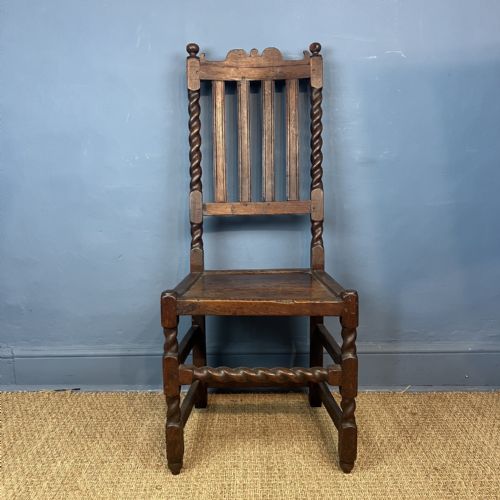
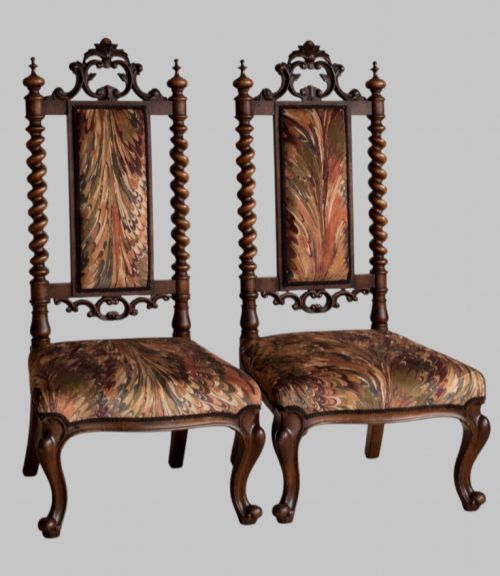
The inventory on this page ranges from side chairs and armchairs to throne chairs and settees. Many pieces display high carved backs, barley twist supports, and extensive openwork detailing.
Regional variations appear across the selection, including Lancashire and South Yorkshire examples, alongside matching pairs and larger matched sets. These seating forms served prominent positions in grand halls and reception spaces.
Materials and construction methods
Makers utilised solid timbers such as oak and walnut, fashioning frames through traditional joinery and pinned mortise-and-tenon joints. Skilled carvers decorated the surfaces with deep relief work, floral motifs, and scrolling foliage.
Seating areas frequently incorporated cane, rattan, or woven textiles, while later revivals added upholstery in leather, velvet, and tapestry. Structural elements such as barley twist legs and stretchers provided both stability and visual rhythm.
Several high-backed chairs on offer are grand enough to make any modern sitter feel like they are plotting a palace coup.
Distinguishing quality across the range
The depth and crispness of the carving distinguish finer examples from simpler provincial work, with master carvers achieving notable relief and undercut detail in the wood. The choice of primary timber also dictates quality, as dense walnut and well-figured oak command greater presence than simpler secondary woods.
Integrity of the frame construction and the survival of original components, such as early canework or period textiles, separate well-preserved specimens from heavily restored pieces. Proportions also matter, with larger throne chairs and matched pairs demonstrating greater ambition in design.
The Carolean Carved Hall Chairs Glossary
- Carolean
- Pertaining to the reign of King Charles II, lasting from 1660 to 1685, characterised by lavish carving and ornate scrollwork. This aesthetic heavily influenced later nineteenth-century revival furniture.
- Barley twist
- A turned wooden support resembling a spiralling rope or column. This decorative feature appears frequently on the legs and stretchers of seventeenth-century and revival chairs.
- Caning
- A woven mesh made from rattan or split cane used for seat and back panels. It offered lightness and flexibility in seventeenth-century chair design.
- Back stool
- An early form of chair without arms, essentially a stool fitted with an upright backrest. These pieces appear frequently in seventeenth-century vernacular contexts.
- Joined oak
- Furniture constructed using mortise-and-tenon joints secured with wooden pegs rather than metal nails. This method defines sturdy seventeenth-century cabinetmaking.
Carolean Carved Hall Chairs: Frequently Asked Questions
How do I spot a seventeenth-century original?
Examine the timber closely for the dry, oxidised surface patina and hand-cut tool marks that indicate age. Original pieces show construction methods consistent with early joinery, such as pegged joints and hand- cleft oak.
Compare the framing against nineteenth-century revival examples, which often feature machine-cut elements, different secondary woods, and a more uniform finish. Structural wear should align naturally with centuries of use rather than artificial distress.
Where should I place a heavy throne chair?
Position these substantial seats in spacious hallways, landings, or studies where their architectural presence can anchor the room. Their high carved backs and grand proportions demand ample surrounding space to be fully appreciated.
Avoid placing them in narrow corridors where the protruding arms or deep carvings might suffer accidental damage. Pair them with simpler surrounding decor to let the intricate woodwork stand out.
How do I care for cane and leather upholstery?
Maintain caned panels by occasionally wiping them with a damp cloth to prevent the natural fibres from becoming brittle. Keep them out of direct sunlight and away from direct heat sources.
Treat leather and textiles with gentle, specialised conditioning products suited to antique fabrics. Regular dusting with a soft brush prevents particulate matter from settling into the carved crevices.
What is the difference between Carolean and Jacobean styles?
Jacobean furniture, dating from the early seventeenth century under James I, tends toward more geometric, rigid, and sober architectural designs. Carvolution brought lighter, more exuberant forms under Charles II.
Carolean pieces introduce dynamic scrollwork, putti, pierced cresting rails, and flowing foliage. Revivals from the Victorian era frequently combined these elements, blurring the stylistic boundaries.