
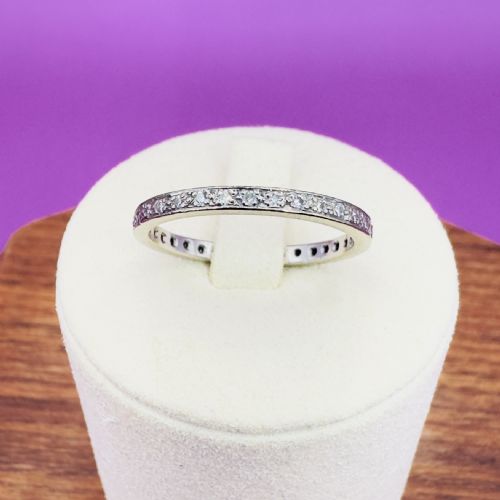

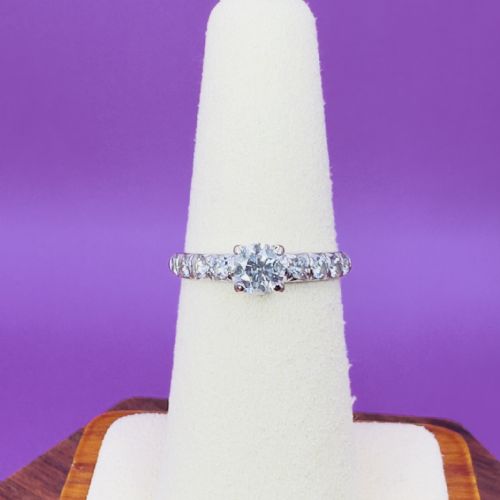
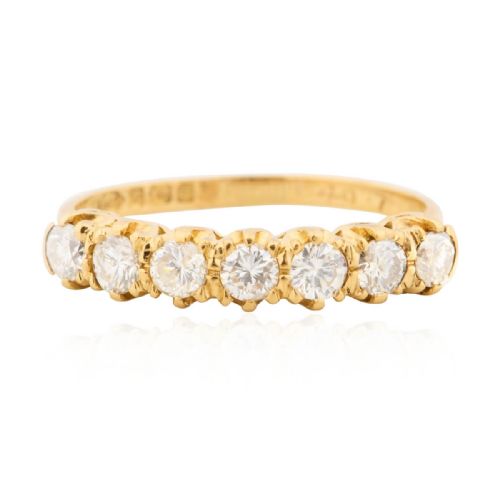


Carat Diamond Eternity Band
A carat diamond eternity band wraps the finger in an unbroken circle of stones, prized for its seamless symbol of continuous brilliance.
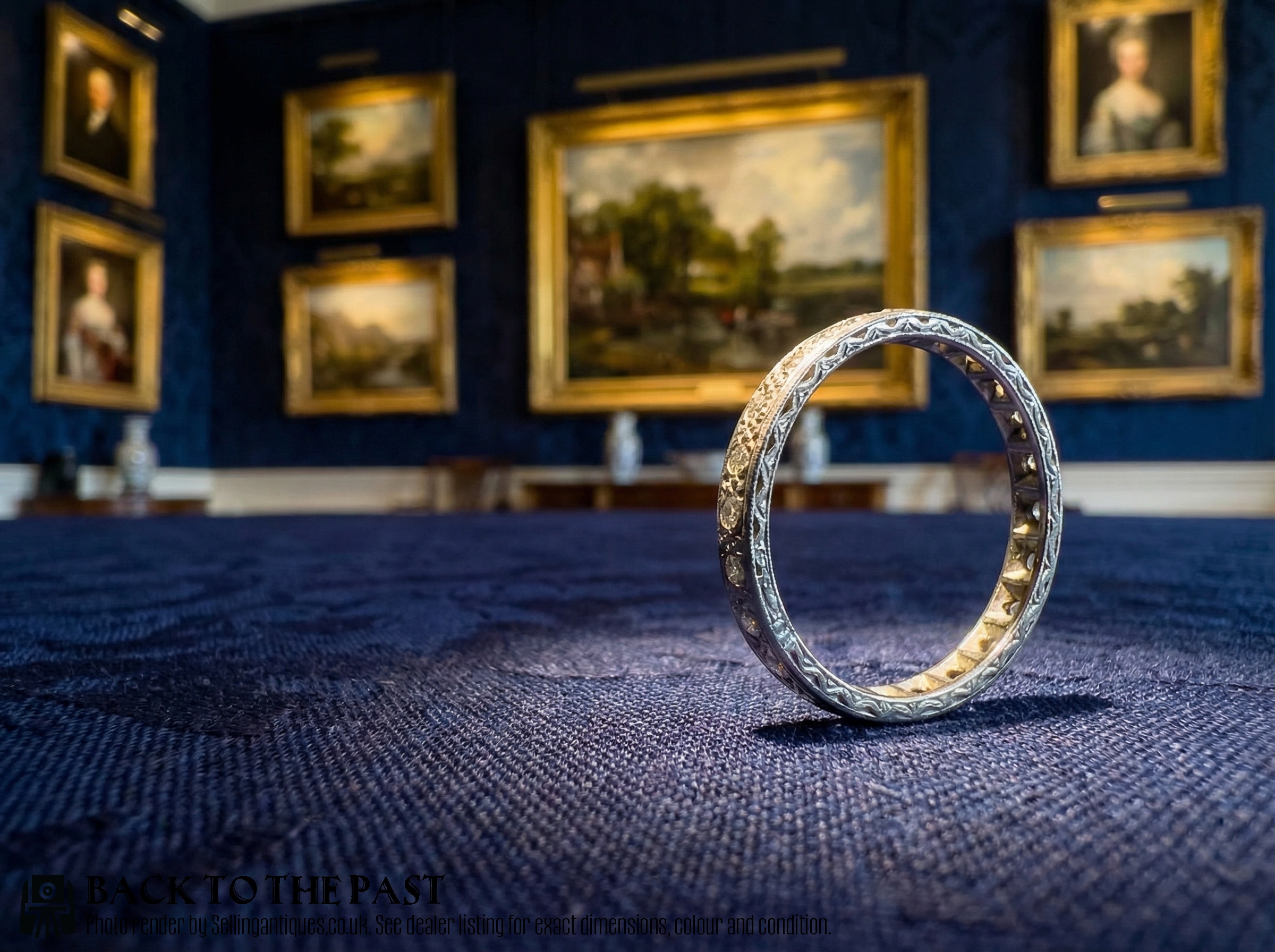
Carat Diamond Eternity Band
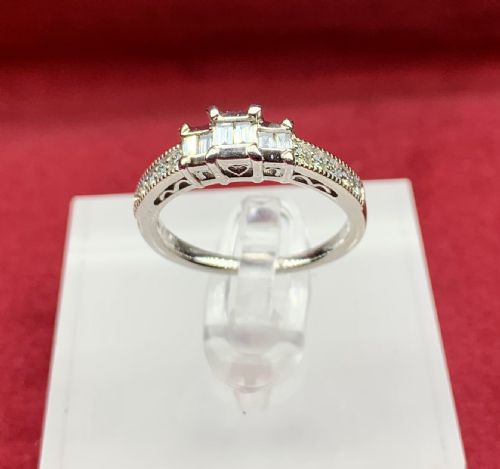
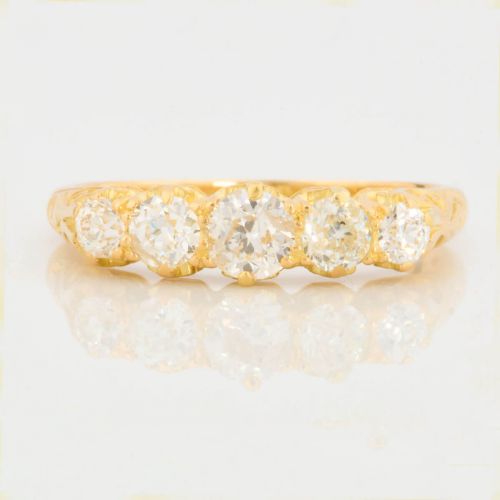
Full and half eternity formats dominate the selection, alongside five-stone rings and cluster configurations that share the continuous aesthetic. Materials range from 9ct and 18ct yellow and white gold to platinum. Pieces emerge from distinct eras, including 1890, the Edwardian period, 1930, 1950, and 1960.
How they were made
The construction of these pieces relies on precious metals such as platinum and 18ct gold, paired with diamonds shaped in old cuts, baguettes, or modern brilliants. Goldsmiths secured these stones into channels, claw settings, or platinum mountings designed to maximise light entry and structural integrity. Yellow gold and white gold provide contrasting body colours, while platinum offers the strength required for fine, continuous stone arrangements.
Craftsmen of the Victorian, Edwardian, and mid-century periods balanced durability with delicate visual proportions. Older examples frequently utilise hand-cut old cut diamonds, whilst later mid-century pieces incorporate calibrated stones and precise white gold or platinum channels.
Listings span periods from Victorian and Edwardian eras through the 1930s, 1950s, and 1960s.
What varies in quality
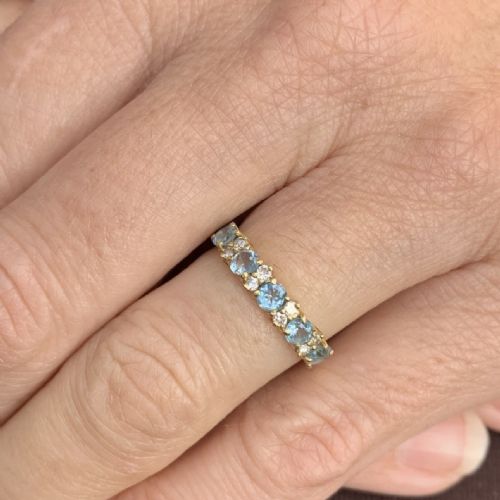
Signed pieces and items featuring substantial total carat weights, such as multi-carat platinum settings, represent the upper tier of the range. The integration of accent stones like rubies, sapphires, or spinels alongside the primary diamonds introduces further variation in design complexity and material composition.
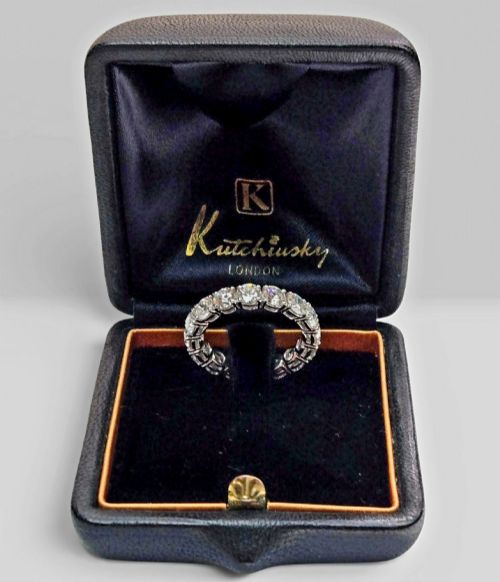
Kutchinsky
The Carat Diamond Eternity Band Glossary
- Eternity ring
- A finger ring set with a continuous line of identically cut gemstones symbolising endless love. These bands appear in full and half configurations across various historical periods.
- Old cut
- A diamond cut predating the modern brilliant, characterised by a smaller table, higher crown, and open culet. These stones catch candlelight and early electric light with a distinct, softer charm.
- Platinum
- A dense, durable white metal used for high-end jewellery mountings. It holds small claw settings and intricate channels securely without losing its colour.
- Half eternity ring
- A band where gemstones span only the top half or third of the circle. This design allows for easier resizing and a more comfortable fit against the finger.
- Five stone ring
- A traditional ring style featuring a graduating or uniform row of five prominent gemstones. These pieces serve as a direct precursor to the modern eternity band.
Carat Diamond Eternity Band: Frequently Asked Questions
How do I wear an eternity ring?
Eternity rings sit comfortably alongside a wedding band and an engagement ring on the left ring finger. Many wearers stack a half eternity band directly beneath their solitaire.
Matching the metal colour, such as pairing 18ct white gold with white gold, creates a cohesive stack. Alternatively, contrasting yellow gold with platinum offers a distinct vintage look.
What is the difference between old cut and modern diamonds?
Old cut diamonds feature hand-polished facets shaped before the standardisation of the modern brilliant cut in the mid-twentieth century. They exhibit smaller tables and deep pavilions that produce a softer, warmer sparkle.
Modern brilliant cut diamonds are cut to strict mathematical proportions to maximise light return and brilliance. Both styles appear across the historical periods represented in this selection.
How do I care for antique diamond jewellery?
Antique diamond jewellery benefits from gentle cleaning using warm soapy water and a soft brush to remove everyday oils. Avoid harsh ultrasonic cleaners, particularly on pieces containing softer accent stones like turquoise or pearls.
Routine inspection by a jeweller ensures that the claw settings and channels remain secure. Storing each piece in a separate fabric-lined compartment prevents metal friction and scratching.