


Canvas French Rural Art
Canvas french rural art brings agrarian life into focus, depicting farmyards, working horses, and provincial landscapes from the nineteenth and early twentieth centuries.
Canvas French Rural Art
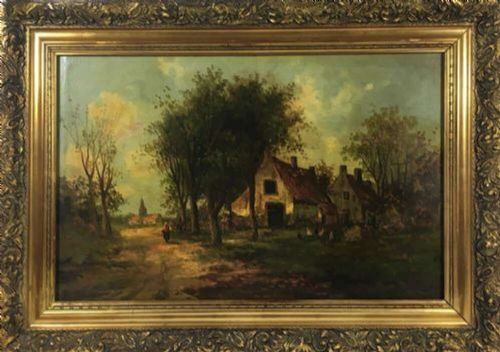
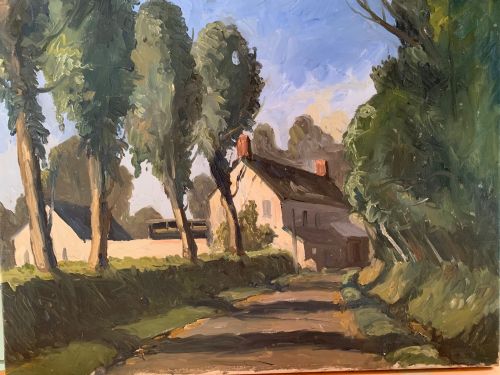
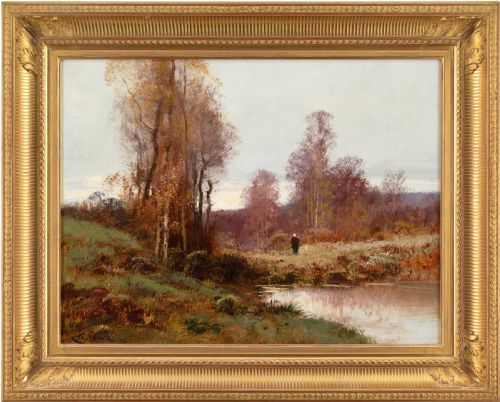
Canvas french rural art captures provincial scenes across the French countryside, focusing on farmyards, country paths, riverbanks, and agricultural work. These works span the nineteenth and twentieth centuries, reflecting rural traditions through pastoral compositions and village landscapes.
The dominant aesthetic draws on French Realism, the Barbizon School, Impressionism, and Post-Impressionism. Viewers encounter depictions of working horses, haystacks, cattle grazing, and everyday domestic labour in rural settings.
How they were made
Artists painted primarily with oil paint on stretched canvas, building texture and depth through layered brushwork. Pigments vary from earthy tones in Barbizon compositions to brighter palettes in later Impressionist and Post-Impressionist interpretations.
Canvases are typically housed in wooden frames, with several examples set within gilded wood surrounds. The construction relies on traditional stretching methods applied to woven canvas supports.
Several canvases record hardworking horses taking a well-earned break at rural water troughs across Normandy.
What varies in quality
Quality rests upon the artist's handling of light, brushwork, and atmospheric depth within the landscape. Works associated with recognised schools or named artists display greater control over composition and colour harmony.
Charles Clair·Raimond Louis Lecourt·Majorie Hoare·Eugene Battaille·Antoine Bouvard·Henri Joseph Harpignies·Salomon le Tropezien
The Canvas French Rural Art Glossary
- Barbizon School
- A nineteenth-century French art movement focused on realistic landscape painting, emphasising direct observation of nature and rural scenery.
- Post-Impressionism
- An artistic development following Impressionism where painters explored emotional and structural expression through colour and form.
- Giltwood
- Wood carved and coated with gold leaf or a gold-colored finish, commonly used for period picture frames.
- Pastoral
- A genre of art depicting rural life, shepherds, and agricultural landscapes in an idealized or naturalistic manner.
Canvas French Rural Art: Frequently Asked Questions
What periods do these paintings represent?
The works span from the mid-nineteenth century through the mid-twentieth century, encompassing periods such as the Barbizon era, the nineteenth-century pastoral tradition, and early twentieth-century Post-Impressionism.
Dating is often determined by stylistic characteristics, artist signatures, or documented exhibition histories tied to specific decades between eighteen-sixty and nineteen-fifty.
Where were these rural scenes painted?
Locations include various French regions such as Provence, Normandy, Brittany, and the Alpilles in the south of France. Artists set their easels in farmyards, along country lanes, and beside rivers.
Compositions frequently record local agricultural practices, including hay harvesting, cattle grazing, and horses at the trough.
How should I display an oil painting on canvas?
Paintings on canvas benefit from placement away from direct sunlight and excessive humidity to protect the oil paint and wooden stretcher frames. Maintaining stable indoor temperatures preserves the canvas tension.
Matching the work with a compatible wooden or giltwood frame enhances both the presentation and the physical security of the piece.
How do I identify Barbizon style works?
Barbizon style paintings emphasise earthy palettes, realistic depictions of rural terrain, and subdued atmospheric effects. Figures in these landscapes are typically integrated naturally into agrarian settings.
Brushwork is often textured and direct, reflecting nineteenth-century plein-air observation of French farm life and forests.