




Canton Rose Medallion Vases
These canton rose medallion vases are vibrant nineteenth-century Chinese export porcelain pieces featuring detailed panel painting and rich gilt highlights.
Canton Rose Medallion Vases
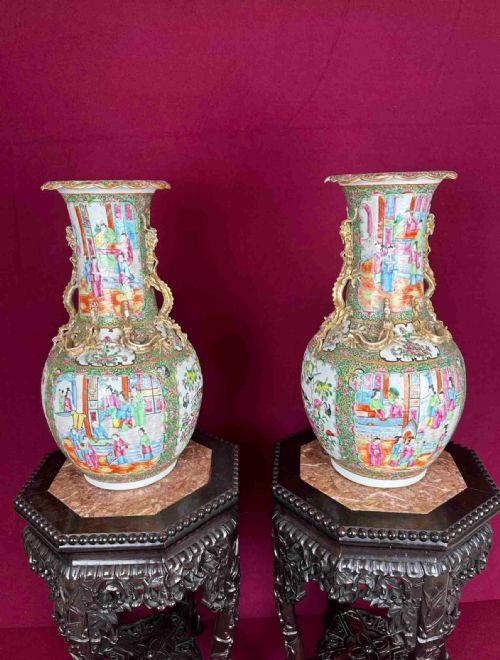
When you search for canton rose medallion vases, you encounter nineteenth-century Chinese export porcelain vessels created during the Qing Dynasty. The most common form on this page is the lidded baluster vase, often found as a matched pair.
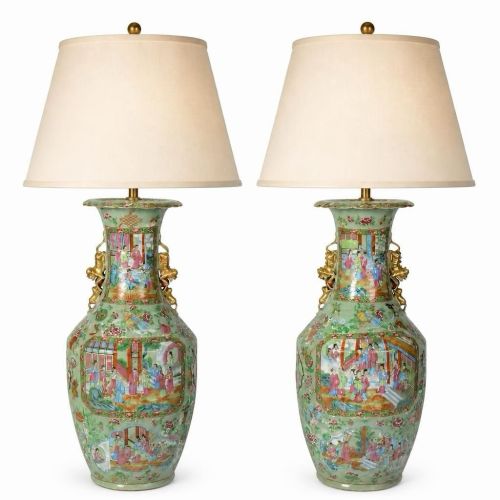
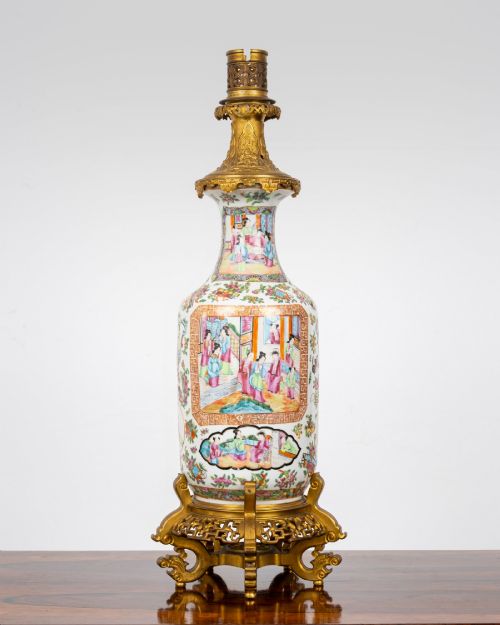
Many examples in this selection appear converted into table lamps or fitted with gilt bronze mounts and brass elements. Alongside standard vases, the listings include larger umbrella stands and decorative centrepiece vessels.
The aesthetic bridges traditional Chinese craftsmanship and Victorian taste, frequently described through styles such as Chinoiserie and Chinese Export. These pieces reflect intense nineteenth-century trade between Canton and Western markets.
Materials and production
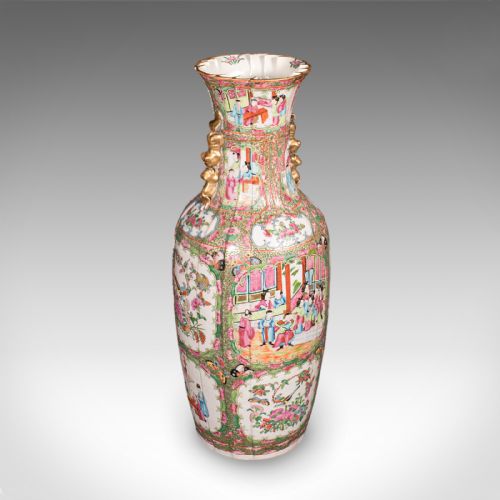
The foundation of these objects is hard-paste porcelain, painted with enamels and finished with gold leaf or gilding. Artisans applied bright enamel colours to delineate complex figural and floral panels across the ceramic body.
Mounts and secondary structures incorporate brass and gilt bronze to support larger lamps or decorative display stands. Some pieces retain fabric elements associated with their later lamp conversions.
Materials recorded across the inventory include porcelain, enamel, brass, fabric, gold leaf, gilt bronze, and standard gilding.
Distinctions in quality
Quality rests upon the precision of the enamel painting and the density of the figurative panels. Superior examples display crisp brushwork and balanced integration of gilt highlights across the porcelain surface.
The scale and ambition of the vessel also set standards, moving from standard decorative vases to monumental baluster forms and large umbrella stands. Integrity of the porcelain body and the presence of original covers elevate individual pieces.
The Canton Rose Medallion Vases Glossary
- Canton
- A major Chinese port city where porcelain was decorated for export to Western markets during the nineteenth century. It served as the primary hub for this distinct aesthetic.
- Baluster
- A vase shape with a rounded body that tapers toward the base and swells outward before narrowing at the neck. This silhouette provides a stable canvas for extensive panel painting.
- Famille Rose
- A prominent palette of opaque enamel colours dominated by pink or rose tones, introduced to Chinese ceramics during the Qing Dynasty. It forms the basis of the rose medallion decorative scheme.
- Gilt Bronze
- An alloy of copper and zinc finished with a layer of gold, utilised for mounts and structural fittings on larger decorative vases and lamp conversions.
Canton Rose Medallion Vases: Frequently Asked Questions
Are these vases always wired as lamps?
Many nineteenth-century examples in this selection function as table lamps through later electrical conversions, often retaining their original ceramic bodies.
Unconverted lidded vases and monumental baluster forms also appear without lamp fittings.
How do I date these vases?
Most listings point to the nineteenth century and the Qing Dynasty, aligning with Victorian production periods.
Specific dates like eighteen-eighty or eighteen-seventy appear when documentation or stylistic markers pinpoint the decade of manufacture.
Where were these pieces made?
These ceramics were produced in China for export through the port of Canton during the nineteenth century.
They catered directly to Western collectors influenced by Chinoiserie and Victorian interior styles.