
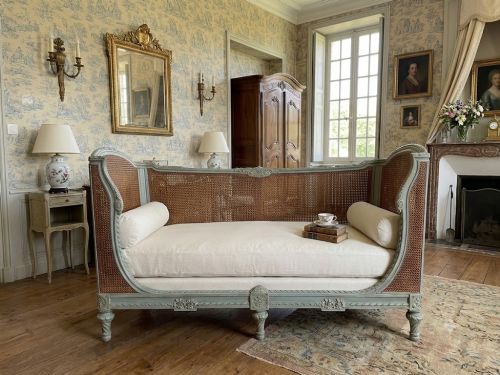
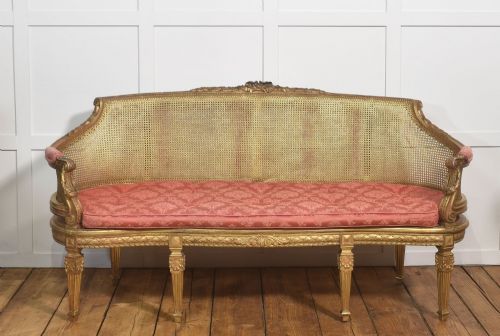
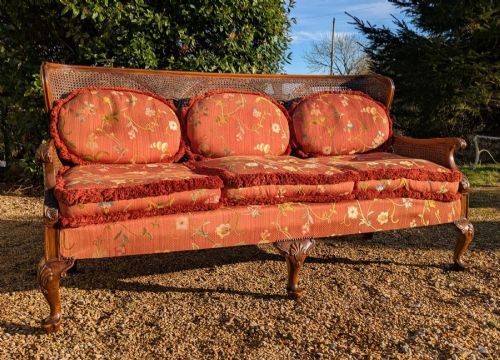


Caned French Sofa
A caned french sofa brings lightness and texture to a room, using woven panels alongside exposed timber frames.
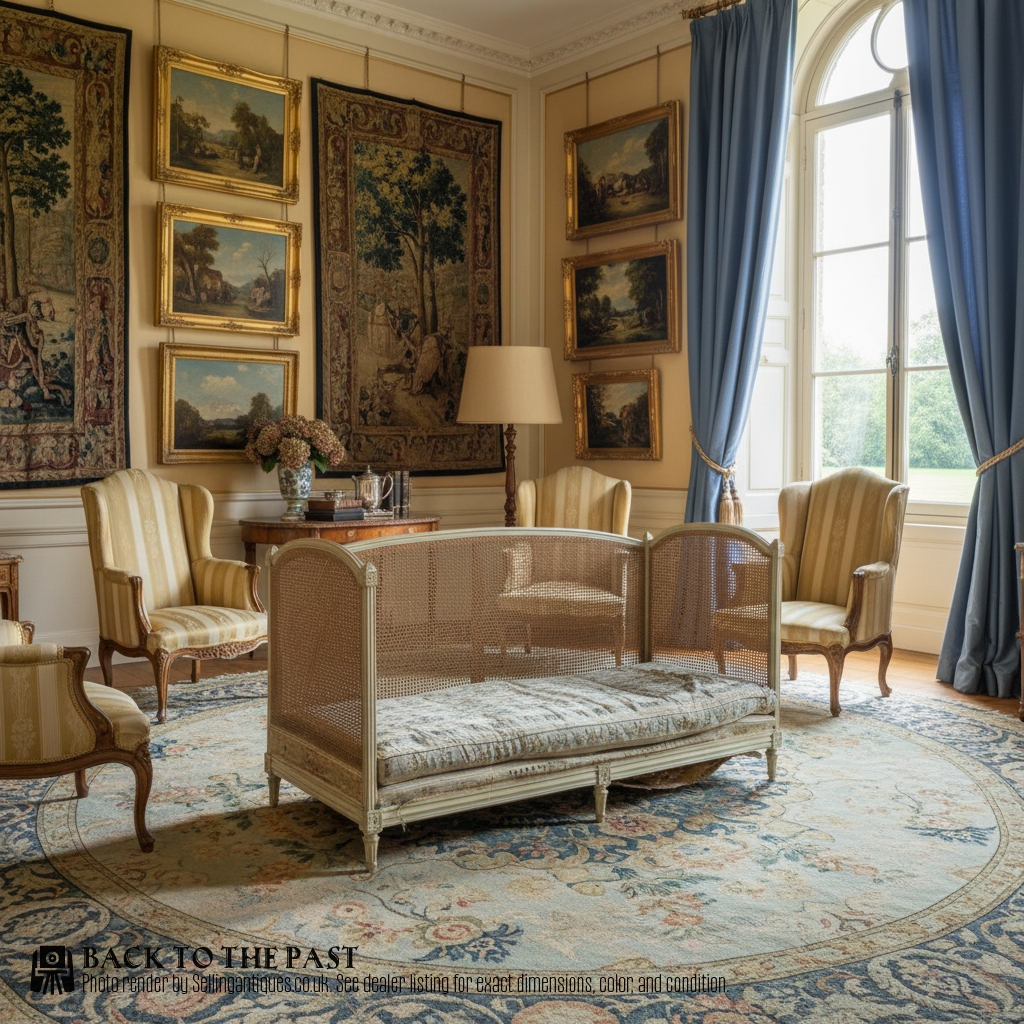
Caned French Sofa
A caned french sofa combines comfortable seating with open woven panels, typically appearing in forms such as settees, daybeds and canapés. These pieces draw on historical aesthetic movements, most notably the Louis XV and Louis XVI styles, alongside revival periods from the nineteenth and twentieth centuries.
You are most likely to encounter nineteenth-century and early twentieth-century interpretations on this page, often built in walnut, beech, or giltwood. Many examples retain their original painted or gilded finishes, while others incorporate upholstered cushions for seat comfort.
How they were made
Frames are constructed from hardwoods like walnut, beech and giltwood, carved with the decorative motifs characteristic of French provincial and court furniture. The structural woodwork supports the woven cane panels inset into the backrests and sides.
Cane panels are hand-woven from peeled rattan, creating a taut yet flexible grid that provides breathable support. Artisans finish the timber frames with paint, gold leaf or natural polish to complement the woven texture.
The listings feature cane, fabric, walnut, giltwood, beech, paint and gold leaf across eighteenth, nineteenth and twentieth-century pieces.
What varies in quality
The precision of the wood carving dictates the refinement of the piece, distinguishing master workshops from standard production. Crisp detailing on floral motifs and structural mouldings indicates a higher standard of craftsmanship.
The integrity of the woven cane work also defines the tier of the piece, with tightly woven, uniform patterns representing superior execution. The preservation of original surface treatments, such as early paint or gilding, adds considerable distinction.
The Caned French Sofa Glossary
- Cane
- The woven material made from peeled rattan stems, used to form breathable panels in furniture backs and sides. It requires careful hand-weaving to maintain tension across the frame.
- Canapé
- The traditional French term for a settee or sofa, often featuring an exposed wooden frame and upholstered seat. These pieces frequently mirror the stylistic details of larger matching armchairs.
- Bergère
- An enclosed armchair or sofa featuring upholstered sides alongside a cushioned seat, combining solid wooden framing with padded comfort. The style emerged during the eighteenth century in France.
- Giltwood
- Timber treated with a thin layer of gold leaf or metallic gilt, creating a bright reflective surface popular in formal French seating. It is typically applied to carved walnut or beech frames.
- Louis XVI Style
- A neoclassical design period characterised by straight tapered legs, geometric symmetry and classical ornamentation. Furniture from this tradition favours rectangular proportions over curved lines.
Caned French Sofa: Frequently Asked Questions
How do I clean caned furniture?
Dust the woven cane regularly with a soft brush to prevent dirt accumulation in the perforations. Keep the material lightly hydrated with a damp cloth to prevent the rattan from becoming brittle.
Avoid soaking the cane or placing the sofa near direct heat sources, which can cause the natural fibres to split. Proper humidity control helps preserve the elasticity of the weave over time.
Can I reupholster a french sofa?
Upholstered seat cushions and squabs can be recovered using traditional methods and materials appropriate to the period of the frame. Many pieces accommodate loose feather cushions that allow for straightforward textile replacement.
Retaining the original internal webbing and padding structure preserves the historic integrity of the settee. Consult a specialist familiar with antique frame construction to protect the exposed woodwork during updates.
Where should I place a caned sofa?
Position the settee away from direct sunlight and radiators to protect both the wooden frame and the delicate woven cane panels. These pieces suit drawing rooms, bedrooms or garden rooms where their open structure can catch natural light.
Allow enough surrounding space to appreciate the carved details of the timber frame and the pattern of the cane work. Their lighter visual weight makes them versatile for rooms that might feel crowded by heavy upholstery.
How do I date a caned sofa?
Examine the construction joints, tool marks on the timber frame and the tightness of the cane weave to gauge the period of manufacture. Nineteenth-century revivals often adopt the forms of earlier eighteenth-century designs but employ machine-sawn timber elements.
Check for traces of original paint finishes, patination on the giltwood and the style of the carved motifs. Comparing the proportions to documented regional pieces helps distinguish authentic period work from later interpretations.