
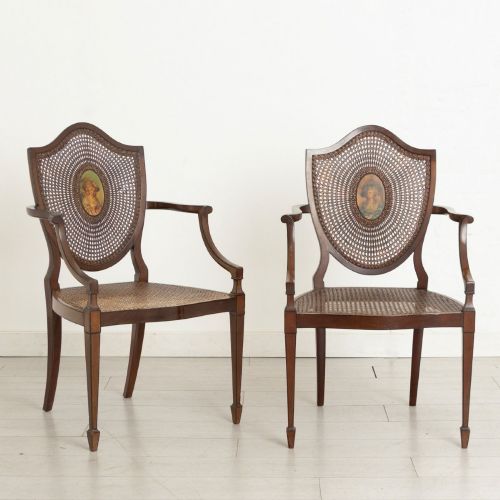


Caned French Chairs
Caned french chairs bring together supple woven seats and classical woodwork, offering both decorative presence and comfortable lounging.
Caned French Chairs
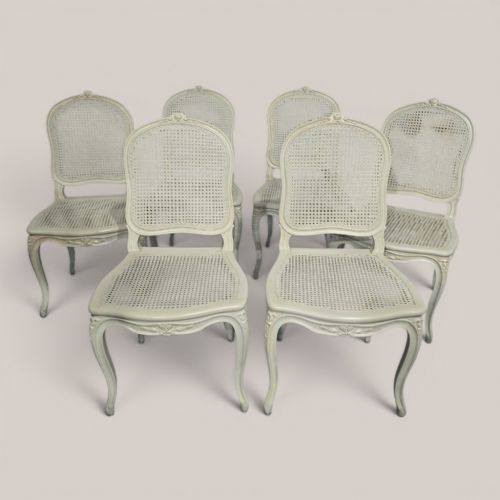
Caned french chairs encompass an array of seating forms originating from the nineteenth and early twentieth centuries, drawing heavily upon classical continental aesthetics. Buyers encounter everything from compact salon seats and window benches to generous library armchairs and complete dining sets.
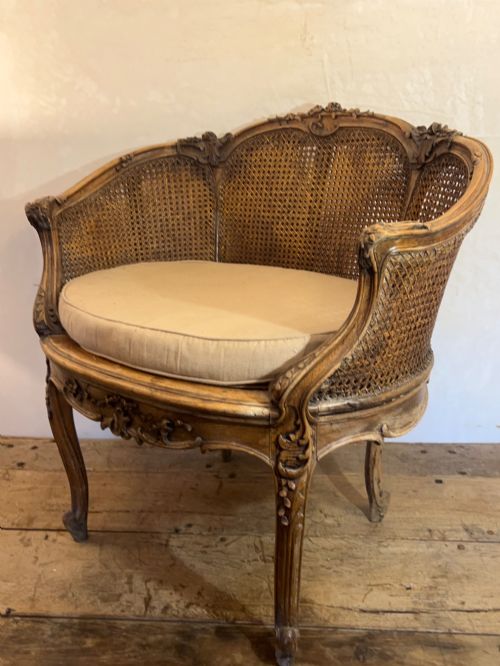
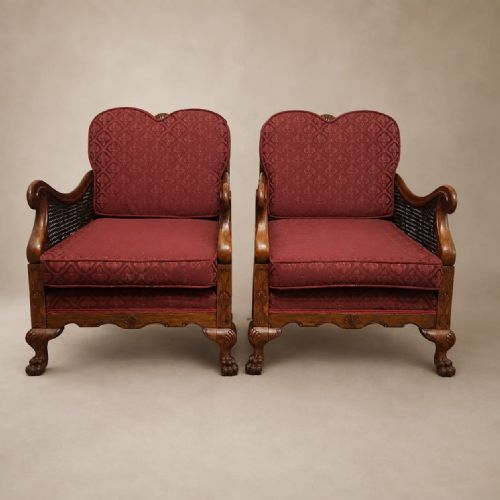
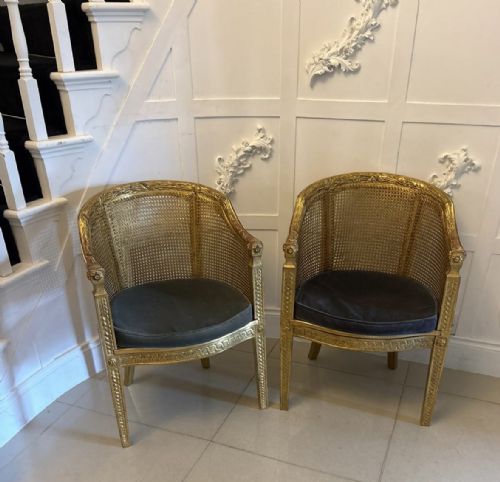
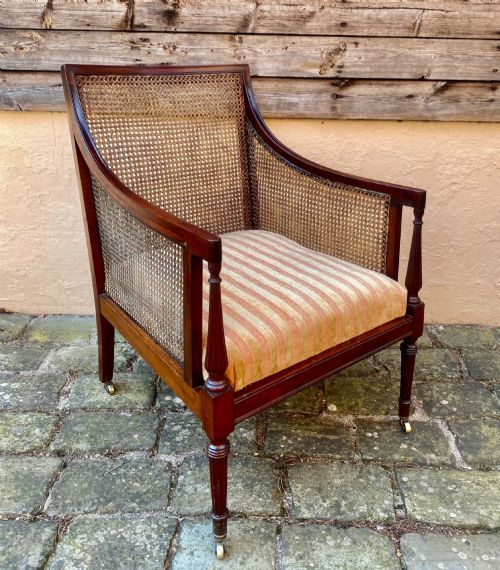
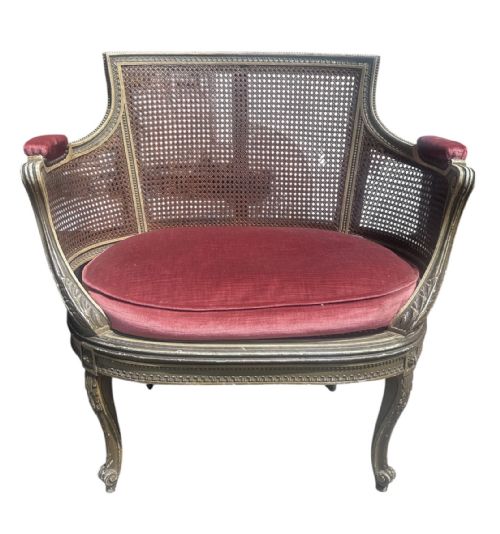
The dominant style on this page is the bergere, an enclosed upholstered armchair often featuring woven panels to the back and sides. Alongside these sit side chairs, tub chairs, and daybeds, frequently echoing the graceful curves of Louis XV or the geometric restraint of Louis XVI designs.
Origins stretch from nineteenth-century workshops through to the Edwardian era and the 1920s, showing both painted finishes and exposed hardwoods. Pieces range from single child's chairs to matched sets of twelve dining seats.
Materials and construction
Makers relied on sturdy hardwoods such as walnut, beech, oak, and mahogany to carve the structural frames, applying giltwood or paint finishes for decorative effect. These frames provide the rigid skeleton necessary to tension the woven panels.
Cane and rattan cane form the signature flexible surfaces, threaded by hand through holes drilled in the frame to create breathable, resilient seats and backs. Upholstered additions incorporate fabric, velvet, and loose cushions for extra comfort.
Listings feature walnut, beech, and mahogany frames paired with cane, rattan, and velvet across nineteenth and early twentieth-century pieces.
Distinguishing quality in craftsmanship
Quality rests primarily in the crispness of the hand-carved woodwork and the tightness of the cane weaving. Superior examples display deeply sculpted floral or scroll motifs in the walnut or giltwood frames rather than flat, machine-cut patterns.
The integrity of the woven rattan panels separates ordinary items from finer ones, with uniform tension across the mesh indicating careful execution. Original paint finishes and matching sets also elevate a piece above later adaptations.
The Caned French Chairs Glossary
- Bergere
- An enclosed armchair with upholstered or caned sides and a built-in seat cushion. This form provides a deep, encompassing seat favoured for drawing rooms.
- Cane
- Strips of peeled rattan woven into a patterned mesh. It offers a light, breathable surface for chair backs and seats.
- Louis XV Style
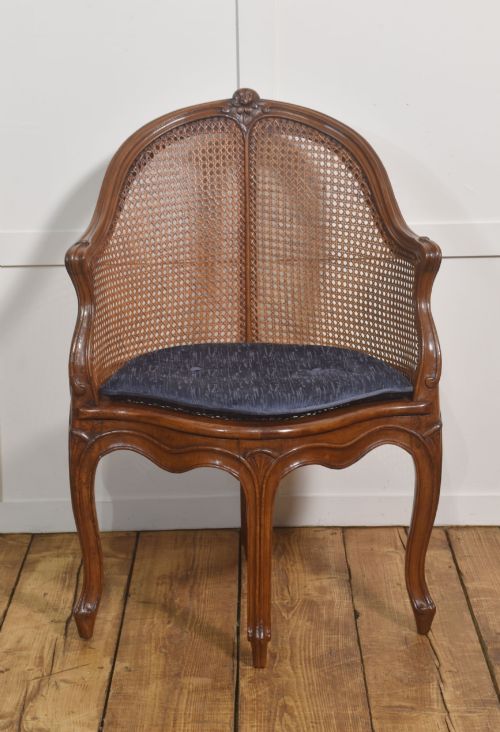
- A decorative design featuring asymmetrical curves, cabriole legs, and naturalistic carved foliage. It originates from the eighteenth century but saw frequent revival.
- Giltwood
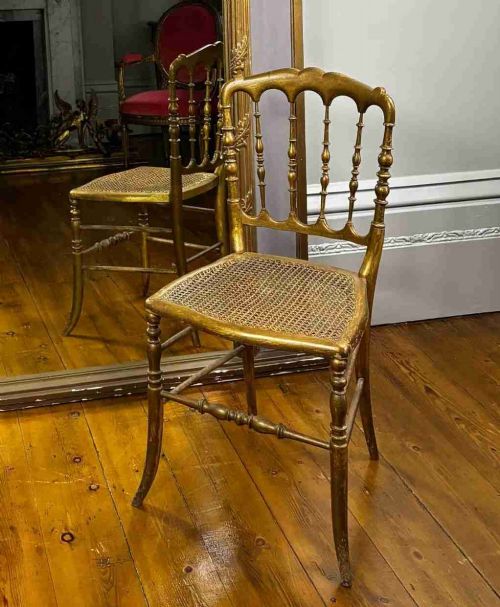
- Timber coated with a thin layer of gold leaf or gilt paint. This finish imparts a reflective, opulent appearance to salon furniture.
- Corbeille
- A basket-shaped chair or bed with a rounded, enclosing back. The curved profile wraps around the sitter.
Caned French Chairs: Frequently Asked Questions
How do I clean a caned seat?
Dust the woven mesh gently with a soft brush to remove trapped particles. Dampen the cane lightly with warm water every few months to maintain its moisture and prevent snapping.
Avoid soaking the timber frame during cleaning. Allow the material to dry completely in a natural airflow before using the seat again.
Can I use these chairs for daily dining?
Many caned french chairs function well around a dining table, particularly sturdy side chairs and matched sets. Check the stability of the leg joints and the firmness of the woven base before regular use.
Add flat seat pads if extra protection is needed for the woven surface. Lighter armchairs suit occasional sitting rather than heavy family meals.
How do I tell Louis XV from Louis XVI style?
Louis XV pieces display flowing, asymmetrical curves, cabriole legs, and naturalistic scrollwork. The overall silhouette feels soft and organic.
Louis XVI furniture introduces straight lines, symmetry, fluted columns, and neoclassical medallions. The geometry reflects a turn toward classical architectural restraint.
Are these chairs suitable for a modern bedroom?
Compact french chairs and window seats fit easily into contemporary bedrooms, serving as dressing table seats or corner accents. Their neutral wood tones and woven textures blend effortlessly with minimalist decor.
Pair a small tub chair with a reading lamp to create a quiet nook. Painted frames add a subtle splash of colour without overwhelming the space.