
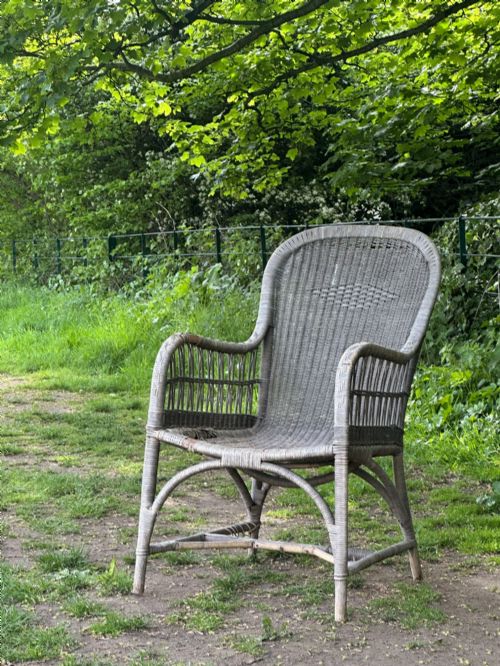


Caned Back Accent Armchair
A caned back accent armchair brings woven texture and classical seating to a room, spanning from seventeenth-century walnut frames to twentieth-century revival pieces.
Caned Back Accent Armchair
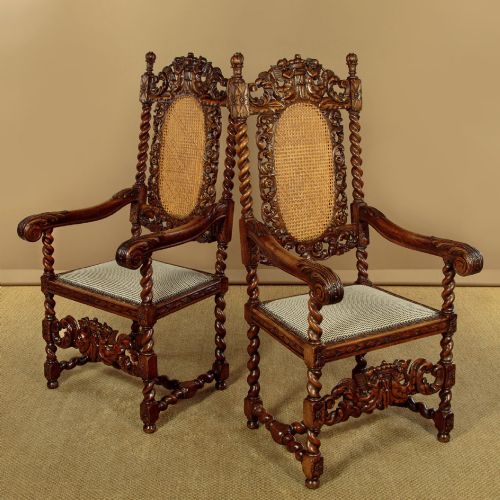
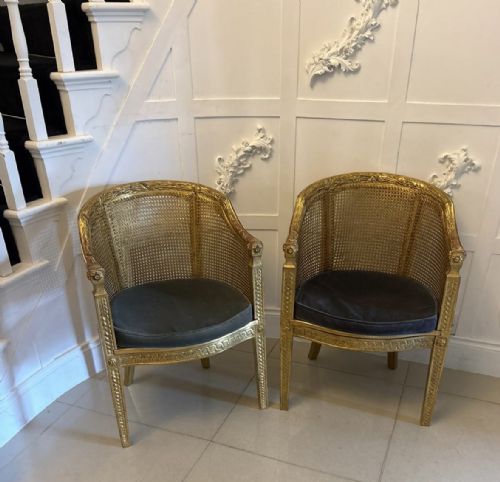
A caned back accent armchair is a seating form defined by woven panels incorporated into the wooden framework, designed to stand out in a room rather than sit as part of a uniform suite. When searching for a caned back accent armchair, buyers encounter pieces ranging from seventeenth-century walnut designs to twentieth-century revival models.
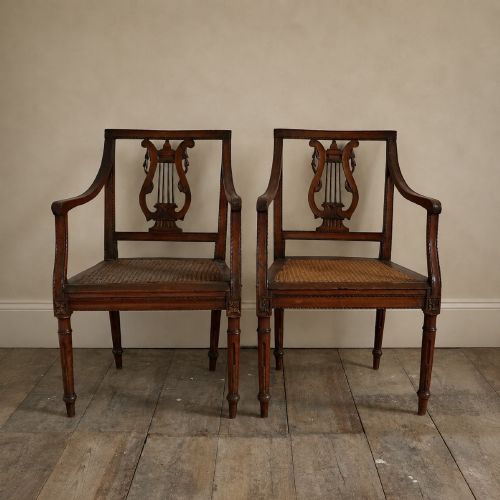
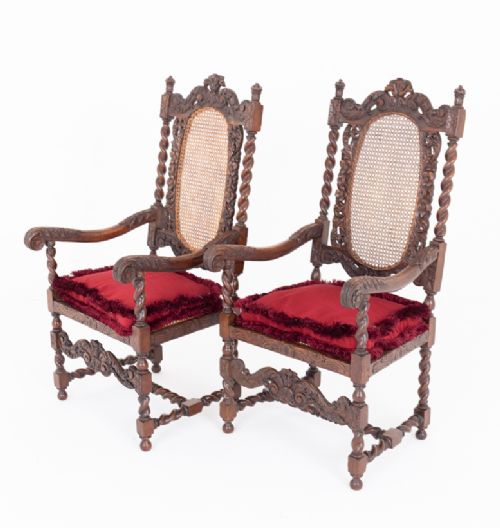
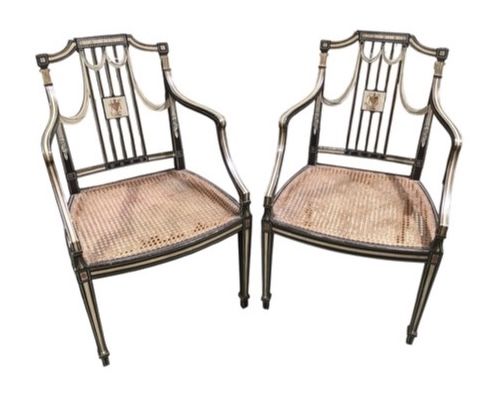
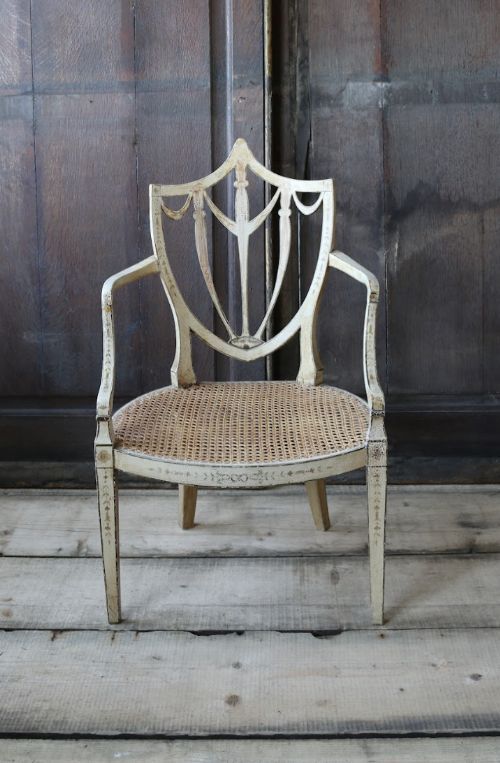
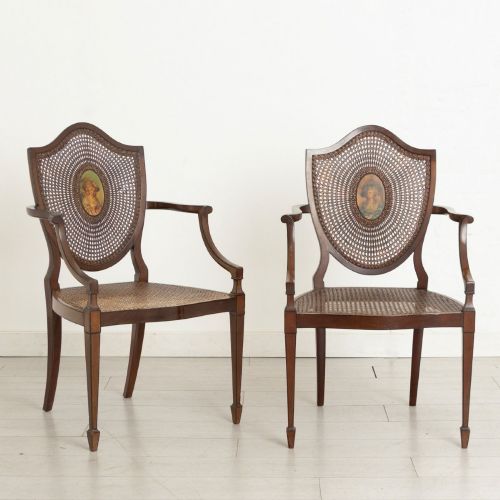
The selections span distinct stylistic revivals including Carolean, Jacobean, and Regency, alongside Anglo-Indian colonial and French bergère forms. Many examples feature open arms, carved wooden details, and cane seats accompanied by cushions.
Origins vary widely across these listings, encompassing English, French, and Anglo-Indian production. The primary function remains that of an occasional chair, offering firm support through woven cane while introducing historical texture.
What varies in quality
Quality in these armchairs rests upon the crispness of the timber carving and the integrity of the joinery within the frame. Walnut, mahogany, and oak structures demonstrate differing degrees of sculptural depth, particularly in revival styles that emulate seventeenth and eighteenth-century craftsmanship.
The precision and tightness of the handwoven cane work dictate the refinement of the piece, alongside the preservation of original painted, gilt, or japanned surfaces. Consistency between the primary wood frame and any secondary elements also separates standard workshop output from finer productions.
Listings feature oak, walnut, mahogany, ebony, and bamboo frames paired with cane, fabric, velvet, and paint materials.
Dryad of Leicester
The Caned Back Accent Armchair Glossary
- Bergère
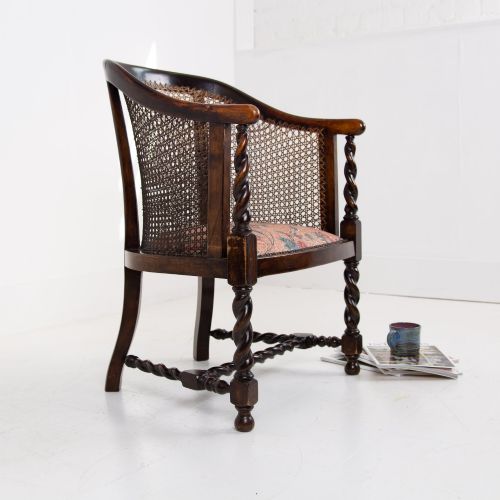
- An enclosed upholstered armchair with wooden framing, often featuring cane sides and back panels alongside a loose seat cushion.
- Cane
- Material woven from stripped rattan or bamboo stems, utilised to create flexible, breathable panels for chair backs and seats.
- Carolean
- A seventeenth-century English style associated with the reign of Charles II, characterised by rich walnut frames, elaborate carving, and high backs.
- Japanned
- European furniture decorated with imitation East Asian low-relief lacquer work, popular in historical revival periods.
- Lyre back
- A chair back featuring an open splat shaped in the contour of a classical stringed musical instrument.
Caned Back Accent Armchair: Frequently Asked Questions
What is a bergere armchair?
A bergère armchair is an enclosed French seating form featuring wooden frames with cane or upholstered sides and backrests. They typically include a fitted seat cushion for comfort.
These chairs date across various centuries and revival periods, offering a deeper and more enclosed seat than standard open armchairs.
How do I care for cane seating?
Cane seating requires moderate humidity to prevent the natural fibres from becoming brittle and snapping under pressure. Regular dusting and occasional gentle damp wiping help maintain the material.
Using a cushion preserves the woven cane seat beneath from direct wear, extending the lifespan of the antique weave.
Are these chairs comfortable for daily use?
Many of these armchairs incorporate loose fabric or velvet cushions placed over the cane seat to enhance everyday sitting comfort. The woven cane back provides a supportive, breathable structure.
Because they function as accent or occasional chairs, their ergonomics reflect historical design priorities rather than modern lounging standards.
How do I identify a revival style?
Revival styles appropriate historical motifs from earlier centuries, such as Carolean scrollwork or Regency curves, executed with the woodworking methods of a later era. Examining the tool marks, timber ageing, and construction joints helps determine the actual production date.
Pieces from the nineteenth and twentieth centuries often replicate seventeenth or eighteenth-century aesthetics while retaining the structural characteristics of their true manufacturing period.