

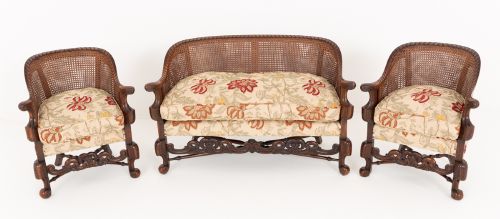
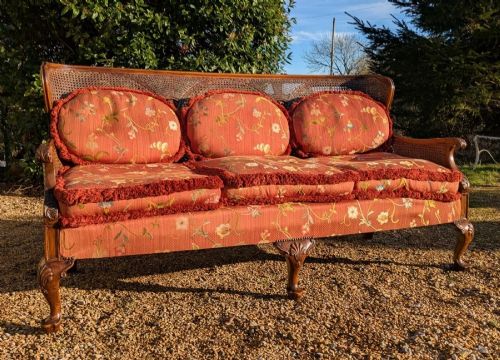


Cane Seat Settee
A cane seat settee brings light, woven texture to a room, offering an elegant seat without visual heaviness.
Cane Seat Settee
When you search for a cane seat settee, you are looking at seating frames built to hold woven panels within the seat, back, or frame. These pieces span centuries of design, reflecting changing tastes from the formal revival styles of the nineteenth century back to earlier eighteenth-century origins.
The versions you are most likely to meet on this page range from painted canework couches and satinwood settees to French caned sofas and Carolean style chair back settees. They draw on diverse aesthetic traditions, including Gustavian, Neo-Classical, and Viennese bentwood forms.
Makers utilised various timber frames, pairing structural woods with woven plant materials to create light, resilient seating. You will find items categorised variously as sofas, settees, love seats, benches, and window seats, each sharing the distinctive woven panel construction.
What varies in quality
The refinement of the timber carving and the execution of the surface finish dictate the visual appeal of each piece. Painted surfaces, gilding, and satinwood inlays show different levels of artisan skill in handling decorative details.
The precision and tightness of the cane weaving vary across examples, alongside the integrity of the underlying wooden frame. The integration of revival styles, from Carolean to Edwardian neoclassical, determines how closely a piece follows historical design precedents.
Cane Seat Settee Retail Price Guide 2026
Typical asking prices for cane seat settee among the pieces listed under this phrase on Sellingantiques today, from the lower quarter to the upper quarter. They describe what is for sale here now, not the wider market.
One lonely nineteenth-century Egyptian revival furniture set sits among a sea of European settees and sofas.
The Cane Seat Settee Glossary
- Canework
- Woven rattan or plant material forming open panels in furniture frames. This technique provides a breathable and lightweight surface for seats and backs.
- Bergere
- An enclosed upholstered armchair or sofa with wooden framing. These pieces frequently incorporate cane panels along the sides or back.
- Giltwood
- Timber treated with gold leaf or a gold-coloured metallic finish. This surface treatment appears on decorative frames from various revival periods.
- Satinwood
- A durable, lustrous timber with a yellow sheen used for fine furniture. Makers often combined it with painted decorations on polite seating.
- Bentwood
- Wood softened by steam and bent into curved structural forms. This method defines specific nineteenth-century seating types found in the records.
Cane Seat Settee: Frequently Asked Questions
How were these settees used historically?
Historically, these settees served as decorative and functional seating in parlours, drawing rooms, and window recesses. Their light construction made them easy to move within formal interiors.
The inclusion of woven cane allowed for cool, comfortable seating without heavy upholstery fabrics.
How do I care for cane furniture?
Cane requires moderate humidity to prevent the natural fibres from becoming brittle and snapping under pressure. Regular gentle dusting keeps the woven panels clear of debris.
Avoid placing these settees near direct heat sources or in overly dry environments to maintain the resilience of the cane.
How can I tell different styles apart?
Styles differ through their decorative carving, silhouette, and surface finish, such as giltwood, paint, or exposed wood. Carolean styles display ornate carved motifs, while Gustavian pieces show simpler, lighter painted surfaces.
Examining the structural lines and decorative vocabulary helps distinguish between eighteenth-century origins and nineteenth-century revival interpretations.