



Cane Seat Benches
Cane seat benches offer practical seating and classic style, spanning from Regency window seats to Edwardian painted daybeds.
Cane Seat Benches
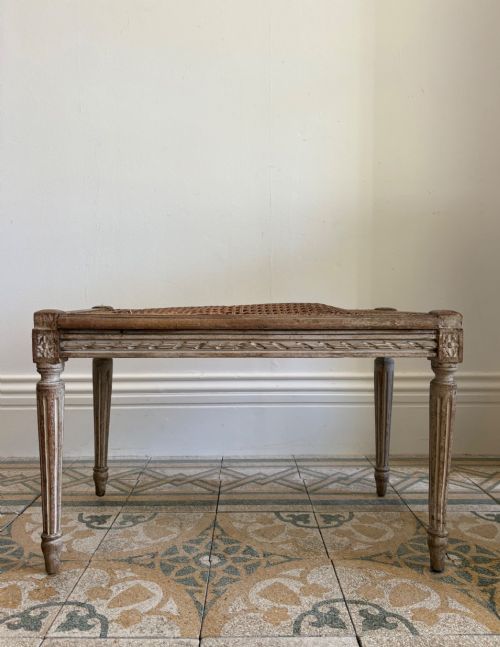
Cane seat benches encompass a range of seating forms including window seats, stools, daybeds, and settees designed for domestic use. When exploring cane seat benches, buyers encounter diverse historical iterations from the eighteenth century through to the early twentieth century.
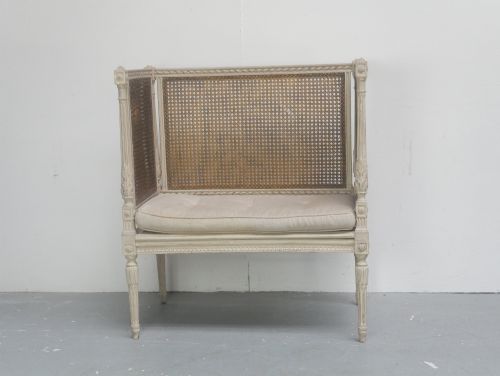
The pieces on this page lean heavily towards French and English aesthetic movements, notably Louis XVI, Regency, and Edwardian styles. Common structural formats include long window seats, caned sofas, and X-frame stools suitable for hallways and drawing rooms.
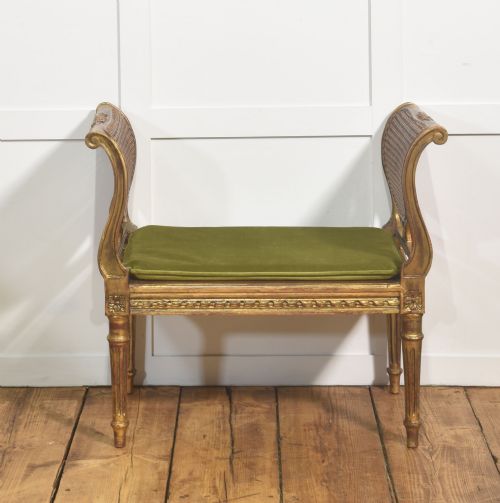
Origins stretch across European workshops, featuring English mahogany and rosewood alongside French painted beech and Italian giltwood examples. Each piece serves primarily as decorative occasional seating with woven cane panels set into wooden frames.
Markers of Quality
Quality in these benches depends on the precision of the frame's hand-carved detailing, whether executed in crisp giltwood or painted satinwood. Finer examples display harmonious proportions and sophisticated stylistic interpretations, such as authentic Louis XVI neoclassical motifs.
The condition and tightness of the original or period cane work significantly influence the integrity of the piece. Superior construction employs tightly woven natural cane within deeply rebated frames, paired with dense, stable hardwoods that resist structural movement over time.
Cane Seat Benches Retail Price Guide 2026
Typical asking prices for cane seat benches among the pieces listed under this phrase on Sellingantiques today, from the lower quarter to the upper quarter. They describe what is for sale here now, not the wider market.
Several items double as coffee tables, proving that historical window seats adapt well to modern tea habits.
The Cane Seat Benches Glossary
- Cane
- Stripped outer bark of the rattan palm, woven into intricate mesh patterns for seat panels. This material offers both ventilation and tensile strength.
- Bergere
- An enclosed upholstered French armchair or sofa featuring wooden frames and cane sides or backs. These items often incorporate loose seat cushions.
- Giltwood
- Timber coated with a thin layer of gold leaf or gesso. This decorative finish appears frequently on elite neoclassical seating.
- Settee
- A small upholstered or caned bench with a back and armrests designed for two or more people. They were traditionally placed in parlours and halls.
- X Frame
- A structural furniture base formed by intersecting diagonal crossbars. This classical support system underpins robust window seats and folding stools.
Cane Seat Benches: Frequently Asked Questions
Where should I place a cane seat bench?
These benches suit narrow entrance halls, the foot of a bedroom bed, or positioned beneath a large window. Their low profiles allow them to provide seating without blocking natural light.
Lighter painted and gilt frames work well in reception rooms, while sturdier mahogany or bamboo examples handle higher traffic areas like hallways.
How do I care for cane seats?
Natural cane requires occasional damp wiping to maintain moisture and prevent the fibres from becoming brittle. Keeping them out of direct sunlight preserves the wood and woven surfaces.
Avoid placing heavy concentrated loads on caned panels to prevent the woven strands from snapping. Regular gentle dusting keeps the intricate mesh free from debris.
Are these benches comfortable to sit on?
Caned seats offer a firm, springy surface that provides support for short periods of sitting. Many historical examples were originally designed for drawing rooms or hallways rather than long lounging.
Some pieces accommodate loose cushions or squabs upholstered in fabric to add softness. Adding a cushion easily alters the seating comfort while maintaining visibility of the woven cane.
How do I identify a Louis XVI style bench?
Louis XVI style pieces typically feature straight tapered legs, often fluted, reflecting classical architectural forms. Carved decorative motifs include ribbon twists, acanthus leaves, and symmetrical geometric patterns.
Frames are frequently painted in white, cream, or gilded, distinguishing them from the more curved lines of earlier rococo designs.