




Cane Chair Frame
These cane chair frame selections offer structural skeletons ready for restoration or display, spanning revivalist styles from the nineteenth century onward.
Cane Chair Frame
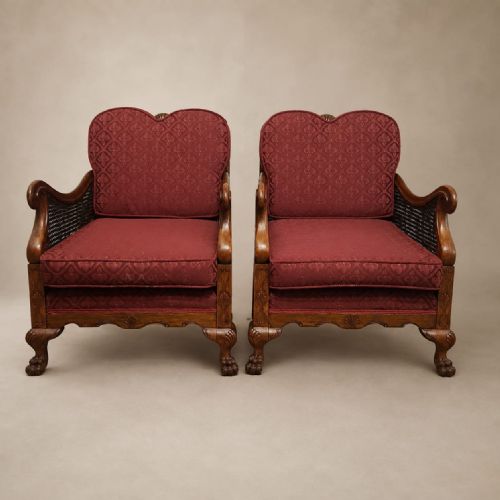
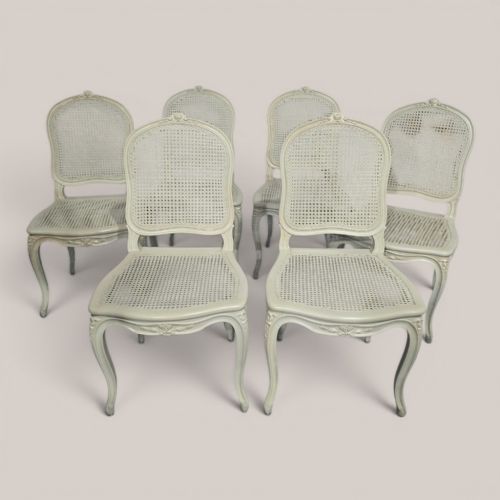
A cane chair frame provides the foundational woodwork and woven seating panels for seating such as armchairs, dining chairs, and window seats. Buyers seeking a cane chair frame encounter structural skeletons executed in oak, walnut, mahogany, and ebony across various revivalist periods.
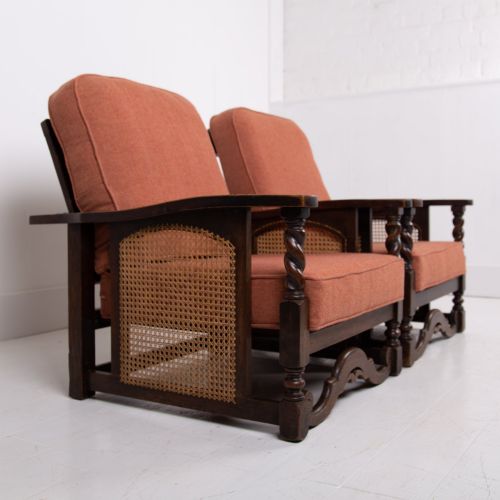
The pieces on this page lean heavily toward nineteenth-century pieces, Edwardian examples, and items from the 1900s to the 1920s. Common forms include bergere armchairs, library armchairs, folding steamer deck chairs, and occasional window seats.
Regional variations span French Chateau, Louis XV Revival, Jacobean Revival, and Anglo-Indian Colonial styles. Most examples integrate woven cane or split cane elements directly into the wooden supports.
Construction and materials
Makers constructed the primary frameworks using dense hardwoods including mahogany, walnut, oak, and ebony, sometimes supplementing these with bamboo or simulated rosewood finishes. Cabinetmakers joined these wooden components using traditional joinery appropriate to the period.
Panels of woven cane, rattan cane, and split cane provide the characteristic flexible support surfaces inset into the wooden channels. Additional tactile contrast arrives through secondary materials like leather, fabric upholstery, and brass fittings.
Cane Chair Frame Retail Price Guide 2026
Typical asking prices for cane chair frame among the pieces listed under this phrase on Sellingantiques today, from the lower quarter to the upper quarter. They describe what is for sale here now, not the wider market.
Period representations span the Regency era, the nineteenth century, and the 1900s through to the 1920s.
Judging the standard of execution
The distinction between tiers rests upon the density of the timber selection and the precision of the joinery within the wooden skeleton. Dense hardwoods like ebony and figured walnut command higher regard than standard secondary timbers.
The integrity and tightness of the cane weaving across the structural panels dictate the refinement of the piece. Hand-woven cane panels demonstrate greater technical mastery than machine-pressed alternatives inserted into the wooden rebates.
The Cane Chair Frame Glossary
- Bergere
- A closed-arm upholstered armchair with wooden framing, often featuring woven cane sides and back panels. This French seating form gained popularity during the eighteenth century and saw numerous revivals.
- Cane
- Strips of peeled rattan plant bark woven into open mesh patterns for chair seats and backs. It provides flexible, breathable support while remaining lightweight.
- Curule
- An ancient X-shaped folding stool or chair design with curved legs. The style derives from Roman magistracy seats and reappears in nineteenth-century revival furniture.
- Steamer deck chair
- A portable folding wooden lounge chair designed for maritime travel and garden use. These folding skeletons often incorporate adjustable backrests and footrests.
- Split cane
- Cane material split lengthwise to create a flat side and a rounded side for weaving. This variation offers distinct textural qualities compared to standard round core cane.
Cane Chair Frame: Frequently Asked Questions
What is a bergere chair?
A bergere is a traditional French armchair characterised by an enclosed upholstered wooden frame. Many examples incorporate woven cane panels along the back and sides.
These chairs often feature loose seat cushions supported by a webbed or caned base. They bridge the gap between formal reception seating and comfortable lounge furniture.
How do I date an oak frame?
Dating an oak frame relies on identifying the joinery methods, tool marks, and stylistic motifs present in the woodwork. Pieces from the Jacobean Revival period often display geometric carvings and heavier proportions.
Later Edwardian interpretations tend to feature lighter scantlings and machine-finished details. Comparing the wood grain and patina against known historical periods helps narrow the decade.
Can I use these chairs outdoors?
Most antique cane furniture and wooden frames suit indoor environments because historical timbers and natural rattan cane react poorly to moisture and temperature swings. Damp conditions cause the wooden joints to weaken and the cane to rot or snap.
Covered porches or dry conservatories represent the limit for exposing these fragile organic materials to the elements. Protective indoor placement ensures the longevity of the woven panels.
What is simulated rosewood?
Simulated or faux rosewood is a decorative surface treatment where a secondary timber receives painted or stained grain patterns to imitate genuine exotic rosewood. Cabinetmakers utilised this technique during the Regency period to achieve opulent appearances economically.
Close inspection reveals brushwork or grain application beneath the clear finish rather than natural timber growth rings. This practice allowed makers to satisfy fashionable demands for dark, dramatic woods.