



Campana Urn Vases
Campana urn vases bring classical proportion and enduring neoclassical style to interiors and gardens alike.
Campana Urn Vases
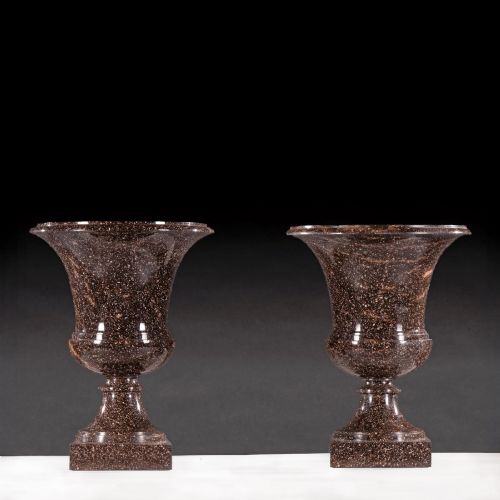
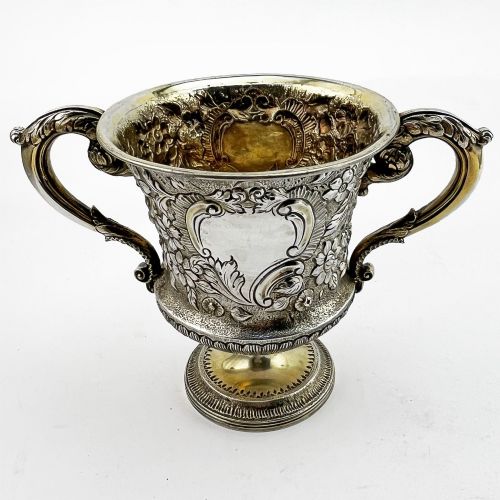
Campana urn vases take their defining inverted bell shape from ancient Roman pottery and metalwork. When searching for campana urn vases, buyers encounter a diverse selection ranging from grand garden ornaments to delicate cabinet pieces. The pieces listed here frequently manifest in the neoclassical, Regency, and Victorian styles.
Examples on this page span several centuries of production, with the nineteenth century heavily represented. Makers and manufacturers interpreted the classical form in varied scales, producing everything from monumental cast iron terrace vessels to modest porcelain table ornaments. French and English interpretations dominate the forms found in these listings.
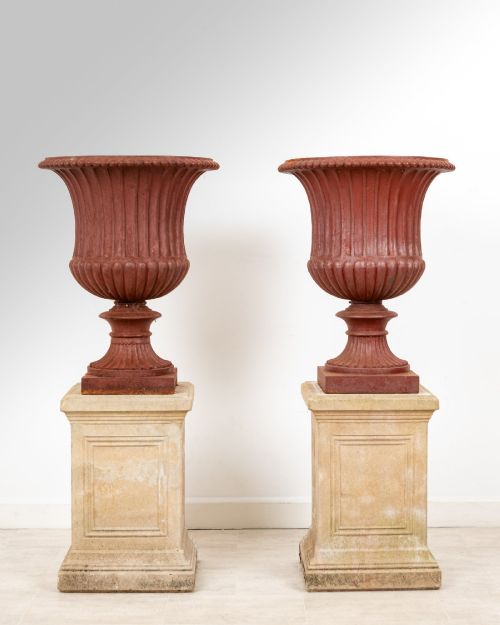
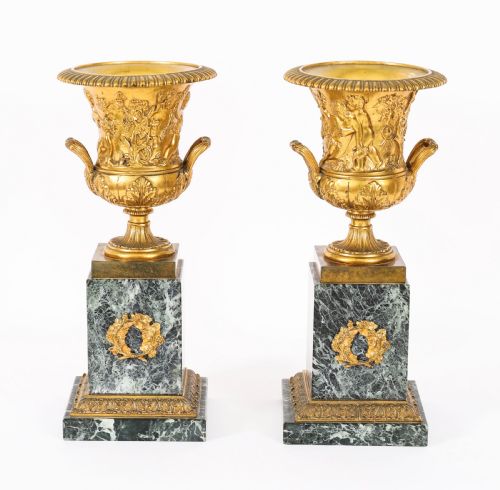
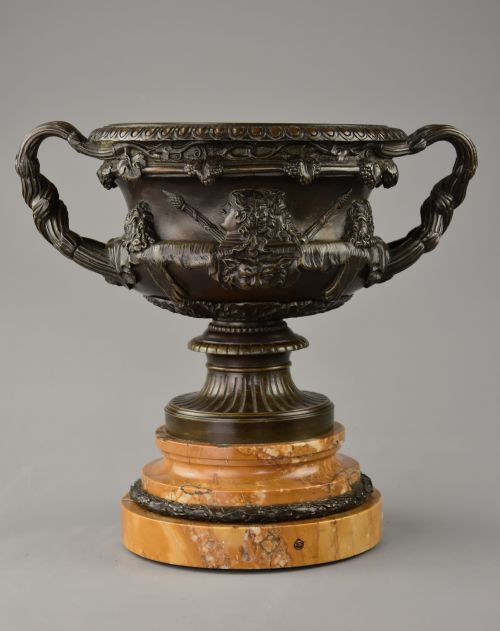
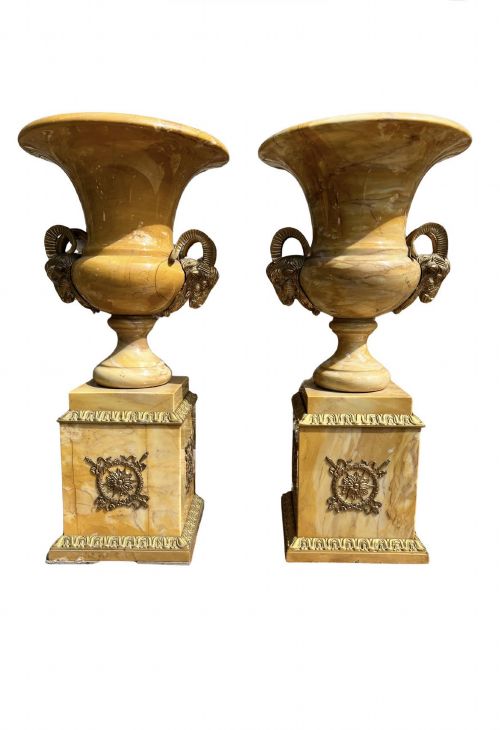
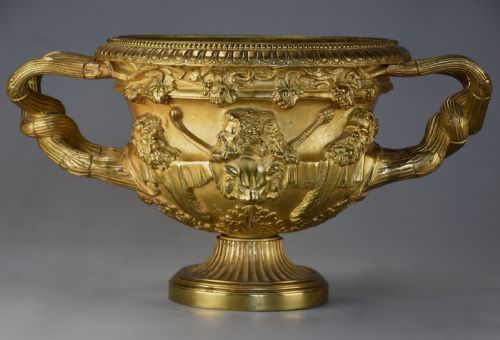
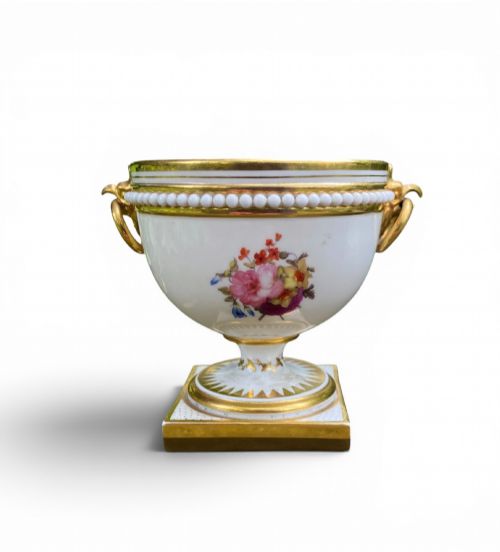
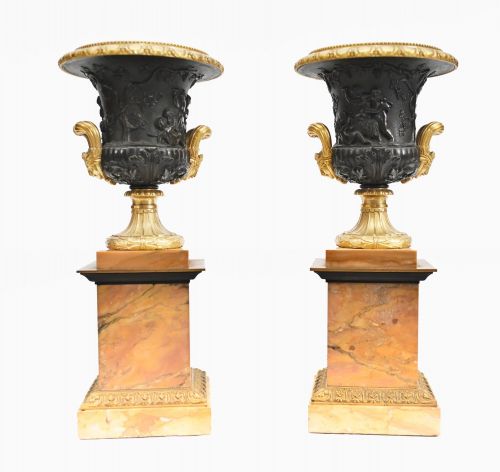
Interior versions appear as porcelain table vases, gilt bronze decorative objects, and marble vessels suited to side tables or mantelpieces. Garden and terrace versions typically employ cast iron or stone, designed to weather outdoors on dedicated pedestals or plinths. The enduring appeal lies in the symmetrical silhouette and classical ornamentation.
What varies in quality
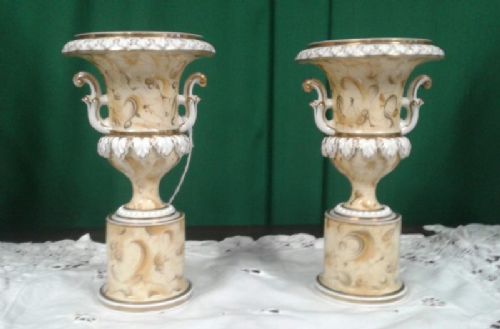
In ceramic and porcelain examples, quality shows in the precision of the hand-painting, the richness of the gilding, and the purity of the porcelain body. Well-executed pieces balance heavy handles and flared rims harmoniously without distortion from the kiln. The quality of the marble or stone base adds further weight to the overall assessment.
A solitary fruitwood specimen proves that even turners enjoyed shaping timber into ancient bell-shaped pots.
BFB Worcester·Flight Barr and Barr·Wedgwood·Coalport·Selim Bright
The Campana Urn Vases Glossary
- Campana
- A classical vase form shaped like an inverted bell, featuring a flared rim and a pedestal foot. The term derives from the Italian word for bell.
- Grand Tour
- A cultural journey undertaken by wealthy young Europeans in the eighteenth and nineteenth centuries to study classical art. Souvenirs included miniature bronzes and marble architectural models.
- Ormolu
- Gilt bronze ornamentation applied to furniture, clocks, and decorative vessels during the eighteenth and nineteenth centuries. The technique involves applying a mercury and gold amalgam to bronze before heating.
- Jasperware
- A type of fine stoneware developed by Josiah Wedgwood, characterised by a unglazed matte surface and contrasting white bas-relief figures. Blue remains the most frequently encountered ground colour.
- Cassolette
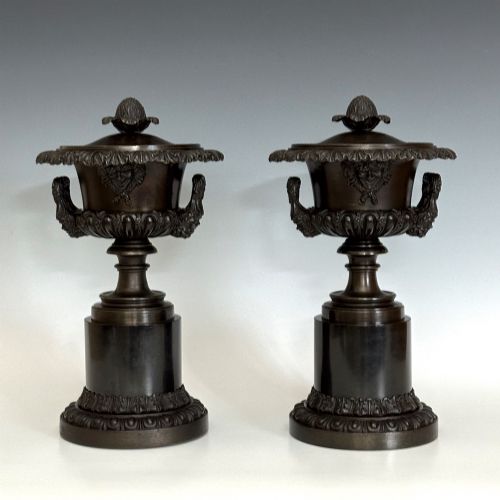
- A decorative vase or urn featuring a reversible lid that functions either as a solid cover or a perfume burner. These vessels often incorporate classical handles and pedestal bases.
Campana Urn Vases: Frequently Asked Questions
What is a campana urn?
A campana urn is a classical vessel shaped like an inverted bell, featuring a distinctive flared rim, handles, and a footed base. Originating in antiquity, the silhouette was revived during the neoclassical period for decorative and architectural use.
These vessels served as garden ornaments, wine coolers, and decorative table pieces. Their symmetrical form made them popular subjects for porcelain manufacturers and bronze founders across Europe.
Where were Grand Tour urns made?
Grand Tour urns were primarily produced in workshops across Italy and France during the eighteenth and nineteenth centuries. Artisans in Rome, Florence, and Paris catered to travellers seeking portable reductions of famous antiquities.
These pieces utilised local materials such as siena marble, alabaster, and bronze. They allowed collectors to display miniature representations of monumental ancient sculptures within domestic interiors.
How do I style a campana urn?
Campana urns function effectively as standalone decorative objects on mantelpieces, sideboards, or console tables. Metal and porcelain versions suit formal interior settings, while larger stone or iron examples anchor garden paths and terraces.
Smaller ceramic and bronze variations can hold dried florals or foliage arrangements. Larger pedestal-mounted versions work well positioned in entrance halls or framing architectural doorways.
How do I date a nineteenth-century urn?
Dating relies on examining manufacturing techniques, material composition, and stylistic markers associated with specific periods like the Regency or Victorian era. Cast iron pieces often carry foundry marks or registration numbers from the mid to late nineteenth century.
Porcelain examples frequently feature factory backstamps or specific painter signatures. Comparing the neoclassical detailing against known stylistic shifts helps narrow the production window.