






Campana Style Urns
Campana style urns bring classical proportion and enduring sculptural form to interior rooms and garden terraces alike.
Campana Style Urns
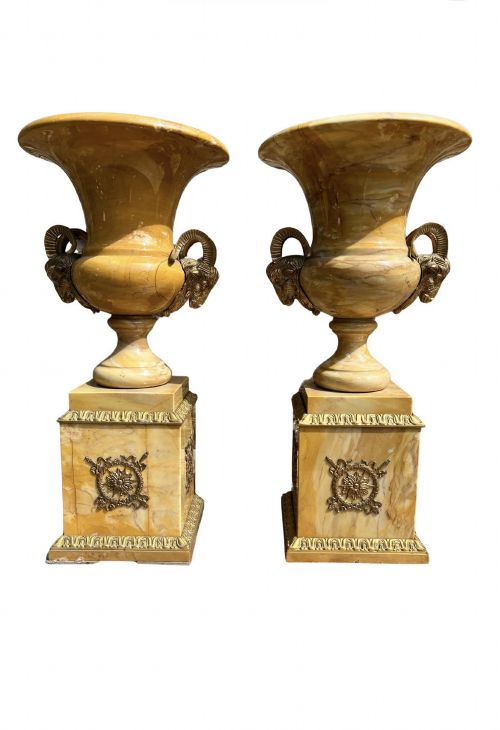
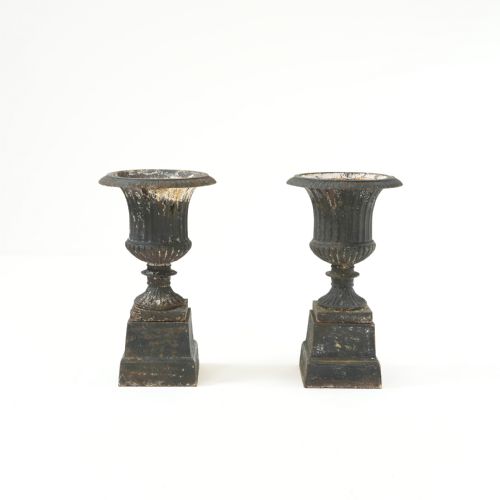
When you search for campana style urns, you encounter vessels defined by their distinctive inverted bell shape, sweeping handles, and footed bases. These pieces draw directly on classical antiquity, translating ancient pottery and stone into enduring decorative forms for the home and garden.
Originating from classical archetypes, the items on this page primarily reflect nineteenth-century revivals, including Regency, Victorian, and French Grand Tour interpretations. These later iterations capture the monumental dignity of antiquity while serving distinct decorative roles in nineteenth and twentieth-century settings.
How they were made
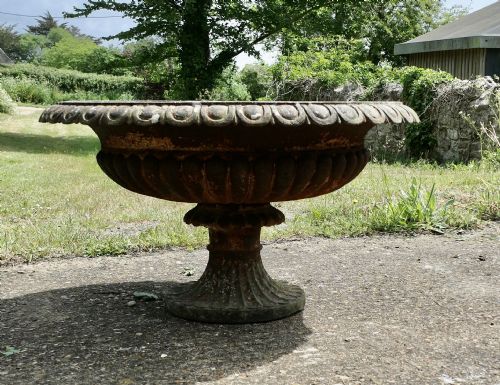
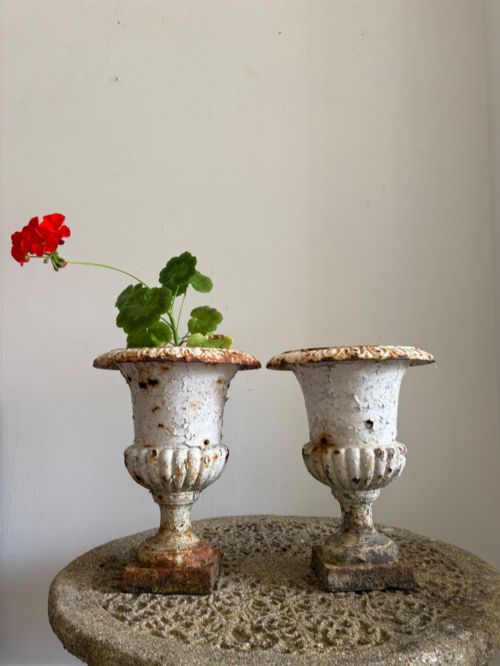
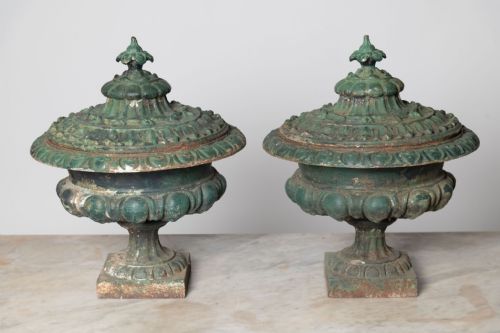
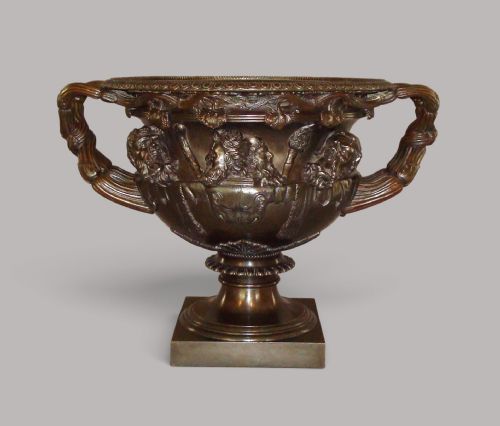
Foundry work dominates the construction of these metal vessels, utilising cast iron and cast bronze to achieve sharp classical relief and sturdy structural integrity. Iron examples often display painted finishes, while bronze pieces benefit from chased detail and rich patination.
Stonework and ceramics introduce contrasting textures through the use of Sienna marble, green marble, porphyry, plaster, and porcelain. These mineral and ceramic materials allow for polished surfaces, flat-backed wall formats, and delicate classical painting.
Many metal examples incorporate applied brass mounts or gilt bronze elements to accent the handles, rims, and bases. This combination of cast bodies with finer decorative mounts characterises the finer manufacturing traditions of the Grand Tour period.
Campana Style Urns Retail Price Guide 2026
Typical asking prices for campana style urns among the pieces listed under this phrase on Sellingantiques today, from the lower quarter to the upper quarter. They describe what is for sale here now, not the wider market.
What varies in quality
The sharpness of the casting distinguishes superior examples from simpler production, particularly in the rendering of classical friezes, handles, and plant motifs. Finer pieces retain crisp definition in every leaf and moulding, whereas lower tiers show softened edges and simplified surface detail.
Material selection and assembly integrity dictate the overall grade of the piece, from solid cast metals and genuine decorative marbles to lighter plaster compositions. The presence of original lids, matching pairs, and integral plinths elevates the historical completeness and visual balance of the object.
Clodion
The Campana Style Urns Glossary
- Campana
- Bell-shaped in Italian, describing an inverted bell form with a flared rim and footed base that defines these classical urns.
- Grand Tour
- A cultural journey undertaken by nineteenth-century elites who acquired miniature bronzes and decorative vases as souvenirs of classical antiquity.
- Neoclassical
- A style spanning the eighteenth and nineteenth centuries that revived the architectural and decorative vocabulary of ancient Greece and Rome.
- Medici Vase
- A specific monumental marble krater from the classical era that inspired numerous scaled-down decorative copies in bronze, iron, and porcelain.
- Porphyry
- A hard purple-red igneous rock embedded with crystal feldspar, prized in antiquity and later revivals for high-status decorative vases.
Campana Style Urns: Frequently Asked Questions
Where should I place a heavy cast iron urn?
Cast iron garden urns suit outdoor terraces, garden pathways, and entranceways, especially when elevated upon stone or iron plinths to showcase their classical silhouette.
Ensure the ground beneath is level and stable to support the considerable weight of iron garden planters.
How do I identify a Grand Tour bronze?
Grand Tour bronze urns typically date from the nineteenth century and replicate famous ancient monuments or sculpture seen by travellers in Italy.
Look for rich patination, finely chased surface details, and classical motifs such as acanthus leaves or figural friezes.
Are these urns suitable for holding water and real plants?
Many cast iron garden urns function perfectly as planters and jardinieres for seasonal floral displays or small shrubs.
Indoor decorative vases in marble, bronze, or porcelain are generally best utilised for dry arrangement or displayed purely as sculptural objects.
What is the difference between campana and Medici shapes?
Campana urns feature a clean inverted bell profile with sweeping loop handles rising from the lower body to the flared rim.
Medici vases present a more bulbous, egg-like body resting on a slender stem, often decorated with low-relief classical scenes.