







Campaign Dresser
A campaign dresser is a portable chest built for travel, offering officers solid timber storage that dismantles cleanly into sections.
Campaign Dresser
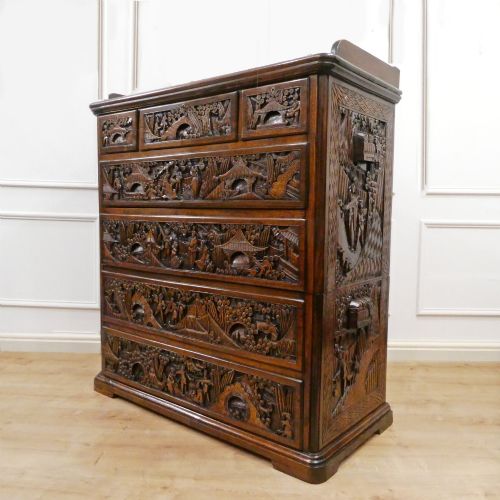
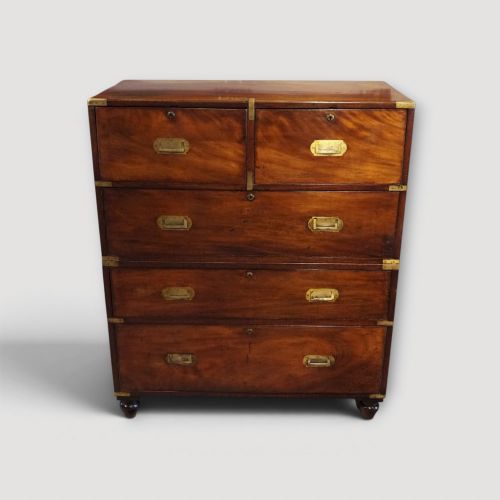
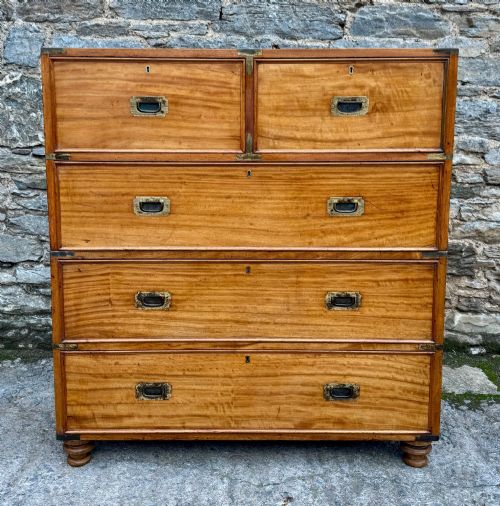
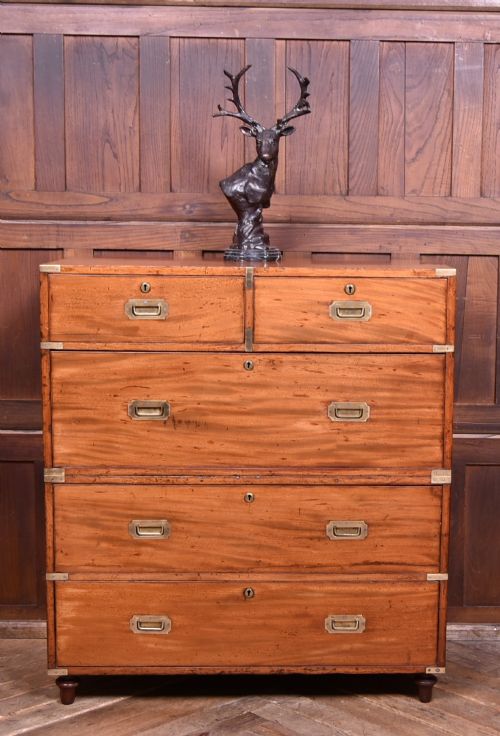
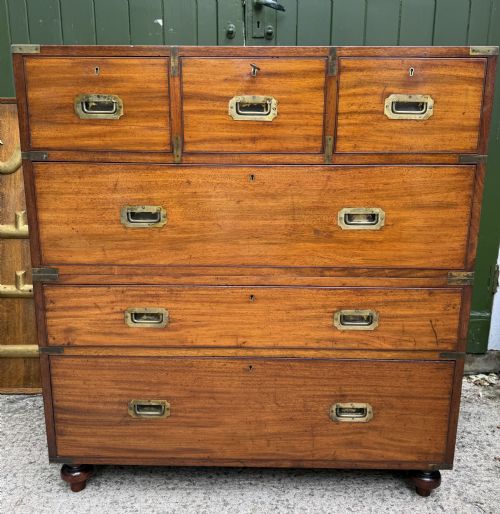
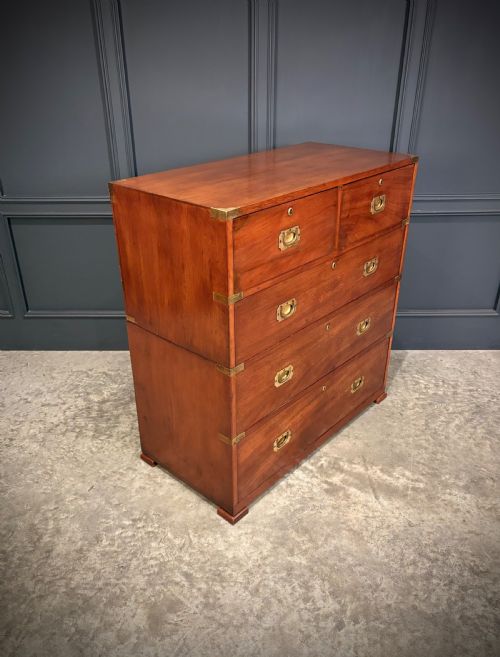
A campaign dresser is a modular chest built for transit, designed to separate into distinct stacked sections for military life. These pieces arrive in heavy timbers like mahogany, teak, and camphor wood, often reinforced with brass corners and flush-fitting pull handles to prevent snagging during transport.
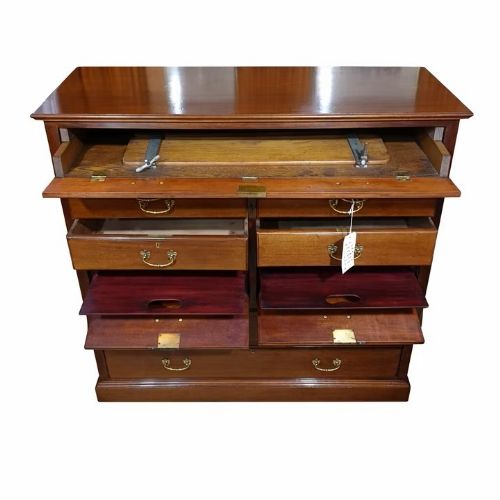
The versions most common on this page date from the nineteenth century, spanning Victorian and Regency eras. Alongside standard chests of drawers, buyers encounter secretaire variants with fitted writing desks, as well as two-part designs built for easy carriage by land or sea.
How they were made
Cabinetmakers constructed these chests using dense timbers such as mahogany, teak, and camphor wood, selected to withstand humid climates and rough handling. Grain alignment and joint work prioritized structural stability under duress.
Brass hardware dominates the construction, featuring corner brackets, strap work, and recessed drop handles screwed directly into the timber. Sections connect via sturdy brass side pins or locking plates that secure the upper and lower halves together.
Campaign Dresser Retail Price Guide 2026
Typical asking prices for campaign dresser among the pieces listed under this phrase on Sellingantiques today, from the lower quarter to the upper quarter. They describe what is for sale here now, not the wider market.
What varies in quality
Quality rests in the precision of the dismantling mechanism and the integrity of the internal drawer construction. Superior examples maintain exact alignment between stacked sections without wobble or binding in the runners.
The selection of timber and the quality of the brass fittings dictate the tier of the piece. Fine chests utilise heavy gauge brass countersunk precisely into the wood, paired with secondary timbers like pine or cedar used discreetly for drawer linings.
Ross & Co
The Campaign Dresser Glossary
- Campaign chest
- A portable chest of drawers built in two or more stackable sections for military travel. These pieces feature recessed handles and reinforced corners to endure transit.
- Secretaire
- A chest fitted with a drop-front drawer that opens to reveal a writing surface and small compartments. This addition provided officers with a portable desk.
- Two-part design
- A cabinet architecture where the main body splits horizontally into separate upper and lower carcases. This configuration facilitated loading onto pack animals or ships.
- Flush handle
- A metal pull inset directly into the wood face so it does not project beyond the surface. This prevents snagging on canvas covers or ropes during movement.
- Padauk
- An exotic tropical hardwood displaying a deep reddish-brown colour used in colonial cabinetmaking. It offers exceptional durability and resistance to warping.
Campaign Dresser: Frequently Asked Questions
Why do campaign dressers come in two parts?
These chests divide horizontally into distinct sections so officers could transport their belongings easily across rugged terrain. Each half acts as a manageable box for pack animals, carts, or ships.
Once at the destination, the sections stack securely on top of each other and lock into place with internal pins or brackets, restoring a full-height chest.
What woods were used for military chests?
Cabinetmakers selected durable hardwoods capable of surviving harsh climates and frequent transit without warping. Mahogany, teak, and camphor wood appear frequently across these listings.
Secondary woods like cedar, pine, and oak also support internal drawer framing, providing sturdy construction while managing overall weight for travel.
Where were these campaign pieces made?
Many campaign chests originated in British workshops during the nineteenth century to supply military personnel heading overseas. Other examples emerged from colonial workshops in regions like India, utilising local timbers.
Cabinetmakers adapted traditional furniture forms to meet the strict demands of military life, resulting in practical storage designed for mobility.