



Cameo Brooch Pin
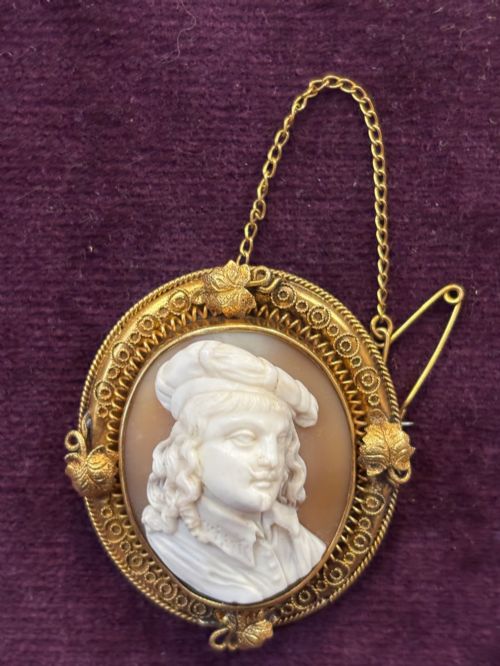
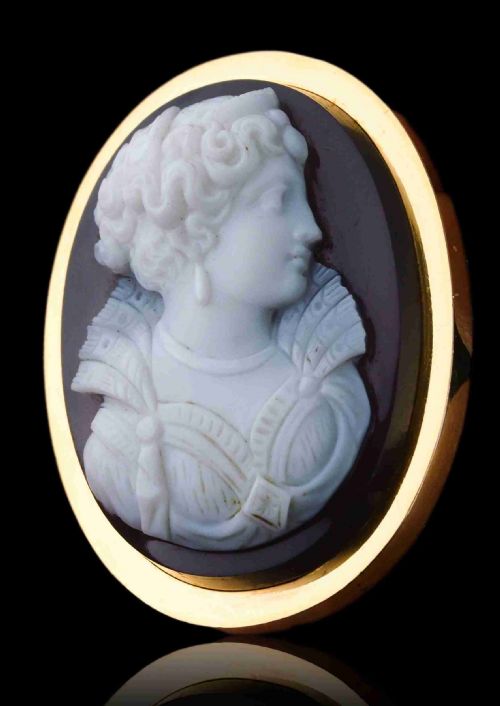
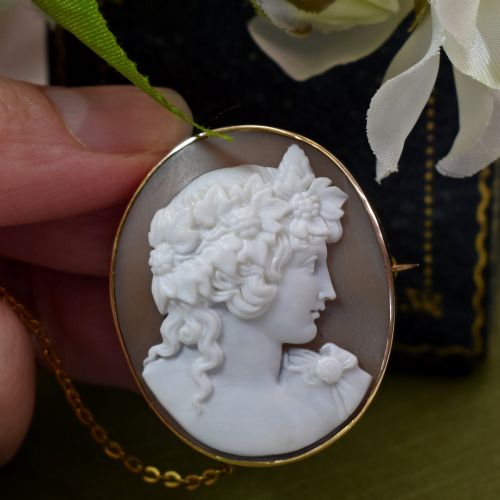
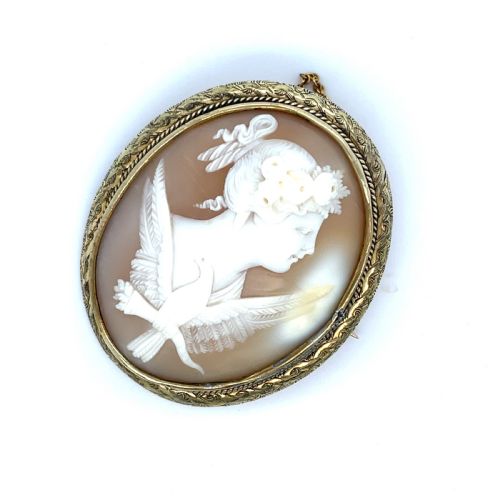
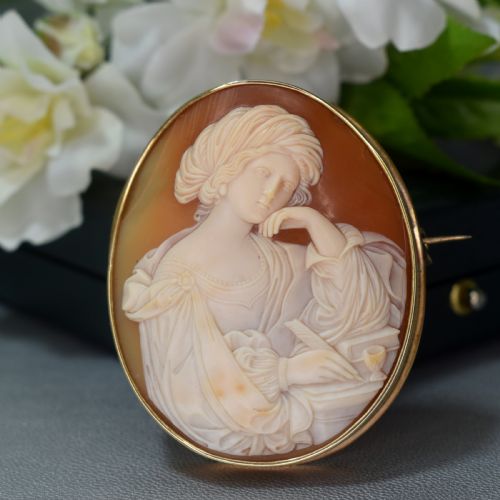
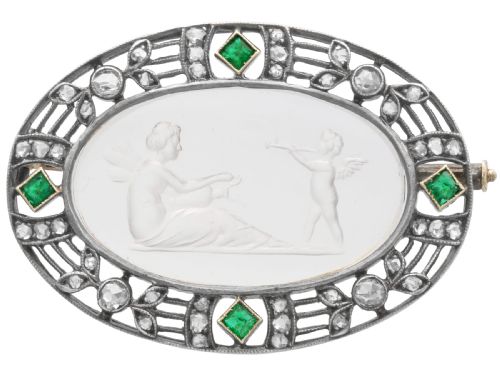
These cameo brooch pin examples span the Victorian, Georgian, and Edwardian periods, carved from shell, hardstone, and lava stone.
Cameo Brooch Pin
A cameo brooch pin combines carved relief imagery with a fastening pin, worn during the Victorian and Georgian periods. These pieces frequently depict classical figures such as Aphrodite, Flora, Psyche, and various Roman goddesses.
Shell is the material most frequently encountered on this page, carved to contrast a light figure against a darker background. Hardstone, agate, lava stone, and coral also appear in mounts of gold, silver, and pinchbeck.
Materials and construction
Carvers work shell and hardstone by hand to build relief portraits and classical scenes, taking advantage of natural colour layers in the material. Lava stone provides a softer medium for sculptural depth in Italian Grand Tour pieces.
Mounts utilise 9ct, 15ct, 18ct, and 20ct gold, alongside silver and pinchbeck. Frames often incorporate filigree work, ornate bezels, and diamond or emerald accents.
Lava stone cameos bring pieces of Vesuvius straight to your lapel, courtesy of enthusiastic nineteenth-century travellers.
Judging quality
Depth of relief and sharpness of carving separate standard examples from finer works. The skill of the carver determines facial expression, drapery folds, and anatomical proportion in figures like Antinous or the Persian Sibyl.
The weight and metalwork of the frame add distinction, particularly where solid gold mounts feature decorative wirework, granulation, or gemstone surrounds. Matching the quality of the carving to a substantial precious metal setting marks out the superior piece.
R. Pernice
The Cameo Brooch Pin Glossary
- Cameo
- A method of carving an object such as a gemstone, lava stone, or shell so that a raised relief image stands distinct from a background layer. This technique creates a layered portrait or mythological scene.
- Hardstone
- A collective term for semi-precious stones like agate used by carvers to produce durable cameos. These stones offer rich natural colour contrasts for the relief.
- Grand Tour
- A cultural journey undertaken by wealthy Europeans through France and Italy during the eighteenth and nineteenth centuries. Travellers acquired local crafts including lava stone and shell carvings as souvenirs.
- Pinchbeck
- An alloy of copper and zinc developed to imitate gold. This material appears in period settings where yellow metal lustre is desired without solid gold composition.
- Filigree
- Delicate jewellery metalwork formed from fine gold or silver wire twisted into intricate patterns. This technique decorates the bezels and frames of many period pieces.
Cameo Brooch Pin: Frequently Asked Questions
How do I date a cameo brooch pin?
Dating relies on stylistic clues, framing techniques, and materials. Victorian examples often display deep relief shells in yellow gold frames, while Georgian pieces show specific neoclassical motifs.
Assay marks and hallmarks on the metal mount provide additional chronological markers. Pin mechanisms also change from early C-clasps to later safety catches.
What subjects do these cameos depict?
Most subjects draw from classical mythology and antiquity. Common figures include goddesses like Flora and Aurora, alongside literary and historical subjects such as the Persian Sibyl.
Italian Grand Tour pieces frequently feature classical deities and mythological pairs like Psyche and Cupid. Portraits of classical youths like Antinous also appear.
Are shell and hardstone cameos different?
Shell cameos utilise natural layered sea shells, typically helmet shell, yielding warm cream figures against brown or orange backgrounds. Hardstone cameos employ banded stones like agate.
Hardstone provides greater durability and sharper detail, whereas shell allows for larger scale compositions. Both maintain a long tradition in European jewellery.
How do I wear an antique cameo?
Pin the piece securely to heavy fabrics such as wool, velvet, or tailored lapels to support the weight of the metal frame. Ensure the C-clasp or pin fastening is secure before wearing.
They function well centred on necklines, fastening scarves, or accenting structured garments. Storage should involve a soft pouch away from direct pressure.