




Caliber Cut Sapphire Ring
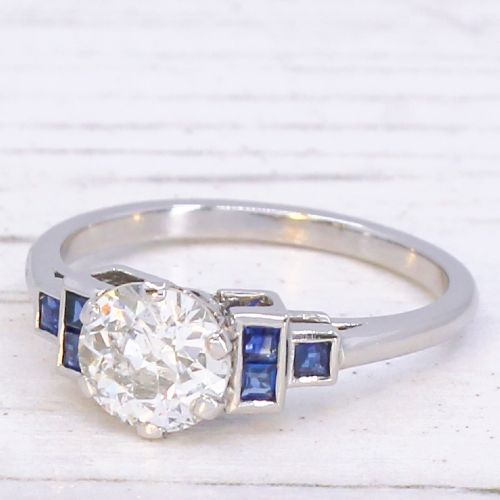
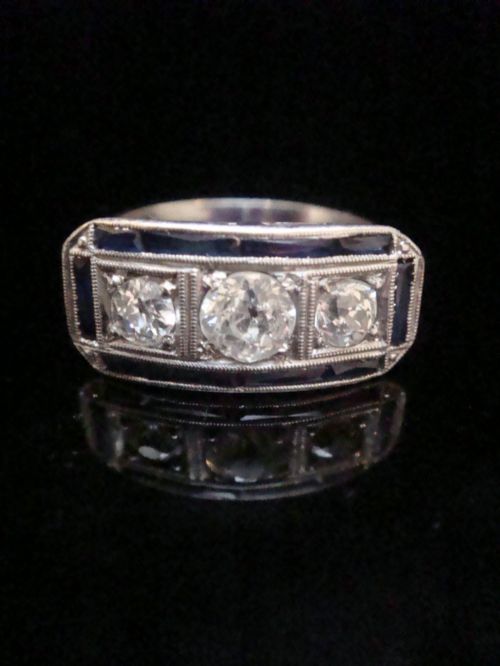
A caliber cut sapphire ring brings together geometric precision and rich colour, offering an unmistakable period silhouette.
Caliber Cut Sapphire Ring
A caliber cut sapphire ring is an item of finger jewellery defined by precisely shaped, channel-set stones that sit closely together without visible metal partitions. The examples available on this page primarily date from the Art Deco period, along with Art Deco Revival pieces, and span the 1920s, 1930s, 1940s, 1960s, and Edwardian eras.
The silhouettes on offer include classic target rings, cluster formations, elongated designs, and marquise shapes. These configurations showcase the geometric discipline typical of the interwar years, where architectural lines and symmetrical stone arrangements dominated jewellery design.
You will encounter these rings set in platinum, 18ct white gold, 18ct yellow gold, and combinations of gold and platinum. Many incorporate old cut diamonds alongside the sapphire elements, occasionally introducing ruby accents within tricolour or multi-stone layouts.
How they were made
The construction relies on shaping individual sapphires to fit exact channel dimensions, requiring meticulous hand-cutting by lapidaries. These stones are then paired with durable metals such as platinum or 18ct white gold, which provided the structural strength needed for intricate geometric settings.
Diamonds incorporated into these designs are predominantly old cuts or rose cuts, shaped by hand rather than modern machine precision. Goldsmiths secured these gems using tight claw or bezel settings, integrating the deep blue sapphires seamlessly with brilliant diamond accents.
Some French examples pack a colourful punch by sneaking ruby and diamond companions alongside the blue sapphires in heavy platinum mounts.
What varies in quality
The standard of execution in a caliber cut sapphire ring depends on the uniformity of the stone alignment and the precision of the facet edges. Stones that fit tightly together with minimal gaps demonstrate superior lapidary skill.
The overall refinement is also determined by the crispness of the platinum or 18ct white gold metalwork framing the gems. Heavier metal weight and intricate gallery work distinguish the finer examples from simpler commercial production.
The Caliber Cut Sapphire Ring Glossary
- Calibre cut
- A style of gemstone cutting where stones are shaped precisely to fit a specific channel or geometric design in jewellery. This technique creates a continuous line of colour.
- Target ring
- A circular cluster ring featuring a central stone surrounded by concentric rings of contrasting gems. This configuration mimics the appearance of a bullseye.
- Marquise ring
- A ring featuring a pointed, boat-shaped gemstone or cluster silhouette. The shape lengthens the appearance of the finger when worn.
- Old cut diamond
- A diamond cut by hand before modern machinery standardised facets. These stones typically feature smaller tables and larger culets.
- Platinum
- A dense, durable, and naturally white precious metal widely utilised in early twentieth-century jewellery. It allowed for delicate yet secure stone settings.
Caliber Cut Sapphire Ring: Frequently Asked Questions
How should I wear an antique sapphire ring?
These rings suit daily wear provided you treat them with reasonable care. Platinum and gold settings hold up well over time, but delicate antique claws benefit from occasional checks by a jeweller.
Consider removing the ring during heavy manual tasks to protect the hand-cut stones and precious metalwork from unnecessary impact.
How do I identify an Art Deco sapphire ring?
Art Deco sapphire rings display strong geometric motifs, symmetry, and channel-set calibre stones. The mountings frequently utilise platinum or 18ct white gold.
Look for target shapes, elongated silhouettes, and the distinctive facet patterns of old cut or rose cut diamonds accompanying the blue sapphires.
What metals were used in these rings?
The primary metals found in these pieces are platinum and 18ct white gold, reflecting the stylistic preference for white metals during the interwar period. Some examples also incorporate yellow gold or mixed metal configurations.
Platinum was particularly favoured for its strength, allowing goldsmiths to create fine, secure settings without excessive bulk.