

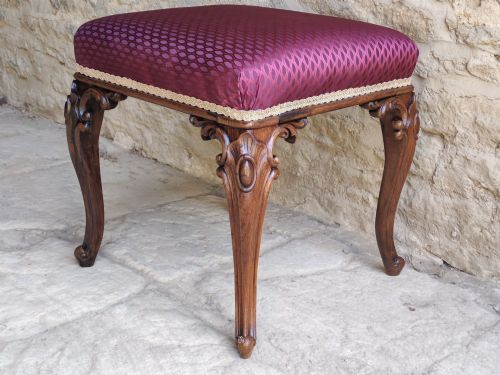

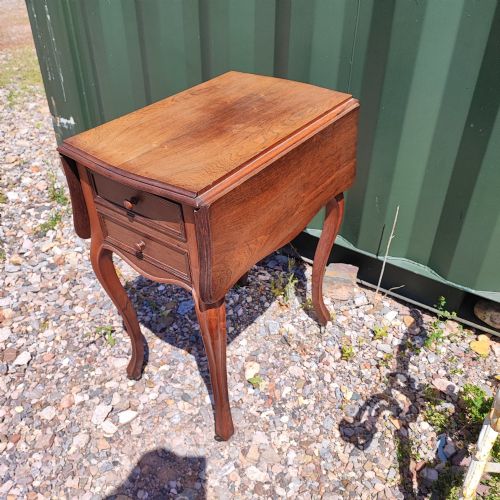
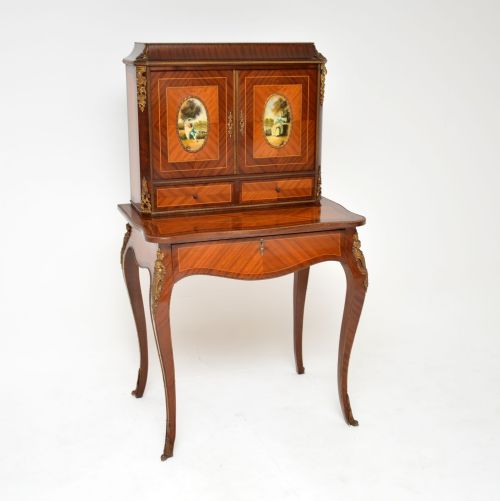
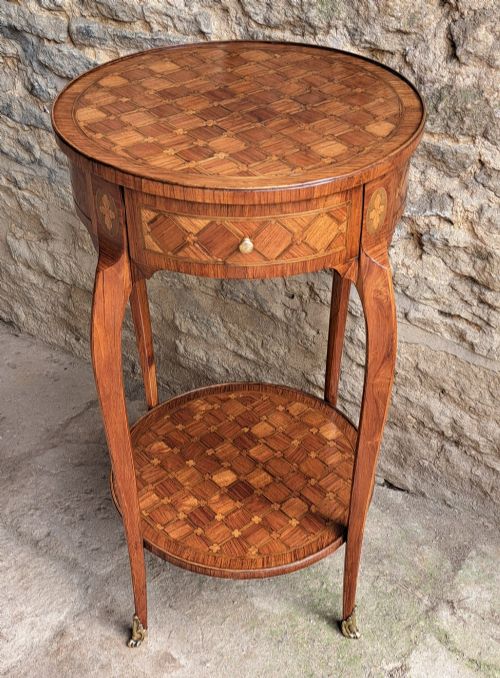
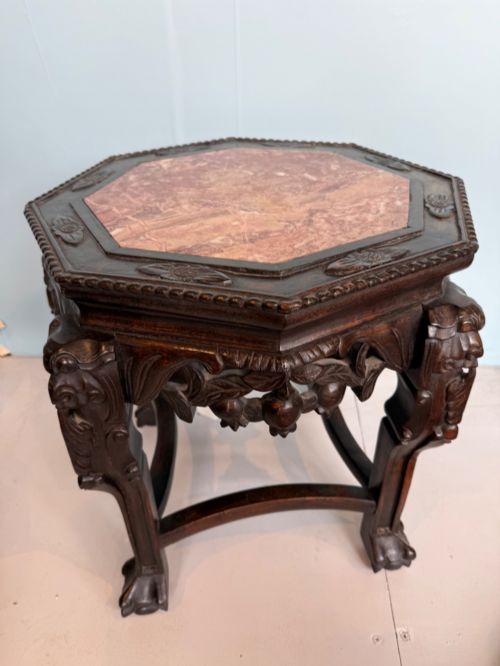

Cabriole Leg Rosewood Table
These pieces bring the warmth of dense timber and curved supports into a room, uniting French revival flair with nineteenth-century utility.
Cabriole Leg Rosewood Table
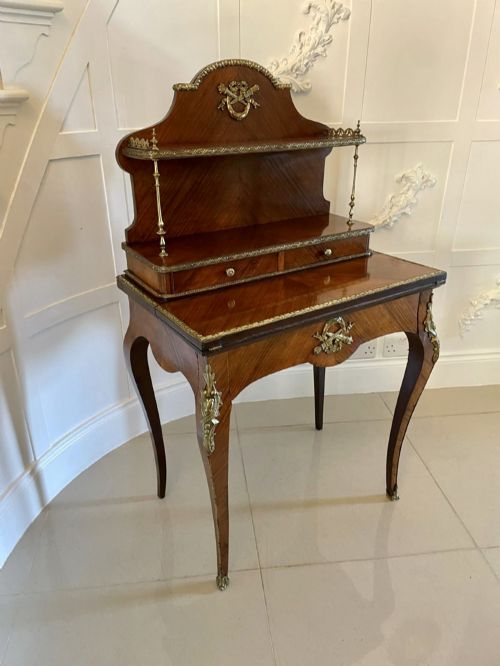
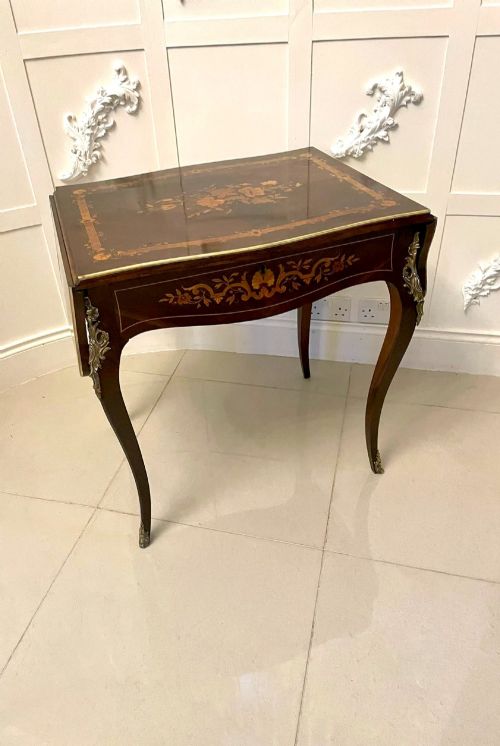
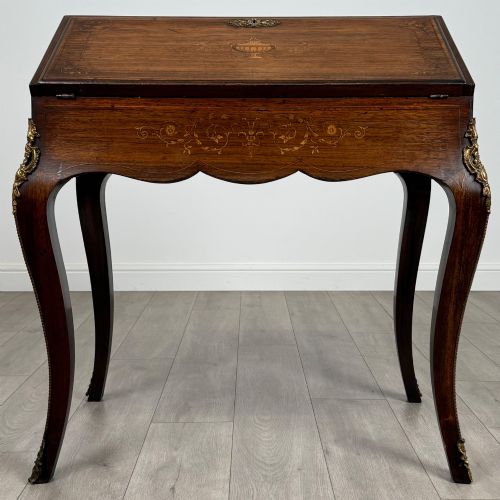
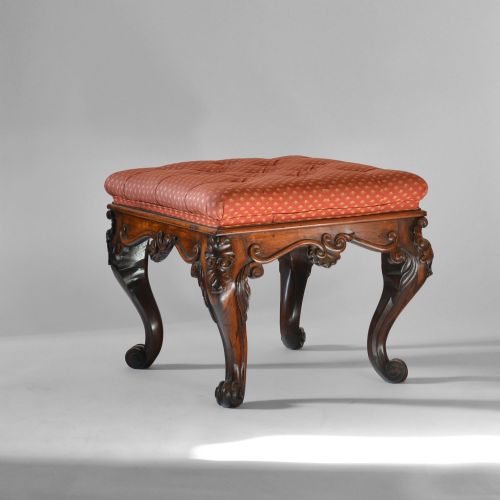
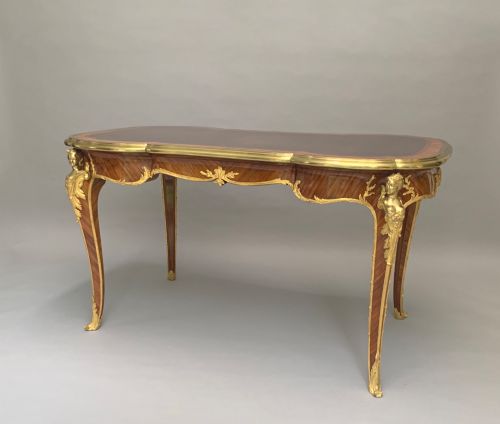
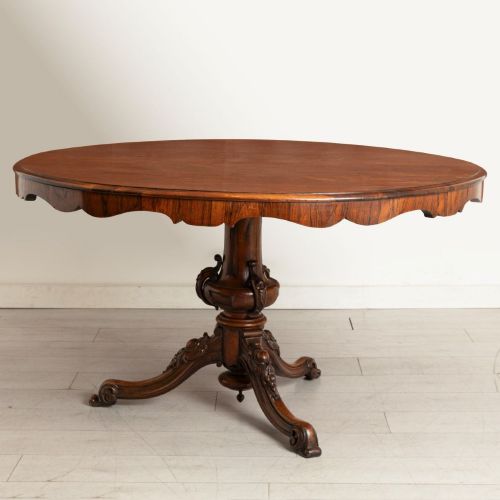
A cabriole leg rosewood table combines rich, dark tropical timber with the signature sweeping double-curved leg derived from eighteenth-century design. Buyers exploring this phrase encounter diverse forms ranging from freestanding centre tables and writing desks to small occasional pieces, card tables, and bedside cabinets.
The selection leans heavily toward nineteenth-century production, particularly Victorian pieces and French revival iterations displaying Louis XV or Rococo influences. Alongside these European works, occasional Anglo-Indian or Oriental examples appear, offering alternative carving traditions upon the same dense timber.
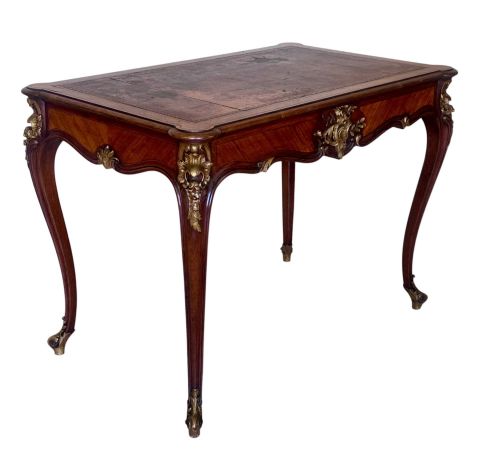
Centre tables and writing desks dominate the larger formats, while drop-leaf occasional tables and bedside stands provide compact alternatives. These surfaces often incorporate hinged leaves, marquetry patterns, or inset leather writing surfaces depending on their intended domestic function.
Construction and materials
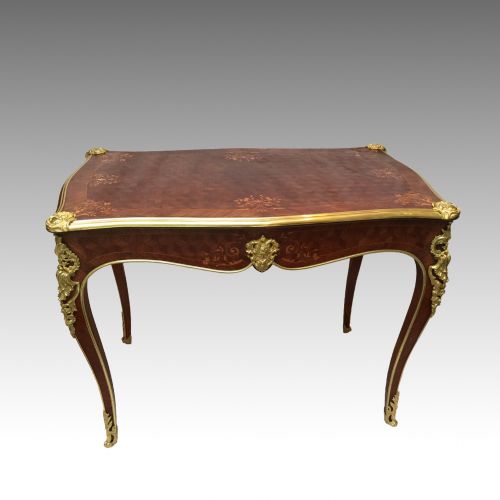
Makers utilised dense rosewood as both solid timber and decorative veneer, frequently pairing it with contrasting woods such as kingwood, tulipwood, and amboyna for parquetry and floral marquetry borders. The foundational carcases often relied on softer secondary timbers to support these heavier decorative veneers.
Metal ornamentation played a central role in elevating the appearance of these tables, utilising cast or gilt ormolu, brass mounts, and bronze accents along the edges and cabriole knees. Surface decoration relied on precision cutting of veneers arranged in geometric or floral patterns, secured with traditional animal glues and finished with French polish.
Materials appearing across these tables include rosewood, kingwood, ormolu, brass, marble, and leather.
Assessing quality and execution
The standard of execution reveals itself in the fluidity of the carved cabriole legs and the precision of the grain matching across the table top. Superior examples demonstrate continuous flow in the timber's natural figure, whereas lesser versions rely on random veneer patches with visible seam lines.
Hardware integration distinguishes finer work from standard production, seen in the crispness of chased ormolu mounts and how cleanly they fit the contours of the rosewood frame. The depth of the hand-cut marquetry and the retention of crisp detailing in carved foliage indicate the original maker's investment of time and skill.
Francois Linke·CH Jeanselme and Co·Gillow
The Cabriole Leg Rosewood Table Glossary
- Cabriole leg
- A furniture leg featuring a double curve, bulging outward at the knee and tapering inward toward the foot, inspired by animal limbs. This form became a defining characteristic of Louis XV and subsequent revival furniture.
- Ormolu
- Gilt bronze mounted upon furniture to provide metallic highlights and decorative borders. The technique involves applying a gold amalgam to bronze before firing.
- Marquetry
- Decorative patterns formed by fitting together thin slices of various coloured veneers into a wood ground. Craftsmen use this technique to create pictorial or floral motifs across table tops.
- Parquetry
- Geometric patterns constructed from wood veneer tiles arranged in repeating arrays. Squares, triangles, and lozenges create tiled surfaces on tabletops and desk lids.
- Bonheur du jour
- A small ladies writing desk featuring a set of small drawers and pigeonholes set upon the main writing surface. These pieces emerged during the mid-nineteenth century French revival periods.
Cabriole Leg Rosewood Table: Frequently Asked Questions
What rooms suit a rosewood table?
These tables adapt easily to living rooms, studies, and bedrooms as centrepieces, writing surfaces, or lamp stands. Their compact footprints allow them to sit comfortably beside seating or against perimeter walls.
Dark grain tones pair effectively with both traditional interiors and modern minimalist spaces, providing a natural focal point without overwhelming the room.
How do I care for rosewood?
Maintenance requires avoiding direct sunlight and excessive heat, which can dry out the French polished finish and cause the underlying timber to split. Regular dusting with a soft dry cloth preserves the lustre without chemical buildup.
Wax polishing should be applied sparingly and only when the finish appears dull, buffing gently along the direction of the wood grain.
Are these tables sturdy enough for daily use?
Most forms, particularly centre tables and writing desks, are built from heavy hardwoods designed for robust domestic service. Cabriole legs distribute weight effectively when placed on level flooring.
Drop-leaf variants and delicate occasional tables require more care when extending leaves or placing heavy objects near the edges of folding sections.
How do I distinguish French from Victorian styles?
French revival pieces frequently incorporate heavier gilt-bronze mounts, elaborate floral marquetry, and sweeping Louis XV curves. Victorian English examples often display more restrained carving, turned supports, and simpler cross-banded borders.
Timber choice also offers clues, as French workshops frequently combined rosewood with kingwood and tulipwood veneers, while English makers often utilised solid rosewood or simpler mahogany carcases.