





Cabriole Leg Cellarette
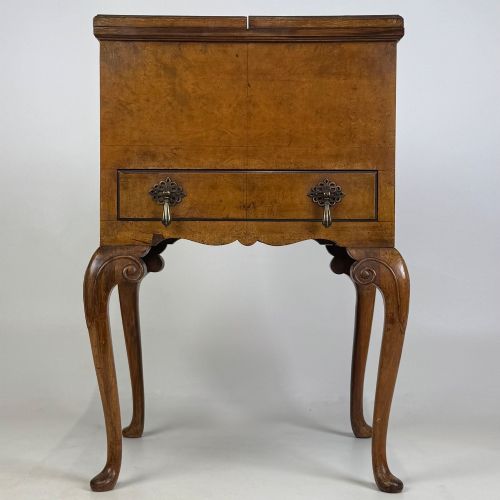
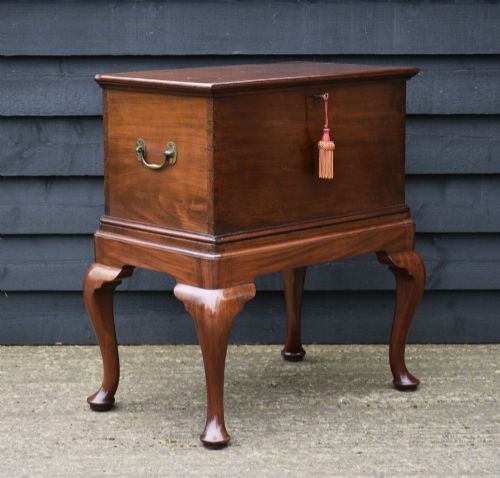
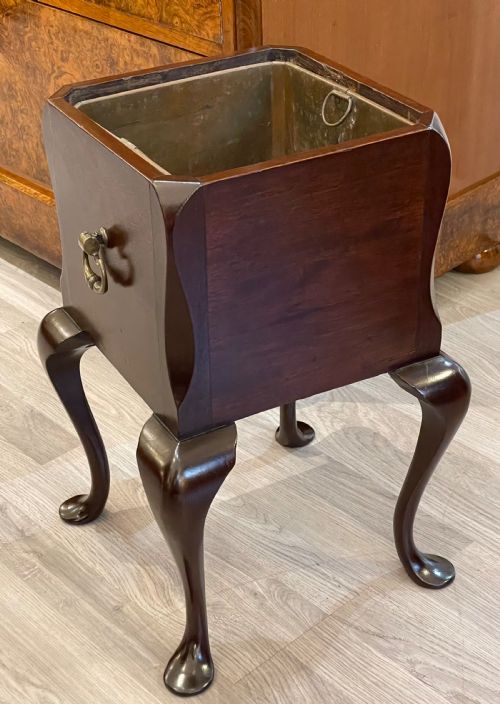
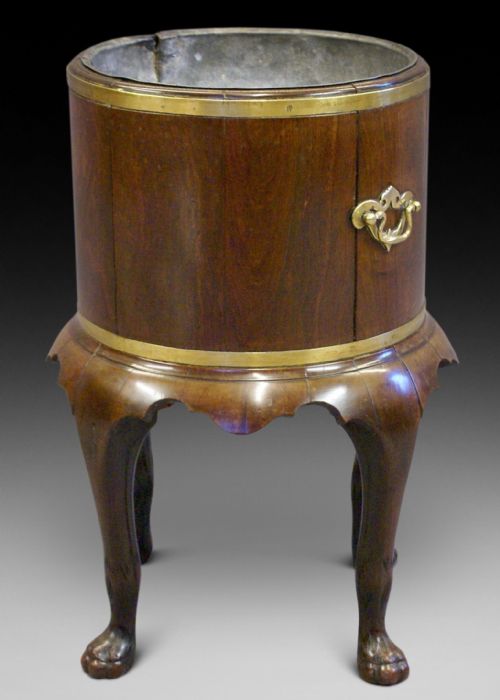
A cabriole leg cellarette is a refined period wine cooler elevated on graceful, curving supports, designed to keep vintage bottles close at hand.
Cabriole Leg Cellarette
A cabriole leg cellarette is a dedicated drinking-wine container designed to sit securely in the dining room during formal meals. These pieces combine secure bottle storage with elegant, curved woodwork that reflects the prevailing taste of the eighteenth and nineteenth centuries.
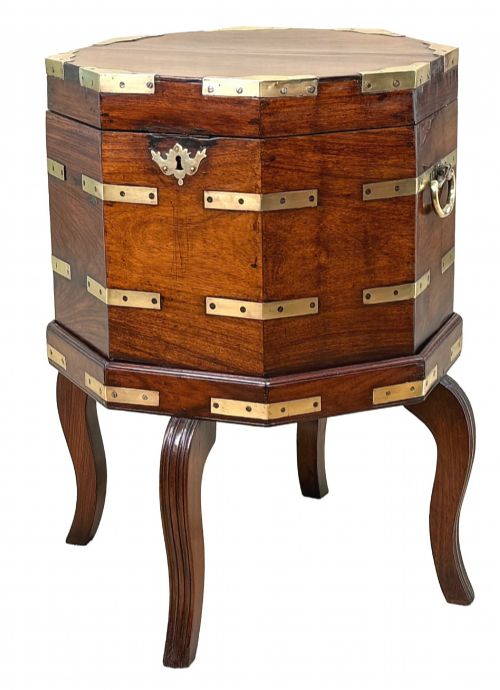
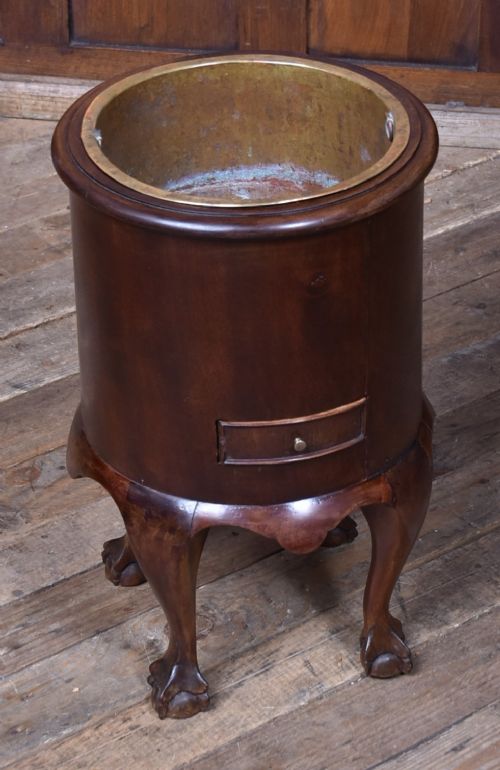
Buyers searching for this phrase will encounter several related forms including mahogany wine coolers on stands and elaborate burr walnut jardiniere planters. The selection spans the Georgian, Victorian, and Edwardian eras, alongside Anglo-Indian colonial interpretations in padouk wood.
The core function remained consistent across these periods, serving to chill wine using internal metal or zinc linings while presenting a polished exterior to dinner guests. Most examples found here rely on rich hardwoods such as mahogany and burr walnut, often enhanced by marquetry inlay or box tree details.
How they were made
Cabinet makers constructed these vessels using dense hardwoods like mahogany and padouk, which provided durability and a dark, lustrous grain. Burr walnut and marquetry inlay were subsequently applied to create striking decorative surfaces on later Edwardian and Victorian iterations.
Interior storage required practical metal linings, typically zinc, brass, or steel, to hold ice and water safely without damaging the surrounding timber. Skilled joiners shaped the characteristic curving supports directly from solid wood blocks to ensure structural integrity under heavy loads.
Dinner guests in the eighteenth century kept their wine securely locked away from thirsty servants using the integrated brass locks on these heavy wooden boxes.
What varies in quality
The standard of craftsmanship is visible in the fluidity of the curving supports and the tightness of the wood joints. Superior pieces exhibit seamless integration between the container box and its structural stand.
Material selection dictates the upper tier of the range, where choice veneers, intricate marquetry inlay, and heavy brass or zinc internal fittings demonstrate superior workshop investment. Lesser examples rely on simpler timber cuts and minimal decorative embellishment.
The Cabriole Leg Cellarette Glossary
- Cabriole leg
- A furniture support that curves out in a convex arc and tapers inward in a concave arc, terminating in a pad or foot. This form derives from animal limbs and gained prominence during the eighteenth century.
- Cellarette
- A lockable container used for storing wine bottles near the dining table before decanting. They often feature internal metal linings designed to hold ice.
- Padouk
- A heavy tropical hardwood valued for its deep reddish-brown colour and durability. It frequently appears in colonial furniture produced for British export.
- Marquetry
- Decorative veneer work arranged in pictorial patterns or geometric designs across a wooden surface. Craftsmen cut contrasting wood veneers to fit precisely within a background panel.
- Jardiniere
- An ornamental stand or pot intended to hold indoor plants and flowers. These vessels often share physical forms with period wine coolers.
Cabriole Leg Cellarette: Frequently Asked Questions
What is a cabriole leg cellarette used for?
These pieces were originally manufactured to hold wine bottles and ice in the dining room during lengthy meals. Servants would access the chilled bottles from inside the box without needing to fetch them from the cellar.
Today, they serve equally well as statement decorative containers, side tables, or planters in a period interior.
How do I date a wine cooler?
Dating relies on observing the primary woods, the style of the curving supports, and any secondary decorative elements like marquetry inlay. Georgian examples typically display dense mahogany and restraint in decoration, whereas Edwardian pieces often incorporate lighter walnut veneers.
Examining the construction methods and the metal used for internal linings also provides strong clues regarding the decade of manufacture.
Can I use an antique wine cooler for plants?
Many of these vessels feature original zinc, brass, or steel linings that protect the surrounding wood from moisture. This makes them naturally suited for housing potted plants or functioning as indoor jardinieres.
Care should be taken to ensure any modern watering does not compromise the historic interior metalwork or the outer veneer.
How do I maintain the wood on a cellarette?
Regular dusting with a soft, dry cloth preserves the natural lustre of hardwoods like mahogany, padouk, and burr walnut. Harsh chemical cleaners and excessive direct sunlight should be avoided to prevent the polish from fading.
Applying a traditional beeswax polish occasionally helps nourish the timber and protects the antique surface finish.