

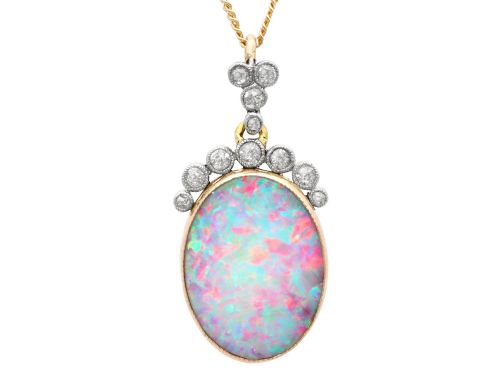
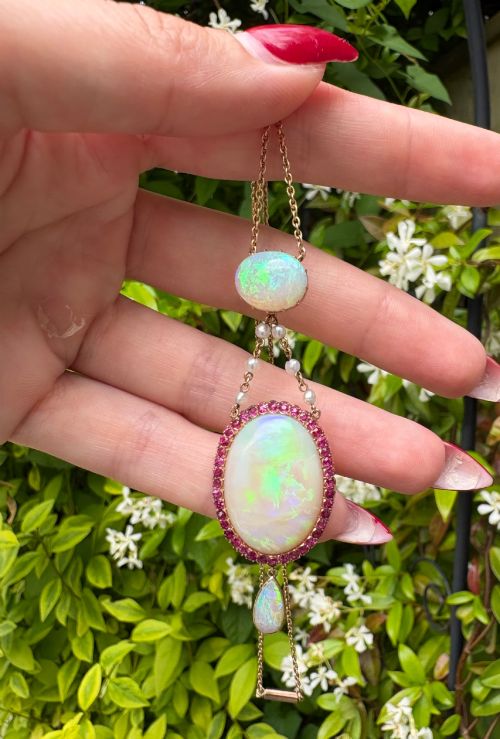


Cabochon Opal Pendant Necklace
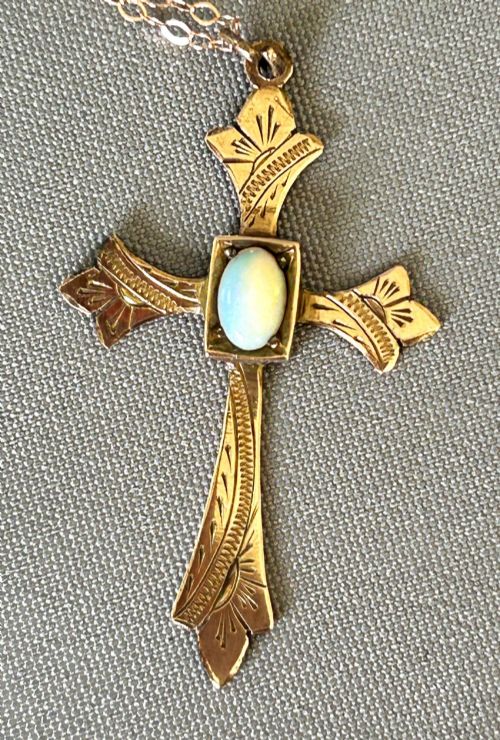
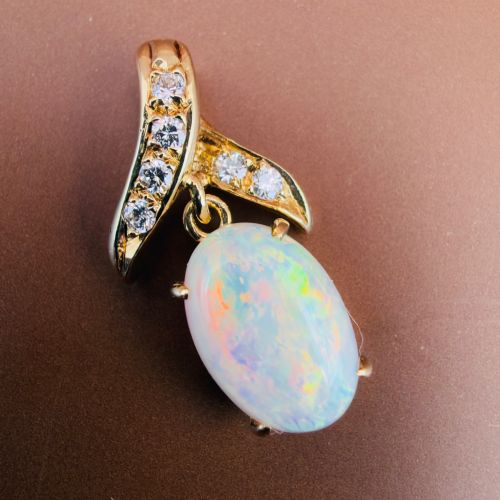
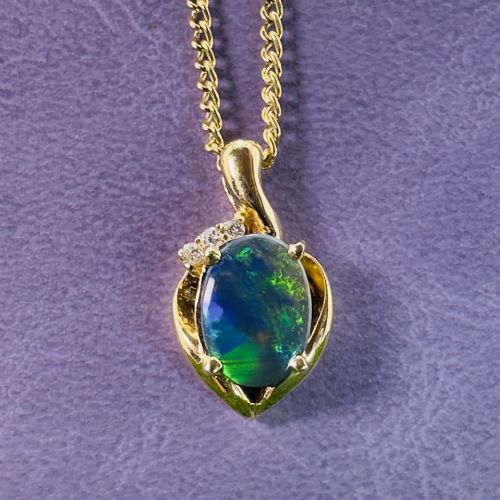
A cabochon opal pendant necklace holds a polished, domed stone that catches the light in shifting spectral colours, framed in gold or silver.
Cabochon Opal Pendant Necklace
A cabochon opal pendant necklace brings together polished, unfaceted opals and precious metals, hanging from chains of varying lengths. These pieces span Victorian, Edwardian, Art Deco, Arts and Crafts, and mid-century periods, showing how different eras set the stone.
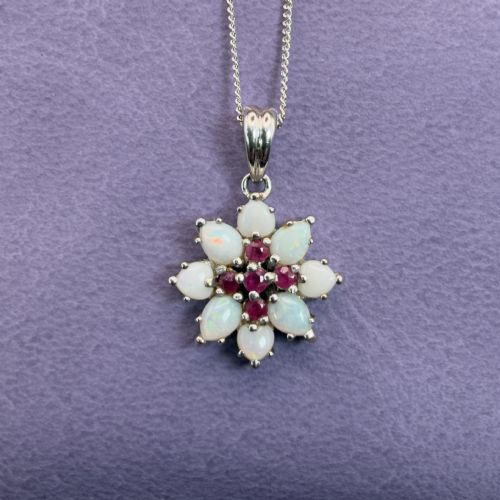
The most common versions on this page pair cabochon opals with nine-carat yellow or white gold, alongside silver settings from the late nineteenth and mid-twentieth centuries. Pendants range from simple solitaires to elaborate fringe festoons and diamond-accented clusters.
Makers and designers from the Arts and Crafts movement also appear, working in silver with hand-wrought details. Whether Victorian or mid-century, each piece centres on the play of colour within the domed opal.
How they were made
Goldsmiths and silversmiths shaped precious metals using casting, wirework, and delicate filigree to build frames that secure the domed stones. Stones were cut into smooth cabochons rather than facets to maximise the internal play-of-colour.
Cluster and fringe designs incorporated rubies, seed pearls, turquoise, and diamonds alongside the central opal, using claw settings, bezels, and millegrain edging. Higher-carat golds and platinum provided durable structure for complex Edwardian and Art Deco formations.
Cabochon Opal Pendant Necklace Retail Price Guide 2026
Typical asking prices for cabochon opal pendant necklace among the pieces listed under this phrase on Sellingantiques today, from the lower quarter to the upper quarter. They describe what is for sale here now, not the wider market.
What varies in quality
The strength and distribution of the opal's play-of-colour define the visual impact of the piece, with vibrant flashes across the spectrum marking superior stones. Solid natural opals differ from triplets, where a thin slice of opal is paired with a backing and cap.
Metalwork execution separates standard production from finer output, seen in hand-finished filigree, robust claw security, and the integration of supporting gems like diamonds or natural pearls. Maker marks and intact period chains further distinguish the upper tier of pieces.
The Gaskins·WH Haseler for Liberty and Co
The Cabochon Opal Pendant Necklace Glossary
- Cabochon
- A gemstone shaped with a smooth, rounded, convex surface instead of being faceted. This cut is chosen for opals to display their internal flashes of colour without interruption.
- Play-of-colour
- The optical phenomenon where spectral colours shift and change as the stone moves under the light. This effect comes from the microscopic silica spheres within the opal structure.
- Fringe festoon
- A necklace style where decorative drops or pendants hang from a central chain in a curved line. Edwardian makers frequently used this layout to suspend opals and pearls across the collarbone.
- Triplet
- A composite gemstone made of three layers, typically a dark backing, a thin slice of natural opal, and a protective quartz or glass dome. This construction enhances colour and protects softer opal material.
- Filigree
- Delicate ornamental work made of fine twisted wire soldered together in openwork patterns. Victorian and mid-century pieces often utilised this technique around the main stone.
Cabochon Opal Pendant Necklace: Frequently Asked Questions
How do I care for an antique opal necklace?
Opals contain water and require gentle handling to prevent drying out or cracking over time. Avoid exposing them to harsh chemicals, ultrasonic cleaners, or sudden temperature changes.
Store the necklace in a soft pouch away from harder gemstones that might scratch the polished cabochon surface. Clean the metal and stone gently with a soft, damp cloth after wearing.
What is the difference between solid opals and triplets?
A solid opal is cut entirely from a single piece of natural opal rough, showing the stone's depth and natural formation. These are valued for their integrity and age.
An opal triplet sandwiches a very thin layer of opal between a dark backing and a clear protective dome. This method strengthens the thin opal and deepens the perceived colour.
How can I tell a Victorian opal pendant from a mid-century one?
Victorian and Edwardian pieces often feature higher-carat gold, hand-wrought details, seed pearls, or intricate festoon settings. The metalwork reflects nineteenth-century craftsmanship and romantic motifs.
Mid-century examples frequently use nine-carat gold or silver with clean solitaire mounts or heavy cast designs. Travel charms and minimalist settings also point towards the twentieth-century production dates.
Can I wear a cabochon opal pendant every day?
Opals are softer than diamonds and rubies, measuring around five to six on the Mohs hardness scale. Daily wear is possible with mindful habits, such as removing the necklace before heavy physical tasks.
Choosing a bezel setting over exposed claws helps protect the girdle of the stone from accidental knocks. Proper storage prevents damage when the piece is not being worn.