



Cabochon Garnet Jewellery
Cabochon garnet jewellery brings together smooth domed stones and rich red tones across Victorian, Edwardian and mid-century designs.
Cabochon Garnet Jewellery
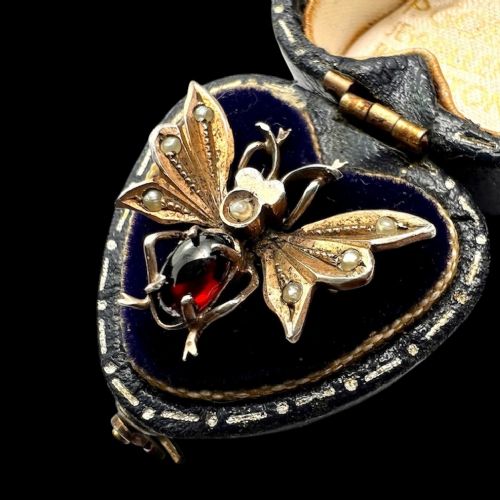
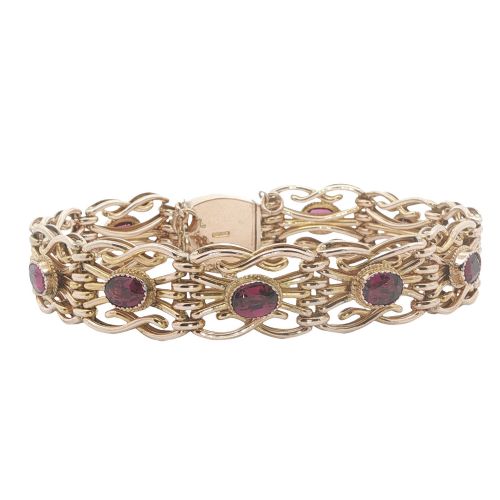
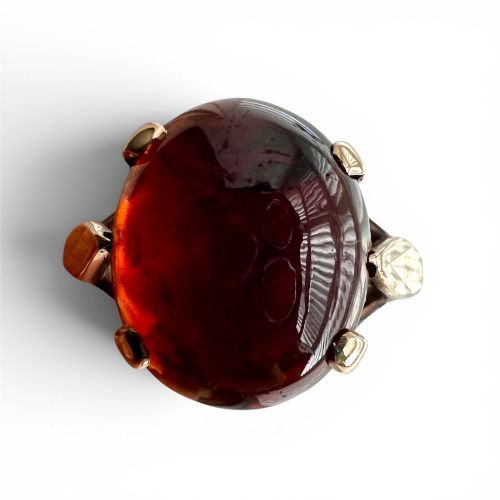
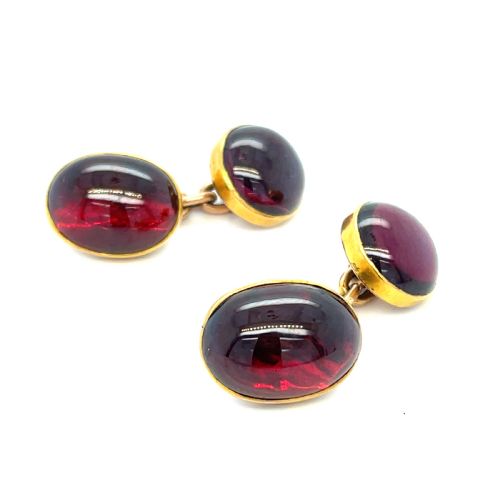
Cabochon garnet jewellery encompasses rings, brooches, pendants, earrings, bracelets and cufflinks set with smooth, rounded stones rather than faceted gems. When searching for cabochon garnet jewellery, buyers encounter pieces spanning the Victorian era through to the 1960s, reflecting changing aesthetic tastes over a century of production.
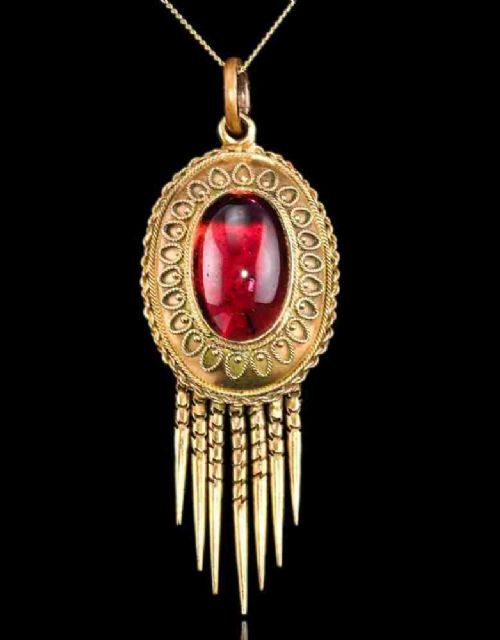
The Victorian period dominates the selection, bringing heavy gold settings, Etruscan Revival motifs and complex pendant brooches alongside memorial lockets. Later twentieth-century examples shift towards simpler floral studs, minimalist cluster rings and clean modernist lines in various gold karats and silver.
Materials and construction methods
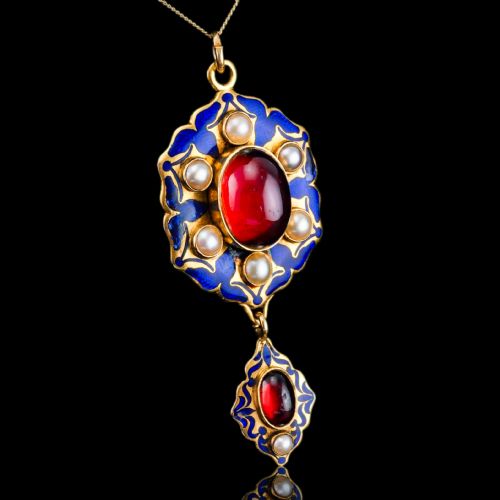
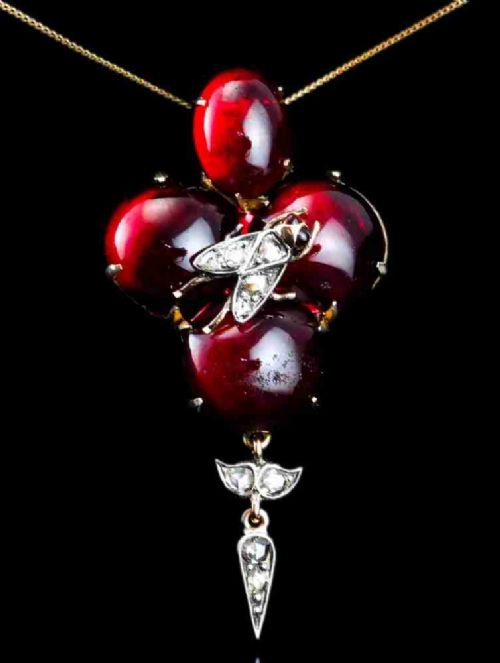
Craftsmen built these pieces primarily in yellow, rose and white gold, utilising 9ct, 14ct, 15ct and 18ct alloys alongside silver for specific mounts. Garnets appear frequently alongside diamonds, pearls and enamels, creating textural contrast within clusters and drop earrings.
Techniques range from intricate granulation and wirework seen in nineteenth-century revivals to clean prong and bezel settings of the mid-century period. Stones were carefully shaped into smooth convex domes to catch light across the polished surface rather than reflecting it through facets.
Cabochon Garnet Jewellery Retail Price Guide 2026
Typical asking prices for cabochon garnet jewellery among the pieces listed under this phrase on Sellingantiques today, from the lower quarter to the upper quarter. They describe what is for sale here now, not the wider market.
Listings feature cabochon garnet jewellery across the Victorian era, Edwardian period, Art Nouveau, Art Deco, and mid-century styles up to the 1960s.
Factors determining quality
Quality rests upon the depth of the stone's colour and the smoothness of its polish, alongside the structural integrity of the metalwork. Superior examples show careful matching of domed garnets and secure integration of supporting gems like diamonds or pearls.
The finesse of the goldsmith's handwork defines the upper tier, particularly in period pieces where bezel walls remain even and decorative wirework stays crisp. Lesser pieces display heavier, simpler mounts with less attention to the proportion between the central cabochon and its surrounding metals.
John Paul Cooper
The Cabochon Garnet Jewellery Glossary
- Cabochon
- A gemstone shaped and polished with a smooth, convex domed surface rather than being faceted. This ancient cutting style emphasises the deep red colour and natural depth of the garnet.
- Carbuncle
- An old-fashioned term for a cabochon-cut red garnet, frequently encountered in descriptions of nineteenth-century jewellery. These stones often possess a deep, dark crimson hue.
- Etruscan Revival
- A Victorian design style inspired by ancient archaeological discoveries featuring applied gold wirework and tiny granules. This technique creates intricate geometric patterns around central garnet cabochons.
- Holbeinesque
- A Victorian revival style drawing on sixteenth-century German and Renaissance designs, characterised by symmetrical pendants set with stones, pearls and enamel drops. These pieces often combine multiple gems like garnets and diamonds.
- Regard
- An acrostic jewellery arrangement where the first letters of the set gemstones spell out a word, typically ruby, emerald, garnet, amethyst, ruby and diamond. These pieces carry sentimental Victorian messaging.
Cabochon Garnet Jewellery: Frequently Asked Questions
How do I care for cabochon garnet jewellery?
Clean these pieces gently using a soft cloth and warm soapy water, avoiding harsh chemical dips that can damage softer accent stones like pearls. Store them individually to prevent harder gems from scratching the smooth domed surface of the garnets.
Inspect the settings periodically to ensure the bezels or claws holding the cabochons remain secure. Professional checks help preserve fragile antique goldwork and delicate pearl arrangements.
What is a carbuncle garnet?
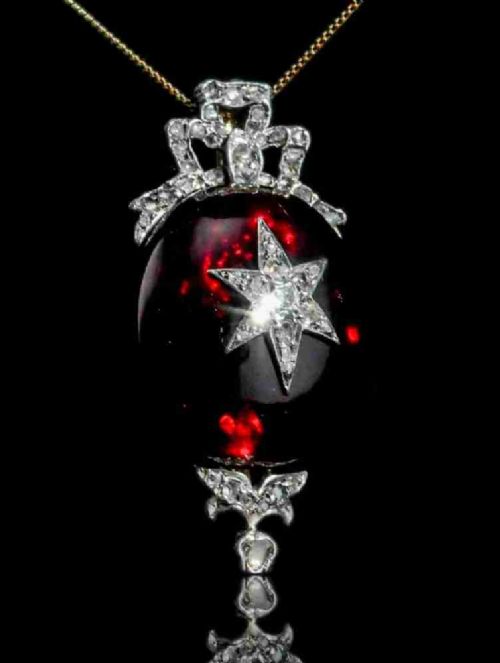
A carbuncle is simply an antique term for a cabochon-cut garnet, usually characterised by its deep, opaque red appearance. Victorians favoured this heavy, domed cut for substantial brooches and drop earrings.
These stones lack facets, relying instead on a polished dome to catch the light. They form the centrepiece of many nineteenth-century cluster and star designs.
How can I date my garnet piece?
Dating relies on examining the metal karat marks, overall design style and construction techniques used by the maker. Victorian examples often feature closed-back settings, heavy gold weights and symbolic motifs like locket backs or Etruscan wirework.
Mid-century pieces from the 1950s and 1960s tend to use lighter mountings, brighter white or yellow gold alloys and simpler floral or cluster arrangements. Hallmarks, where present, offer precise clues to the year and city of manufacture.
Can I wear a garnet ring every day?
Garnets have a moderate hardness, making them suitable for daily wear if treated with reasonable care. Rings with low-profile cabochon settings tend to catch less on clothing during routine activities.
Consider removing older antique rings before heavy lifting, gardening or swimming to protect delicate prongs and softer surrounding stones like pearls. Regular inspection by a jeweller keeps the mounting secure.