


Cabin Trunk Luggage
Cabin trunk luggage offers robust historical storage and travel utility, bridging practical transit heritage with bold interior character.
Cabin Trunk Luggage
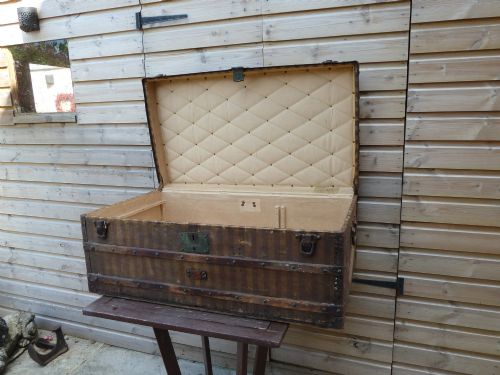
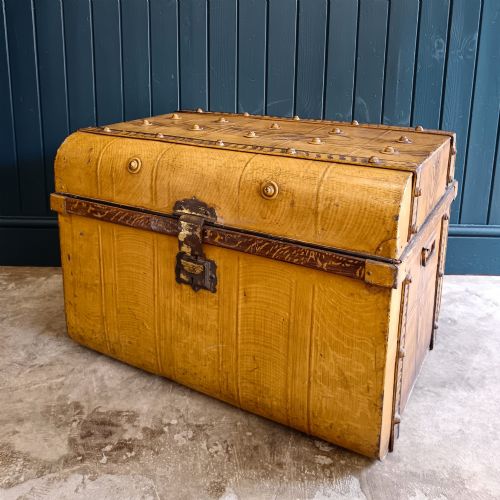
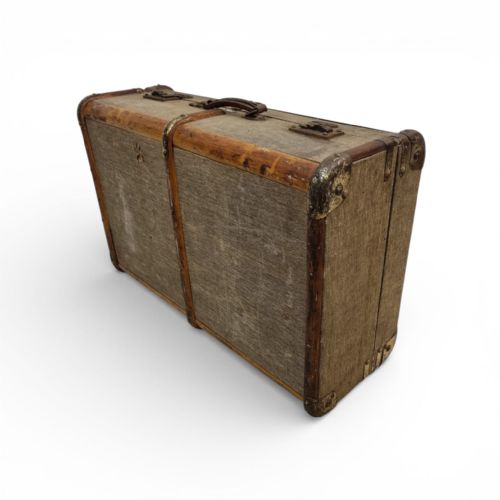
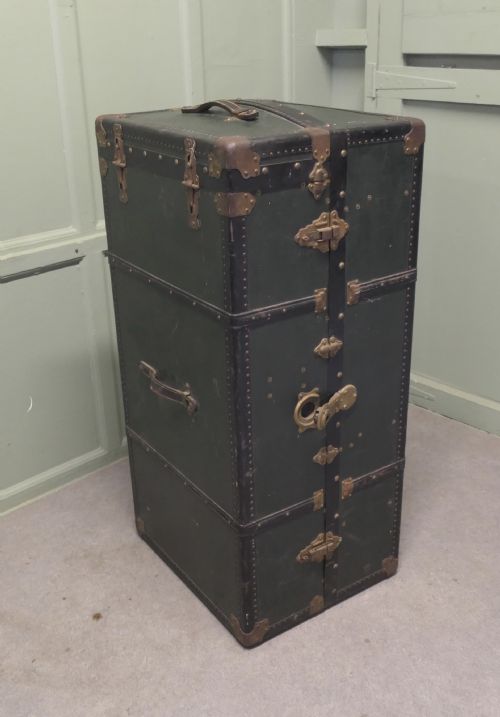
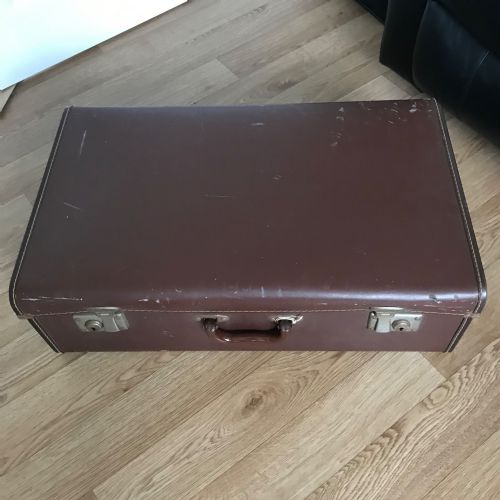
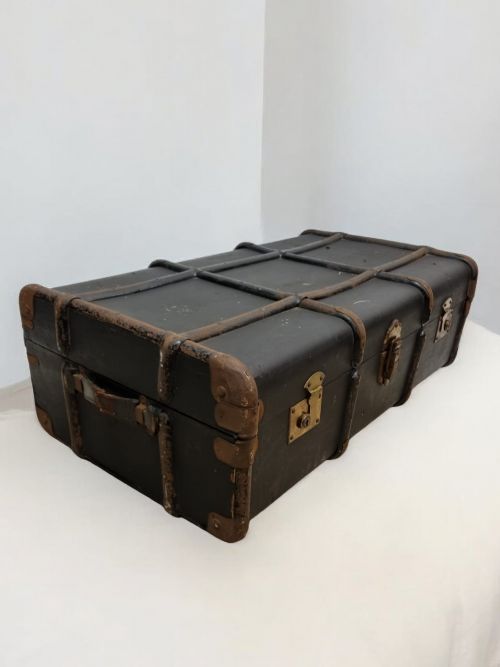
Buyers will most frequently encounter Victorian, Edwardian, and early twentieth-century examples shaped from wood, leather, canvas, and reinforced metal. These traditional forms range from compact hand luggage and suitcases to large compartmented steamer trunks and dome-top travel chests.
Materials and Construction
Construction relies on sturdy timber carcasses bound in protective leather, durable canvas, or vulcanised fibre to withstand rigorous transit handling. Metal reinforcements, iron brackets, and brass fittings secure the structural corners and edges.
Internal compartments, wooden slats, and fitted wardrobe sections organise personal belongings for travel. Exterior surfaces utilise faux-wood paint finishes, black canvas coverings, or natural hide bound with robust metal hardware.
Several trunks bear the distant travel history of global shipping labels, steamship stickers, and faded railway transit tags stuck straight onto the canvas.
Assessing Quality and Execution
Quality separates through the integrity of original hardware, working latches, and intact interior fittings rather than mere surface age. Superior pieces retain their original manufacturer labels, matching keys, and sound structural joinery.
The refinement of exterior materials, from hand-stitched leather bindings to robust brass caps and specialised metal framing, dictates the enduring value of each piece. Unrestored examples demonstrate the raw authenticity of period travel heritage.
Louis Vuitton·Aux Etats Unis·Hartman Luggage Co·T Wilkes And Sons
The Cabin Trunk Luggage Glossary
- Steamer trunk
- A lower-profile travel chest designed to fit beneath a steamship berth or in limited cabin space. These pieces often feature reinforced lids and specialised internal compartments.
- Vulcanised fibre
- A treated, laminated cellulose material developed for lightweight durability and impact resistance in travel goods. It provided tough exterior protection without excessive weight.
- Portmanteau
- A large suitcase or travel trunk that opens into two distinct equal compartments. This traditional form suited extended journeys.
- Dome top
- A rounded upper lid profile intended to shed water and prevent baggage handlers from stacking heavy items on top. It remains a distinctive Victorian aesthetic.
- Campaign trunk
- A portable storage chest designed for military officers or civilian travellers on active expeditions. These pieces prioritize robust portability and secure fastenings.
Cabin Trunk Luggage: Frequently Asked Questions
How do I clean an old leather trunk?
Maintenance requires gentle dusting and the careful application of appropriate leather conditioning balms to preserve the hide without altering historical patination.
Harsh chemical cleaners or excessive moisture must be avoided to protect original stitching and metal hardware components.
Can these trunks be used as coffee tables?
Many buyers repurpose flat-topped steamer trunks and shipping chests as living room coffee tables because they provide hidden interior storage.
Sturdy wooden and metal-bound constructions easily support books and decorative objects while adding industrial character to a room.
How do I date a vintage travel trunk?
Dating relies on examining the materials, such as vulcanised fibre or aluminium, alongside patent dates, manufacturer plaques, and lock stamps.
Victorian and Edwardian pieces typically display heavy brass fittings and timber frames, whereas 1930s examples often introduce streamlined Art Deco hardware.
What is the difference between a steamer trunk and a standard trunk?
Steamer trunks were specifically manufactured with lower heights to slide under passenger cabin berths during ocean liner voyages.
Standard travel trunks and dome-top chests were taller, heavier, and generally intended for luggage holds or railway transport.