
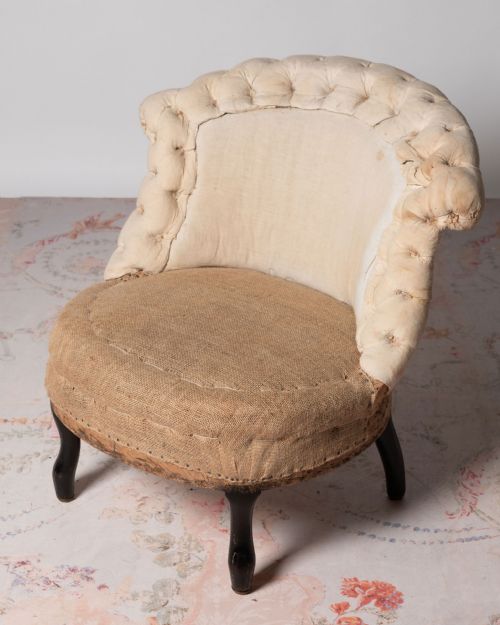


Buttoned Upholstery Armchairs
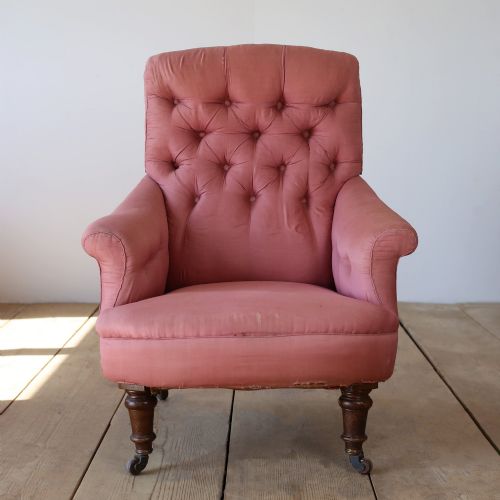
Buttoned upholstery armchairs are tactile seating pieces combining deep tufting with period frames, sought after for comfort and distinct nineteenth and early twentieth century character.
Buttoned Upholstery Armchairs
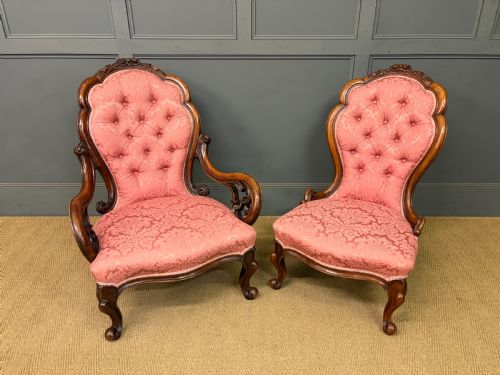
Buttoned upholstery armchairs encompass a wide variety of seating forms designed for comfort and reception rooms, ranging from library and fireside models to nursing and boudoir chairs. When searching for buttoned upholstery armchairs, buyers encounter nineteenth century and Edwardian interpretations built across distinct stylistic movements including Victorian, French Napoleon III, and the Aesthetic Movement.
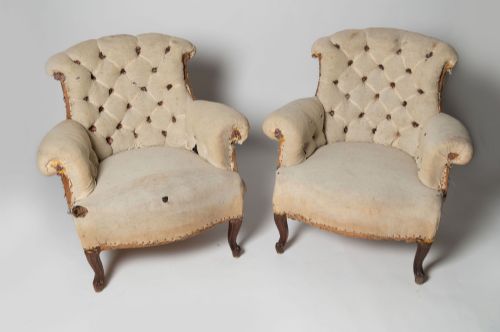
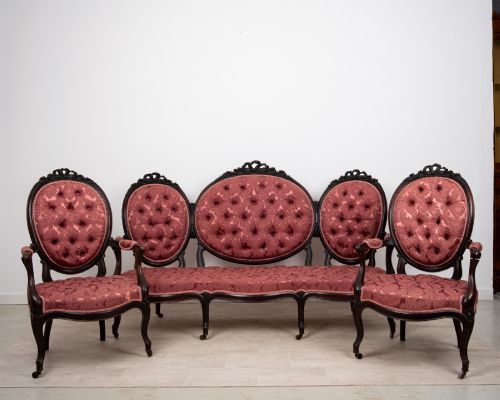
The selection frequently includes salon suites, tub back chairs, and compact occasional seating upholstered in materials like velvet, ticking, calico, and hessian. Frames span from modest walnut and mahogany structures to substantial iron frames and carved walnut designs, often reflecting specific regional or maker traditions.
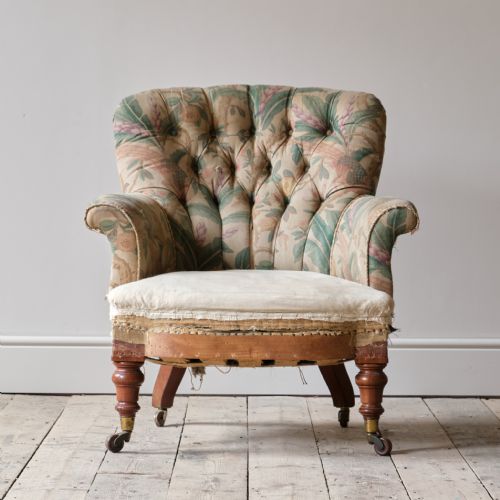
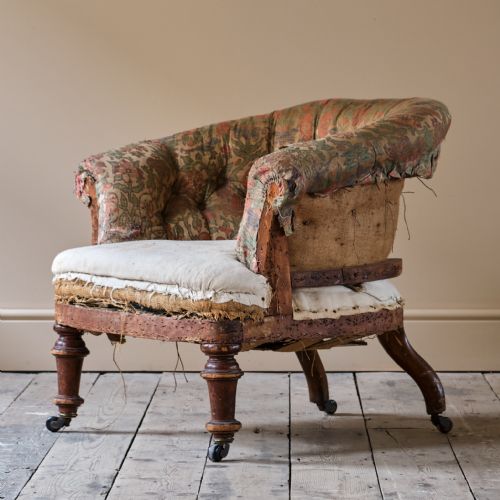
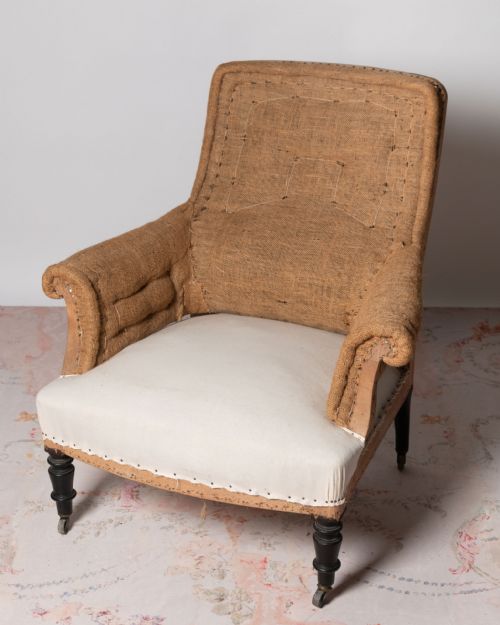
Many examples arrive ready for placement, while others present specific opportunities for recovering or restoration using traditional methods. The form serves both functional seating needs and decorative roles within period or contemporary interiors.
How they were made
Makers constructed the structural frames of buttoned upholstery armchairs using hardwoods such as mahogany, walnut, oak, and rosewood, occasionally incorporating iron framing for added strength. These wooden elements were turned, carved, or inlaid to define the style of the period, from barley twist details to smooth mahogany surfaces.
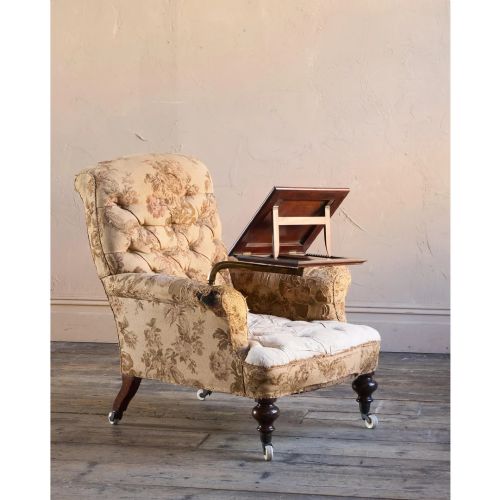
Upholstery techniques involved securing deep buttoning through multiple layers of internal stuffing, Hessian, and padding before finishing the exterior with durable fabrics like velvet, ticking, or printed textiles. Craftspeople often integrated auxiliary elements such as reading stands, brass castors, and precise joinery to ensure both mobility and long term durability.
The selection includes specialised seating forms such as nursing chairs, fireside armchairs, desk chairs, and complete salon suites.
What varies in quality
The degree of refinement in the carved woodwork and the integrity of the internal frame construction significantly differentiate individual buttoned upholstery armchairs. Superior examples display thoughtful proportions, robust timber selection, and meticulous execution of the deep buttoning technique that maintains tension across the upholstered surface.
Provenance and maker attribution heavily influence the standing of a piece, with documented workshops imparting distinct value through signature framing and upholstery methods. The preservation of original period fabric versus sympathetic restoration also shapes the character and appeal of each armchair.
Howard and Sons·Woodstock·Gillows·Hamptons and Sons·Cornelius V Smith·Maple and Co
The Buttoned Upholstery Armchairs Glossary
- Button back
- A traditional upholstery method where buttons are pulled deep into the padding in a diamond pattern to create structured tufting. This technique provides both firm support and decorative texture.
- Tub back
- An armchair design featuring a continuous curved back and arms that form a rounded enclosure. It offers a snug seating experience popular in nineteenth century studies and parlours.
- Nursing chair
- A low seated armchair traditionally used for infant care and nursery duties, often featuring an open frame and upholstered back. These seats are compact and easy to move.
- Barley twist
- A type of woodturning resembling a spiralling rope column, frequently seen on the legs and structural frames of Victorian chairs. It adds visual movement to the timber.
- Ticking
- A tightly woven, durable cotton or linen fabric traditionally used as an under-layer for feather and down filled upholstery. It appears on restored pieces to showcase original stuffing materials.
Buttoned Upholstery Armchairs: Frequently Asked Questions
What is a buttoned upholstery armchair?
A buttoned upholstery armchair is a padded seat featuring deep tufted buttons across the backrest, originating primarily from Victorian and Edwardian workshops. These chairs combine supportive frames with soft textiles to offer both comfort and formal presence.
They appear in various forms, from library armchairs with reading stands to low nursing chairs and boudoir seating, utilising materials such as mahogany, walnut, velvet, and ticking.
How do I identify a Victorian armchair?
Victorian armchairs are typically identified by their robust timber frames, dark hardwoods like walnut and mahogany, and characteristic design motifs of the nineteenth century. Details such as turned legs, iron frames, or deep buttoned velvet upholstery point directly to this era.
Examining the construction methods beneath the upholstery, including Hessian layers and traditional joinery, helps confirm the period origin of the piece.
How do I care for antique upholstery?
Caring for antique upholstery involves gentle dusting and vacuuming with a low suction attachment to protect delicate fabrics like velvet and ticking. Keeping the chairs away from direct sunlight prevents fading of the textiles and drying out of the internal stuffing.
When structural or fabric repairs are necessary, consulting a specialist who uses traditional conservation methods ensures the integrity of the piece remains intact.
What is a Howard and Sons armchair?
A Howard and Sons armchair is a piece produced by the renowned nineteenth century London upholstery firm, celebrated for exceptional comfort and superior frame construction. These chairs often feature stamped legs, original castors, and high quality ticking or branded fabric upholstery.
Collectors prize them for their enduring build quality and signature aesthetic that bridges traditional craftsmanship with relaxed seating.