

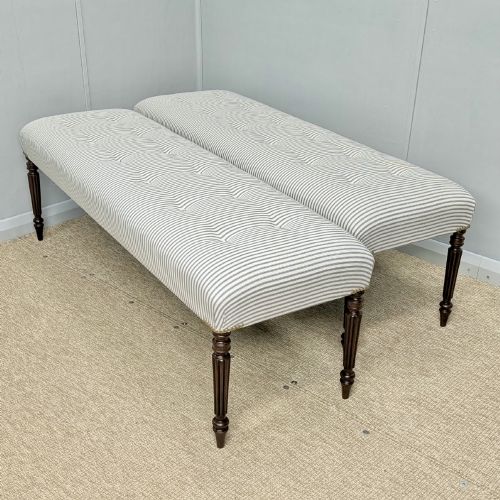
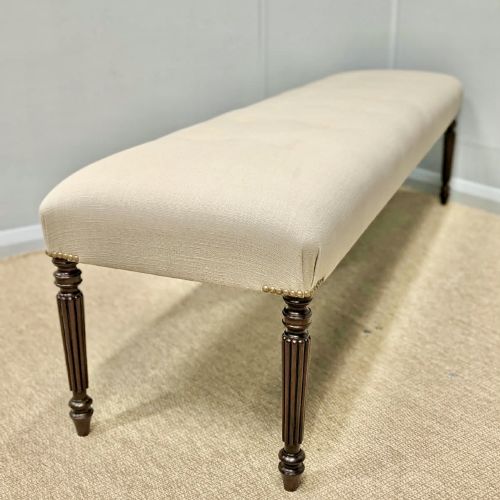

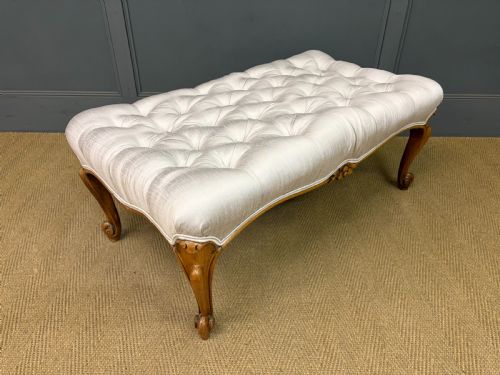
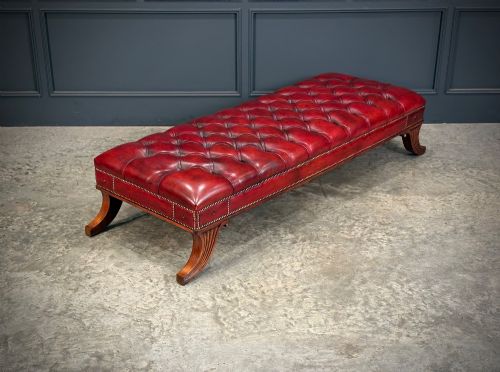
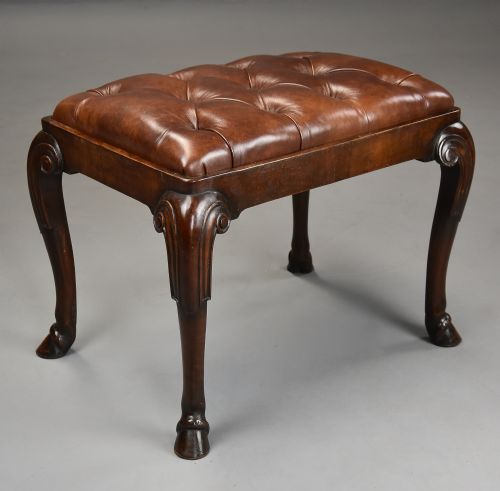
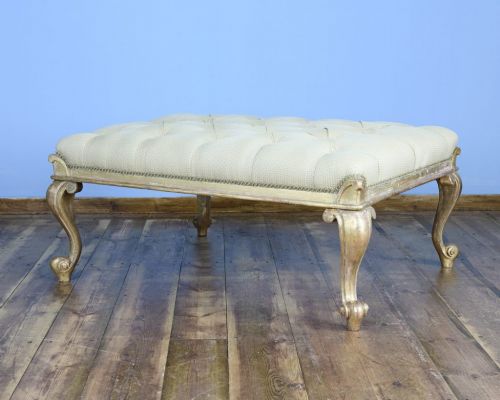


Buttoned Upholstered Footstool
These buttoned upholstered footstool examples combine deep tufting with traditional timbers, offering both decorative presence and sturdy support for tired feet.
Buttoned Upholstered Footstool
A buttoned upholstered footstool sits low to the floor, designed primarily to support the feet or serve as a low seat in reception rooms and libraries. Buyers searching this phrase encounter substantial pieces built on timber frames with deep tufted upholstery.
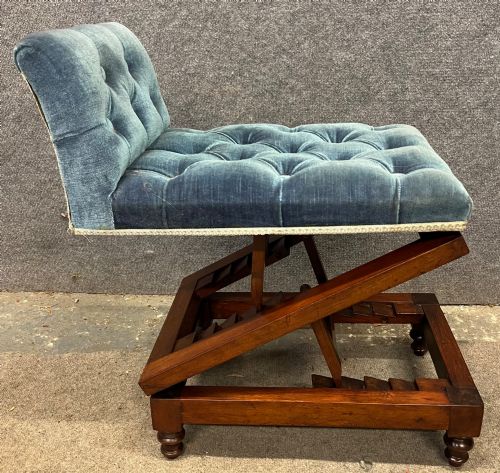
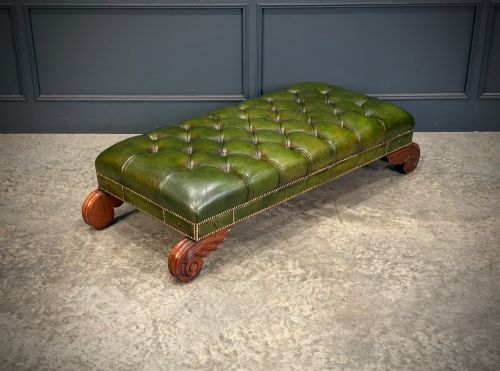
The versions most commonly met on this page date from the Victorian and nineteenth-century periods, alongside Regency examples and later revivals. They appear in forms ranging from compact gout stools to large salon ottomans and long window seats.
Makers constructed these low seats to complement heavy seating arrangements, frequently pairing them with matching armchairs or library furniture. Their proportions vary from intimate single stools to grand scale pieces resting on castors.
Materials and construction methods
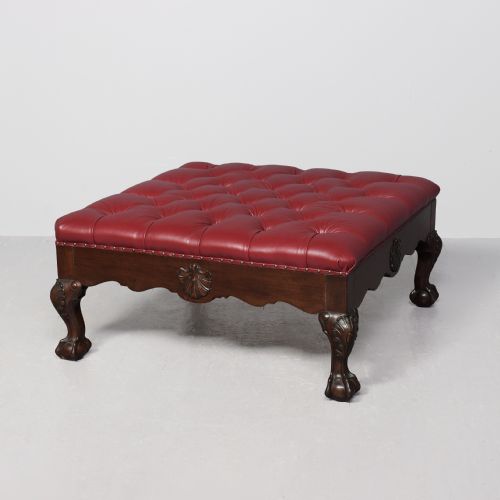
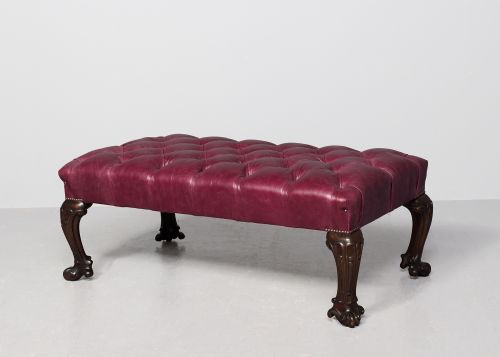
Craftsmen built the structural frames using dense hardwoods such as mahogany, walnut, and rosewood, often shaping the timber into cabriole legs or fluted supports. Brass-studded detailing frequently secures the edges of the leather or fabric covering.
Upholsterers applied deep buttoning through the padding, pulling the leather, velvet, silk, or fabric tight to create distinctive geometric indentations. This technique required precise tension to maintain the characteristic tufted surface over generations of use.
Buttoned Upholstered Footstool Retail Price Guide 2026
Typical asking prices for buttoned upholstered footstool among the pieces listed under this phrase on Sellingantiques today, from the lower quarter to the upper quarter. They describe what is for sale here now, not the wider market.
The inventory includes several matched pairs of window seats and long stools alongside individual salon ottomans and gout stools.
Distinctions in quality and execution
Quality rests in the density of the timber frame and the depth of the hand-dyed hide or silk upholstery. Superior examples display refined carving on the mahogany or walnut legs and disciplined buttoning that holds its form firmly.
Scale and proportion separate standard output from grander commissions, particularly where parcels of gilding, castors, or matched pairs indicate bespoke workshop production.
James Shoolbred·A.M.E. Fournier
The Buttoned Upholstered Footstool Glossary
- Buttoning
- An upholstery technique where twine pulls the surface fabric deep into the stuffing, secured with buttons to form a diamond pattern. This method keeps internal padding distributed evenly.
- Cabriole leg
- A furniture leg that curves outward at the knee and tapers inward toward the foot, inspired by animal limbs. It appears frequently on walnut and mahogany pieces from various revival periods.
- Gout stool
- A specialised small footstool featuring an adjustable incline designed to elevate a sufferer's foot. Nineteenth-century examples often use mahogany frames.
- Hide
- Untanned or tanned heavy animal skin used as durable upholstery leather on traditional seating. Red and burgundy hides appear regularly on nineteenth-century library pieces.
- Parcel gilt
- A decorative treatment where specific carved details on a wooden frame receive a thin application of gold leaf. This technique highlights particular ornamental motifs against dark timber.
Buttoned Upholstered Footstool: Frequently Asked Questions
What is a buttoned upholstered footstool used for?
These pieces function primarily as low supports for resting the legs while seated in an armchair or library chair. They also serve as impromptu seats or decorative central ottomans in period rooms.
Their robust timber frames and upholstered tops allow them to handle everyday domestic use while maintaining a formal aesthetic.
How do I identify a Victorian footstool?
Victorian pieces often feature heavy mahogany or walnut frames, deep buttoned leather or fabric upholstery, and sometimes castors for mobility. Their proportions tend to be substantial and generous.
Stylistic markers range from plain upholstered boxes to elaborate cabriole legs reflecting revival designs of the era.
Are these footstools suitable for modern homes?
Their classic timber frames and neutral or rich leather tones allow them to integrate smoothly into contemporary living spaces. They function well as coffee table alternatives or occasional seating.
The durable nature of buttoned hide upholstery helps them withstand modern family environments.
What timber is most common?
Mahogany and walnut dominate the structural frames across the available selection, frequently paired with rosewood on higher-status pieces. These dense woods provide the structural integrity required for heavy upholstered furniture.
Secondary woods may appear internally, but exterior surfaces display polished grain characteristic of nineteenth-century cabinetmaking.