

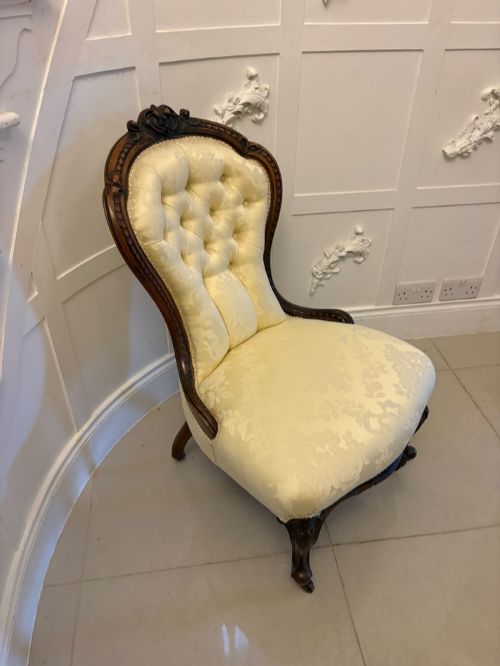
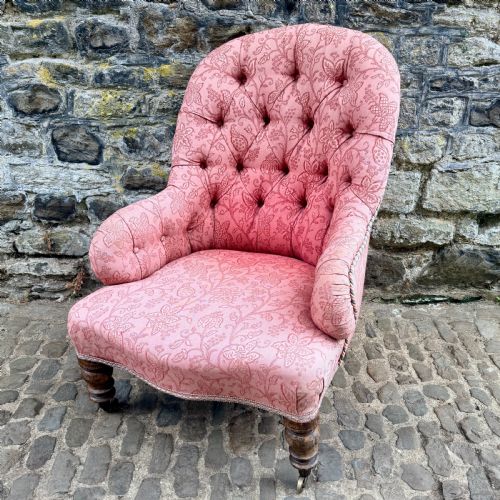
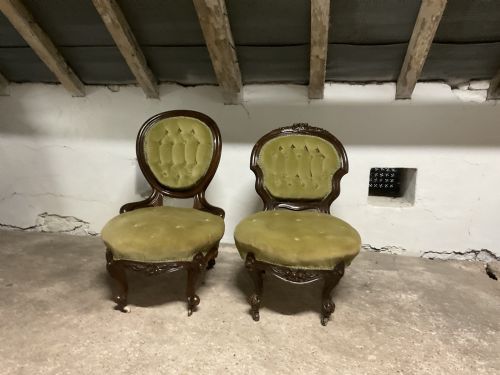
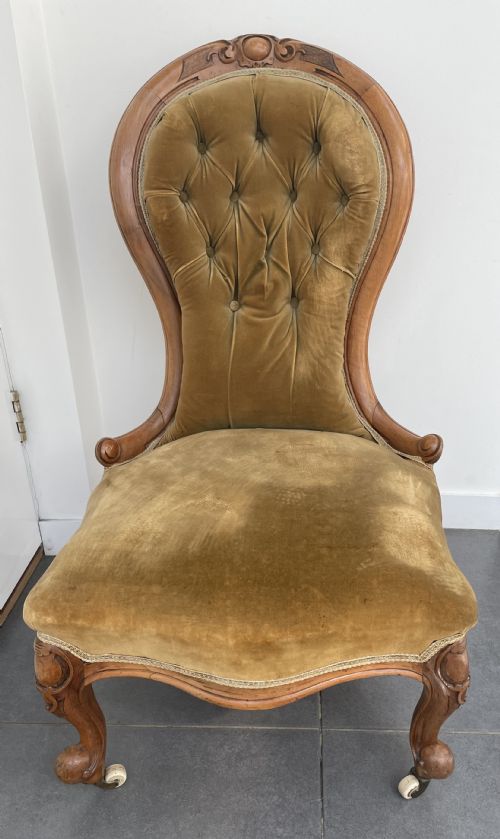
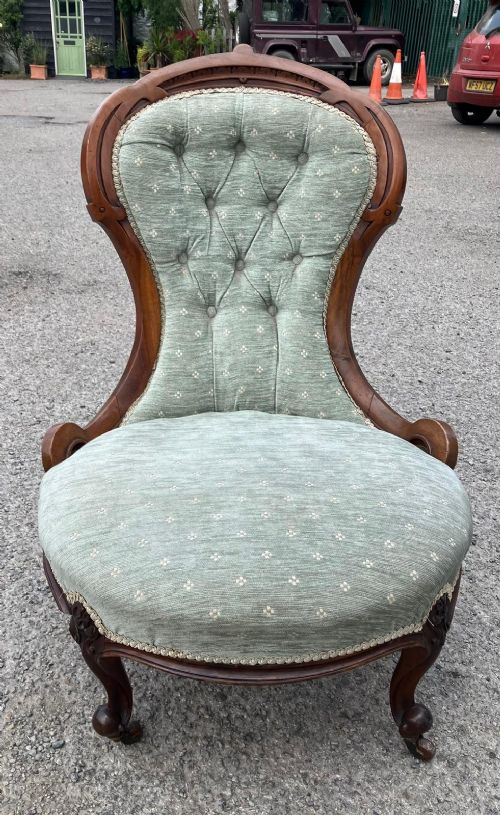
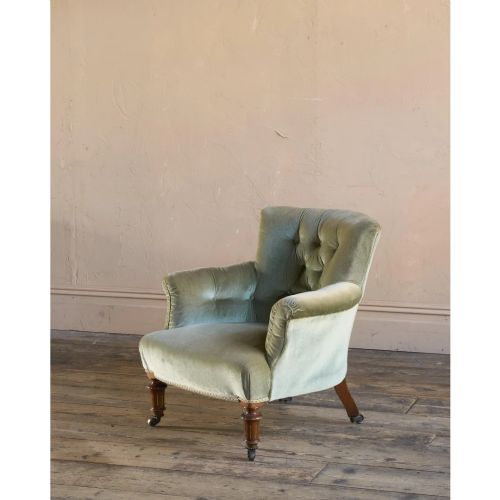
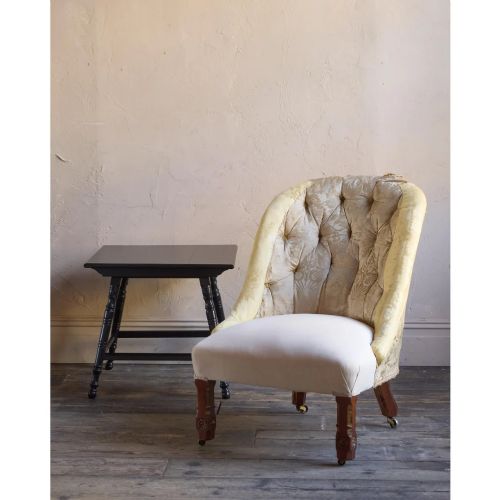
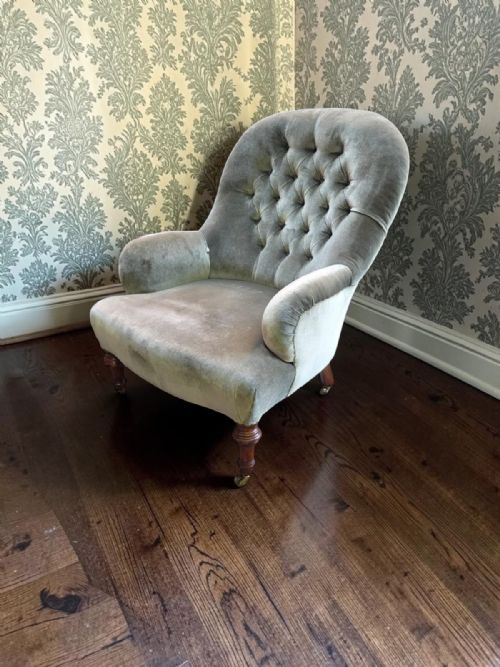
Buttoned Slipper Chair
A buttoned slipper chair offers low-slung seating designed for comfort and ease, combining traditional upholstery with compact proportions.
Buttoned Slipper Chair
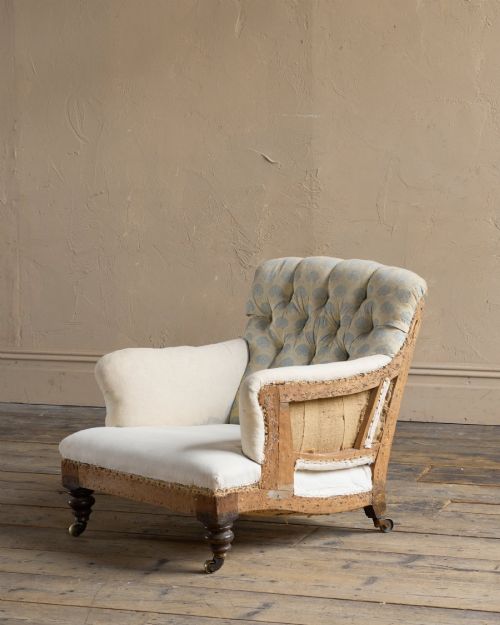
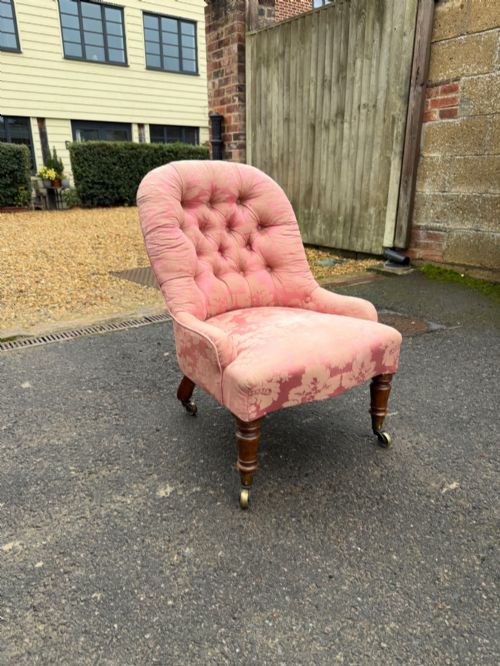
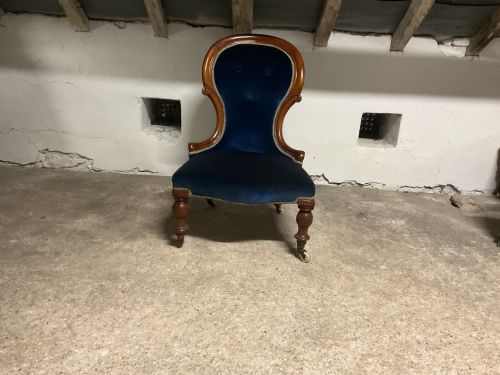
The buttoned slipper chair sits low to the floor, historically designed for bedrooms and dressing rooms to aid in putting on shoes. Pieces matching this description appear primarily across the nineteenth century, including Victorian, Edwardian, and Regency periods.
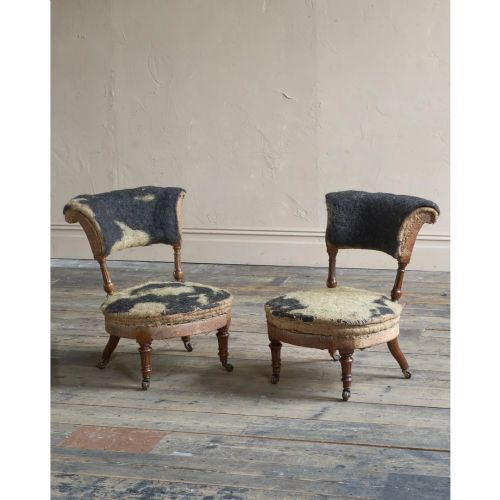
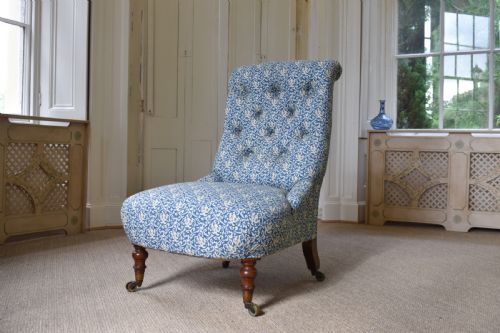
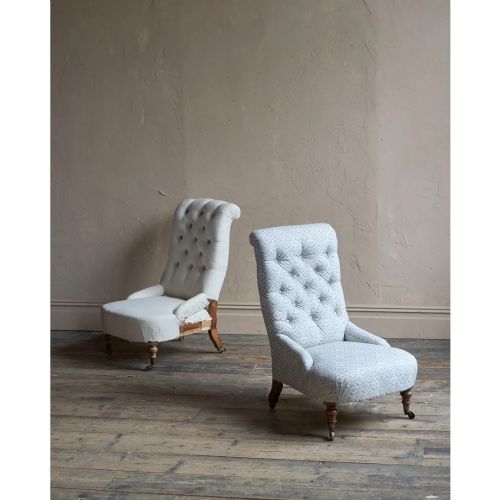
Makers produced these low seats in various forms such as nursing chairs, bedroom chairs, and occasional chairs. Examples commonly feature deep buttoning on the backrest and compact frames suited for smaller spaces.
Origin variations include English pieces alongside French examples from the nineteenth century, including styles associated with the mid-century and Napoleon III periods.
Materials and construction
Frames rely on timbers such as mahogany, walnut, rosewood, and general wood or timber. Metal components like brass and iron appear in structural or back-frame supports.
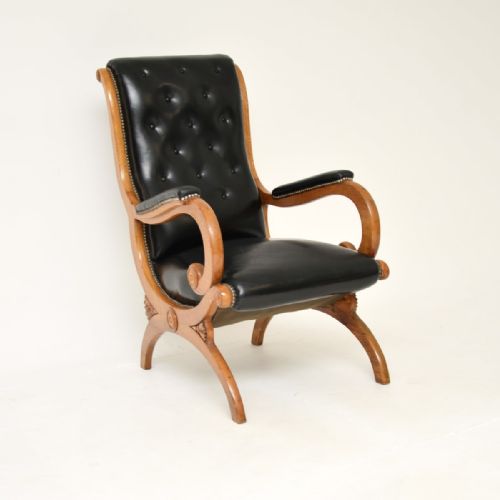
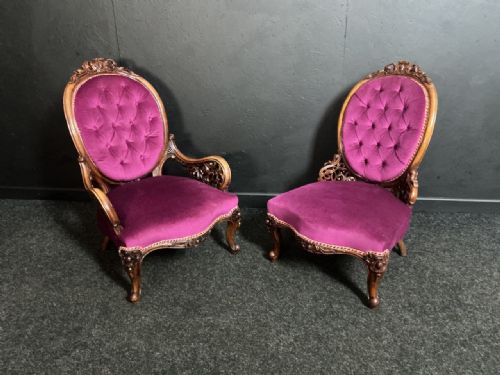
Upholstery relies on fabric, velvet, leather, and specific textiles like Robert Kime Avebury fabric, secured over button-backed upholstery schemes and sometimes finished with fringe details.
Buttoned Slipper Chair Retail Price Guide 2026
Typical asking prices for buttoned slipper chair among the pieces listed under this phrase on Sellingantiques today, from the lower quarter to the upper quarter. They describe what is for sale here now, not the wider market.
Listings feature frames built from mahogany, walnut, rosewood, and iron, upholstered in velvet, leather, and patterned fabric.
Distinguishing quality in production
Quality separates through the integrity of the timber frame, such as solid walnut or mahogany construction versus simpler woods, alongside the precision of the button tufting and upholstery work. Maker attribution to notable workshops also elevates the standing of a piece.
Proportion and scale dictate the refinement of the design, where balanced dimensions and supportive internal padding distinguish standard bedroom seating from finer salon and drawing-room examples.
Gillows·Howard and Sons·Holland and Sons·CVS
The Buttoned Slipper Chair Glossary
- Buttoned
- An upholstery technique where stitches pull the fabric deep into the padding in a geometric pattern, securing the stuffing and creating distinct tufts. This method provides both structural tension and decorative depth.
- Slipper chair
- A low-set upholstered chair with no arms, traditionally used in bedrooms for dressing. The shortened height makes it distinct from standard parlour seating.
- Nursing chair
- A low upholstered seat designed for comfort, historically used for nursing infants. These often share the low proportions and padded backrests of slipper chairs.
- Tub chair
- An armchair featuring a rounded, enclosed back that curves continuously into the arms. The design envelops the sitter in a semicircular shell.
- Spoon-back
- A chair back shaped like the bowl of a spoon, featuring a concave upholstered centre surrounded by a carved wooden rim. This form is particularly common in Victorian walnut seating.
Buttoned Slipper Chair: Frequently Asked Questions
What is a buttoned slipper chair used for?
These low-profile seats originated in dressing rooms and bedrooms to provide a comfortable place for changing shoes or attending to personal attire.
Today, buyers place them in bedrooms, studies, and smaller living spaces where standard armchairs would overwhelm the room.
How do I identify a Victorian piece?
Victorian examples often employ dense timbers like walnut and mahogany, accompanied by deep button upholstery and serpentine or spoon-shaped backrests.
Proportions tend to be compact, and construction methods reflect mid to late nineteenth-century cabinet making.
Are these chairs comfortable for daily sitting?
The low seat height and padded backrest offer a relaxed, upright posture that suits reading or conversational seating.
Because they sit closer to the floor than standard armchairs, checking the depth and springing helps determine daily comfort.
What fabric is appropriate for recovering?
Velvet, heavy cotton, and traditional patterned textiles maintain the character of nineteenth-century frames while offering durable surface textures.
Choosing fabrics that complement the timber tone ensures the upholstery enhances the frame's original lines.