
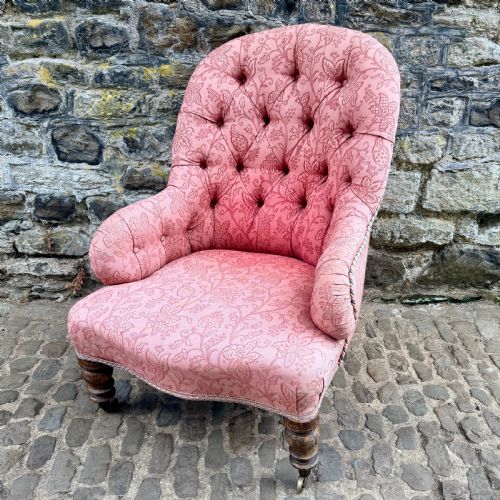
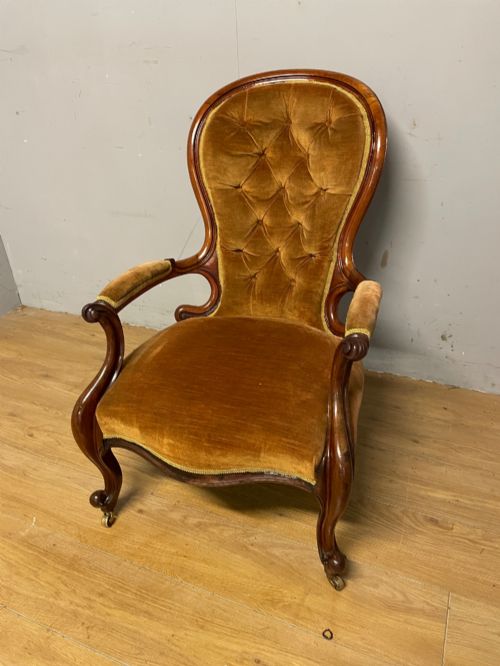
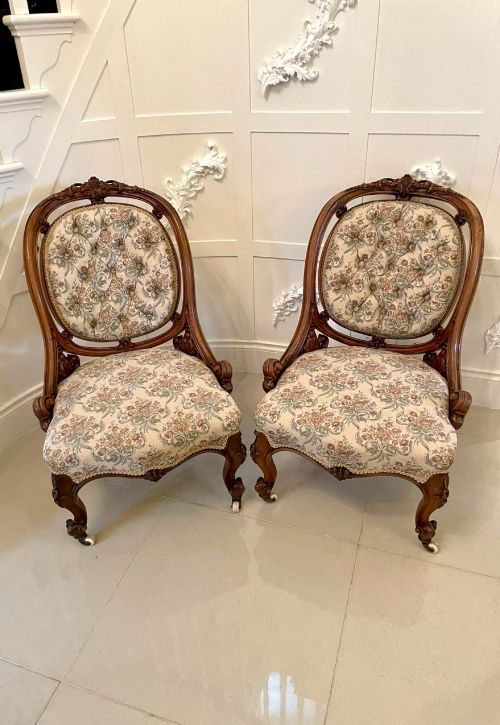
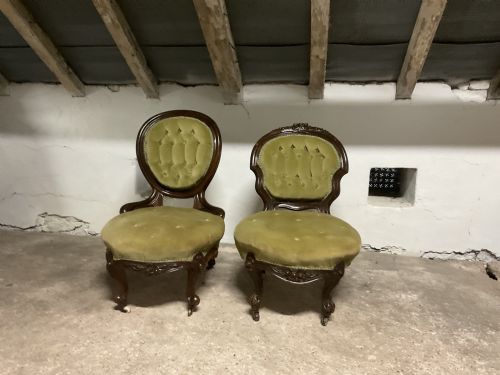
Buttoned Nursing Chair
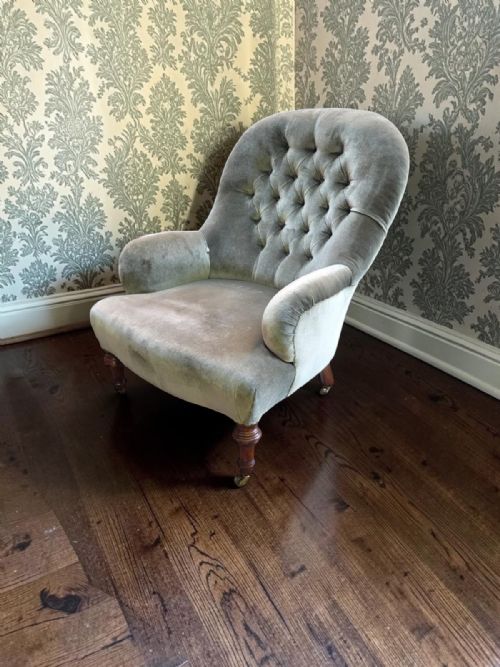
A buttoned nursing chair is a low-slung nineteenth-century seat designed for comfort, and these examples bring Victorian and Edwardian character to a modern room.
Buttoned Nursing Chair
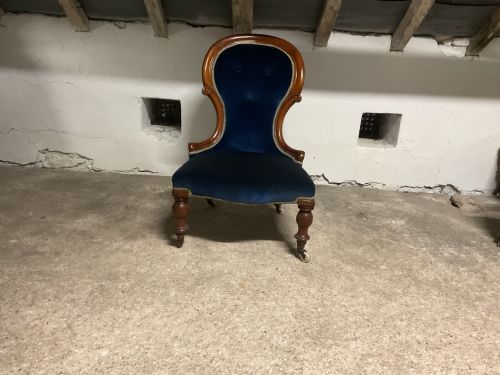
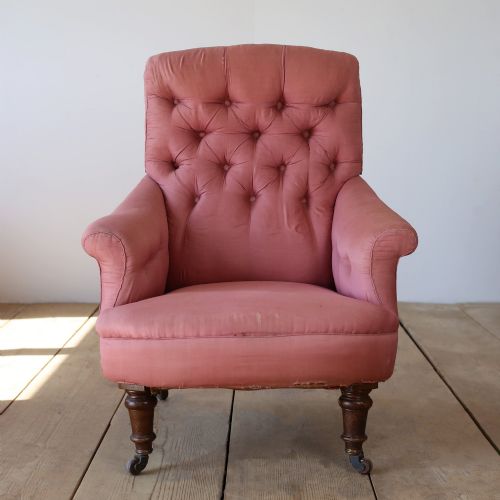
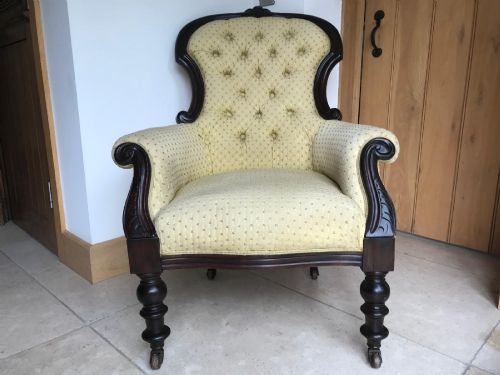
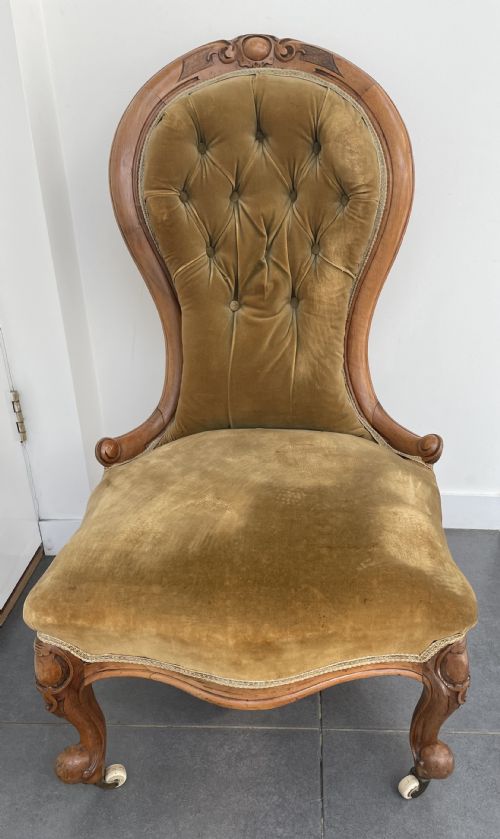
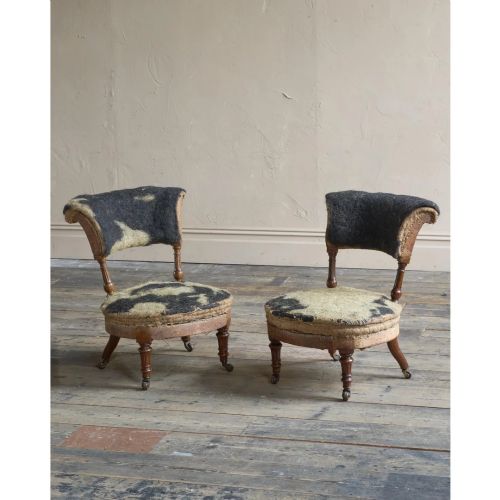
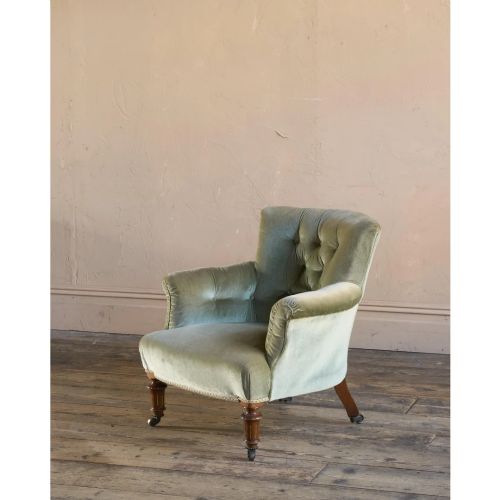
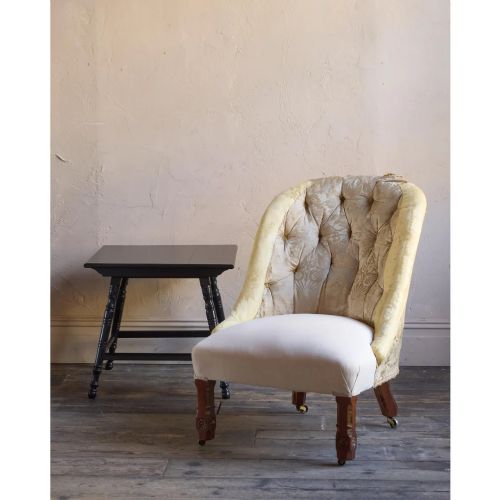
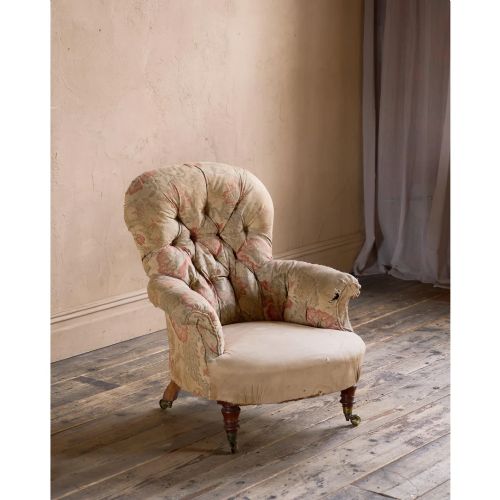
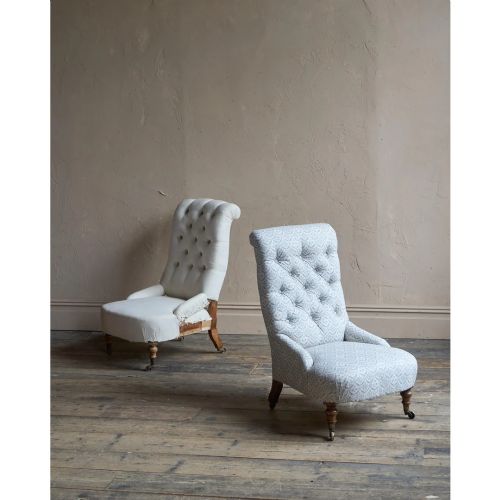
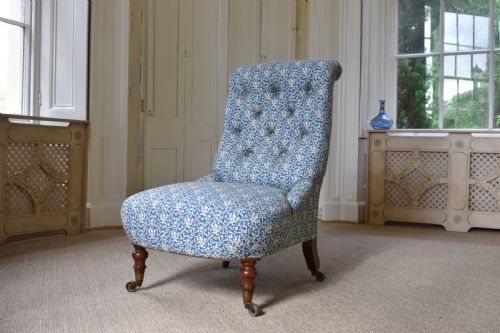
A buttoned nursing chair is a low-slung nineteenth-century seat designed for comfort, appearing across Victorian and Edwardian periods in forms such as slipper chairs, bedroom chairs, and low armchairs. The pieces on this page span the mid-nineteenth century through to about nineteen-ten, taking shapes that include spoon backs, round seats, and low frames built for the bedroom or drawing room.
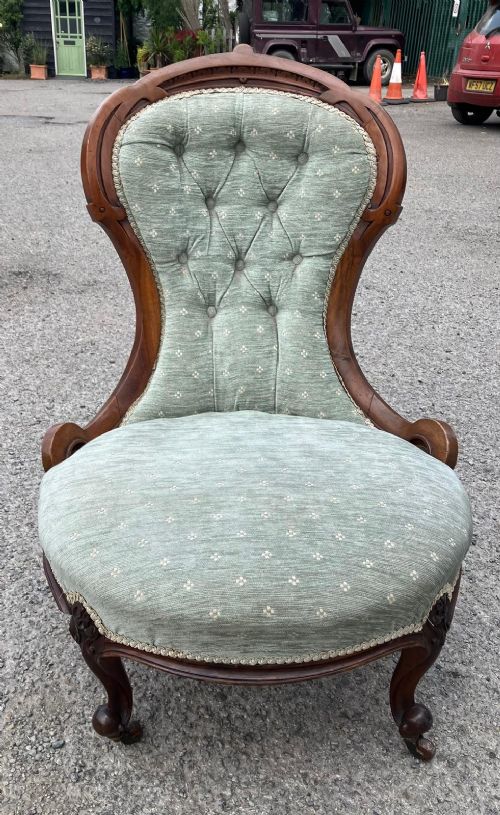
Buyers seeking a buttoned nursing chair will frequently encounter Victorian walnut and mahogany framing, often paired with deep buttoning and upholstery in velvet, fabric, or leather. These low seats sit closer to the floor than standard armchairs, reflecting their original nineteenth-century domestic function.
How they were made
Frames are constructed from dense hardwoods like walnut, mahogany, and rosewood, carved with details such as spoon backs, barley twist supports, and cabriole legs. These wooden structures provide the robust skeleton necessary to support deep upholstery and sprung seats.
Upholstery relies on traditional techniques involving buttoning across fabric, velvet, or leather, sometimes supported by iron-back frameworks and brass castors or metal fittings. The padding creates the characteristic quilted surface that defines the style.
Some nineteenth-century sitters were built so low to the floor that wearing heavy Victorian petticoats required an entirely different approach to sitting down.
What varies in quality
The distinction between ordinary production and top-tier workshop output lies in the crispness of the timber carving and the architectural balance of the low frame. Maker attribution and exhibition standards separate standard Victorian seating from exceptional documented pieces.
Quality also shows in the integrity of the original wooden frame and the precision of the button upholstery work. Finer examples maintain tighter joinery and more harmonious proportions across the low seat and back.
Gillows·Holland & Sons·Howard and Sons
The Buttoned Nursing Chair Glossary
- Button back
- A traditional upholstery method where tufts are pulled deep into the padding and secured with buttons, creating a cushioned diamond pattern. This technique provides both structural tension and decorative relief on the backrest.
- Spoon back
- An oval upholstered backrest shaped distinctly like the bowl of a spoon, popular during the mid-nineteenth century. The wooden rim is typically carved to follow the concave contour of the padding.
- Slipper chair
- An armless chair sitting low to the floor, historically used in bedrooms for dressing or sitting near a fire. The absence of arms allowed space for bulky historical garments.
- Cabriole leg
- A furniture leg that curves outward in a convex arc before tapering inward in a concave sweep to a foot. This design originated from classical furniture forms and recurs frequently on mid-Victorian seating.
- Barley twist
- A carved wooden decorative motif resembling the spirals of a barley stalk. It appears on the uprights and legs of nineteenth-century frames.
Buttoned Nursing Chair: Frequently Asked Questions
What is a buttoned nursing chair used for today?
These low seats function well as accent chairs in bedrooms, dressing rooms, or sitting areas where a standard armchair would sit too high or look too bulky.
Their compact proportions allow them to fit easily into smaller spaces while retaining the decorative presence of nineteenth-century furniture.
How do I date a buttoned nursing chair?
Dating relies on identifying timber choices, frame shapes, and upholstery styles recorded across the nineteenth and early twentieth centuries. Mid-century pieces often feature walnut spoon backs, while later Victorian and Edwardian examples introduce different proportions and turning.
Examining the construction methods underneath and the wood species provides further clues to whether a piece belongs to the mid-Victorian era or the later Edwardian period.
Are these chairs comfortable for daily sitting?
Most pieces offer a supportive sit due to their sprung seats and padded backrests, though their low height distinguishes them from standard modern armchairs.
They are built for relaxed sitting rather than upright desk work, matching their original domestic purpose in nineteenth-century bedrooms and parlours.
What fabrics are appropriate for reupholstering?
Traditional choices include velvet, patterned textiles, and leather, which complement the historic walnut and mahogany frames found on nineteenth-century examples.
Selecting a fabric that respects the period style helps maintain the character of the chair while ensuring the upholstery suits contemporary interiors.