




Buttoned Chaise Lounge
A buttoned chaise lounge offers a reclining seat built for solitary rest, combining deep tufting with long, elegant proportions.
Buttoned Chaise Lounge
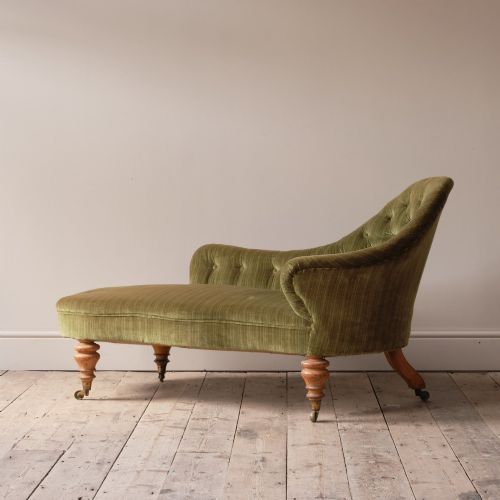
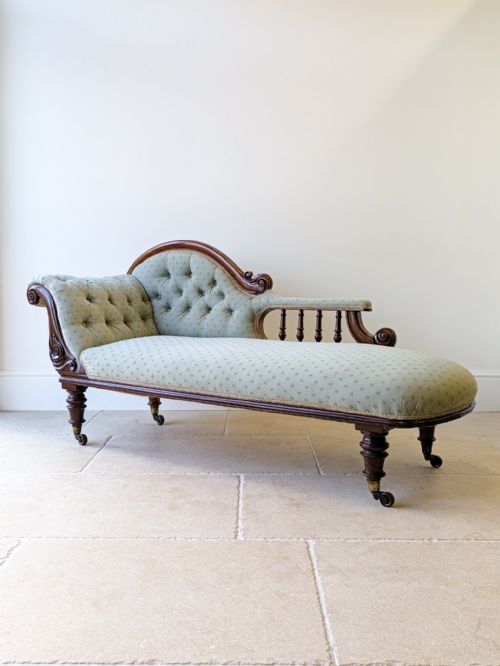
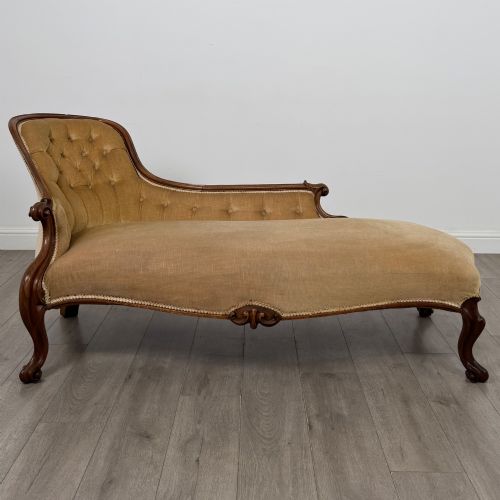
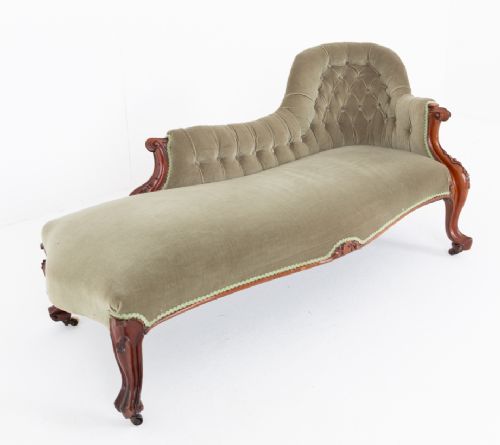
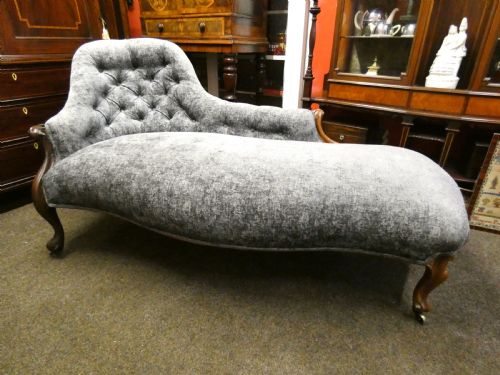
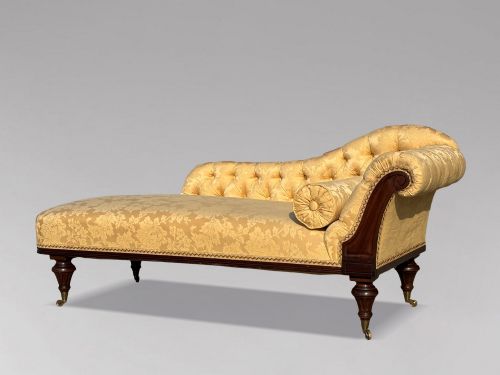
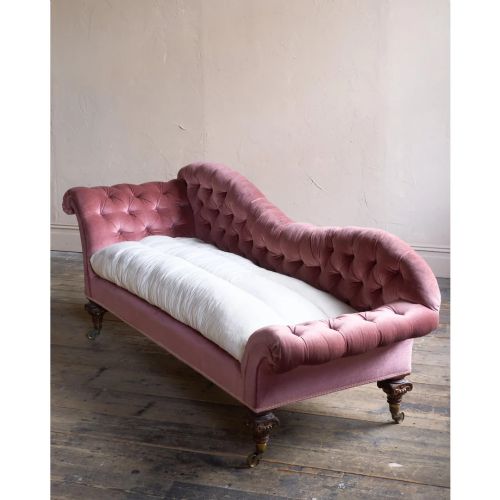
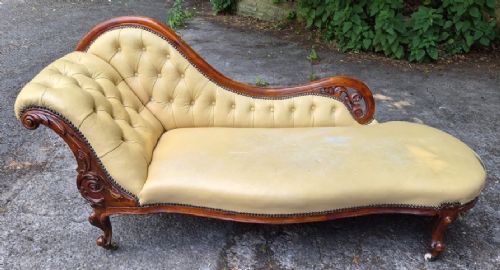
When you search for a buttoned chaise lounge, you encounter nineteenth-century day beds and couches designed for half-sitting, half-lying postures in formal reception rooms. These pieces feature an asymmetric backrest that tapers down to a single scroll end, intended for daytime resting without disturbing formal attire.
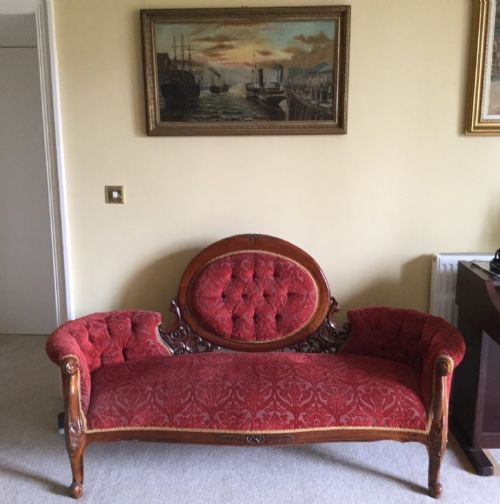
The version you meet most often on this page dates from the Victorian period, frequently constructed from rich timbers like mahogany or rosewood and upholstered in velvet, leather, or damask fabric. They appear under various historic labels including day beds, couches, and double-ended sofas, spanning styles from Regency through to Louis XVI Revival.
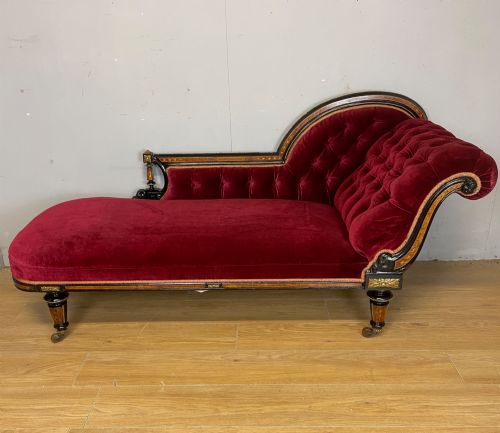
Makers of the era designed these frames with carved wooden show-wood rails, serpentine fronts, and turned or ionic column legs that support sprung seating bases. Some examples adopt grand proportions with double spoon backs, whilst others present ebonised finishes with inlaid walnut panels and ormolu decoration.
How they were made
Cabinet makers constructed the foundational frames using dense hardwoods such as mahogany, walnut, and rosewood, often employing hand-carving for the scrolling headrests and show-wood rails. Ebonised finishes and ormolu mounts appear on select pieces alongside inlaid walnut panels.
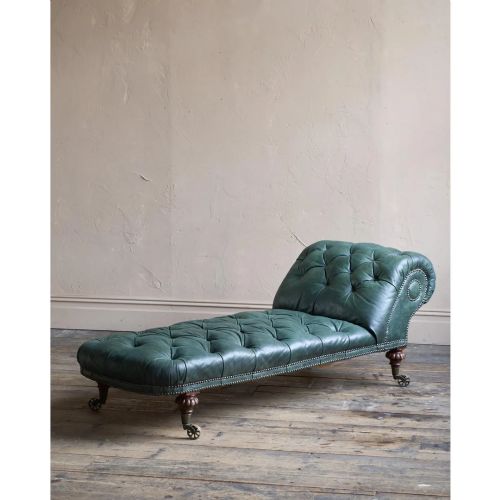
Upholsters built the comfort of these seats using traditional spring units tied by hand, layered with stuffings, and secured with deep buttoning through fabrics like velvet, damask, leather, and brocade.
Buttoned Chaise Lounge Retail Price Guide 2026
Typical asking prices for buttoned chaise lounge among the pieces listed under this phrase on Sellingantiques today, from the lower quarter to the upper quarter. They describe what is for sale here now, not the wider market.
Some nineteenth-century makers supplied miniature ebonised day beds, scaled down perfectly for household pets to recline in style.
What varies in quality
The distinction between a standard piece and a finer example lies in the crispness of the timber carving and the architectural ambition of the frame, such as whether it incorporates ionic column legs or elaborate scrollwork. Superior craftsmanship shows in the fluid sweep of the asymmetric backrest and the integrity of the show-wood construction.
Upholstery execution dictates the tactile standard, where precise button tufting creates deep, uniform diamond patterns across the velvet or leather surface. The choice of primary timber - ranging from simple turned mahogany to figured rosewood or ebonised wood with ormolu - marks the grade of the commission.
Howard And Sons·H Goodall And Sons·Holland And Sons·Jas Shoolbred
The Buttoned Chaise Lounge Glossary
- Button back
- An upholstery method where depressions are formed in the padding by stitching through to the base, creating a diamond pattern secured with cloth or leather buttons. This technique provides structural tension and distinct visual rhythm.
- Ormolu
- Gilded bronze ornamentation applied to furniture frames during the nineteenth century. It adds metallic contrast against dark woods like mahogany and ebonised timber.
- Show-wood
- The exposed, polished wooden portions of a framed upholstered seat, distinct from the upholstered surfaces. It displays the grain and carving of the timber.
- Double-ended sofa
- A seating form with two raised ends or scrolled backs facing opposite directions. It allows a person to recline against either end.
Buttoned Chaise Lounge: Frequently Asked Questions
Where did people put a chaise lounge?
Nineteenth-century households placed these reclining seats in withdrawing rooms, ladies' boudoirs, and large master bedrooms where daytime relaxation took place. They sat away from walls to display the carved show-wood back and swept frame from all angles.
Today, they suit large living rooms, home libraries, or spacious hallways, functioning both as a striking architectural focal point and a practical spot for reading.
How do I care for leather upholstery?
Leather-upholstered daybeds benefit from regular dusting with a soft, dry cloth to prevent grit from settling into the natural grain and button folds. Conditioning the leather periodically with a suitable balm preserves suppleness and prevents the hide from drying out.
Keep these pieces away from direct sunlight and heat sources, which cause the leather and the underlying button tufting to warp or crack over time.
Can I use one as a primary sofa?
These pieces accommodate solitary resting and lounging rather than formal group seating, due to their single asymmetric backrest and elongated form. They serve well as a secondary seating option in a room alongside armchairs or a traditional sofa.
Their open profile prevents a room from feeling crowded, making them useful in spaces where a bulky three-seater settee would overwhelm the floor plan.
How do I identify a Victorian piece?
Victorian examples often display heavy timbers like rosewood and walnut, deep button tufting, and elaborate hand-carved floral motifs along the show-wood rails. Turned wooden legs or heavy scroll ends frequently indicate mid-to-late nineteenth-century manufacturing methods.
Examining the construction beneath the upholstery reveals hand-tied coil springs and traditional webbing typical of the era before mass production standardised furniture assembly.