
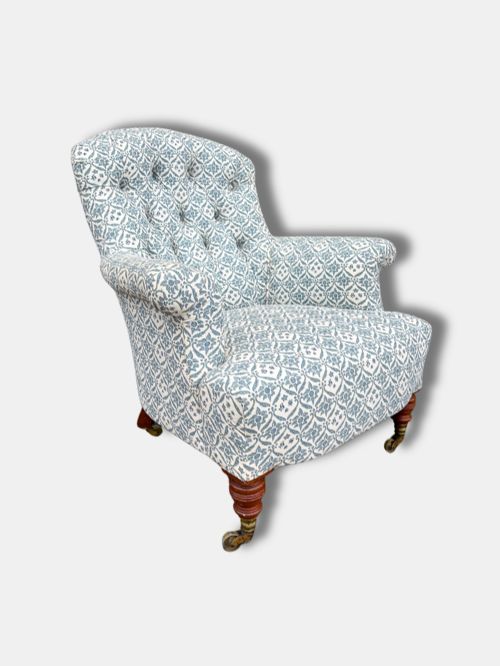
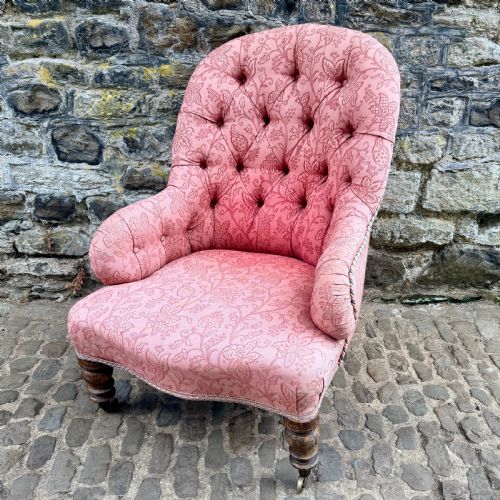
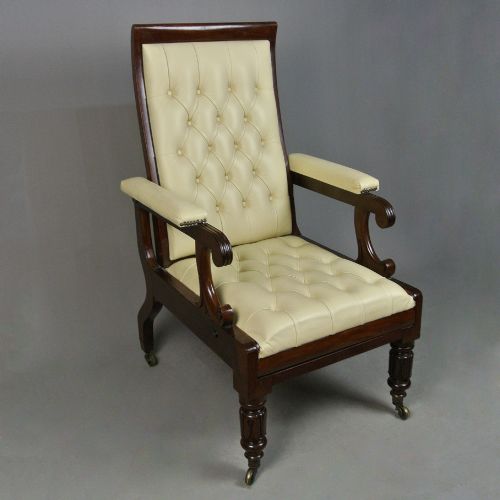
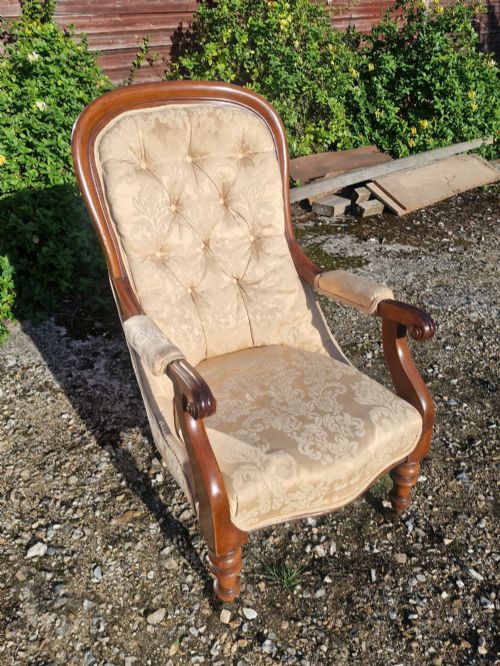
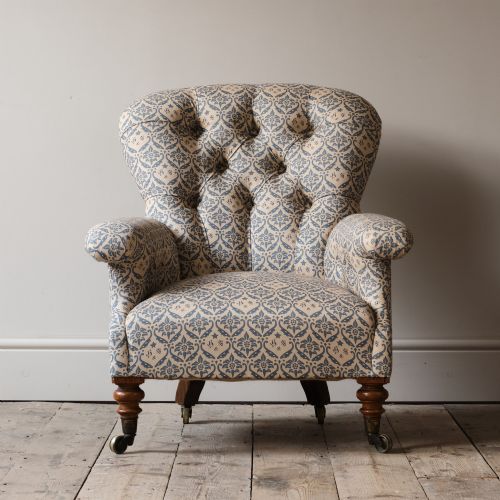
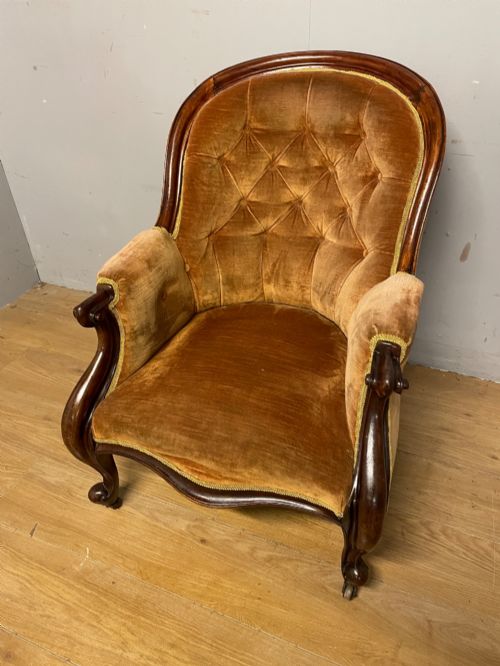
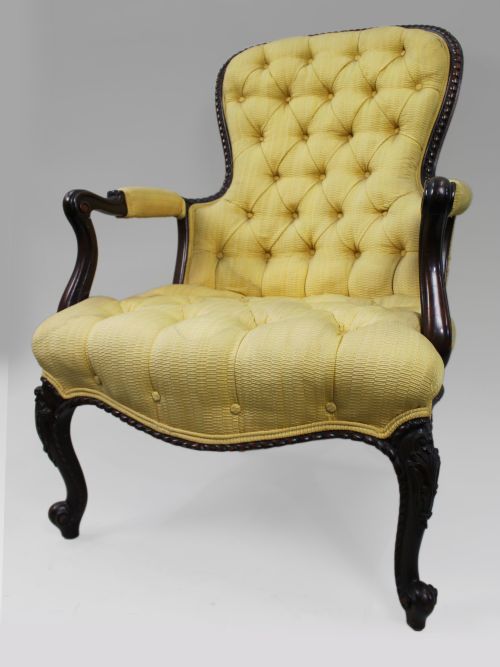
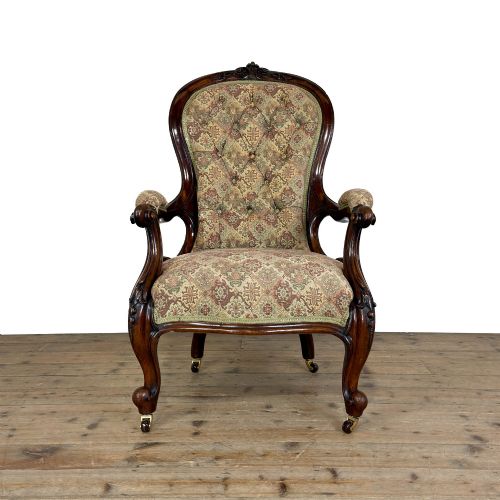
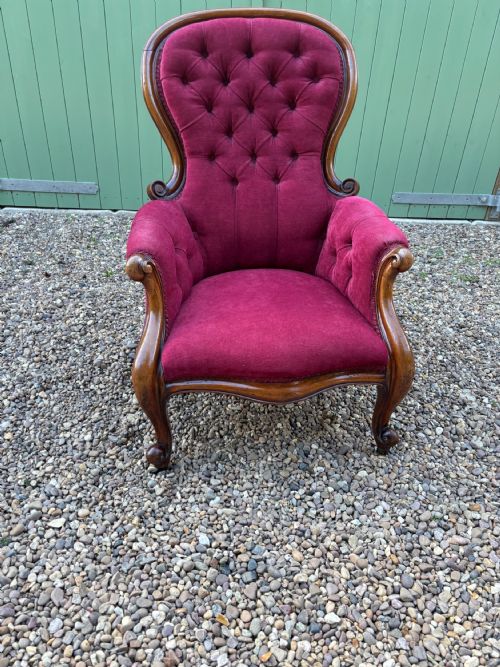
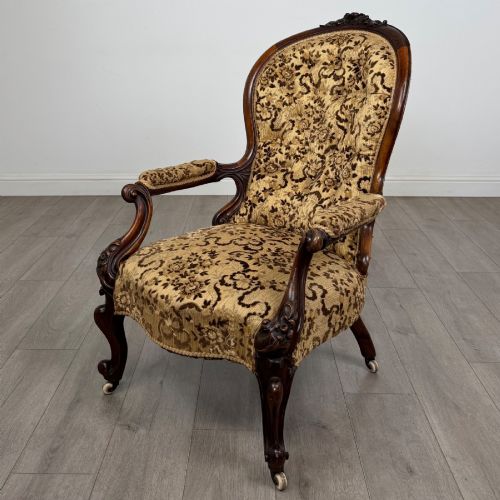
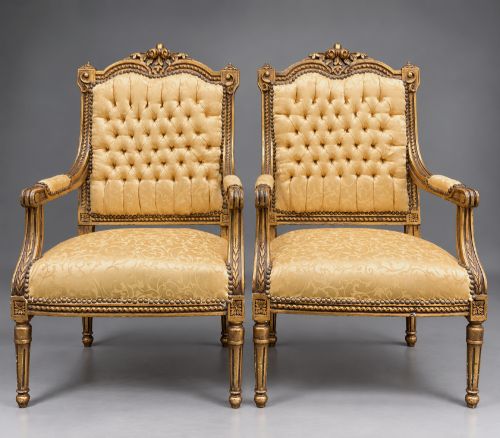
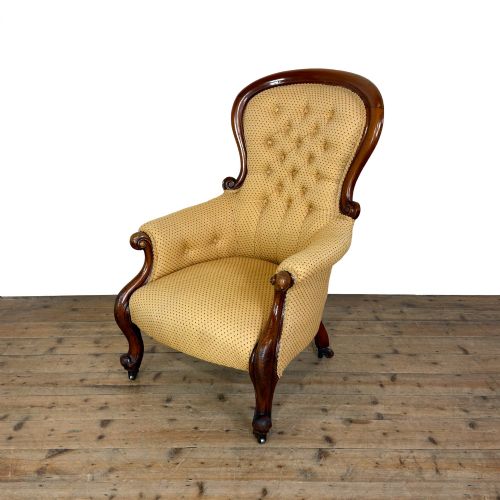
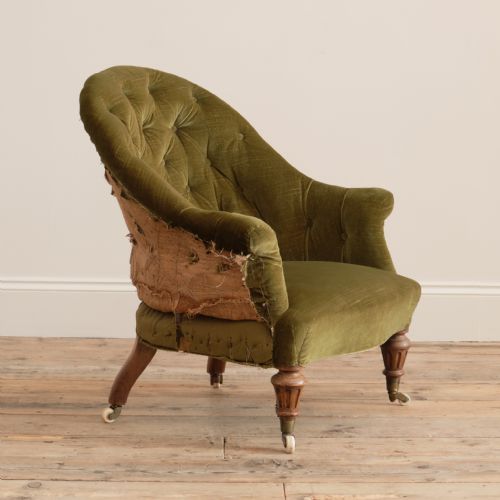
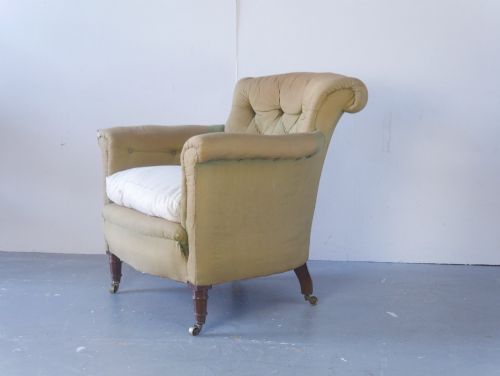
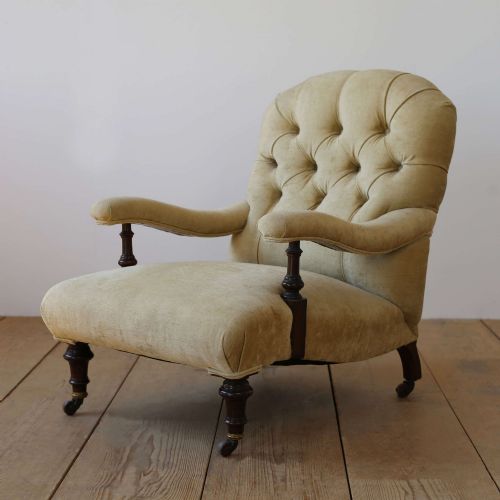
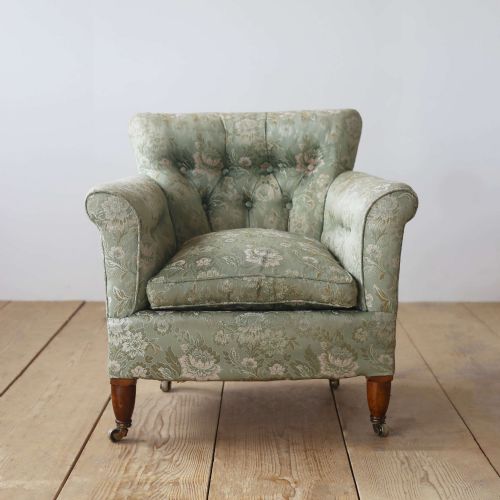
Button Upholstered Armchair
A button upholstered armchair offers deep sprung comfort and tufted visual depth, spanning Regency, Victorian, and Edwardian periods.
Button Upholstered Armchair
When you search for a button upholstered armchair, you find seating designed for relaxation, library study, and parlour reception across the nineteenth century and into the Edwardian era. The pieces appear in forms such as gentleman's armchairs, library armchairs, tub chairs, nursing chairs, and reclining chairs.
The Victorian period dominates the selection, bringing mahogany, walnut, and rosewood frames paired with button-backed upholstery. You also encounter Regency, William IV, and mid-nineteenth-century French Napoleon III designs alongside country house styles.
Materials and construction
Framing relies on dense timbers including mahogany, walnut, rosewood, oak, and occasionally iron or giltwood. These sturdy structures support complex internal springing and padding.
Upholstery materials range from tactile velvet and leather to calico and standard fabric, secured with deep buttoning that pulls the textile into a tight, patterned grid of recesses.
Materials recorded in frames and upholstery include mahogany, walnut, rosewood, oak, brass, leather, velvet, and calico.
Judging the range
The distinction between standard commercial seating and exceptional workshop production lies in the precision of the frame carving, the timber selection, and the integrity of the internal stuffing. Maker attribution and documented patents elevate specific pieces significantly.
Proportion and wood figure set finer examples apart from simpler parlour or bedroom chairs. Timber choice, from figured mahogany to rich rosewood, dictates visual weight and presence.
Howard & Sons·Gillows·Mellier & Co·Daws Patent
The Button Upholstered Armchair Glossary
- Button-back
- An upholstery technique where buttons are sewn deeply through the padding to create a uniform geometric pattern of tufts and folds. This method secures the internal stuffing while adding decorative texture.
- Library armchair
- A sturdy, deep-seated chair designed for reading rooms, typically featuring padded arms and upholstered in leather or heavy fabric. These pieces prioritize ergonomic support for extended sitting.
- Gentleman's armchair
- A larger Victorian armchair featuring an open or enclosed padded frame, often constructed from mahogany or walnut. They provide generous proportions suited to nineteenth-century parlours.
- Giltwood
- Wood that has been treated with a thin layer of gold leaf or gilt paint. This finish appears predominantly on decorative French and Regency-style framework.
- Tub chair
- An armchair with a continuous curved back and arms forming a rounded enclosure. The design wraps around the sitter for draught-excluding comfort.
Button Upholstered Armchair: Frequently Asked Questions
How do I date a Victorian armchair?
Dating relies on stylistic shifts between the heavier Regency and William IV frameworks, through mid-nineteenth-century Victorian carved walnut and mahogany, to later Edwardian proportions.
Material choices, frame shapes, and documented maker attribution or patent stamps help narrow the manufacturing decade.
Where were these armchairs used historically?
These seats served primarily in domestic reception rooms, libraries, and private studies as reading or gentleman's chairs. Smaller variants functioned in bedrooms and parlours.
Their robust timber construction and sprung upholstery accommodated long hours of sedentary work or leisure in country houses and urban townhouses.
How do I care for leather and fabric upholstery?
Leather upholstery requires regular conditioning to maintain flexibility and prevent cracking, while fabric and velvet surfaces benefit from gentle brushing and vacuuming with a soft attachment.
Keep antique timber frames polished with suitable wax and protect the textiles from direct sunlight to preserve colour and fibre strength.