

Button Tufted Lounge Chairs
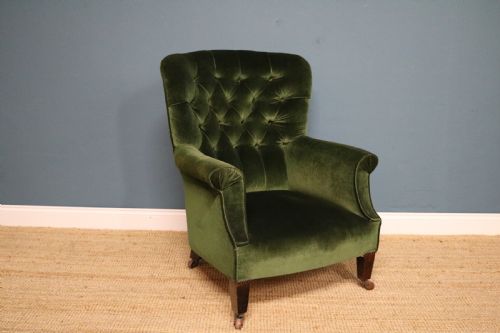
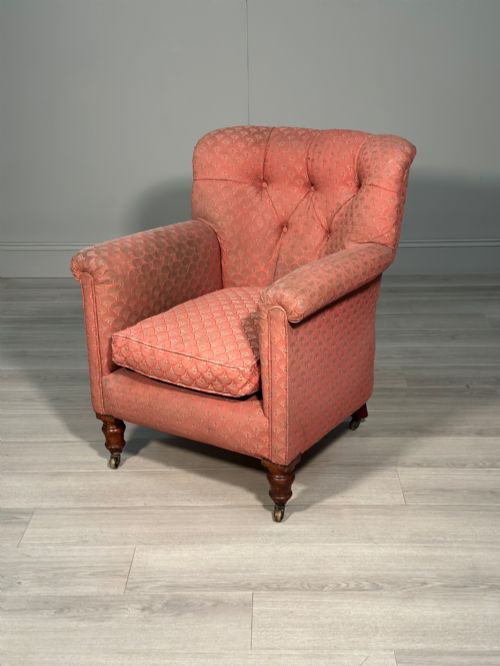
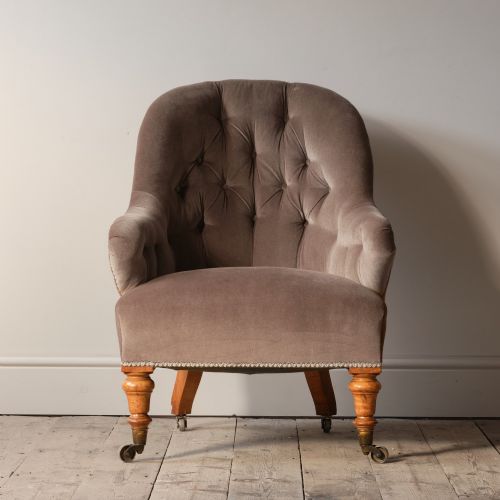
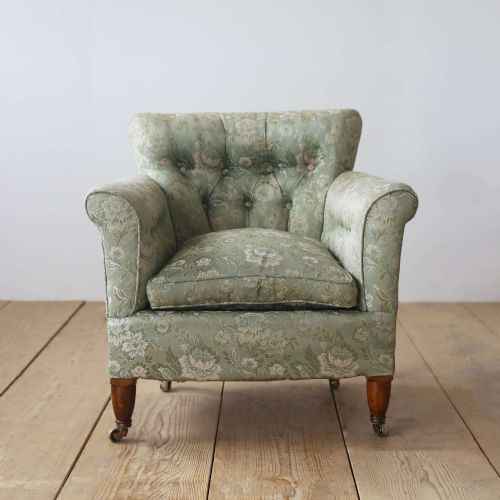
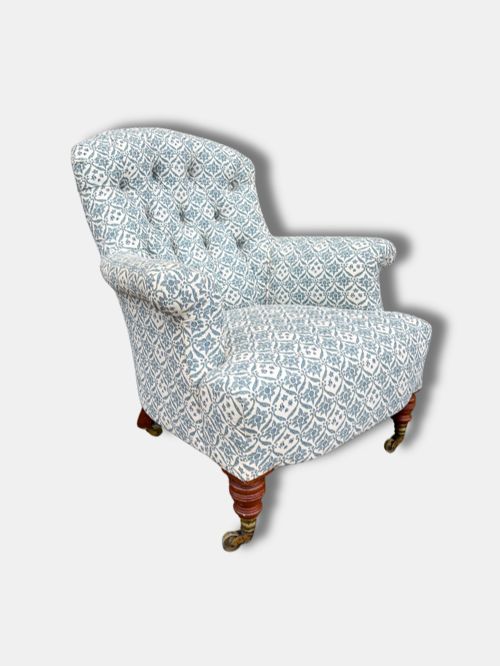
Button tufted lounge chairs are deeply sprung nineteenth century seating designed for comfort, and they bring tactile texture to a room.
Button Tufted Lounge Chairs
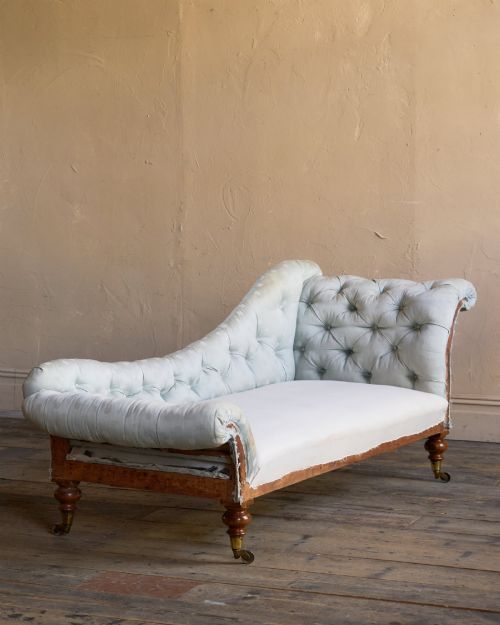
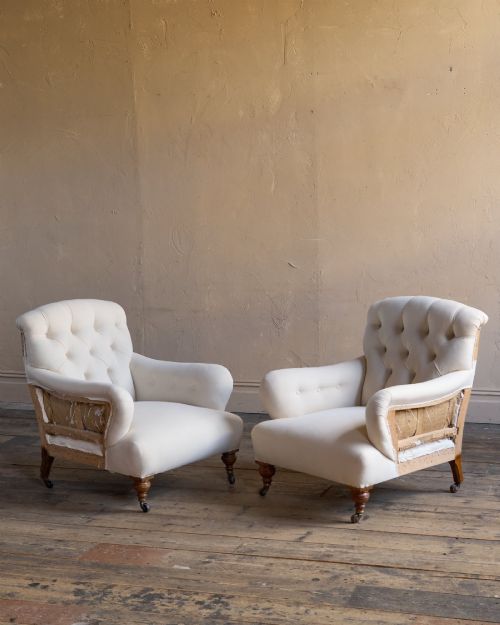
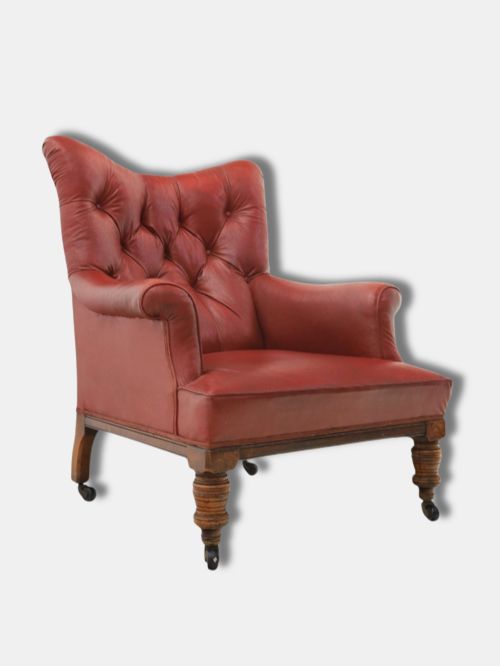
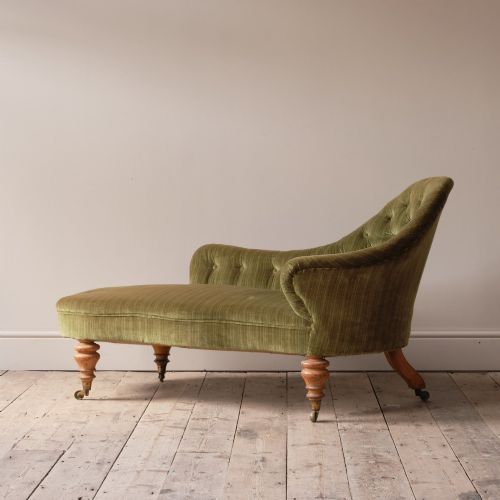
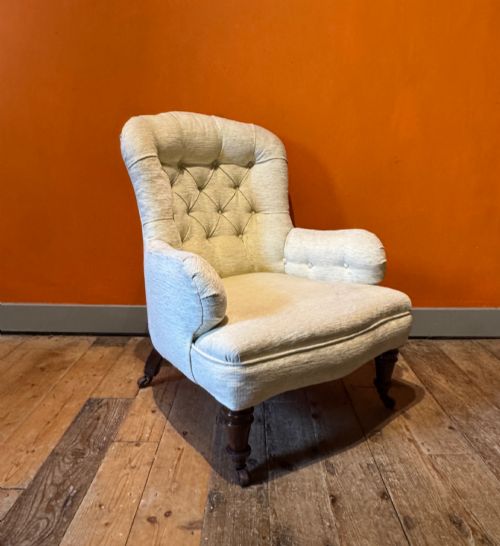
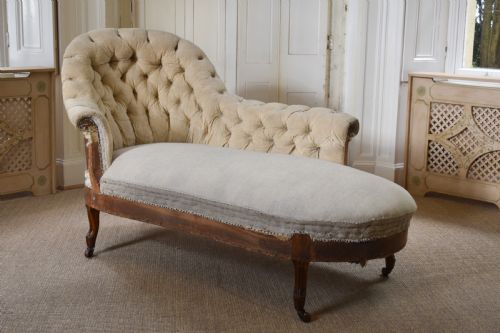
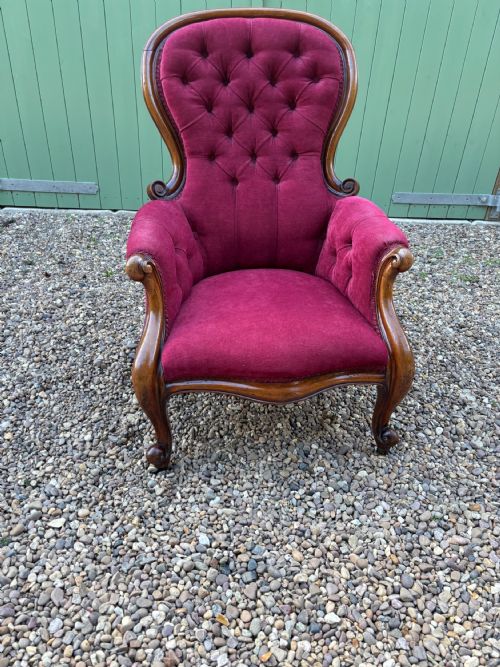
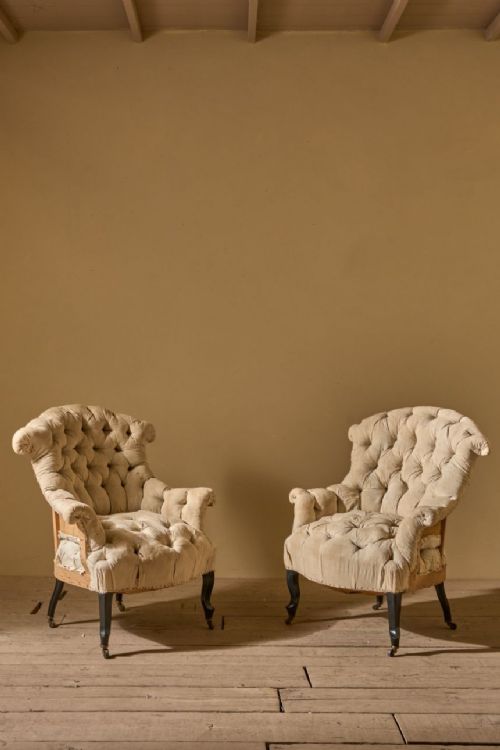
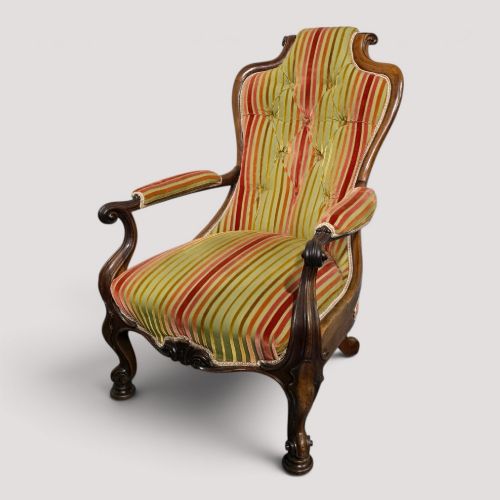
Button tufted lounge chairs encompass a range of nineteenth century forms, from Victorian button back armchairs to chaise longues and low slipper chairs. When searching for button tufted lounge chairs, buyers encounter varied silhouettes including spoon backs, gentleman's chairs, and deep lounge seating rooted in Victorian and French Napoleon III aesthetics.
The evidence shows robust representation from English country house seating alongside French walnut and mahogany framing. Pieces frequently display characteristic upholstery techniques where deep buttons pull the fabric into geometric recesses across the backrest and seat.
Makers and stylistic influences of the period range from Howard and Sons styles to Holland and Sons and Hindley and Sons. These pieces function as statement seating in libraries, drawing rooms, and studies, combining low profiles with generous cushioning.
Materials and construction
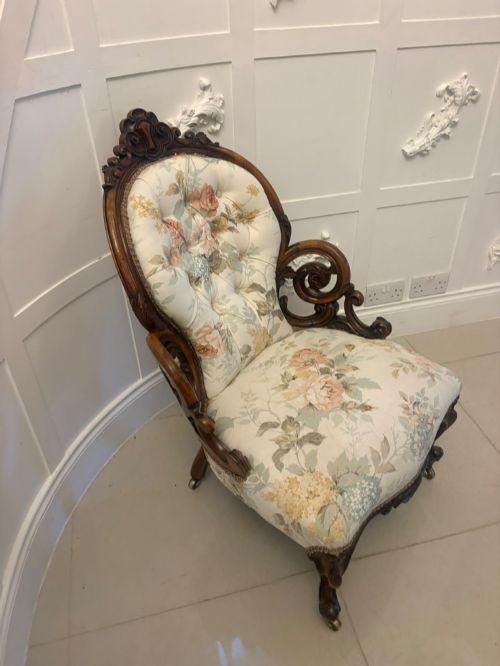
Frames are constructed from dense timbers such as mahogany, walnut, oak, rosewood, and timber, providing structural integrity for heavily sprung interiors. Wood carvers shaped showwood frames with scrolling details, barley twists, and carved supports.
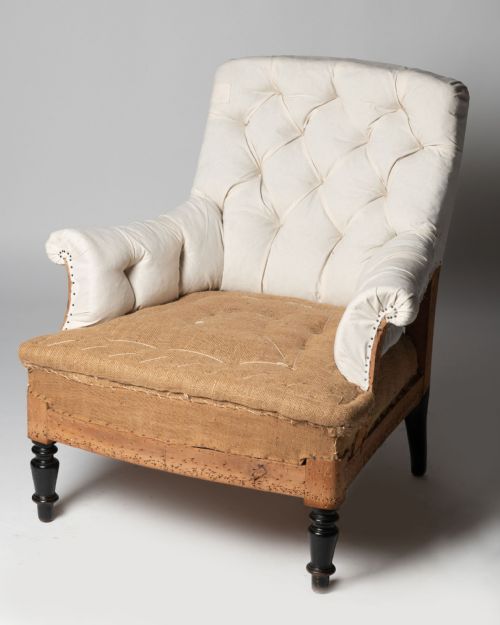
Upholstery relies on traditional stuffing secured by webbing and springs, finished in tactile coverings of leather, velvet, silk, and woven fabric. Brass tacks and decorative fringing often secure the outer edges of the textile.
Button Tufted Lounge Chairs Retail Price Guide 2026
Typical asking prices for button tufted lounge chairs among the pieces listed under this phrase on Sellingantiques today, from the lower quarter to the upper quarter. They describe what is for sale here now, not the wider market.
Listings feature eighteenth and nineteenth century periods, utilising primary materials including walnut, mahogany, leather, velvet, and brass.
Assessing craftsmanship
Quality rests in the articulation of the timber frame and the precision of the tufting work. Superior examples demonstrate crisp carving on exposed mahogany or walnut showwood and balanced proportions in the sprung architecture.
The choice of covering material and the uniformity of the button pleating distinguish standard production from exceptional cabinet work associated with premier nineteenth century workshops.
Howard and Sons·Holland and Sons·Hindley and Sons
The Button Tufted Lounge Chairs Glossary
- Button back
- An upholstery technique where buttons are pulled deep into the padding in a diamond pattern to create tufting. This method secures internal stuffing while adding rich surface texture.
- Showwood
- Timber framework left visible around the upholstered portions of a chair. It highlights the quality of the wood and the carver's skill.
- Slipper chair
- A low-set upholstered chair traditionally used in bedrooms for dressing. These pieces feature compact proportions and minimal leg height.
- Chaise longue
- An elongated upholstered seat designed for reclining. Nineteenth century examples often feature a single scrolled backrest and turned wooden legs.
Button Tufted Lounge Chairs: Frequently Asked Questions
Where were these chairs used historically?
These chairs served primarily in Victorian drawing rooms, libraries, and private sitting rooms. Their comfortable proportions suited long periods of reading or conversation.
Lower variants like slipper chairs were placed in bedrooms, while larger gentleman's chairs occupied studies.
How do I identify a Victorian piece?
Victorian identification relies on timber selection such as walnut, rosewood, and mahogany, alongside characteristic revival styles. Details like spoon backs and barley twist legs point directly to the nineteenth century.
Maker attribution stamps on the wooden frame or castors can also confirm the era.
How do I care for antique upholstery?
Care involves gentle vacuuming using a soft brush attachment to remove dust from the tufted folds. Direct sunlight should be avoided to prevent fading on velvet, silk, or leather surfaces.
Wooden showwood frames benefit from occasional dusting with a dry cloth to preserve the polished finish.