


Button Back Velvet Couch
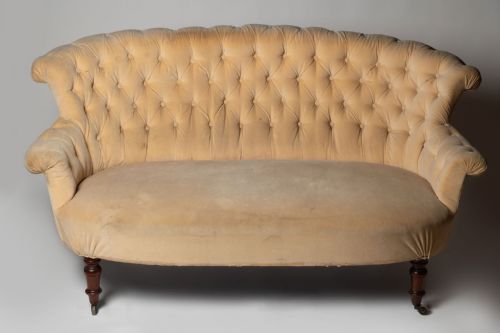
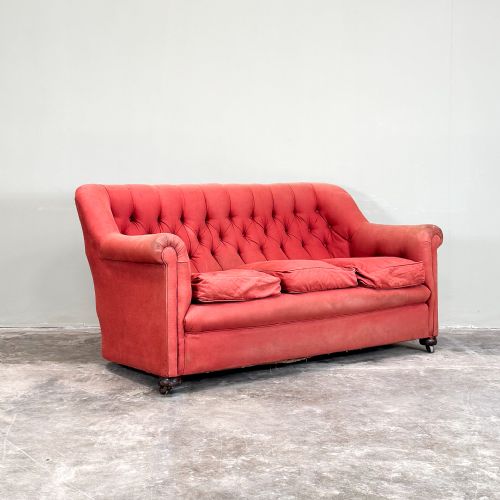
A button back velvet couch brings deep upholstery and tactile pile together, offering a comfortable seat shaped by Victorian and Regency traditions.
Button Back Velvet Couch
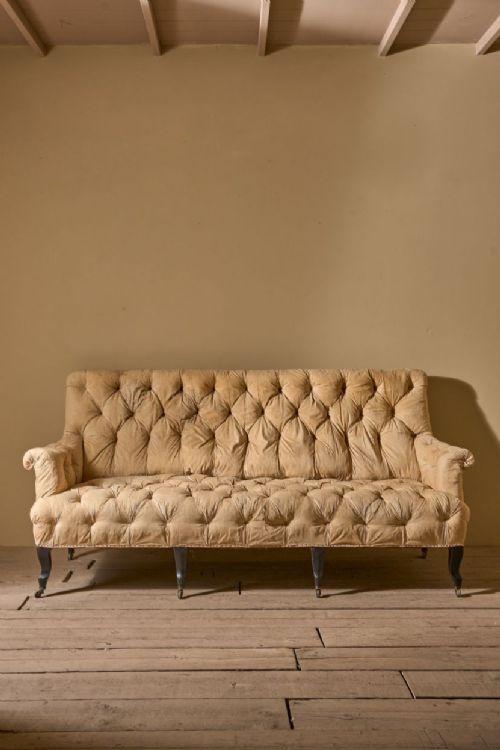
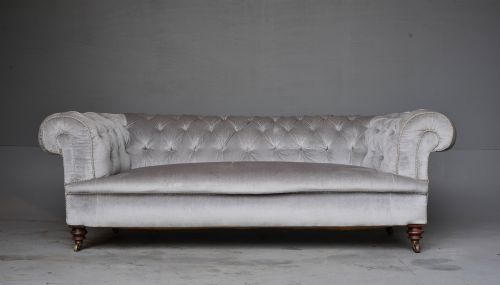
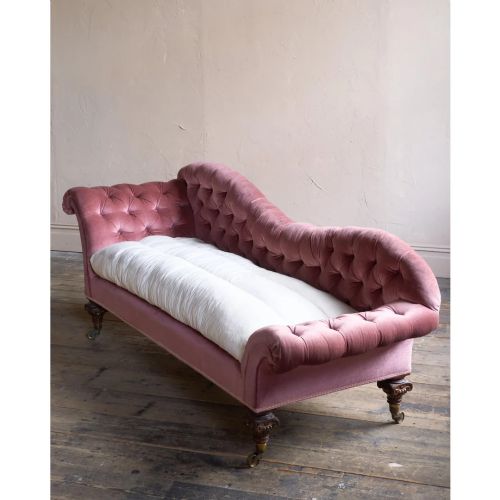
A button back velvet couch covers a wide family of seating, including settees, Chesterfields, and daybeds found across the nineteenth century. These pieces range from compact bedroom sofas to large country house settees designed for principal rooms.
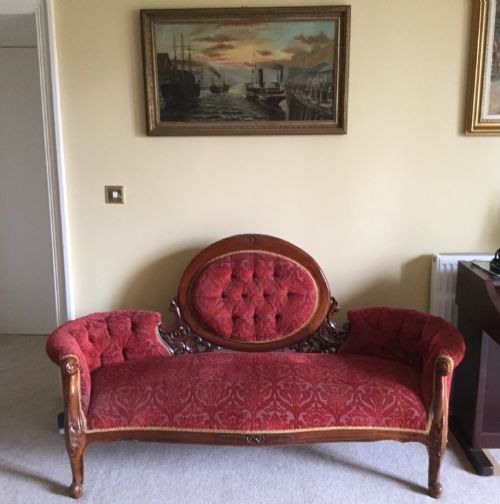
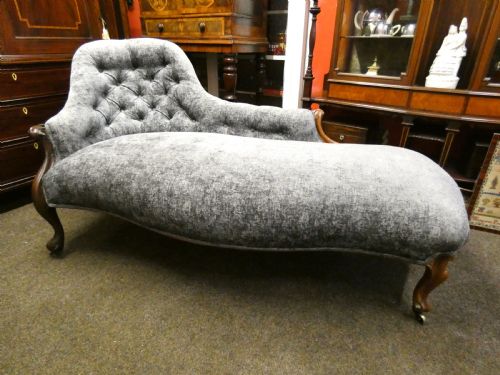
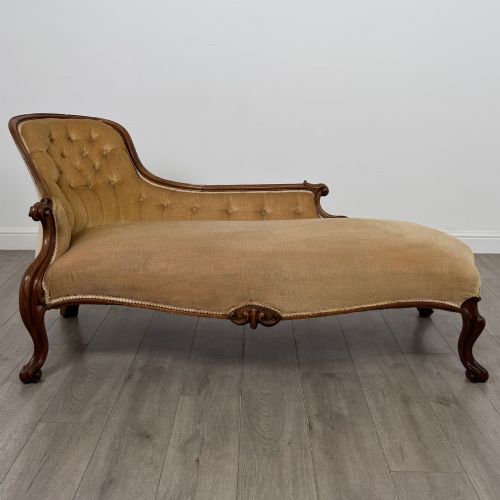
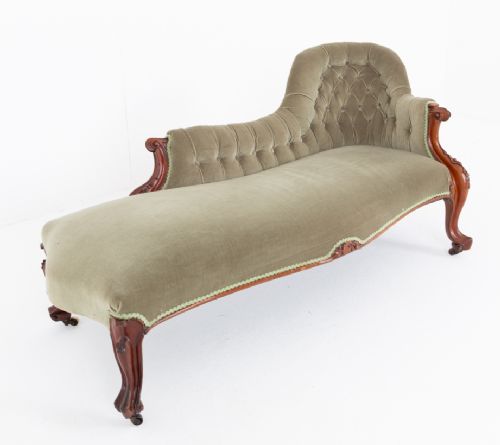
Buyers searching for a button back velvet couch will encounter various forms, most notably Victorian walnut or rosewood framed settees alongside mahogany chaise longues. Many examples show deep buttoning across the backrest, pairing traditional timber frames with soft piled fabric.
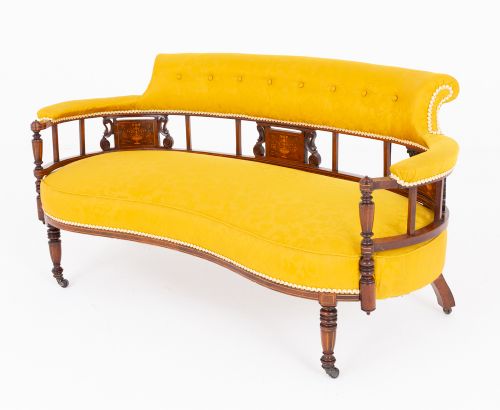
Origins stretch from Regency daybeds through to 1930s deep seated sofas, with Victorian and Napoleon III interpretations appearing frequently. Forms include double spoon back settees, conversation seats, and kidney shaped daybeds.
Materials and construction
Frames rely on hardwoods such as mahogany, rosewood, walnut, and timber, sometimes ebonised or carved with specific column and twist details. These structural elements provide the rigid skeleton required to support heavy sprung upholstery.
Upholstery combines deep pile velvet and brocade fabrics secured over sprung settee bases and padded backrests. Brass details and tassel trims often complete the finish on these nineteenth-century frames.
Victorian conversation seats ensure nobody looks at the same wall twice while chatting.
Assessing quality and finish
The sophistication of the timber framing sets individual pieces apart, distinguishing plain structural wood from finely carved rosewood or walnut with detailed frames. Carving depth and timber selection indicate the original ambition of the maker.
Upholstery execution dictates comfort and visual weight, from simple sprung bases to deep buttoning and complex double spoon back designs. The choice of pile and fabric trim alters the overall presence of the settee.
Howard and Sons
The Button Back Velvet Couch Glossary
- Chaise longue
- An upholstered couch shaped for reclining, combining a chair with an extended seat. These forms appear frequently in nineteenth-century inventories.
- Chesterfield
- A deep buttoned sofa traditionally featuring arms and back of the same height. This style remains a staple of period seating.
- Settee
- A long upholstered seat with a back and arms, designed for multiple occupants. The term is often used interchangeably with sofa.
- Ebonised
- Wood finished to resemble ebony through staining or painting. This technique appears in Aesthetic Movement pieces.
- Double spoon back
- A wooden frame profile featuring two contiguous, rounded backrest shapes resembling spoons. This shape is characteristic of early Victorian seating.
Button Back Velvet Couch: Frequently Asked Questions
How do I date a Victorian settee?
Dating relies on observing frame styles, timber choices, and upholstery configurations recorded across the nineteenth century. Early Victorian pieces often feature carved rosewood frames and double spoon back designs.
Later Victorian and 1900 examples shift towards walnut framing, simpler lines, or distinctive Napoleon III and Aesthetic Movement influences.
Are these couches comfortable for daily use?
Many examples incorporate sprung settee bases and deep padding designed for extended sitting or reclining. Pieces like deep seated sofas and daybeds offer substantial support.
Condition varies depending on whether the upholstery has been recently renewed or retains older brocade and velvet finishes.
What is the difference between a chaise longue and a settee?
A chaise longue is designed for reclining with a single backrest section at one end of an extended seat. A settee provides a conventional multi-seat sofa arrangement with a full backrest.
Both forms utilise period timber frames and buttoned upholstery but serve different functional layouts within a room.