
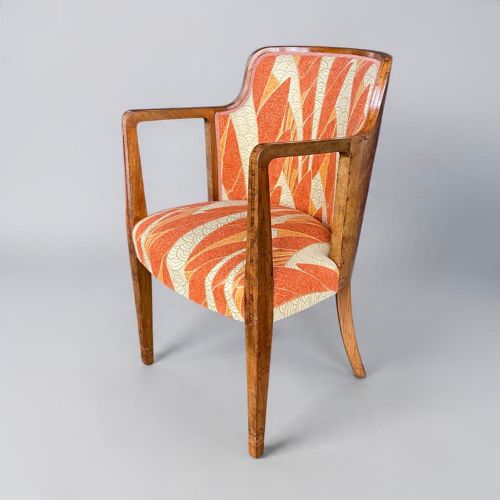
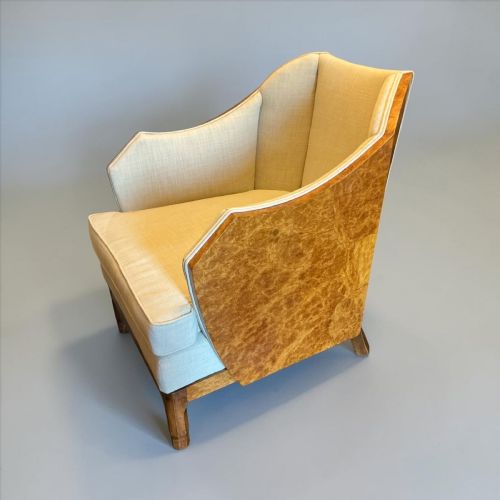
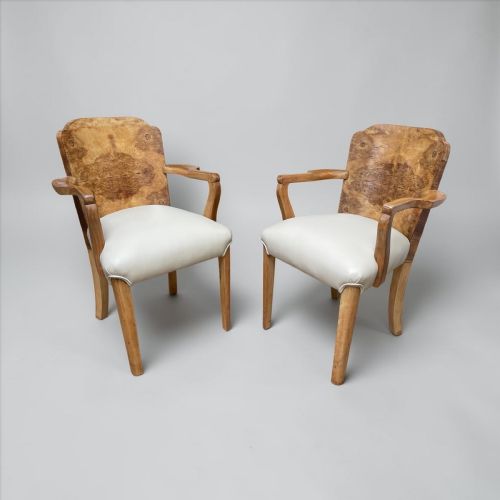

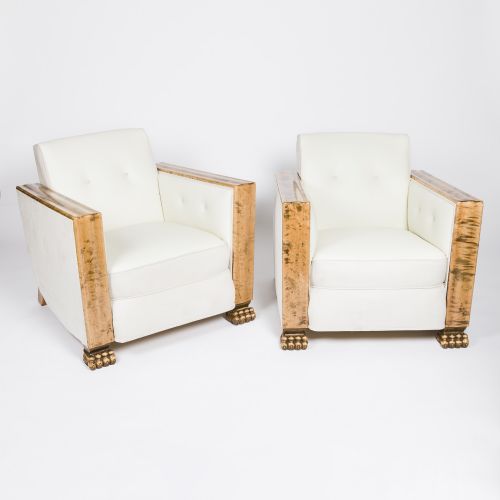


Burr Wood Armchair
These burr wood armchairs bring striking grain and deep character into a room, offering both seating and a strong focal point.
Burr Wood Armchair
A burr wood armchair is a seating choice defined by its distinctive, knotty grain patterns harvested from tree growths. The examples gathered here span centuries and regions, showing how makers utilised unusual timber for everyday seating and formal reception pieces.
The selections available include vernacular Windsor chairs alongside streamlined Art Deco club chairs and desk chairs. You will encounter nineteenth-century country pieces alongside twentieth-century modern designs, each showcasing the natural figuring of the wood.
Form follows function across these examples, ranging from low-back Windsor seating to upholstered club chairs and dedicated desk armchairs. The common thread is the prominent use of burr timbers, which turn standard seating into decorative statements.
How they were made
Makers constructed these chairs using dense native hardwoods like elm, ash, and yew, often combining solid timber frames with decorative burr veneers. Burr walnut, birch, elm, and yew were chosen specifically for their swirling grain patterns, which required skilled handling during shaping and polishing.
Traditional joinery methods such as Windsor framing and steam-bending shaped the vernacular country chairs, while later twentieth-century pieces employed veneering techniques over robust hardwood carcasses. Artisans finished these surfaces to highlight the natural figuration and rich tone of the wood.
Early country makers occasionally saved their most hypnotic tree knots specifically for the central back splat, ensuring anyone staring into the fire had something strange to gaze at.
What varies in quality
Quality rests in the density and dramatic impact of the burr figuring across the primary viewing surfaces. Chairs displaying uninterrupted, symmetrical grain patterns stand apart from those with patchy or fragmented figuring.
The skill of the original maker dictates the structural integrity and sculptural grace of the frame, particularly in complex Windsor splats or curved Art Deco silhouettes. Richness of tone and depth of natural patina further separate standard vernacular items from exceptional creations.
Hary and Lou Epstein·John Moss Worksop
The Burr Wood Armchair Glossary
- Burr wood
- A growth on a tree where the grain has grown in a deformed manner, resulting in swirling, eye-catching patterns when sliced. It is highly prized for decorative furniture panels.
- Windsor chair
- A traditional wooden chair constructed with a solid wooden seat into which the legs and back spindles are separately inserted. They often feature carved or comb-back details.
- Bergere
- An enclosed armchair with upholstered sides and back, typically featuring cane work or tightly fitted fabric panels. The style gained popularity during the Art Deco period.
- Patina
- The deep surface sheen and mellowing developed by wood over decades of handling and exposure to light. It indicates genuine age and use.
- Splatted back
- A central vertical wooden strip running up the middle of a chair back for structural support and decoration. In country chairs, these are frequently shaped from figured timber.
Burr Wood Armchair: Frequently Asked Questions
What is a burr wood armchair?
A burr wood armchair is a seat constructed or veneered with timber from a tree growth, known for its chaotic and decorative grain patterns. These chairs range from rustic nineteenth-century country designs to sleek twentieth-century forms.
Makers utilised this unusual wood to draw the eye, making the seating both functional and highly decorative. The pieces reflect the tastes of their respective periods while highlighting natural timber figuring.
How do I identify a Windsor chair?
A Windsor chair is identified by its heavy solid wooden seat, into which the legs and back spindles are bored directly rather than joined via a conventional frame. They often include carved splats and comb backs.
Country makers relied on this sturdy construction for everyday seating. The evidence shows these chairs frequently incorporate burr elm or yew in the back assembly.
Are Art Deco armchairs comfortable?
Art Deco armchairs, particularly club chairs and bergere styles, were designed with generous proportions and deep cushioning to offer substantial comfort. They often combine upholstered seating with sweeping wooden arms.
These chairs balance striking geometric or rounded forms with practical seating. The integration of burr veneers adds visual warmth to the rooms they occupy.
How do I care for burr wood furniture?
Caring for burr wood involves keeping the timber away from direct heat sources and strong sunlight, which can dry out the grain and fade the polish. Regular gentle dusting preserves the surface finish.
Applying appropriate wax feeds the wood and maintains its natural sheen without building up a heavy residue. Treating the timber with care ensures the rich grain remains prominent.