



Burr Walnut Specimen Chest
These burr walnut specimen chest pieces bring rich, patterned grain and compact storage to any room.
Burr Walnut Specimen Chest
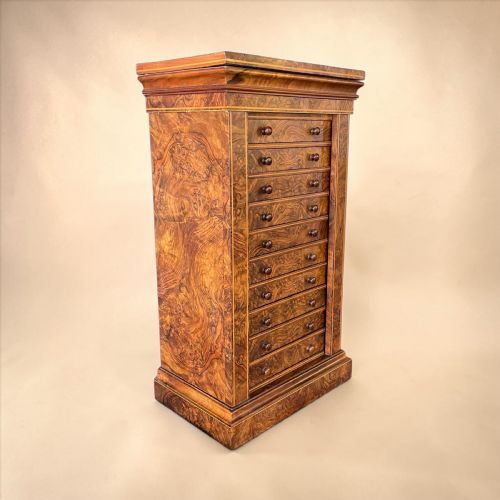
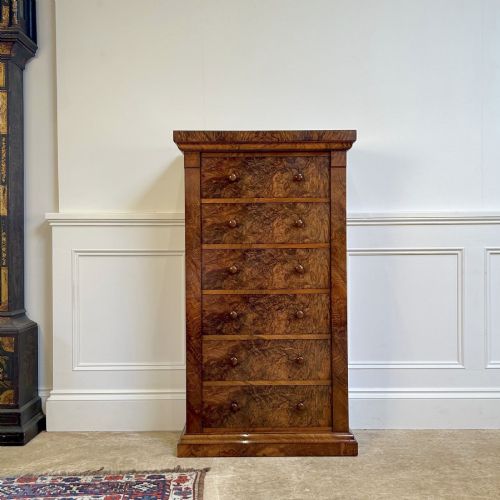
A burr walnut specimen chest takes the form of miniature furniture, table cabinets, or collectors cabinets designed to hold small objects and curiosities. Most examples on this page date from the Victorian period, the nineteenth century, and the Regency era.
The most common formats include Wellington chests, drawer chests, and cabinets on stands that display the distinctive figured wood across their compact surfaces. These pieces range from small miniature chests of drawers measuring twenty centimetres high to larger multi-drawer storage cabinets.
Makers utilised various traditional furniture forms, including George II style designs, campaign styles, and show cabinets meant for the drawing room. A buyer searching for a burr walnut specimen chest will encounter specialised pieces such as dentist cabinets alongside traditional collectors cabinets.
How they were made
Craftsmen built these cabinets using timber frames faced with walnut and burr walnut veneer, creating the characteristic swirling grain patterns on the drawer fronts and exterior surfaces. Secondary woods such as mahogany frequently appear in the internal drawer construction.
Details include brass hardware, boxwood stringing, and multiple small drawers designed for sorting delicate items. Cabinets often feature locking mechanisms like the vertical locking bar typical of Wellington chests.
Burr Walnut Specimen Chest Retail Price Guide 2026
Typical asking prices for burr walnut specimen chest among the pieces listed under this phrase on Sellingantiques today, from the lower quarter to the upper quarter. They describe what is for sale here now, not the wider market.
Some nineteenth-century dentists utilised these handsome burr walnut cabinets to keep their instruments orderly and out of sight.
What varies in quality
Quality rests primarily in the selection and matching of the burr walnut veneer across the facade, where superior pieces display symmetrical, highly figured grain patterns. The density and complexity of the internal drawer configuration also separate standard storage pieces from elaborate collectors cabinets.
The refinement of brass fittings, the precision of the boxwood details, and the integrity of the timber framing distinguish finer workshop production from simpler commercial output.
Gillows
The Burr Walnut Specimen Chest Glossary
- Burr walnut
- A veneer sliced from the knotty growth of a walnut tree, prized for its swirling, highly figured grain patterns. It forms the primary decorative surface on these cabinets.
- Wellington chest
- A tall, slender chest of drawers featuring a hinged locking stile on one side that secures all drawers with a single padlock. This form appears frequently among nineteenth-century examples.
- Collectors cabinet
- A multi-drawer piece originally built to house natural history specimens, coins, or small artefacts. They often contain numerous shallow drawers.
- Miniature furniture
- Small-scale cabinets and chests created either as masterworks by apprentices or as decorative tabletop pieces. Examples here include items measuring twenty centimetres high.
- Boxwood
- A dense, pale timber used for fine inlay work and stringing lines on cabinet exteriors.
Burr Walnut Specimen Chest: Frequently Asked Questions
What is a burr walnut specimen chest?
A burr walnut specimen chest is a small cabinet or set of drawers covered in figured walnut veneer, traditionally built to house small collections, specimens, or valuable trinkets.
These pieces range from tabletop miniature chests to larger collectors cabinets and Wellington chests dating from the nineteenth century.
How were these cabinets used?
Owners used these multi-drawer cabinets to store and organise delicate items such as coins, shells, geological specimens, or medical tools in consulting rooms and drawing rooms.
The numerous small drawers kept specialised collections protected and neatly catalogued.
Where should I place one?
These compact chests suit tabletops, sideboards, or dedicated display areas where their figured wood grain can be appreciated close up.
Their smaller scale makes them versatile enough to sit on desks or chest tops while providing practical enclosed storage.